How to Grow Potatoes in Containers: Size, Soil, Water
Grow potatoes in a 10- to 15-gallon container, choose early or midseason varieties for tighter spaces, and keep the mix evenly moist without letting it stay soggy. Miss those basics and you can end up with small harvests, heat-stressed plants, or tubers that rot before harvest. This guide covers container choice, soil mix, watering, hilling, sun, and harvest timing so you can grow a steady crop in pots or bags.
Quick decision checklist: If you have a balcony, choose a pot or grow bag that drains well and place it where it gets full sun. If you garden in a hot climate, use a lighter-colored container or a spot with morning sun and some afternoon relief. If you want the easiest setup, start with a 10- to 15-gallon pot or bucket rather than a very small container. If you are using a grow bag, plan on checking moisture more often because bags dry out faster. If you want the most predictable crop in a limited space, choose an early or midseason variety, use 1 to 2 seed potatoes in a 10-gallon container, and increase to 2 to 3 only in a larger container. Watering should be steady, with the main risk being a container that dries too fast or stays wet too long.
Which potatoes work best in containers?
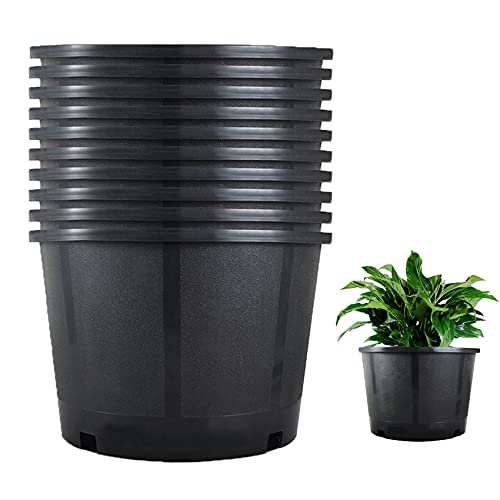


Early and midseason potatoes are usually the best fit for containers because they finish sooner and spend less time in a limited root zone. Determinate types are often easier to manage in pots, while later types can still work if the container is large, the weather stays mild, and moisture stays steady.
Early, mid, and late varieties
Early potatoes can mature in about 50 days, while late varieties can take up to 100 days. Midseason types fall between those points, and actual harvest timing can vary a lot by cultivar, temperature, container size, and watering consistency. In a container, shorter maturity often means less heat stress and a lower chance that the mix dries out before tubers size up.
Determinate and indeterminate types
Determinate potatoes usually concentrate tuber set in a shorter window, which makes them a good match for smaller containers and more predictable harvest timing. Indeterminate types keep growing longer and can fill more vertical space, but they need a larger container and more careful watering.
Seed potatoes versus grocery potatoes
Certified seed potatoes are the better starting material because they are selected to be disease-free. Grocery-store potatoes may sprout, but they can carry pathogens or have been treated to slow sprouting, which makes them a poor choice for a small container where one failure matters more than in a larger planting.
A common first-timer mistake is planting a sprouted supermarket potato in a 5-gallon bucket, then hoping the container will make up for weak starting material. The container cannot fix disease, poor sprouting, or a variety that is too late for the space.
What container size do you need?
A useful starting point is a container that is at least 14 inches deep and holds about 10 to 15 gallons, or roughly 30 liters. That gives you enough soil volume for roots, moisture buffering, and hilling without forcing the plant into a cramped, hot mix that dries too fast. Because containers vary in shape, this is a practical heuristic rather than a strict rule.
Pots, buckets, bags, and tubs
Epic Gardening notes that even a 5-gallon bucket can work if it has drainage holes, but that is a minimum option with modest yield expectations. A 10- to 15-gallon pot, tub, or grow bag gives you more room for one to three seed potatoes, depending on the variety and your goal for harvest size.
Why drainage holes matter
Drainage holes are essential. Potato tubers and stems rot quickly in standing water, especially in deep containers where the lower mix stays wet after rain or overwatering. Opaque sides are often preferred because they reduce light exposure to developing tubers and can help limit sidewall heating.
| Container volume | Seed potatoes | Variety type | Fill depth | Watering risk | Expected maturity window |
|---|---|---|---|---|---|
| 5 gallons | 1 | Early or determinate | About 4 to 6 inches at planting, then fill up in stages | High drying risk, low buffer against heat | About 50 to 75 days, depending on variety |
| 10 gallons | 1 to 2 | Early or midseason | About 4 to 6 inches at planting, then hill upward | Moderate risk; easier to keep even moisture | About 50 to 90 days |
| 15 gallons | 2 to 3 | Midseason or some late types | About 5 to 7 inches at planting, then add mix in layers | Lower drying risk than bags, but overwatering is still a concern | About 70 to 100 days |
| 30 liters | 1 to 2 | Early or midseason | About 4 to 6 inches at planting | Balanced moisture if drainage is open | About 50 to 90 days |
This table is a practical planning guide, not a guarantee. More seed pieces in a small container can increase competition for water and reduce tuber size, while fewer seed pieces often give steadier results.
How do you plant potatoes in containers?
Plant seed potatoes in a loose, fertile, free-draining potting mix and cover them lightly at first. Set the container in a cool spot with the right sun exposure, then add more mix as the stems grow. The goal is steady coverage, not deep burial on day one.
Chit the seed potatoes. Let certified seed potatoes sprout before planting if they are slow to wake up. Chitting encourages short, sturdy sprouts and can help you get a more even start.
Cut larger tubers. If a seed potato is large, cut it into pieces with at least 2 eyes each. After cutting, let the pieces dry and callus before planting so the cut surfaces are less likely to rot.
Set the first layer. Fill the container with about 4 to 6 inches of mix, then place seed pieces about 5 to 6 inches apart and about 3 to 4 inches from the container sides. Cover them with enough mix to leave a shallow planting depth, then water lightly.
Top up in stages. When shoots are several inches tall, add more mix around the stems, leaving the top leaves exposed. Repeat this as the plant grows until the container is nearly full, but stop before the rim is packed tight.
Water gently once. After planting, moisten the mix evenly without soaking it. The container should feel damp through the upper layer, not muddy at the bottom.
Picture a 15-gallon tub planted with two early potatoes, each set near opposite sides of the container. If the mix is covered in small stages rather than all at once, the plant keeps more stem length available for tuber production and stays easier to water evenly.
What soil mix should you use?
Use a soilless potting mix rather than heavy garden soil. A good mix drains well, still holds moisture, and is light enough for roots and tubers to expand. Many gardeners blend potting mix with compost, but fresh manure is a poor choice because it can be too strong, too wet, and too unstable for containers.
Potting mix versus garden soil
Garden soil compacts in containers. That cuts oxygen to roots, slows drainage, and raises the chance of rot. A soilless medium stays looser, which matters even more in bags and small pots where the root zone has less room to recover from a wet spell.
Compost blend and moisture balance
Compost can add nutrients and help the mix hold water, but it should not dominate the blend. Too much compost can make the container dense and water-retentive. Aim for a mix that feels airy when dry and stays evenly moist after watering, not wet for long periods.
Choose a bagged potting mix. Start with a soilless container mix labeled for pots or raised beds. This is the safest base because it balances drainage and moisture better than straight topsoil.
Add compost sparingly. Blend in compost if you want more nutrient holding power, but keep the texture loose. If the finished mix feels heavy in hand or clumps after watering, cut back on compost next time.
Skip fresh manure. Fresh manure can push the mix too hard and may keep the container overly wet. That raises disease risk and can stress young plants.
How much sun and water do container potatoes need?
Potatoes should get 6 to 8 hours of sunshine per day, and they need even moisture through the growing period. Full sun supports top growth and tuber formation, but dark containers, hot patios, and fabric bags can dry the root zone quickly. The main goal is steady moisture without waterlogging.
Full sun and heat risk
Full sun helps potatoes perform, but dark pots on hot concrete can overheat the root zone. If a container bakes in afternoon sun, move it to a spot with morning sun and light afternoon shade, or shield the sides so the mix does not heat up as fast.
Watering solid pots versus fabric bags
Grow bags are popular for small-space gardening, but they often dry out faster than solid-sided containers. That means more frequent checks, especially in warm or windy weather. Solid pots hold moisture longer, but they can also stay soggy if drainage is poor or if you water by habit instead of by feel.
Signs of overwatering and underwatering
Overwatered plants may yellow, stall, or feel limp even when the mix is wet. Underwatered plants can wilt in the afternoon, then perk up by evening, which is a sign the container is drying too far between waterings. Aim for evenly moist mix through the main growth phase.
Check moisture daily. Push a finger into the top few inches of mix. If it feels dry there but damp below, wait and check again later; if it is wet and heavy, hold off on watering.
Water deeply and slowly. Add water until it drains from the bottom, then stop. This helps wet the full root zone instead of only the top layer.
Adjust for fabric bags. Check grow bags more often than solid pots because they dry faster. In hot weather, they may need shorter intervals between waterings even when the plant size has not changed.
How do you hill potatoes in a container?
Earthing up means adding soil around the stems as the plant grows so developing tubers stay covered. In a container, that usually means topping up in layers until the pot is nearly full. It helps you use more stem length, but it does not guarantee more tubers in every setup.
When to stop adding mix
Stop when the container is close to full and the plant still has leaves above the rim. Do not bury the whole plant. The top growth still needs light, and a packed rim makes watering harder.
What hilling can and cannot do
Hilling keeps exposed tubers from turning green and expands the planted stem area. That can support a fuller crop in some varieties, but the final yield still depends on variety, container size, light, temperature, and watering control. It is a useful practice, not a promise.
How do you know when to harvest and store them?
Stop watering once the tops yellow and begin to die back. Early potatoes may be ready in about 50 days, while late types can need up to 100 days. Harvest timing varies substantially by cultivar and conditions, so use the foliage and tuber size together rather than the calendar alone. Once the tops yellow and begin to die back, wait for skins to set before lifting if you want better storage quality.
Maturity windows and harvest signals
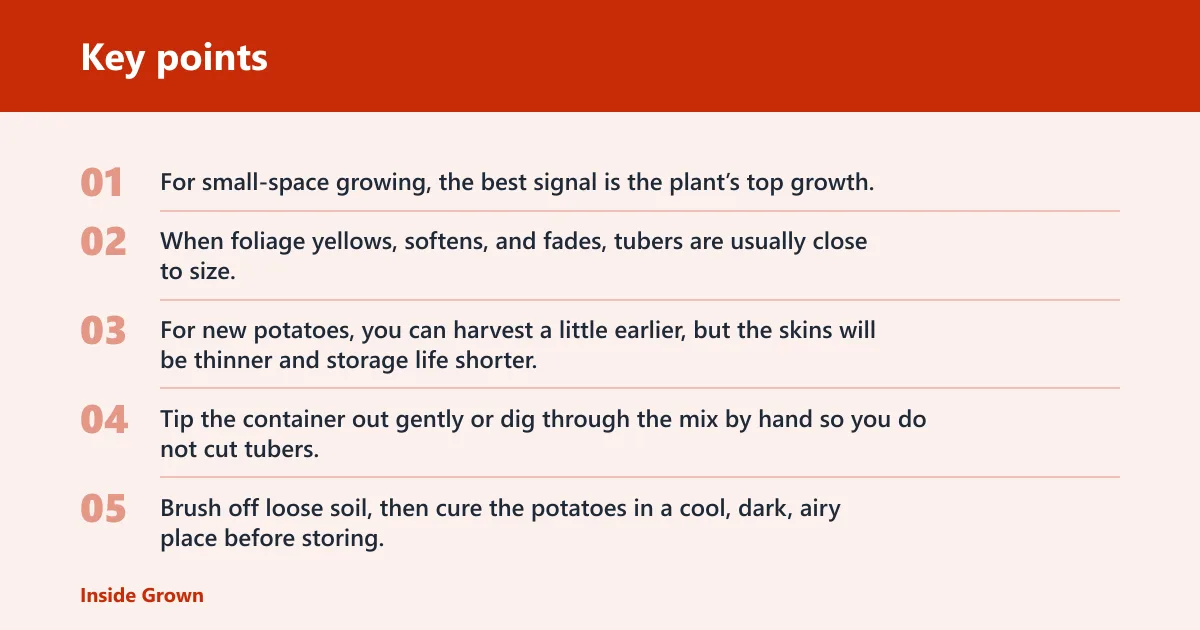
For small-space growing, the best signal is the plant’s top growth. When foliage yellows, softens, and fades, tubers are usually close to size. For new potatoes, you can harvest a little earlier, but the skins will be thinner and storage life shorter.
How to lift and cure them
Tip the container out gently or dig through the mix by hand so you do not cut tubers. Brush off loose soil, then cure the potatoes in a cool, dark, airy place before storing. Skip washing until you are ready to use them, because wet skins store poorly.
Suppose a grow bag is planted with an early variety and the foliage starts yellowing after roughly 50 days. If the mix has been kept evenly moist and the tubers are a usable size, that is a reasonable time to stop watering and begin checking for harvest.
Frequently asked questions
What is the best way to grow potatoes in containers?
The best setup is a deep, well-drained container, a soilless mix with compost, and an early or midseason variety that matches the space. Grow bags can work, but they dry faster. Solid pots are easier to keep steady if you tend to overwater or live in a hot spot.
How long to grow potatoes in containers
Early varieties can mature in about 50 days, while late varieties can take up to 100 days. Midseason types fall between those ranges. Harvest timing also depends on weather, container size, and how steadily you keep the mix moist.
When to grow potatoes in containers
Start in early spring. In cool weather, container potatoes can be planted before or around the last spring frost, and one standard reference point is at least 2 weeks past the last frost date for pot planting. Local conditions matter more than the calendar alone, and UK gardeners often use the same spring window once frost risk is passing.
Do potatoes grow well in containers?
Yes, if the container is deep enough, drains well, and gets full sun. Containers can limit yield compared with in-ground planting, but they also give you more control over soil quality, moisture, and placement. That control is the main advantage in small spaces.
Can you grow potatoes in pots versus grow bags?
Yes. Pots hold moisture a little longer and are often easier to manage in hot weather, while grow bags drain quickly and usually need more frequent watering checks. Both work if drainage is strong and the container is large enough for the variety.
Are containers better than growing potatoes in the ground?
Containers are better when you want cleaner harvesting, better soil control, or you have poor garden soil. The ground is often better if you want larger yields and can keep the soil loose and evenly watered. The best choice depends on space, climate, and how much control you need.
How do you use the straw method in containers?
Straw can be used as a light top layer or mulch in a container, but it should not replace a proper potting mix. It works best as a moisture-retaining cover around the stems rather than as the main planting medium, and the container still needs drainage holes and enough depth.
Are sweet potatoes the same as regular potatoes in containers?
No. Regular potatoes and sweet potatoes are different crops with different planting needs, and this guide is for regular potatoes. Sweet potatoes usually need a warmer season and a different container approach.
What should I do if my container dries out too fast?
Move it out of the hottest exposure if possible, use a larger container next time, and check moisture more often. A heavier potting mix with a little compost can hold water better, but too much compost can create new drainage problems, so balance matters.