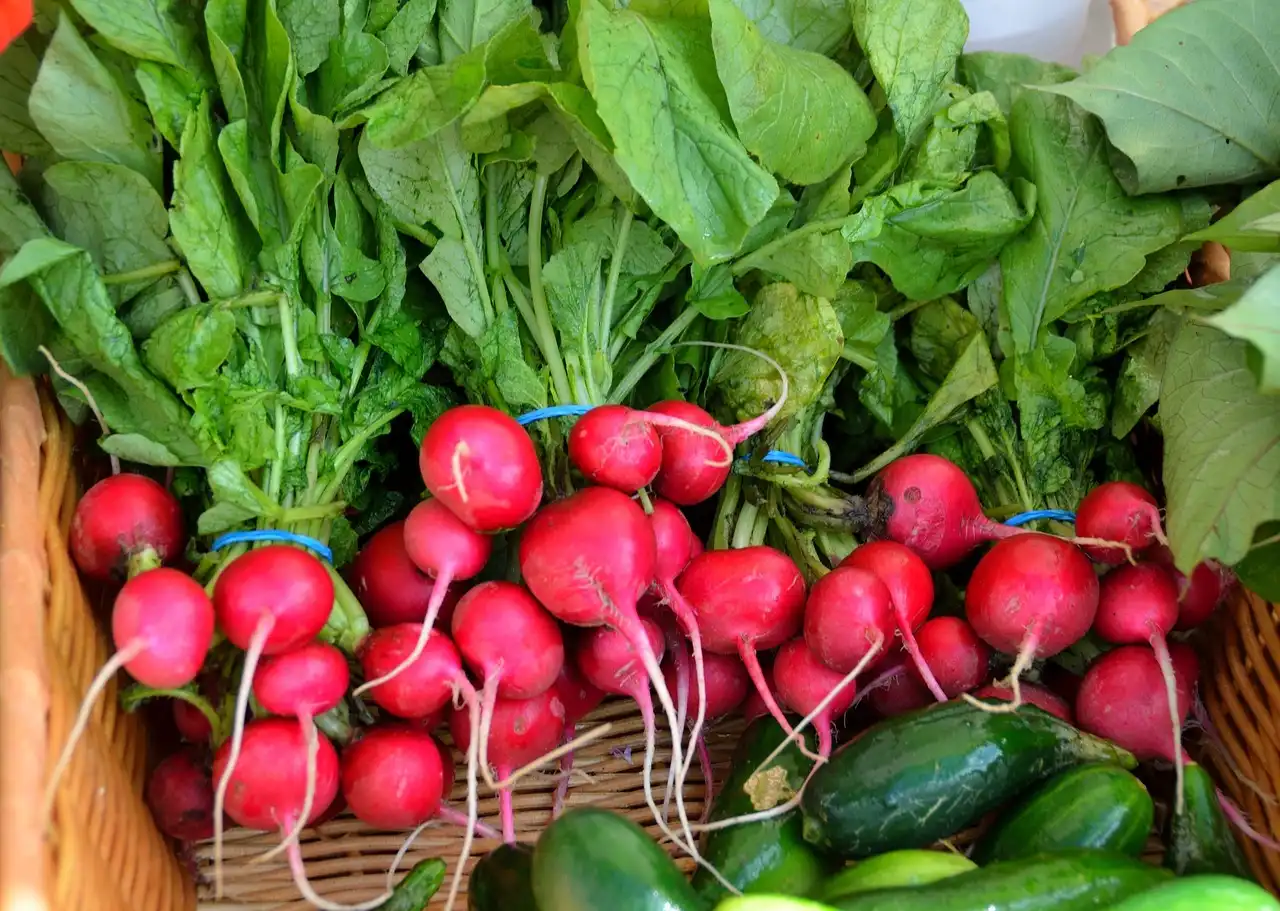
How to Grow Radishes Fast in a Vegetable Garden
For a faster radish harvest, sow seeds about 1/2 inch deep in loose, stone-free soil, keep the bed evenly moist, and thin seedlings to about 1–2 inches apart; many varieties reach pull size in about 22–30 days. Dry, compacted, or crowded beds slow growth and produce hot, woody roots with split skins. This guide shows how to tune soil texture, watering, and sowing intervals for crisp roots as quickly as possible.
What you’ll need


- Radish seed packets suited to spring, winter, daikon, or edible-podded types
- Hand rake or garden fork
- Fine compost or screened topsoil
- Watering can or hose with a gentle setting
- Measuring trowel or ruler
- Plant labels
- Shallow tray or wide container with drainage holes, if growing in pots
How do you grow radishes fast?
For speed, choose a quick spring type, sow it directly, and keep growth steady from sprout to harvest. Radish roots size up fastest in cool weather, loose soil, and steady moisture with bright light and about 6 hours of sun. If any of those slip, tops outrun roots, and harvest slows, toughens, and heats up.
Choose the right radish type for your timeline
- Pick a fast-maturing type. Spring and salad radishes are the quickest option. Many are ready in about 20 to 30 days, while daikon and winter radishes need a longer run and more space for root length.
- Sow directly in place. Radish seeds are best direct sown because transplanting can distort the root. Germination usually takes about 5 to 10 days in cool soil, so keep the seedbed ready before you sow.
Sow seeds at the right depth and spacing
- Mark shallow rows. Set seeds about 1/4 to 1/2 inch deep. A depth near 1/2 inch is a reliable target for most garden beds, while shallow sowing near 1/4 inch can work in fine, evenly moist soil.
- Space for the final root size. Place standard spring radishes 1 to 2 inches apart after thinning. For larger types, leave more room so roots can expand without crowding. Radish roots fail to size up when seedlings compete too long.
- Thin early. Remove extras when the first true leaves appear. Crowded seedlings send up tops quickly and leave the roots small, uneven, or pointed.
Keep seedlings growing without stress
- Water to hold even moisture. Keep the top layer damp, not soggy. About 1 inch of water per week is a useful baseline in open ground, adjusted for heat, wind, and container drying.
- Protect the seedbed surface. If rain crusts the soil, break the crust lightly with fingertips or a hand fork. Seedlings push through fine tilth more easily than a sealed surface.
Say your radish row sprouts unevenly, with one end standing at two leaves while the other end is still bare. The usual cause is uneven moisture or a packed patch in the bed. Rework the top inch, water steadily, and resow the bare section at the same depth rather than waiting for the weak patch to catch up.
Radish speed checklist
| Problem | Likely cause | Immediate fix |
|---|---|---|
| Slow germination | Cold, dry seedbed or seeds buried too deep | Sow 1/4 to 1/2 inch deep, water the row evenly, and keep the top inch moist until sprouts appear |
| All leaves, no root | Too much nitrogen, too much shade, or crowding | Thin to final spacing, move to full sun if possible, and stop adding high-nitrogen feed |
| Cracked roots | Soil dried out, then was soaked | Water on a fixed schedule and keep moisture even instead of letting the bed swing dry to wet |
| Woody or tough roots | Harvest came late or the plant was heat-stressed | Pull at ready size, usually before roots become oversized, and switch to a cooler sowing window |
| Forked roots | Stones, hard clods, or compacted soil | Rake out debris, loosen the bed 6 to 8 inches deep, and rework the top layer to a fine tilth |
| Uneven sizing | Mixed spacing, patchy moisture, or variable soil texture | Thin to one spacing standard and water the whole row evenly from end to end |
| Hot, bitter roots | Heat, drought, or oversized roots left in the bed | Harvest promptly and stop sowing in hot weather until the season cools |
| Misshapen roots in clay | Heavy soil that resists root expansion | Grow in a raised bed or wide container filled with loose, well-draining mix |
| Weak tops, tiny roots | Too much shade or root competition | Move the crop to stronger light and thin hard before seedlings knit together |
| Sudden leaf damage or stunted growth | Flea beetles, root maggots, or bolting from heat stress | Cover young plants, keep the bed clean and evenly moist, and stop sowing once warm weather pushes plants to flower |
How much sun and water do radishes need?
Radishes grow fastest in bright light and steady moisture. Full sun is best, and about 6 hours of sunlight a day is a common minimum target for decent roots. In hot climates, afternoon shade can help prevent stress, but deep shade slows sizing and pushes growth into leaves.
Pick the brightest cool-season spot
- Choose full sun first. Aim for the brightest cool-season bed you have. If summer heat arrives early, shift the crop to a site with morning sun and light afternoon shade so the roots do not stall.
- Match timing to temperature. Radishes grow best between 40 and 70 degrees Fahrenheit, and many gardeners also keep them in the cool-weather range of 50 to 75°F. Once heat stays high, stop sowing spring types and wait for fall.
Use even moisture to prevent splitting and bitterness
- Water on a schedule. Keep the soil evenly moist instead of alternating dry spells and heavy soakings. That pattern often cracks roots and sharpens bitterness.
- Check containers more often. Pots dry faster than garden beds. Water whenever the top inch feels dry, because container radishes can go from crisp to stressed quickly.
Adjust for hot climates and containers
- Use larger pots. For salad radishes, a wide container at least 30cm wide and deep gives roots room to size up. Deeper daikon types need much more depth, so choose a bed or container that fits the mature root length.
- Move sowings to cooler windows. In heat, sow in early spring, pause during the hottest stretch, then restart for a fall flush. That schedule is often faster than forcing summer sowings that bolt or stay stringy.
Suppose a container row of radishes stays small while the same variety in a bed sizes up normally. The container is likely drying too fast or is too shallow for that root type. Move to a larger pot, keep the mix evenly moist, and thin to the final spacing before the roots start pressing against each other.
How do you fix slow or misshapen radishes?
Slow, forked, or tiny radishes usually point to soil structure, crowding, or late harvest. Fix those first. Heavy clay, stones, and compaction block straight root growth, while crowded seedlings and delayed picking leave you with tops instead of tender roots.
Correct heavy soil and surface crusting
- Loosen the bed deeply. Work the top 6 to 8 inches until it is loose and fine, then remove stones and hard clods. Radishes do best in sandy or loamy soil with good drainage.
- Add a light amendment. Mix in screened compost if the soil is tight, but do not overfeed. Fast root enlargement depends more on open texture than on heavy fertility.
- Resow in a raised strip if needed. If clay stays stubborn, build the crop in a raised bed or a deep container filled with a light mix. That gives the taproot a straighter path.
Thin crowded seedlings early
- Remove extra plants early. Thin before the seedlings are elbow to elbow. Keep the final spacing tight for small salad radishes, and wider for larger roots.
- Recheck after one week. If seedlings were thinned in a rush and later fill in the gaps, pull a second round so the remaining roots still have room.
Match spacing to spring, winter, or daikon roots
- Scale spacing to root size. Small spring radishes can sit close together, but larger winter and daikon types need more room because the root diameter and length are greater. Close spacing is one reason big varieties stay skinny.
- Use row spacing that leaves access. Give rows enough space to thin and harvest cleanly without bumping neighboring roots. For daikon, wider row spacing matters as much as in-row spacing.
A common first-timer mistake is leaving spring radishes in the bed “just a few more days.” That extra time is where tenderness drops. Pull them at ready size, and if a root looks oversized for the variety, harvest it immediately before it turns woody.
How do you keep radishes fast from sowing to harvest?
Keep the crop moving by sowing in small batches, watching root size instead of the calendar alone, and harvesting as soon as roots reach eating size. Faster growth is not only about speed. It also keeps roots tender and reduces the chance of woody, overly pungent texture.
Use succession sowing through cool weather
- Sow a fresh batch regularly. Plant a new short row every 7 to 14 days for a steady supply. In cool weather, many gardeners use a fresh batch every week or two.
- Stop during heat. When daytime temperatures stay high and seedlings struggle, pause sowing and resume for fall. Spring types that race in cool weather often disappoint in summer.
Watch maturity by root size, not just days
- Check the root shoulder. Start checking when the roots approach ready size. Spring radishes are often ready in 20 to 30 days, with some salad types ready in as little as four weeks.
- Pull when roots are about 1 inch across. That size is a useful sign for many spring types. Waiting much longer invites woody texture and stronger heat.
Pull promptly before roots turn woody
- Harvest in cool, moist soil. Water lightly before pulling if the bed is dry, then lift the roots cleanly. That helps prevent skin splitting during harvest.
- Trim tops right away. Remove the leaves after harvest so the roots keep their moisture and crisp texture.
Common mistakes
Most radish problems come from trying to push the crop through heat, clay, or crowding. Fixing any one of those helps, but the fastest results come from correcting all three together.
- Sowing too deep. Seeds buried below 1/2 inch emerge slowly and unevenly.
- Leaving clay untouched. Compact soil leads to forked roots and odd shapes.
- Ignoring thinning. Crowded rows make top growth race ahead of root size.
- Letting moisture swing. Dry-then-wet cycles crack roots and sharpen flavor.
- Waiting too long to harvest. Oversized roots lose tenderness fast.
Frequently asked questions
How do I grow radishes successfully?
Start with a cool-season sowing in loose soil, then keep the bed evenly moist until harvest. Direct sow at 1/4 to 1/2 inch deep, thin early, and pull roots when they reach ready size. Those three controls matter more than fertilizer or extra care.
How long do radishes take to grow?
Spring radishes commonly reach harvest in about 20 to 30 days after sowing. Some salad types are ready in as little as four weeks, while winter and daikon types take longer. Check the root shoulder, not just the calendar, before you pull.
How deep should I plant radish seeds?
Plant radish seeds about 1/2 inch deep, or as shallow as 1/4 inch in fine, moist soil. Deeper sowing slows sprouting and can leave seedlings weak. Cover lightly, firm the surface, and water gently so the seed stays in contact with the soil.
How far apart should radishes be spaced?
Space standard spring radishes 1 to 2 inches apart after thinning. Larger types need wider spacing so the root can expand without becoming skinny or forked. Farmers’ Almanac also gives 3 inches apart for some sowings, which suits larger-rooted spacing more than tight salad rows.
How much sun do radishes need?
Give radishes full sun when temperatures stay cool. About 6 hours of sunlight a day is a common minimum target, but partial shade can help in hot climates. Too much shade slows root sizing and leaves you with a bigger top and a smaller root.
Can I grow radishes from seed?
Yes. Radishes are normally grown from seed, and that is the fastest route to a usable crop. Sow them directly in the garden or a container, keep the seedbed moist, and avoid transplanting, which can twist or stunt the root.
How fast do radishes grow?
Many spring radishes are ready in about 20 to 30 days, and some salad types can be pulled in as little as four weeks. Growth is fastest in cool weather with steady moisture and enough light. Hot, crowded, or dry beds usually slow the crop down.
Are radishes easy to grow?
Yes. Radishes are one of the simplest garden crops because they germinate quickly, mature fast, and need only light feeding. The main jobs are direct sowing, thinning, and keeping the soil evenly moist. If those stay on track, the crop usually performs well.
How do you plant radishes in a garden?
Prepare loose, stone-free soil, then sow the seeds directly about 1/4 to 1/2 inch deep in shallow rows. Cover lightly, water gently, and thin seedlings to 1 to 2 inches apart once they come up. Full sun and even moisture help the roots size up quickly.