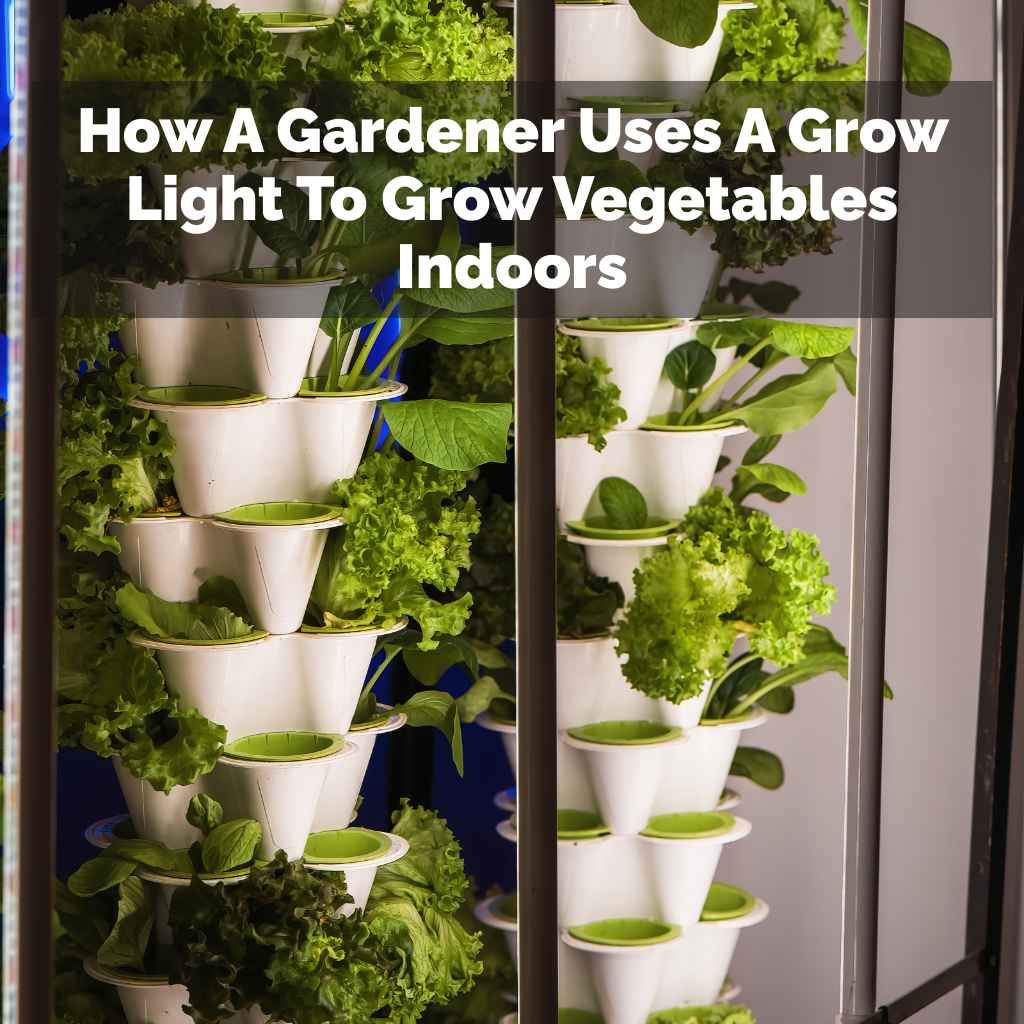
How A Gardener Uses A Grow Light To Grow Vegetables Indoors
It feels like magic, doesn’t it? Watching tiny seeds sprout and grow into lush plants, right inside your own home. But when winter bites or the sun just doesn’t show up enough, our green dreams can fade.
That’s where grow lights come in. They are a gardener’s secret weapon for bringing the sunshine indoors.
You might be wondering, how exactly does a gardener use a grow light to grow vegetables indoors? It’s a great question. It’s about understanding what plants need.
It’s also about picking the right light and putting it to work. This guide will walk you through it all.
Grow lights help gardeners bring sunlight indoors to grow vegetables. They provide the light plants need for growth when natural sunlight is not enough. This allows for year-round gardening and growing plants that might not survive local climates.
What is a Grow Light?
Think of a grow light as a special lamp. It’s made to mimic sunlight. Plants need light to make their food.
This process is called photosynthesis. Sunlight has different colors of light. Grow lights give off these colors.
Some lights are full-spectrum. This means they have all the colors plants need. Others focus on specific colors.
Red and blue light are very important for plant growth. Red light helps with flowering and fruiting. Blue light helps with leaf and stem growth.
Gardening indoors often means less natural light. This is especially true in colder months or in apartments with few windows. Grow lights fill this gap.
They give plants the energy they need to grow strong and healthy. They are a key tool for modern home gardeners.
Why Use Grow Lights for Vegetables Indoors?
There are many good reasons a gardener uses grow lights. The most obvious is to grow vegetables when it’s too cold outside. You can have fresh salads in January!
This extends the growing season. It makes gardening a year-round hobby.
Some plants need more light than a windowsill can offer. Leafy greens like lettuce and spinach do well. Herbs such as basil and mint also thrive.
Even some fruiting plants, like small peppers or tomatoes, can be grown. This depends on the light’s strength and the plant’s needs.
Grow lights also help start seeds. You can start your garden early indoors. Then, you can move the plants outside when the weather is right.
This gives them a head start. It means a better harvest sooner.
Another reason is consistency. You can control the light. You can give plants the exact amount of light they need.
Natural sunlight can be unpredictable. It changes with clouds and seasons. A grow light offers steady, reliable light.
This helps plants grow more evenly.
Types of Grow Lights
LED Grow Lights: These are very popular. They use less energy. They also produce less heat.
This is good for small spaces. They can be full-spectrum or have specific colors. Many have adjustable settings.
Fluorescent Grow Lights: These are older but still work. They are good for seedlings and leafy greens. They are usually cheaper to buy at first.
They can get hot, so you need space between the light and plants.
High-Intensity Discharge (HID) Lights: These are very powerful. They are often used by commercial growers. They are too strong for most home setups.
They use a lot of energy and produce a lot of heat.
How a Gardener Sets Up a Grow Light
Setting up a grow light is not too hard. First, you need to pick the right light. Think about what you want to grow.
Leafy greens need less intense light. Fruiting plants need more light.
Next, choose a place for your plants. A shelf, a corner of a room, or a small grow tent works. You need to be able to hang the light above your plants.
Or, the light might have its own stand. Make sure it’s stable.
Hanging the light is important. It needs to be the right distance from the plants. Too close, and the plants can get burned.
Too far, and they won’t get enough light. This distance changes based on the type of light.
For LED lights, they can often be closer. Fluorescent lights need more space. Always check the light’s instructions.
They will tell you the best height. You might need to adjust the light as plants grow taller.
Most gardeners use timers. This helps control how long the light is on. Plants need a dark period too.
Usually, 12-16 hours of light is good. A timer makes this easy. You don’t have to remember to turn it on or off.
Understanding Plant Light Needs
Plants have different needs. This is true for light, water, and food. For grow lights, the main thing is light intensity and duration.
Light Intensity: Some plants need bright light. Others do fine with dimmer light. Leafy greens like lettuce, spinach, and kale need moderate light.
They can grow well under fluorescent or LED lights.
Fruiting plants, like small peppers, strawberries, or even mini tomatoes, need more intense light. They need lights that provide more “bang for your buck.” Look for lights that are rated for flowering and fruiting.
Light Duration: Most vegetables need about 12 to 16 hours of light per day. Some plants, like herbs, can tolerate shorter days. Others, like leafy greens, benefit from longer days.
It’s also vital that plants get a dark period. This means turning the lights off completely. During the dark period, plants rest and grow.
Most vegetables need about 8 hours of darkness. So, a 16-hour light cycle means 8 hours of dark.
The spectrum of light matters too. Plants use red and blue light most. Full-spectrum lights provide all colors.
This is often the easiest choice for beginners. It ensures plants get a good mix.
I remember my first attempt at growing herbs indoors. I used a regular desk lamp. The basil grew tall and leggy.
The leaves were pale. It was clear it wasn’t getting enough of the right kind of light. That’s when I switched to a proper LED grow light.
The difference was amazing. The leaves got darker and fuller. The stems were stronger.
Quick Guide: Light Needs by Vegetable Type
Leafy Greens (Lettuce, Spinach, Kale):
- Light Hours: 14-16 per day
- Intensity: Moderate
- Light Type: Full spectrum LED or Fluorescent
Herbs (Basil, Mint, Parsley):
- Light Hours: 12-14 per day
- Intensity: Moderate to Low
- Light Type: Full spectrum LED or Fluorescent
Fruiting Plants (Peppers, Small Tomatoes):
- Light Hours: 14-16 per day
- Intensity: High
- Light Type: High-output Full spectrum LED (designed for flowering)
Choosing the Right Grow Light
Picking the best grow light can feel tricky. There are so many options! Let’s break it down.
LEDs are King: For most home gardeners, LED grow lights are the best choice. They are energy-efficient. This saves you money on your electricity bill.
They also produce very little heat. This is important for small indoor spaces. You can place them closer to your plants without risk of burning them.
LEDs also last a long time. You won’t have to replace them often. Look for “full-spectrum” LEDs.
This means they give plants a good mix of light colors. Some LEDs are adjustable. You can change the light spectrum as your plants grow.
This is a nice feature but not always necessary.
Fluorescents for Starters: If you are on a tight budget, fluorescent lights can work. They are good for starting seeds. They are also good for growing simple greens or herbs.
They are less powerful than LEDs. So, you’ll need to keep them closer to the plants.
The downside is they use more energy. They also produce more heat. You need to make sure there is good air circulation.
Wattage vs. PAR: Don’t get too caught up in wattage. Wattage tells you how much power the light uses.
It doesn’t directly tell you how much light the plants get. Look for lights that mention “PAR” (Photosynthetically Active Radiation).
PAR is the light that plants can actually use for growth. A higher PAR rating is better. Many reputable grow light companies will provide PAR charts for their lights.
This shows you how much light the plants receive at different distances.
Size of Your Garden: Think about how much space you have. Do you want to grow one small pot of basil? Or a whole shelf of lettuce?
The size of your grow light should match the size of your growing area.
There are small clip-on lights. There are also larger panels that cover a whole shelf. Make sure the light you choose covers your plants evenly.
I learned this lesson when I bought a small, cheap grow light for a single basil plant. It worked okay. But when I tried to grow a small tray of mixed greens, the ones in the middle grew fine.
The ones on the edges struggled. The light wasn’t big enough. It was a good reminder to match the light to the space.
Quick-Scan Table: Grow Light Features
| Feature | What it Means | Why It Matters |
|---|---|---|
| Type | LED, Fluorescent, HID | Affects energy use, heat, and light quality. LEDs are usually best for homes. |
| Spectrum | Full Spectrum, Red/Blue | Plants use different colors for different growth stages. Full spectrum is versatile. |
| PAR Rating | Amount of usable light | Higher PAR means more light for plant growth. Look for charts. |
| Wattage | Power consumption | Lower is better for energy bills. Doesn’t directly equal plant growth. |
| Coverage Area | Size of the lit space | Match the light’s coverage to your plant setup. |
The Light Cycle and Your Vegetables
Plants don’t just need light; they need it at the right times. This is called the light cycle. Most vegetables, like humans, need a period of light and a period of darkness.
Daytime (Light Period): This is when plants use light energy to make food. For most vegetables, 12 to 16 hours of light per day is ideal. Leafy greens often do well with 14-16 hours.
If you give plants too much light, it can actually be harmful. They can become stressed. Their growth might slow down.
It’s like staying up all night every night. Even plants need rest.
Nighttime (Dark Period): This is when plants do their growing and repairing. They need a solid block of darkness. This is usually about 8 hours.
It’s very important that this dark period is truly dark. No dim lights, no hallway lights leaking in. Even a little bit of light can confuse the plant.
It can disrupt their natural cycles. This is especially true for plants that flower or fruit.
Using a Timer: This is where timers are your best friend. You set it once and forget it. You can have the lights turn on at the same time each morning.
You can have them turn off at the same time each evening. This keeps the light cycle consistent. It makes your life much easier.
I use a simple digital timer for my indoor herb garden. I have it set for 15 hours on, 9 hours off. It’s been a game-changer.
Before, I’d forget to turn off the light. Then I’d panic and turn it off too early. My plants were not as healthy.
Now, they get the right rest and light.
Setting Up Your Light Timer
1. Choose your cycle: Decide on total light hours. 14-16 hours is common for most vegetables.
2. Set the ‘On’ time: Pick a time for the light to turn on each day. Morning is often best.
3. Set the ‘Off’ time: Calculate this based on your total light hours. For 16 hours on, if it turns on at 7 AM, it will turn off at 11 PM (7 AM + 16 hours).
4. Ensure darkness: Make sure the grow area is completely dark during the ‘Off’ period.
Common Issues and How to Solve Them
Even with grow lights, things can go wrong. Don’t get discouraged! Most problems are easy to fix.
Leggy Plants: This means the plants are tall and thin. They stretch towards the light. This usually happens when the light is too far away.
Or, it’s not strong enough.
Solution: Move the light closer to the plants. Check the manufacturer’s recommendations for distance. If the light is very weak, you might need a stronger one.
Yellow Leaves: This can mean a few things. It could be too little light. It could be too much water.
Or, it could be a nutrient deficiency.
Solution: First, check your light. Is it the right distance and strength? If so, check your watering habits.
Make sure the soil drains well. If the light and water are okay, consider adding a plant-specific fertilizer.
No Flowers or Fruit: This is common with plants that are supposed to produce. It usually means the light is not strong enough. Or, it doesn’t have the right kind of light spectrum for flowering.
Solution: You need a more powerful light. Look for one specifically designed for “flowering” or “fruiting” stages. These lights often have more red light, which helps with blooming.
Make sure your light timer is set correctly for the long days needed for fruiting.
Heat Issues: Even LEDs can generate some heat. If your plants seem wilted or stressed from heat, check the light’s distance.
Solution: Ensure good air circulation. Use a small fan if needed. Move the light a bit further away.
Most LEDs are designed to run cooler than older types.
I once had a problem with my indoor peppers. They were growing leaves, but no flowers. I was frustrated.
I checked my light. It was a full-spectrum LED, and I thought it was good. Then I remembered I had moved it a little higher than usual to make space for new growth.
I moved it back down to the recommended height for fruiting plants. Within a few weeks, tiny flowers appeared! It showed me how sensitive plants are to light.
Common Problems at a Glance
Problem: Leggy Plants
Cause: Light too far or too weak.
Fix: Move light closer or use a stronger light.
Problem: Yellow Leaves
Cause: Light, water, or nutrient issue.
Fix: Check light, water, and soil. Fertilize if needed.
Problem: No Fruit/Flowers
Cause: Light not strong or correct spectrum for flowering.
Fix: Use a dedicated flowering light. Adjust light timer.
Real-World Scenarios: Who Uses Grow Lights?
You see grow lights in many places. They are not just for serious gardeners.
The Apartment Dweller: Sarah lives in a small city apartment. She has no balcony. She loves fresh salads.
She uses a shelf with LED grow lights. She grows lettuce, spinach, and herbs. She gets fresh greens all year.
It brings life to her kitchen.
The Winter Gardener: Mark lives in a place with long, cold winters. His outdoor garden is covered in snow for months. He uses a small grow tent in his basement.
He starts tomato and pepper seeds early. He also grows some root vegetables like radishes. This way, he’s ready to plant as soon as spring arrives.
The Hobbyist: Emily likes to experiment. She grows unique or hard-to-find vegetables. Some might not grow well in her local climate.
She uses grow lights to provide the perfect conditions. She finds it very rewarding.
The Health-Conscious Cook: For people who want to eat very fresh, grow lights are a great tool. They can grow their own herbs and greens. They know exactly what went into growing them.
No pesticides are needed if grown indoors with care.
These are just a few examples. The common thread is a love for fresh food and gardening. Grow lights make it possible even when nature doesn’t cooperate.
It’s about making the best of the space and time you have.
What Grow Lights Mean for Your Home Garden
Using a grow light can change your home gardening experience. It opens up new possibilities.
Year-Round Freshness: This is the biggest benefit. Imagine picking fresh basil for pasta in December. Or having crisp lettuce for a salad in February.
Grow lights make this a reality.
Starting Seeds Early: You can get a jump on the growing season. Start your tomatoes, peppers, and other warm-weather plants indoors. This gives them a strong start.
They will be bigger and healthier when you plant them outside.
Growing in Low-Light Areas: Do you have a basement or a room with no good windows? You can still have a garden. Grow lights turn any corner into a potential growing space.
Learning and Experimenting: Grow lights are great for learning. You can watch plants grow under controlled conditions. You can experiment with different types of lights.
You can try growing plants that are difficult in your climate.
It does require some investment. You need the light itself, maybe a timer, and possibly a shelf or tent. But for many, the reward of fresh, home-grown vegetables is well worth it.
It’s a way to connect with nature, even indoors.
Tips for Success with Indoor Vegetable Gardening
Beyond just having a grow light, a few simple tips can help your indoor vegetable garden thrive.
Use Good Quality Soil: Don’t use dirt from your yard. Get a good potting mix. It should be light and drain well.
This helps prevent root rot.
Water Wisely: Overwatering is a common mistake. Let the top inch of soil dry out before watering again. Stick your finger in the soil to check.
Provide Airflow: Plants need fresh air. A small fan can help circulate air. This also helps prevent fungal diseases.
It makes the plants’ stems stronger.
Feed Your Plants: Potting soil has nutrients, but they run out. Use a liquid fertilizer made for vegetables. Follow the instructions on the package.
Clean Your Lights: Dust can build up on your grow lights. This blocks light. Wipe them down gently now and then.
Observe Your Plants: Look at your plants every day. Notice any changes. Are the leaves droopy?
Are they turning yellow? Catching problems early makes them easier to fix.
I used to think just having a grow light was enough. But then I realized plants need more. I started paying attention to the soil.
I learned not to drown them. Adding a bit of plant food made a huge difference. It’s like feeding yourself.
You need good food and the right conditions.
Essential Indoor Gardening Checklist
- Grow Light: Proper type and wattage for your plants.
- Timer: For consistent light cycles.
- Potting Mix: Well-draining and nutrient-rich.
- Containers: With drainage holes.
- Watering Can: With a fine spout.
- Fertilizer: Plant-specific, liquid is easy.
- Fan (Optional but Recommended): For air circulation.
- Thermometer: To monitor temperature.
Frequently Asked Questions About Grow Lights for Vegetables
Can I use a regular lamp instead of a grow light?
A regular lamp, like an incandescent or even some LED bulbs, won’t work well for growing vegetables. They don’t emit the right spectrum of light that plants need for photosynthesis. Grow lights are designed to provide the specific wavelengths of light that support plant growth, especially the red and blue light crucial for development.
How long should I run my grow lights each day?
Most vegetables need about 12 to 16 hours of light per day. Leafy greens and herbs often do well with 14-16 hours. Fruiting plants like peppers or tomatoes might also benefit from 16 hours.
It’s important they also get about 8 hours of darkness for rest and growth.
How close should my grow light be to my plants?
The distance depends on the type and power of your grow light. LED lights can usually be placed closer, sometimes just a few inches away. Older fluorescent lights need more space, often 6-12 inches.
Always check the manufacturer’s recommendations for your specific light model.
Will grow lights increase my electricity bill a lot?
It depends on the type of light and how long you run it. Modern LED grow lights are very energy-efficient. They use much less electricity than older types like HID or even fluorescent lights.
While there will be an increase, it’s often quite manageable, especially for small home setups.
What vegetables grow best under grow lights?
Leafy greens like lettuce, spinach, kale, and arugula are excellent choices. Herbs such as basil, mint, parsley, and chives also do very well. You can also grow smaller fruiting plants like cherry tomatoes, small peppers, and strawberries with the right, powerful grow lights.
Do I need a special timer for grow lights?
You don’t necessarily need a “special” grow light timer. A standard digital or mechanical outlet timer works perfectly. These timers allow you to set specific on and off times for your lights, ensuring your plants get a consistent light cycle every day without you having to remember to flip the switch.
Conclusion
Using a grow light is a fantastic way to enjoy fresh vegetables year-round. It lets you extend your gardening season. It brings vibrant life into your home.
By understanding plant needs and choosing the right light, you can create a thriving indoor garden. Don’t be afraid to start small. Watch your plants grow.
Enjoy the bounty!