How to Grow Spinach in Cooler Weather
Spinach is usually planted when soil is about 45–75°F, with germination often strongest near 50–60°F, and young plants need protection if nights fall below about 20°F. Miss that window and seeds can stall, seedlings can struggle, and a warm spell can send plants to bolt before harvest. This guide shows when to sow, how to protect spinach through cold snaps, and how to keep plants productive as weather shifts.
When does spinach grow best in cool weather?
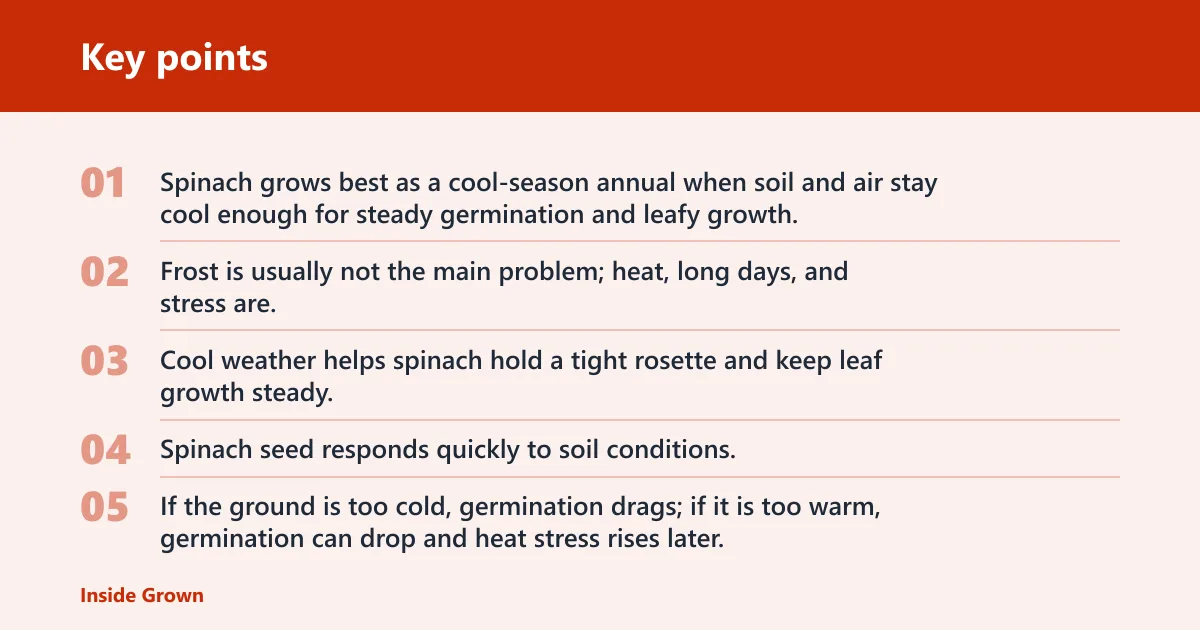


Spinach grows best as a cool-season annual when soil and air stay cool enough for steady germination and leafy growth. It prefers 50 to 70°F daytime conditions, while temperatures over 75°F can push plants toward bolting. Frost is usually not the main problem; heat, long days, and stress are.
Cool weather helps spinach hold a tight rosette and keep leaf growth steady. When temperatures swing hard from cold to warm, germination can slow, seedlings can stall, and established plants can start stretching. That is why local frost dates and current soil temperature matter more than a fixed planting month.
Why does temperature matter more than the calendar?
Spinach seed responds quickly to soil conditions. If the ground is too cold, germination drags; if it is too warm, germination can drop and heat stress rises later. Use your frost dates only as a rough guide, then check soil temperature before each sowing.
Seed packets also matter here. Use the days-to-maturity figure on the packet to decide whether a spring sowing will finish before heat arrives or whether a fall sowing has enough cool days left before hard frost.
When does cool weather help, and when does it start to hurt?
Cool air, cool soil, and short days favor spinach growth. Once warm spells arrive, especially with stronger sun and longer day length, bolting risk rises. Spinach can still grow in partial sun, but it needs airflow and dry foliage when conditions start to warm.
What do you need to plant spinach successfully?
Spinach does best with cool soil, direct sowing, and a simple setup that keeps the seed zone evenly moist. A few basic tools, a shallow sowing depth, and the right container size are enough for strong results. The key is matching spacing, drainage, and protection to the harvest you want.
- Spinach seed chosen for slow bolting, with mildew resistance where available
- Compost or well-drained garden soil
- A trowel or dibber for sowing
- Row cover or frost cloth for cold snaps
- Mulch for moderating soil moisture and temperature
- A ruler or marked dibber for seed depth
- Containers that are 8 to 10 inches wide and deep, with drainage holes, if growing in pots
- Potting mix that drains well
- Optional shade cloth or a site with afternoon shade for warming spells
How do you sow spinach seed?
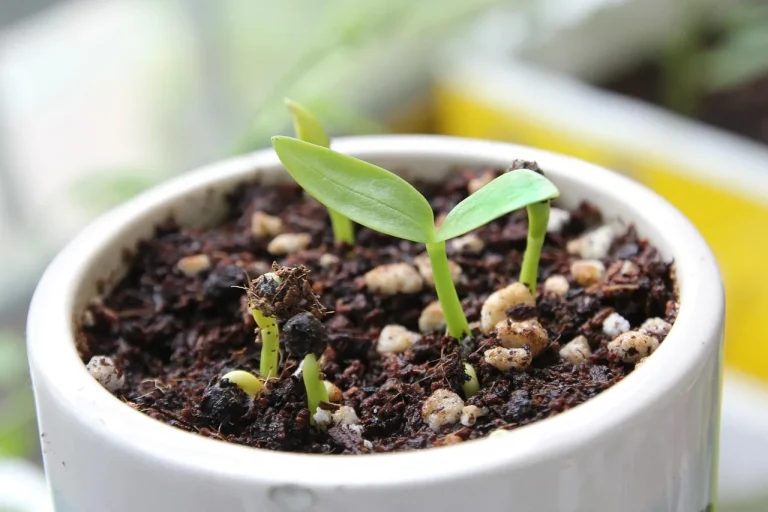
Direct sow spinach whenever possible, because it usually performs better that way and can resent transplanting. Plant seed shallowly, keep the bed evenly moist, and space the sowing to match whether you want baby leaves or full rosettes. For most beds, shallow rows and careful thinning give the most reliable stand.
- Check soil first. Sow only when the soil can be worked and is within the cool range you want to hit. If the soil is too cold, seed can sit; if it is warm, germination and later growth both suffer.
- Choose direct sowing. Put spinach seed straight into the bed whenever possible. Spinach usually performs better this way because it can resent transplanting, especially if roots are disturbed or seedlings are held too long indoors.
- Mark shallow rows. Make rows 6–8 inches apart, then sow plant spinach seed 1/2 inch deep. In larger containers or mixed planters, keep mature plants farther apart; for baby leaves, you can sow more densely and thin by cutting.
- Thin on purpose. Thin seedlings once they emerge so plants have room for the harvest you want. If you want mature rosettes, leave about 3 inches between plants in tighter container plantings and more space in the ground; for baby leaves, crowding is acceptable because you will cut early.
- Water evenly. Keep the seed zone moist, not soggy. Uneven moisture can slow germination, and hot, dry surface soil can stop the stand before it starts.
- Protect the surface. If the weather turns windy or a cold snap is coming, add row cover over the bed. That helps buffer temperature swings and reduces drying around seedlings.
When should you plant spinach?
Plant spinach for spring or fall, and use current soil temperature plus local frost dates to choose the exact window. In cool regions, gardeners in Zones 2 to 5 can start seeds indoors two to four weeks before the last frost if needed, but direct sowing is usually the better choice. Fall sowing usually works best about 6 weeks before first frost.
When is the spring sowing window?
Sow as soon as soil can be worked and temperatures are still cool. That gives spinach a long enough run to size up before warm days arrive. A spring planting is strongest when it can reach harvest size before the first sustained stretch above 75°F.
When is the fall sowing window?
For fall harvests, count back from your first frost date. A sowing about 6 weeks before first frost gives many plantings enough time to germinate, size up, and produce leaves before hard cold slows growth.
Say your first frost usually arrives in late October. A mid-September sowing can still work if the soil remains cool and the variety matures quickly, but a late-September sowing may be too late for mature rosettes and better suited to baby leaves.
When should you delay planting?
Delay sowing if daytime heat is already pushing toward the bolting zone, or if soil is warm enough that seed germination is uneven. Also wait if a freeze is due on newly sown ground that has not been covered yet, especially in exposed beds where wind can dry the seed row.
How do you protect spinach from cold snaps?
Established spinach handles frost well, but young seedlings are less forgiving of hard freezes, drying wind, and wet soil. Light frost is usually fine for established plants, while a hard freeze can damage exposed tissue. Use row cover, keep soil from waterlogging, and avoid leaving new seedlings unprotected through severe cold.
When should you use row cover?
Lay row cover over the bed before the temperature drops hard, then secure the edges so wind cannot lift it. That helps trap a little warmth and reduces desiccation. Remove or vent the cover when daytime temperatures rise enough to prevent overheating.
What precautions help during a hard freeze?
If a hard freeze is forecast, protect the bed early rather than after damage starts. Young spinach under row cover and in moist, not soggy, soil has a better chance than exposed seedlings in open wind. Mature plants tolerate more cold, but tender new growth is still the most exposed.
How do wet soil and wind affect cold-weather spinach?
Cold, wet ground slows root function and can invite disease. Keep drainage open, avoid overwatering before a freeze, and use mulch lightly if the site dries out fast in wind. Dry foliage and moving air reduce disease pressure once temperatures rise again.
What is the best spinach cool-weather decision table
Use this table as a quick field check. Match air temperature, soil temperature, and crop stage before you decide whether to sow, cover, thin, delay, or harvest. The best action changes fast once seedlings emerge, leaves size up, or a warm spell raises bolting risk.
| Air temp | Soil temp | Action | Risk | Expected result |
|---|---|---|---|---|
| 35–50°F | 40–50°F | Newly sown seed: sow direct and cover if wind or frost is expected; newly emerged seedlings: keep covered | Slow germination, cold stress, wind drying | Seeds may take longer, but cool conditions favor strong growth once they emerge |
| 50–70°F | 50–60°F | Emerged seedlings and baby-leaf stand: sow, thin, and keep evenly moist | Low risk if moisture stays steady | Best setup for steady germination and leafy growth |
| 70–75°F | 60–75°F | Baby-leaf stand and young rosettes: harvest sooner, provide airflow, and use shade if the bed is still filling in | Uneven germination, faster bolting risk | Baby leaves may still be possible if timing is tight |
| Over 75°F | Over 75°F | Mature rosettes: harvest promptly; if sowing is not already underway, delay planting or move to a cooler spot with afternoon shade | Bolting, bitterness, poor stand establishment | Better to wait than lose the crop early |
| Below 20°F at night | Any workable soil | Cover young plants and protect from wind | Freeze injury on exposed seedlings and leaf tissue | Established plants may survive; tender growth is safer under cover |
How do you harvest spinach before it bolts?
Harvest spinach as soon as the leaves are large enough for the cut you want. Baby leaves can be ready in 4 to 6 weeks indoors, and harvesting can begin as soon as 5 weeks after sowing in some garden conditions. Once warm weather or long days trigger stretch, switch to faster cutting.
How should you harvest baby-leaf spinach?
For baby leaves, cut the stand when leaves are still tender and before the center starts to stretch. This works best in dense sowings where you want quick turnover. A fast cut keeps the crop usable before heat changes the flavor and texture.
How should you harvest outer leaves?
For larger plants, pick outer leaves first and leave the center growing. You can also cut the plant 2–3 inches above the soil line for regrowth when the crown is healthy. That approach works best while temperatures stay cool and the plant has not started to bolt.
When should you stop cutting?
Stop cutting once the center begins to lengthen, stems get tougher, or leaf size drops quickly after warm days. Suppose a patch looks fine at breakfast but starts stretching after a sunny 78°F afternoon; that is the signal to harvest the rest or switch to baby leaves before quality falls.
What are the most common spinach mistakes?
Most spinach problems come from timing, spacing, and heat. The crop fails when the bed is too warm, seedlings are crowded without enough airflow, or harvest is delayed after the first signs of stretch. Good timing and quick response prevent more trouble than any rescue treatment.
- Sowing too late. If the soil is already warm, wait for the next cool window instead of forcing a sowing that will bolt early.
- Starting indoors by default. Direct sow unless you have a short, cool window and a strong reason to start early. Spinach can resent transplanting.
- Using one spacing for every harvest goal. Baby leaves can be denser than mature rosettes. Match spacing to the harvest you want.
- Ignoring airflow. Crowding and wet foliage raise disease risk, including downy mildew. Keep plants spaced well and water the soil, not the leaves.
- Letting heat build up under cover. Row cover helps during cold snaps, but remove or vent it once temperatures rise so seedlings do not overheat.
Choose slow-to-bolt varieties for spring and shoulder-season sowings, and look for mildew resistance where available. Smooth-leaved types are often easier to wash and harvest in baby-leaf beds, while savoyed types can hold more texture for larger harvests. Some hardy varieties are bred for overwintering, which makes them better choices when you want an extended cool-weather run.
Common problems include aphids, slugs, and downy mildew. Aphids often gather on tender new growth, slugs leave ragged holes in damp beds, and downy mildew shows up more readily when foliage stays wet and air movement is poor. Timing, spacing, and dry leaves prevent more trouble than any spray.
For containers, use a pot that is at least 8 inches deep and 8 to 10 inches wide for one plant, or choose a wider box if you want several baby-leaf plants. Drainage holes are nonnegotiable. Wider containers usually work better than very deep ones because spinach roots are modest, but the root zone still needs room, moisture, and cool mix.
Frequently asked questions
Can spinach grow in cold weather?
Yes. Spinach is a cool-season annual and handles frost better than heat. Established plants can survive light frost, but young seedlings should be protected if nights are dropping hard or wind is drying the bed. Cold, not warmth, is the safer direction for this crop.
Can you grow spinach in the summer?
Only in cooler summer pockets, such as shaded beds or short cool spells. Once temperatures stay over 75°F, bolting risk rises and the crop loses quality fast. If summer is your only option, aim for baby leaves and provide afternoon shade plus steady moisture.
Can spinach grow in hot weather?
It can survive brief heat, but hot weather is the main reason spinach fails. High temperatures push it to bolt, especially when days are long and soil stays warm. If you must plant near heat, choose a quick variety and harvest early.
What temperature is best for spinach growth?
The best daytime range is 50 to 70°F. Around 60°F to 70°F is especially favorable for steady growth. Once temperatures move above that range, use shade, airflow, and faster harvesting to keep the crop usable.
How much frost can spinach tolerate?
Spinach tolerates a light frost well once it is established. A hard freeze is a different matter, especially for young plants and exposed leaves. Row cover helps during cold snaps, but it does not replace good timing and shelter from wind.
How deep should I plant spinach seeds?
Plant spinach seed 1/2 inch deep in rows. That depth keeps the seed moist without burying it too far, which can slow emergence. In containers, keep the same shallow approach and cover lightly with mix or fine soil.
How much space does spinach need between plants?
For mature plants, leave about 3 inches between plants in tighter container setups and give more room in beds for larger rosettes. For rows, 6–8 inches between rows works well. Baby-leaf plantings can be denser because you will harvest them young.
Should I start spinach indoors or sow it directly?
Direct sowing is usually the better choice. Spinach often resents transplanting, so start indoors only when your local season is very short and cool. If you do start indoors, move seedlings gently and use them quickly.
How do I stop spinach from bolting in warm weather?
Plant early, harvest early, and keep the crop cool. Use a slow-to-bolt variety, avoid warm soil, and shift to partial sun or afternoon shade when temperatures rise. Once plants begin to stretch, cut the remaining leaves promptly before quality drops.