How to Add Garden Accent Lighting on a Budget
For a strong impact on a budget, place about 3 to 5 low-voltage or solar lights at one focal point, aim them upward or across features, and skip evenly spaced rows. Too many weak lights waste money and create glare, while poor placement leaves the yard dark. This guide shows how to choose cheap fixtures, place them for contrast, and install them without hiring an electrician.
Garden accent lighting basics
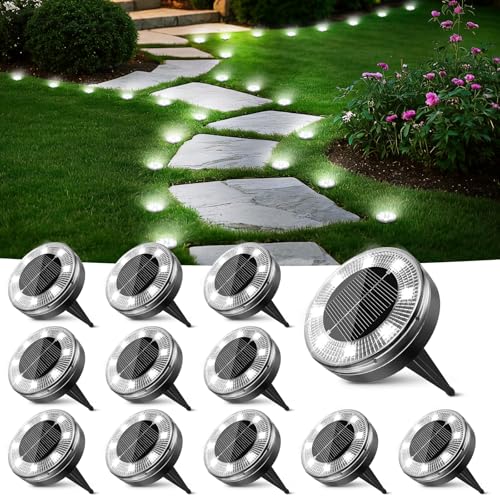


Garden lighting can improve safety, curb appeal, and nighttime visibility without turning the yard into a bright wash. For budget work, aim for contrast: light one feature, leave some darkness, and avoid spreading weak fixtures everywhere. Warm light usually suits planting beds and edges better than harsh brightness.
What budget lighting can and cannot do
Budget fixtures can define a path, point to an entry, or pull attention to one tree or shrub. They cannot make a shaded yard perform like a full hardwired plan, especially in winter or under heavy canopy. Solar garden lights are the easiest low-cost starting point because they need no wiring and have low upfront cost.
Solar lighting has become a legitimate design tool for landscape professionals. Better solar panels, more efficient LEDs, and improved battery capacity drive modern solar performance, so today’s solar fixtures can charge faster than older versions. Modern solar LEDs are brighter while using less power, and lithium-ion batteries in better solar lights hold charge longer.
Why warm, layered light works best
Layering matters even on a small budget. Use low light for paths, a little upward light for height, and a separate glow at the entry edge. That mix gives the yard shape without making every zone equally bright.
A common first-timer mistake is buying six or eight tiny stakes because they look inexpensive per piece. The yard then reads as clutter, not design. Three well-placed lights can often do more than ten randomly placed ones.
What you’ll need
- Solar path lights with stakes
- One solar uplight or a small pair of uplights
- One solar motion-sensor spotlight for an entry or dark corner
- Battery-operated fairy lights for a branch or small feature
- Outdoor-rated clips, stakes, or mounting hardware
- A tape measure or counting steps for spacing
- A charger or spare batteries if you choose battery-operated lights
- Optional: low-voltage fixture kit for a wired upgrade later
For any DIY exterior setup, use outdoor-rated components. If you choose a plugged-in or wired project, follow local electrical codes.
How to plan the cheapest useful layout
Pick one focal area. Choose the path, a feature plant or tree, or the entry edge as the first place to spend. Budget lighting works best when you light one zone well instead of spreading money across the whole garden.
Check sun before buying. Put solar fixtures where they get direct sun exposure for most of the day. Solar panels charge faster with better exposure, and runtime depends on that charge.
If a bed is shaded by a fence, eave, or dense canopy, move solar lights out of that spot or expect shorter evening runtime.
Choose LED-based fixtures. LEDs are the right budget choice because they use less power, last longer than older bulbs, and fit compact accent fixtures well. That matters most when you want a few small lights to do real work.
Set your light count first. Plan for 3 to 5 lights in one small zone, then add only if the feature still reads dark. Start with one zone, not three. A top-up of 1 extra fixture at a time is easier to judge than a full extra row.
Place by feature, not habit. Aim light where the eye should go: the trunk of a tree, the front edge of a path, or the side of an entry post. Avoid placing fixtures at the same distance apart just because it looks tidy on paper.
How to avoid the landing-strip look
Break up the line. The landing-strip effect happens when lights are spaced too evenly and aimed the same way, especially along a path or driveway edge. A better layout leaves gaps, changes heights, and puts emphasis at one or two points instead of every few feet.
Spacing lights by feature, not by habit
Use clusters and pauses. Put a pair near the start of a walkway, then leave a longer dark gap before the next light if the path is short. For a feature tree, one uplight can be enough if it hits the trunk and lower canopy cleanly.
Suppose a 20-foot side path looks flat with four identical solar stakes. Remove one light, shift another toward the bend, and add one near a planting or gate post. The path usually looks more intentional with three lights and one dark section than with four equal points.
Using darkness as part of the design
Darkness gives the lit spots meaning. If every square foot glows, nothing stands out and the yard can feel harsh. Budget lighting should leave some shadow at the back of beds and between zones so the brightest point has contrast.
Garden lighting budget map
This text-only map is for a typical small garden with a path, one feature plant or small tree, and an entry edge. The idea is to spend the least where the result is weakest and the most where the eye lands first.
| Zone | Starter spend | Buy | Skip | Upgrade later |
|---|---|---|---|---|
| Path | $20 | 2 solar path lights with stakes | Perfectly even spacing across the whole walk | 2 more path lights only if the walk still feels unsafe |
| Feature plant or tree | $25 | 1 solar uplight or 1 pair of small uplights | Four or more lights aimed at the same trunk | Extra uplight for a wider canopy or taller specimen |
| Entry edge | $15 | 1 solar motion-sensor spotlight or fence post cap | Bright floodlight coverage of the whole frontage | Second sensor light only if the corner stays dark |
Path zone
Solar path lights are a classic garden lighting option. They work best in sunny areas where the stake can mark the border and improve walkway safety. Use them to define the edge of the walk, not to turn the whole path into a runway.
Solar disk lights sit flush in the ground for a cleaner look, but they are better for visual markers than for strong vertical light. For a budget start, one or two stake lights usually give more visible definition than several weak disks.
Feature plant or tree zone
Solar uplights are useful when you want vertical interest from a tree or tall shrub. Aim the beam up the trunk or across the lower branches, and stop before the light washes the whole canopy. Strategic placement matters more than adding extra fixtures.
Battery-operated fairy lights can be wrapped around branches for a temporary or low-commitment look. They work well for small features, but they do not replace a real uplight if the goal is strong shape from the ground.
Entry edge zone
Solar motion-sensor spotlights fit entry points and dark corners where light is only needed on demand. They are useful when you want security without leaving a bright lamp on all evening. Solar fence post caps can also add a soft ambient glow along the edge.
For a front step, gate, or side entrance, one sensor light usually beats several tiny decorative stakes. It draws attention where people approach, and it uses light only when needed.
Placement checklist to avoid a cheap look
- Put the brightest fixture on the main focal point.
- Leave at least one dark gap between lit zones.
- Keep lights slightly off-center instead of dead even.
- Aim uplights at trunks, not into open sky.
- Keep path lights low and consistent in purpose, not in a ruler-straight row.
- Hide cords, battery packs, and loose hardware from the main view.
Where should you place lights for the biggest impact?
Place lights where people move, where the eye naturally lands, and where darkness creates the most contrast. For most small gardens, that means the walk, one plant or tree, and the entry edge. That three-zone plan gives more visible payoff than scattering lights across every bed.
Paths and walkways
Use path lights to mark turns, steps, and edges. A short path often needs about two or three solar stakes if the goal is guidance, not full brightness. Place them where the border is hard to read at night.
Trees, shrubs, and fences
Use one uplight for a tree trunk or one soft glow on a fence post instead of lighting every plant. Fence post caps add a gentle edge, while uplights create height. If a shrub bed is shaded, skip solar stakes there and move the light to a sunnier edge.
Entries, gates, and dark corners
Entries are the best place for motion-sensor lighting because the need is immediate and practical. A gate, side door, or blind corner benefits more from one targeted beam than from a row of decorative stakes. Solar lighting can improve dark corners without grid wiring.
Common mistakes
The most common failures are predictable: too many fixtures, too much even spacing, and poor sun exposure. Cheap hardware also breaks down faster, especially when the panel is weak or the battery is low quality. Winter sun angle can shorten runtime even when the lights worked well in summer.
Buying too many fixtures
More lights do not always create better lighting. If you can already read the path and see the feature, stop there. Add only one fixture at a time if the zone still feels dark.
Ignoring sun exposure and shade
Solar garden lights depend on the panel. Shade, north-facing placement, and winter conditions can all reduce output. Move panels into direct sun instead of expecting a shaded bed to perform the same way.
Choosing harsh or mismatched light
Warm, low-glare light usually looks better in a garden than cool, bright light that makes the yard feel flat. Mix styles only when they have different jobs. A sensor light, a path light, and a fairy-light branch should not all compete for attention.
If that still looks weak, replace one cheap fixture before adding more. A better panel, a stronger LED, or a longer-lasting lithium-ion battery often helps more than buying extra low-grade lights.
Frequently asked questions
How do I add garden accent lighting on a budget?
Start with one zone and one job. Spend first on a path, a feature tree, or an entry edge, then add only after the first light source proves useful. A three-light setup often gives more visual impact than a scattered set of five or six.
What are the cheapest ways to light a garden at night?
Solar path lights and a single motion-sensor spotlight are usually the lowest-cost starting points because they avoid wiring and lower installation cost. Battery-operated fairy lights can also work for a tree or small feature when you want temporary accenting.
Are solar garden lights worth it for accent lighting?
Yes, if the spot gets direct sun and you choose a better panel, LED fixture, and lithium-ion battery where possible. They are less reliable in deep shade, but they are still the easiest low-cost option for paths, edges, and isolated accents.
How many lights do I need for a small garden on a budget?
Start with 3 to 5 lights total for one focal zone, then stop and evaluate. In a small garden, one path light pair, one tree uplight, and one entry sensor light can cover the most useful areas without crowding the space.
Where should I place accent lights so they don’t look cheap?
Place them at features, not in even rows. Aim uplights at trunks or shrubs, put path lights only where the border is unclear, and keep one dark gap between zones. That spacing makes each lit point feel deliberate.
What budget-friendly lights work for trees, paths, and fences?
Use solar uplights for trees, solar path lights for walkways, and solar fence post caps or a motion-sensor spotlight for edges and entries. Battery-operated fairy lights work best on branches or small features when the goal is a softer, temporary look.