Should You Hire Landscaping Services or Do It Yourself?
DIY works for simple lawn care, planting, and mulching, but hire landscaping services for grading, drainage, irrigation, retaining walls, and any job that needs permits or heavy machinery. A wrong call can eat weekends, damage plants, create drainage problems, and turn a small savings into a larger repair bill. This guide breaks down cost, time, skill, risk, and project scope so you can choose job by job.
What landscaping services include
Professional landscaping services usually include labor, equipment, planning, coordination, and cleanup. DIY means you handle the work yourself, which can be fine for simple tasks, but it also leaves tool choice, material handling, disposal, and mistake repair on you. For projects that touch permits, slopes, or underground lines, local rules and utility locating requirements can change the plan quickly. See your municipality’s permit pages and call before digging.
DIY landscaping basics
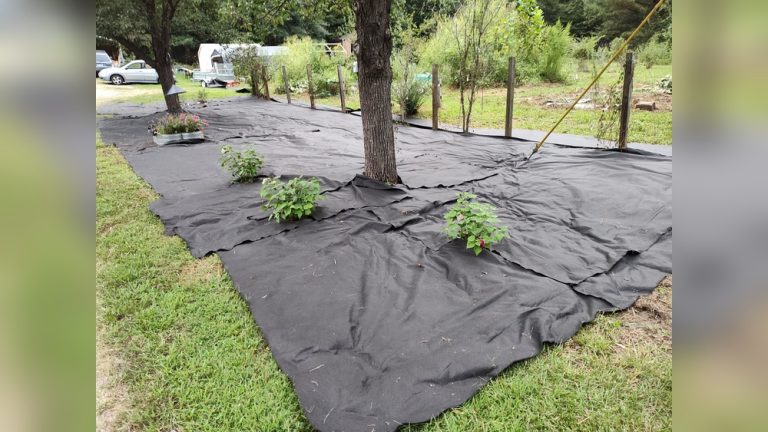
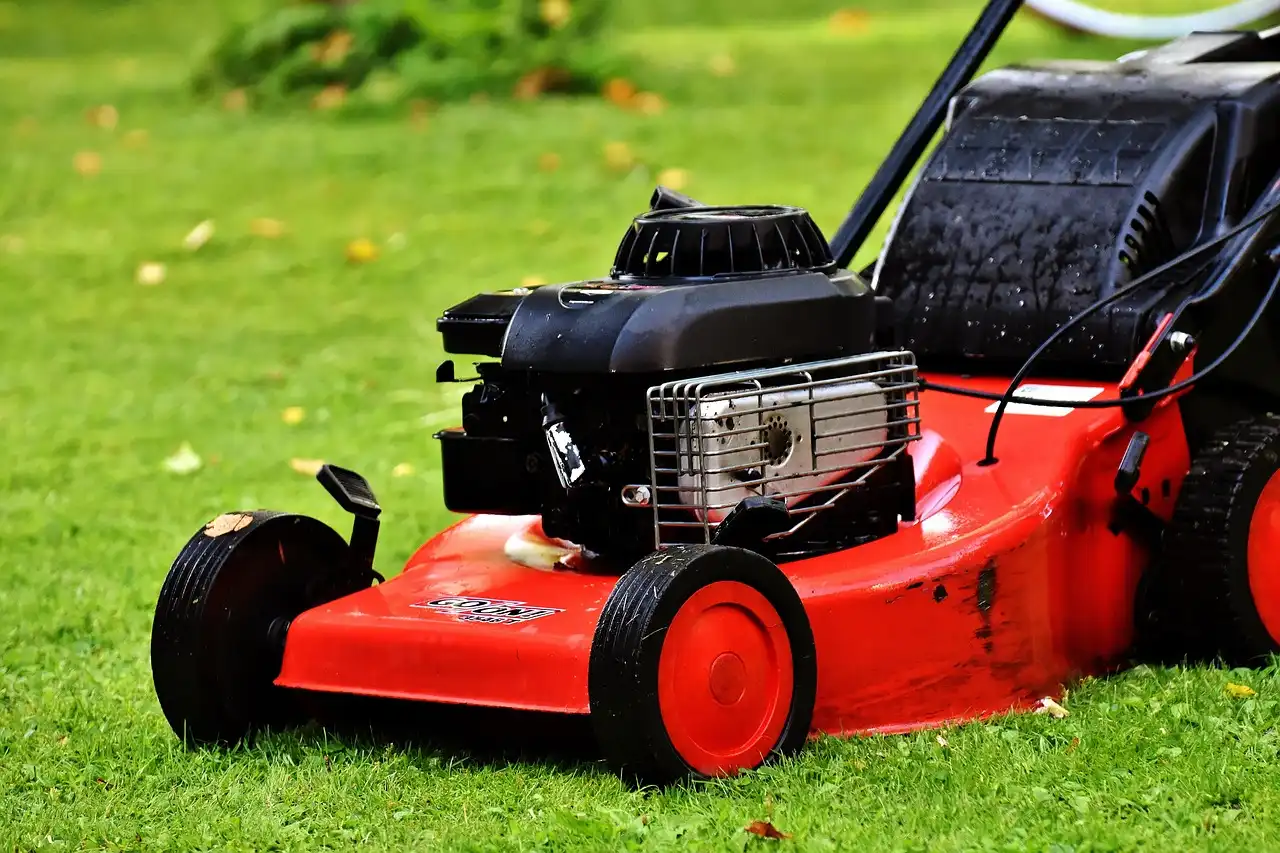
DIY landscaping works best when the job is visible, repetitive, and low risk: mowing, raking, edging, spreading mulch, planting annuals, and basic bed cleanup. Those tasks need modest skill, but the time cost grows fast once you factor in hauling materials, breaking up compacted soil, and cleaning debris. For mulch, extension guidance commonly recommends a shallow layer rather than a deep pile; for example, Clemson Extension advises keeping mulch modest around trees and shrubs rather than mounding it high against stems.
Hidden costs appear quickly. Tool rental, delivery fees, bagged soil, mulch, disposal charges, and rework can wipe out part of the savings. A single-use compactor or plate tamper, for example, may cost more to rent for a day than a homeowner expects if the project also needs truck rental or dump runs. Major rental providers publish daily rental rates that make this easy to verify before you start; see The Home Depot Tool & Truck Rental and Ace Hardware Tool Rental.
Professional scope and accountability
Professional services are a better fit when the job needs design judgment, slope correction, drainage control, heavy lifting, or tight layout accuracy. Crews usually bring equipment that would be expensive to buy for one project, along with scheduling, labor coordination, and accountability if the result fails early.
That matters most for work where mistakes are expensive to reverse. A patio that settles, a bed that sheds mulch into the lawn, or a swale that sends water toward the house can become repair work after the fact. Many services also include follow-up support or warranty terms for installation defects, though the exact terms vary by company and by local code requirements. Permit thresholds also vary by city and county, so verify the local rule before work starts; municipal building departments often list retaining-wall height limits, drainage rules, and setback requirements.
Where projects usually split
Many yards do not need an all-or-nothing decision. A common split is to hire out technical work first, then finish the visible, lighter tasks yourself. That can mean paying for grading, drainage, or a hardscape base, then handling planting, mulch, and routine cleanup on your own.
Picture a front yard with standing water near a sidewalk and a thin planting bed along the driveway. The drainage problem needs technical correction. The bed refresh can often be DIY after the grade is fixed, which keeps the budget focused on the part most likely to fail.
Landscaping services decision matrix
This matrix weighs five factors: cost savings, physical labor, technical risk, tool cost, and rework risk. Higher scores mean the factor pushes harder toward hiring help. A “DIY” recommendation means the job is usually safe and affordable to do yourself. “Hire” means the risk or equipment burden is high. “Hybrid” means you can split the job. Add the five scores for each task: 5–9 = DIY, 10–14 = Hybrid, and 15–25 = Hire.
| Task | Cost savings | Physical labor | Technical risk | Tool cost | Rework risk | Recommendation |
|---|---|---|---|---|---|---|
| Mulch refresh | 5/5 | 2/5 | 1/5 | 1/5 | 1/5 | DIY |
| Annual flower planting | 4/5 | 2/5 | 1/5 | 1/5 | 1/5 | DIY |
| Bed edging and cleanup | 4/5 | 3/5 | 2/5 | 2/5 | 2/5 | DIY |
| Shrub replacement | 3/5 | 3/5 | 2/5 | 2/5 | 2/5 | DIY |
| Soil amendment and bed rebuild | 3/5 | 4/5 | 3/5 | 2/5 | 3/5 | Hybrid |
| Small retaining wall | 2/5 | 5/5 | 4/5 | 4/5 | 4/5 | Hire |
| Patio or walkway installation | 2/5 | 5/5 | 5/5 | 4/5 | 5/5 | Hire |
| Grading correction | 2/5 | 4/5 | 5/5 | 4/5 | 5/5 | Hire |
| Drainage swale or drain line | 2/5 | 4/5 | 5/5 | 4/5 | 5/5 | Hire |
| Front-yard cleanup | 4/5 | 2/5 | 1/5 | 1/5 | 1/5 | DIY |
Use the table as a filter, not a verdict. If a task scores high on labor, technical risk, and rework risk, hiring usually makes more sense even if the upfront bill is larger. If the job is low risk and the tools are simple, DIY can save real money.
Better task-by-task scoring
For a more useful decision, score each job with the same criteria every time. Cost savings should reflect the labor you would avoid. Physical labor should reflect carrying, digging, demolition, and cleanup. Technical risk should reflect slope, drainage, layout, or plant survival. Tool cost should reflect buying or renting equipment, not just hand tools. Rework risk should reflect how expensive a mistake would be to fix.
| Task | Cost savings | Physical labor | Technical risk | Tool cost | Rework risk | Total | Recommendation |
|---|---|---|---|---|---|---|---|
| Mulch refresh | 5 | 2 | 1 | 1 | 1 | 10 | DIY |
| Annual flower planting | 4 | 2 | 1 | 1 | 1 | 9 | DIY |
| Seasonal cleanup | 4 | 2 | 1 | 1 | 1 | 9 | DIY |
| Bed edging and cleanup | 4 | 3 | 2 | 2 | 2 | 13 | Hybrid |
| Shrub replacement | 3 | 3 | 2 | 2 | 2 | 12 | Hybrid |
| Sod install | 3 | 4 | 3 | 3 | 3 | 16 | Hire |
| Irrigation repair | 3 | 3 | 4 | 2 | 4 | 16 | Hire |
| Tree planting | 3 | 4 | 3 | 3 | 3 | 16 | Hire |
| Stump removal | 2 | 5 | 4 | 4 | 4 | 19 | Hire |
| Low-voltage lighting | 3 | 3 | 4 | 3 | 3 | 16 | Hire |
| Small retaining wall under local height limit | 2 | 5 | 4 | 4 | 4 | 19 | Hire |
| Retaining wall over local height limit | 1 | 5 | 5 | 4 | 5 | 20 | Hire |
| Grading correction | 2 | 4 | 5 | 4 | 5 | 20 | Hire |
| Drainage swale or drain line | 2 | 4 | 5 | 4 | 5 | 20 | Hire |
| Patio or walkway installation | 2 | 5 | 5 | 4 | 5 | 21 | Hire |
| Front-yard cleanup | 4 | 2 | 1 | 1 | 1 | 9 | DIY |
Use this rule: total 5–9 means DIY, 10–14 means hybrid, and 15 or higher means hire. The hybrid zone is where a contractor handles the technical or heavy work and the homeowner finishes planting, mulch, cleanup, or simple trim work.
What landscaping jobs are realistic for DIY?
DIY jobs are realistic when they are shallow, visible, and easy to correct. Cleanup, mulch, annuals, light trimming, and simple bed work fit that pattern. The job should not depend on exact grading, compacted base layers, or drainage calculations.
Cleanup and mulch refresh
Seasonal cleanup is one of the easiest DIY jobs. Raking leaves, pulling weeds, cutting back dead annuals, and spreading a fresh mulch layer are straightforward if the bed already has a healthy shape. Extension guidance commonly recommends keeping mulch shallow; for example, University of Maryland Extension advises against excessive mulch depth around landscape plants.
Cleanup is also one of the best places to cut costs because the tool list is short. Gloves, a rake, hand pruners, a wheelbarrow, and a tarp often cover the job. Disposal is still a cost, though, if you have brush or yard waste to haul away.
Planting annuals and simple beds
Annual flowers and simple bed planting are a good DIY fit when sun, shade, and soil match the plant label. The main technical points are spacing, mature size, and soil prep. If plants are set too close, the bed can look full for a month and crowded by midsummer.
Suppose a 10-by-4-foot bed gets six shrubs instead of four because the planting plan ignored mature width. The result is a cramped bed, more pruning, and possible transplanting later. That kind of rework costs more than getting spacing right the first time.
Basic edging and light trimming
Basic edging along a bed or driveway is manageable for many homeowners if the line is short and the grade is already stable. Light trimming, deadheading, and shaping small shrubs also fit DIY. The risk rises when roots, buried utilities, or steep slopes are involved.
Jobs that fit a weekend
Weekend-sized work usually means about one truckload or less of materials, a clear start and finish, and no heavy machinery. A small front yard cleanup, a narrow bed refresh, or a few container plantings can often be done in a day or two. Once the job spreads beyond that, fatigue becomes a real quality issue.
When should you hire landscaping services?
Hire when the job affects water, structure, safety, or code compliance. Grading, drainage, retaining walls, large hardscape projects, irrigation repair, and permit-related work belong in that category. These jobs can fail in ways that are costly, hidden, and hard to undo.
Grading and drainage
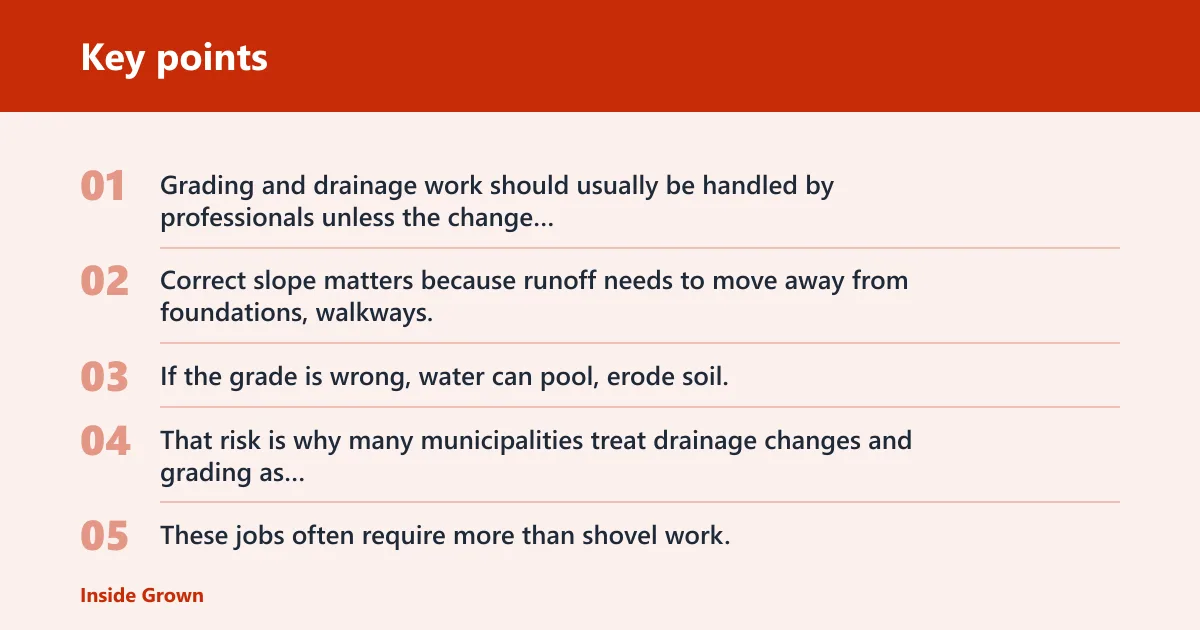
Grading and drainage work should usually be handled by professionals unless the change is very small and clearly cosmetic. Correct slope matters because runoff needs to move away from foundations, walkways, and planted beds. If the grade is wrong, water can pool, erode soil, or push moisture where it does not belong. That risk is why many municipalities treat drainage changes and grading as permit-sensitive work.
These jobs often require more than shovel work. They may involve soil removal, fill placement, compaction, and precise slope checks. Mistakes can damage foundations, undermine patios, and wash out newly planted areas. Many extension resources also caution that persistent drainage problems should be addressed at the source rather than hidden with surface planting.
Hardscape installation
Patios and walkways demand accurate base prep, leveling, edge restraint, and careful handling of heavy materials. A stone surface that looks level on day one can settle or shift if the base is thin or uneven. That failure can create trip hazards and costly tear-out.
Weight is part of the decision. Pavers, gravel, sand, and concrete products are heavy enough that labor alone becomes a major factor. Tool needs also rise fast, especially for compaction, cutting, and leveling. Rental pricing for compactors, tillers, and trenchers is published by major chains, so compare the total before choosing DIY.
Large or steep sites
Larger yards increase labor, disposal, and material staging. Steep sites increase the chance of erosion, unsafe footing, and uneven drainage. When the site size pushes the work past a simple cleanup, hiring usually brings better speed and lower rework risk.
Projects that need permits or code checks
If the project may affect setbacks, drainage paths, retaining height, or utility lines, check local rules before starting. Some areas require permits for retaining walls, drainage changes, or hardscape near property lines. A contractor may handle that coordination as part of the job, which reduces surprises later. Permit rules vary widely by municipality, so check your city or county building department rather than assuming a neighbor’s project followed the same rule.
Utility locating and underground conflicts
Before any dig that could reach buried utilities, call and wait for marks. That step is especially important for irrigation repairs, drainage trenches, lighting runs, stump removal, fence posts, and tree planting in older yards where lines may be shallow or undocumented. Utility-locate requirements are a basic safety check, not an optional extra.
How do you compare the true cost?
The true cost is not just labor versus a contractor invoice. You also need to count materials, tool rental, delivery, disposal, and the value of the time the project takes. DIY looks cheaper only when those extra lines stay small.
Labor versus material cost
DIY usually saves on labor, which is often the largest line in a service quote. But material costs do not disappear. Soil, mulch, edging, plants, stone, and fasteners still cost the same, whether you install them or not.
Rental, delivery, and disposal fees
Tool rental can make a small job more expensive than expected. If a compactor, tiller, or sod cutter is needed for one day, add pickup or delivery time, fuel, and deposits. Disposal also matters for old sod, roots, broken concrete, or yard waste that will not fit at the curb. Rental providers such as The Home Depot Tool & Truck Rental, Lowe’s Tool Rental, and RYOBI ONE+ Tool Rental show how quickly a one-day rental can become a meaningful line item.
Hidden rework and tool ownership costs
Rework is the hidden cost that surprises homeowners most. Fixing a bad slope, replanting dead shrubs, or resetting pavers can cost more than the original savings. Buying tools for a one-time project is another trap, because the purchase price often outpaces the value of a single use.
Time value and project delays
DIY projects also cost time. A multiweek project can delay other yard work and leave the site torn up longer than expected. That matters if the yard is the main outdoor space or if rain is likely to interrupt the schedule.
Hire landscaping services or worksheet
Use this worksheet to compare DIY, hire, and hybrid options before you commit.
Labor quote: ________
Material cost: ________
Rental cost: ________
Delivery cost: ________
Disposal cost: ________
Time hours: ________
Rework contingency: ________
Total DIY cost = material + rental + delivery + disposal + rework contingency
Total hire cost = labor quote + material + delivery + disposal
Total hybrid cost = contractor quote for technical tasks + your materials for finish work + rental/delivery/disposal you still need
Break-even example, simple project: A mulch refresh may cost less to DIY if the only expenses are mulch, a rake, and disposal. If the contractor quote is modest but your time is limited, the gap may be small enough that DIY still wins. Break-even example, complex project: A drainage or grading job often flips the math because rental, disposal, and rework risk can erase savings fast. In that case, a higher upfront quote may still be cheaper than fixing a failed DIY result.
What tools and equipment do you need for DIY landscaping?
The right tools depend on the job, but most DIY yard work starts with hand tools, cleanup gear, and a way to move material. For harder tasks, rental equipment may be smarter than buying. The best choice depends on whether the tool will be used once or many times.
Basic hand tools
Common hand tools include a spade, square shovel, rake, hand pruners, loppers, a hoe, a wheelbarrow, gloves, and a tape measure. For layout work, a string line, stakes, and a level help keep beds and edges straight. These tools cover much of the light work around a yard.
Power tools and rentals
Some jobs need equipment that is not worth buying for a single project. A tiller can help with soil preparation, a plate compactor is useful for pavers, and a sod cutter may be needed for larger turf removal. Renting makes sense when the tool is expensive, heavy, and unlikely to be used again soon. Rental rates vary by provider and market, so check your local store before estimating the project total.
Buying versus renting
Buying works better for small tools used often. Renting works better for heavy equipment with a short duty cycle. If pickup and return logistics are hard, delivery fees can erase part of the rental advantage, so compare total cost before deciding.
Material handling and cleanup gear
Tarp sheets, buckets, pruning shears, a leaf blower, and a sturdy cart can save time on a DIY job. They also reduce strain during cleanup and hauling. For projects with lots of debris, plan for disposal before the work starts so the yard does not become a holding area.
What should you hire out first?
Start by hiring the parts that create the highest failure risk and keep the rest for yourself. Drainage, grading, layout, and heavy base work are the best first candidates. That approach protects the parts of the project that are hardest to fix later.
Drainage and grading
These are the first jobs to outsource if standing water, erosion, or slope changes are part of the plan. A contractor can set the grade, establish runoff direction, and reduce the chance of damage to nearby structures. Once the base is right, DIY planting and mulch become much safer.
Design and layout
Design decisions affect plant spacing, sun exposure, soil fit, and maintenance load. If the yard has unusual shade, poor drainage, or a complex shape, paying for layout help can prevent expensive mistakes. It can also help if the project may need permit checks or utility coordination.
Heavy hardscape bases
For patios, walkways, and retaining walls, the base work is often the most technical part. Hiring that phase and doing the surface finishing yourself is a practical split on some projects. It keeps the critical structure in professional hands while preserving some labor savings.
Tasks to keep DIY
Keep the low-risk, visible jobs if you want to stay involved without taking on the most technical work. Mulching, simple planting, cleanup, and basic trimming are the best places to start. They are also the easiest to pause and finish later if the budget changes.
How long does a landscaping project take?
Timelines vary by scope, yard size, and how much material has to move. Small cleanup jobs can take a few hours. Bigger projects stretch into multiple weekends or several weeks, especially if you are working around weather, rentals, and disposal trips.
Small cleanup timelines
A small front-yard cleanup, a mulch refresh, or a few new plants can often be finished in one day. If the bed already exists and the soil is workable, the timeline is short. Add more time if roots, clay soil, or debris need removal first.
One-yard versus full-yard projects
A single bed or corner of the yard can be a one-weekend project for a careful homeowner. A full-yard makeover is different. It often includes demolition, soil work, planting, edging, and cleanup, which can stretch the work across several weekends even without weather delays.
Weekend, multiweek, and phased schedules
Weekend work is best for cleanup, mulch, and light planting. Multiweek schedules fit jobs that need rentals, deliveries, or repeated soil correction. A phased approach is often the smartest option: hire grading or drainage first, then finish beds and plants yourself when the ground is ready.
Frequently asked questions
Should you hire landscaping services or do it yourself?
Do it yourself for light cleanup, mulch, edging, and simple planting. Hire landscaping services for grading, drainage, retaining walls, irrigation, or any project that needs permits, heavy machinery, or exact layout. Many homeowners get the best result by splitting the job between both.
When is it worth hiring a landscaper instead of DIY?
Hire when the project changes how water moves, needs exact leveling, or involves heavy materials. Grading, drainage, patios, walkways, and retaining walls are the clearest examples. If a mistake could damage a foundation, create erosion, or require tear-out, professional help is usually the safer buy.
How much money can you save doing landscaping yourself?
Savings depend on how much labor the job needs and how much equipment you must rent. DIY can save a meaningful share of the labor bill on simple jobs, but rentals, soil amendments, disposal, and rework reduce the gap. The bigger and more technical the task, the smaller the true savings.
How long does a typical landscaping project take to do yourself?
Simple cleanup and mulch work can take a few hours to a day. Planting a small bed may take a weekend once you include shopping and prep. Full-yard projects can stretch into multiple weekends or several weeks, especially if you need deliveries, rentals, or drain correction first.