How Many Tomato Plants Per Square Foot? Spacing Guide
For most home gardens, planting determinate tomatoes a bit more tightly and indeterminate tomatoes a bit more widely is a practical rule of thumb; with heavy pruning and strong vertical support, some small-fruited indeterminates may fit in a smaller space. Crowding tomatoes too tightly cuts airflow, leaves stay wet longer, disease spreads faster, and yields drop. This guide shows how to choose spacing by tomato type, support method, pruning style, and bed setup.
This guide is part of our Planting quantity guide series.
How many tomato plants per square foot?
Start with the basic spacing rule
Most tomato varieties are recommended at one plant per square foot. That works as a starting point for square-foot gardens, but it does not fit every tomato. Final spacing depends on the plant’s mature width, how it is supported, and how much pruning it will receive.
In plain terms, square feet per plant means the space a tomato needs to reach its normal size without pushing hard into a neighbor’s canopy. For tighter plantings, root room is only part of the equation. Airflow, sunlight, and how much foliage remains after pruning matter too.
When one plant per square foot is too tight
One plant per square foot is usually too tight for full-size indeterminate tomatoes, beefsteaks, and any planting in a damp site with weak sun or poor air movement. It can also be too tight when the soil is highly fertile and plants push extra leaf growth. Too many plants can cause disease and poor growth.
When the canopy closes quickly, leaves stay wet longer after rain or overhead watering. That is when leaf spots, blight pressure, and poor fruit set become more likely. If a plant is shaded from midday onward, spacing needs to open up.
How to convert bed size into plant count
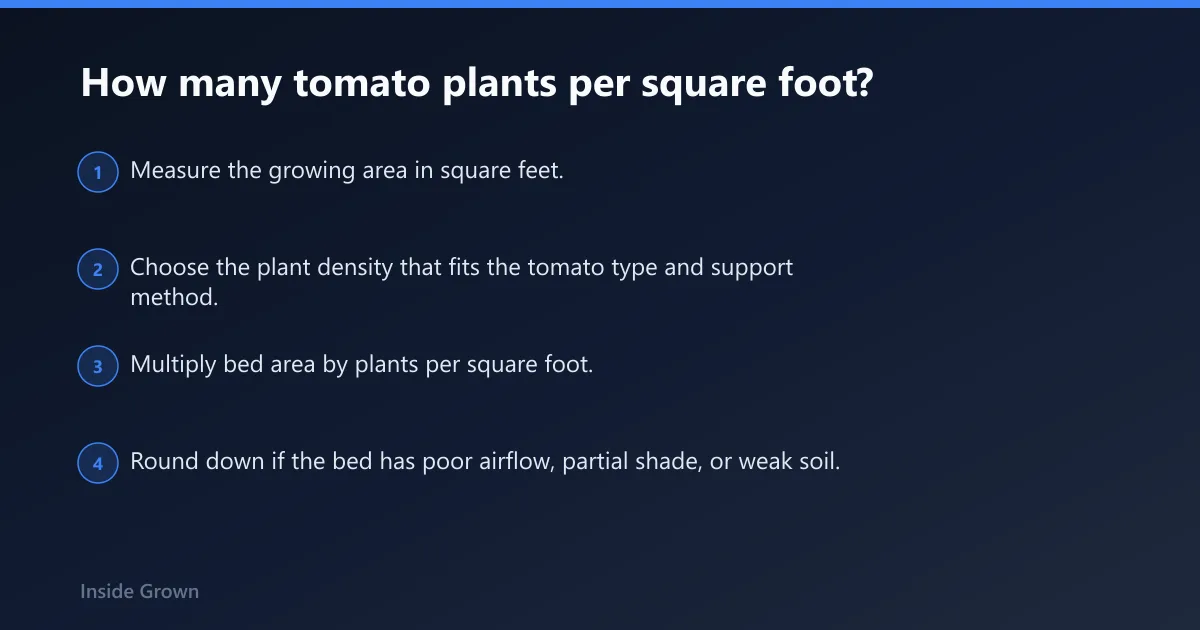
- Measure the growing area in square feet.
- Choose the plant density that fits the tomato type and support method.
- Multiply bed area by plants per square foot.
- Round down if the bed has poor airflow, partial shade, or weak soil.
A 4-by-4-foot bed has 16 square feet, which is a simple way to estimate space. At one plant per square foot, that is 16 plants in theory, but that number only makes sense for tiny, heavily trained plants. For normal garden tomatoes, a much lower count is usually the better choice.
Which tomato type are you planting?
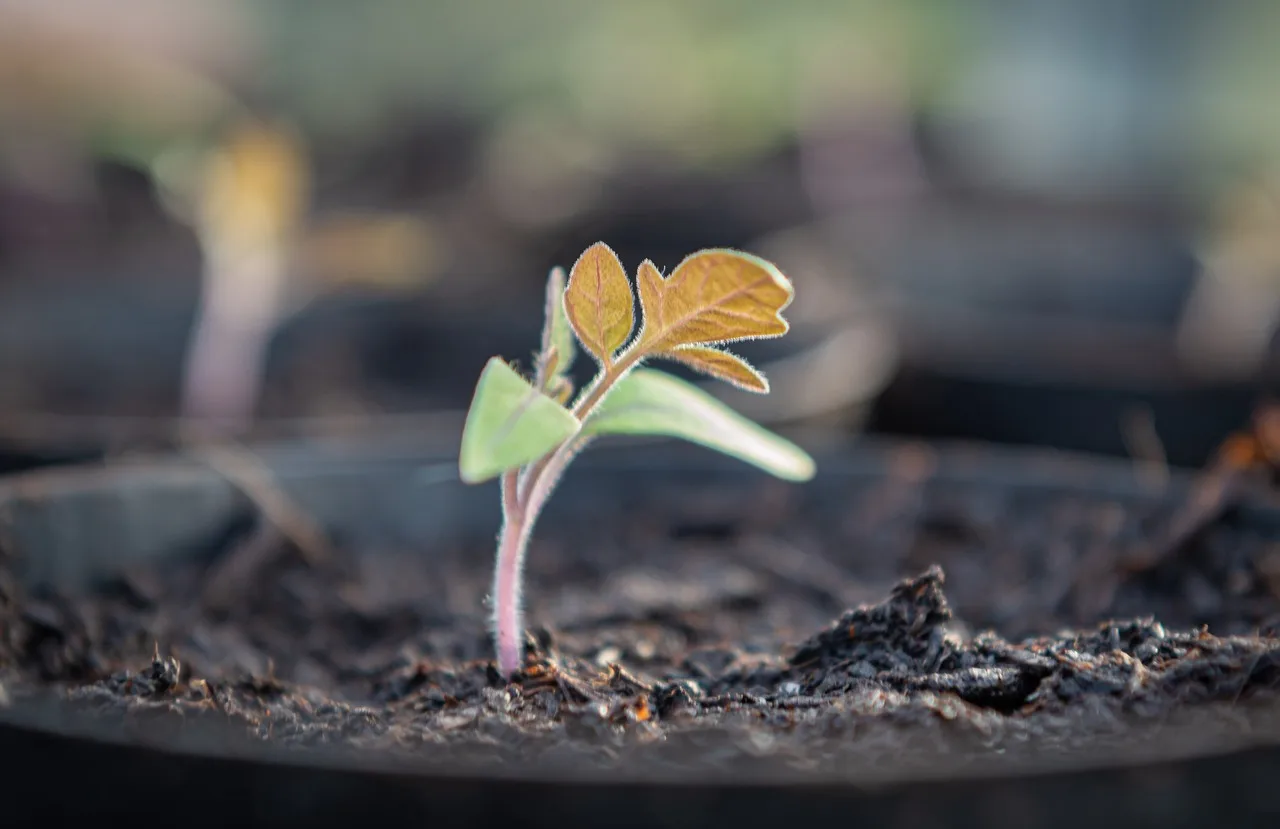
Tomato type changes the spacing answer more than most gardeners expect. Determinate tomatoes stay more compact, indeterminate tomatoes keep vining, and cherry, Roma, and beefsteak types each land in different spacing ranges because fruit size and canopy size are not the same.
Determinate tomatoes
Determinate tomatoes have a compact growth habit and finish most of their leaf and flower growth in a shorter window. They are a good fit for raised beds, containers, and smaller garden plots where the goal is a concentrated harvest. Dwarf or determinate tomatoes were listed at 24 inches apart.
That spacing works out to about 1 plant per 4 square feet. In practice, that is a better fit than the one-per-square-foot rule for most determinate plants, especially if the bed stays humid or the soil is very fertile.
Indeterminate tomatoes
Indeterminate tomatoes have a vining growth habit and keep growing until frost. They need more support and more room. Indeterminate tomatoes were described as needing three square feet per plant, and they were listed at 18–36 inches apart.
That range matches about 1 plant per 3 square feet at the tight end, and even more room when the plants are large-fruited or lightly pruned. For most open-air beds, this is the safer category to space wider rather than tighter.
Cherry, Roma, and beefsteak tomatoes
Cherry tomatoes can be the highest-density option because the fruit is smaller and the plants often respond well to trellising. Cherry tomatoes may fit two plants per square foot with support and pruning. Roma tomatoes usually sit in the middle: smaller than beefsteaks, but still capable of heavy canopy growth.
Beefsteak tomatoes are the least forgiving in tight spacing. Their fruit load and foliage mass can crowd neighbors quickly. For beefsteaks, open spacing and strong support matter more than squeezing extra plants into a bed.
How support changes the answer
Support changes density because a tomato trained upward takes less horizontal space than one allowed to sprawl. Trellises and cages help hold stems upright and keep the plant from spreading across the bed, but they do not erase plant size. They only shift where that growth goes. Vertical gardening can help maximize space.
Trellises and cages
Trellises work best for indeterminate tomatoes, cherry tomatoes, and any plant that will be pruned into one or two main stems. Cages fit determinate tomatoes well when the variety is compact and the bed has room for a full cage diameter. In raised beds, vertical support can turn a wider plant into a narrower one.
Even with cages, the canopy still needs enough air around it. A cage is support, not permission to crowd.
Stakes and single-stem training
Stakes plus single-stem training let a gardener place plants closer than a sprawling bush would allow. This is useful for greenhouse rows and for small-fruited indeterminates. It is less useful for beefsteaks, which still need room for leaf mass and fruit clusters.
Single-stem systems can raise density, but only if pruning is consistent. Missed side shoots quickly turn a narrow plant into a tangled one.
Why vertical support can raise density
Vertical support raises density because it reduces floor spread, not because the plant needs fewer resources. Roots still compete. Leaves still need light. The canopy still needs moving air. If the support is weak or the plant is not tied often enough, the whole spacing plan falls apart.
How aggressive are you pruning?
Pruning changes how many plants fit into a square foot, especially with indeterminate and cherry tomatoes. Light pruning keeps more foliage and needs more room. Heavy pruning can narrow the canopy, but it cannot fix a weak bed, poor light, or a disease-prone site.
Light pruning versus heavy pruning
Light pruning removes only damaged leaves and a few low suckers. Heavy pruning strips more side growth and channels the plant into fewer stems. Heavy pruning works best when the plant is trained upright and checked often. Without that follow-through, the plant can become crowded again in a short time.
When pruning lets you plant closer
Pruning can let cherry tomatoes and smaller indeterminates fit at a tighter density when they are on a trellis and kept to one or two stems. That is the clearest case for moving from the wider end of the spacing range toward the tighter end.
For greenhouse production, pruning often matters more because air movement is limited. Tight spacing only works if lower leaves are removed carefully and humidity is controlled.
When pruning cannot fix crowding
Pruning does not solve crowding when the variety is large-fruited, the bed has poor light, or the soil holds too much moisture. It also fails when plants are so close that stems and leaves already overlap heavily. At that point, the problem is space, not trimming.
Use this tomato spacing table

This table turns tomato type, support method, and pruning level into exact plants-per-square-foot recommendations. Use it as a planning tool, then reduce density if the bed is shaded, humid, or disease-prone. Seed packet or nursery tag spacing should still be the final authority.
| Tomato type | Support method | Pruning level | Recommended plants per square foot | Best fit |
|---|---|---|---|---|
| Determinate | Cage | Light | 1 per 4 sq ft | Raised beds, compact bush varieties |
| Determinate | Stake | Moderate | 1 per 3 sq ft | Small beds with decent airflow |
| Cherry | Trellis | Moderate to heavy | 1 to 2 per sq ft | Vertical gardens, greenhouse rows |
| Roma | Cage or stake | Light to moderate | 1 per 2 to 3 sq ft | Open beds, raised beds |
| Indeterminate | Trellis | Heavy | 1 per 2 sq ft | Small-fruited types, controlled training |
| Indeterminate | Cage or stake | Light | 1 per 3 to 4 sq ft | Most home garden beds |
| Beefsteak | Cage or stake | Light | 1 per 4 sq ft or wider | Large-fruited plants with room to spread |
Raised bed and greenhouse adjustments
Bush tomatoes in raised beds were described as one plant per four square feet. That is a sensible starting point for compact varieties that still need a full root zone. Raised beds also warm faster, which helps growth, but they can dry out faster and make nutrient competition more obvious.
In a greenhouse, air movement becomes the limiting factor faster than in open air. That means the same tomato may need more space indoors unless fans, venting, and pruning are working together. For greenhouse plantings, do not copy open-field row spacing without checking the canopy width.
Best-fit recommendations for common setups
- Small raised bed: one determinate or bush tomato per 4 square feet.
- Open garden bed: one indeterminate per 3 to 4 square feet.
- Trellised cherry tomatoes: 1 to 2 plants per square foot only with steady pruning.
- Greenhouse trellis: keep extra room between stems and prune lower foliage often.
For many gardeners, the simplest answer is still this: one plant per square foot works only for the smallest, best-trained tomatoes. Most others need more room.
Do you need to plant fewer tomatoes?
Plant fewer tomatoes whenever airflow is poor, leaves stay wet, the sun is weak, or the soil is already under pressure. Tight spacing fails first in damp, shaded, or nutrient-poor beds. If the site cannot move air or support steady growth, back off the density.
Airflow warning signs
If leaves touch across the row early in the season, the bed is probably too tight. If the lower canopy stays shaded all day, airflow is too low. If morning dew dries slowly, disease pressure rises. Those are the moments to thin or remove a plant before problems spread.
Sun and shade limits
Tomatoes need full sun. When plants get less than that, each one needs more room because weaker light slows drying and stretches the growth habit. A shaded tomato often becomes taller, thinner, and more prone to leaning into its neighbors.
Soil quality and root competition
Soil quality affects how tightly tomatoes can be spaced because roots compete harder in lean, compact, or uneven beds. Good soil can support slightly tighter plantings, but it does not remove the need for root room. Poor soil makes crowding fail sooner.
Do not overcrowd if…
- Leaves overlap heavily before midseason.
- The site stays humid after rain or watering.
- Plants receive less than full sun.
- The bed has a history of leaf spot, blight, or mildew.
- Soil is thin, compacted, or dries unevenly.
- You cannot keep up with pruning and tying.
If any of those are true, reduce density rather than hoping pruning will save the planting.
Frequently asked questions
how many tomato plants per square foot
For most home gardens, start with 1 plant per square foot only for compact, well-trained tomatoes. Most determinate plants need more room, and many indeterminate plants need 2–4 square feet each. The final count depends on support, pruning, airflow, and sunlight.
how many tomato plants per square foot in greenhouse
In a greenhouse, tomato spacing often needs to be wider than in open air because humidity and weak airflow increase disease risk. Use the variety’s mature size, tie plants carefully, and leave enough room for moving air around leaves and stems.
how many cherry tomato plants per square foot
Cherry tomatoes may fit two plants per square foot with support and pruning. That works best on a trellis or stake system with frequent training. If the greenhouse is humid or the bed is shaded, drop back to fewer plants.
how many indeterminate tomato plants per square foot
Indeterminate tomatoes usually need more space than compact types. A practical range is 1 plant per 3 to 4 square feet, with some heavily pruned small-fruited plants fitting closer. Larger fruit types need the wider end of that range.
how many square feet does a tomato plant need
A tomato plant may need anywhere from 1 to 4 square feet depending on the type and training system. Determinate plants are usually on the tighter end, while indeterminate and beefsteak tomatoes need more room. Airflow and sunlight should guide the final spacing.
how many beefsteak tomato plants per square foot
Beefsteak tomatoes usually need the most room. In a home garden, giving each plant roughly 4 square feet or a bit more is a safer choice. Their large foliage and fruit load make crowding risky, especially in humid beds with limited airflow.