How Many Lavender Plants Should You Space in a Hedge?
Space lavender by mature width, not pot size. For a tight hedge, use 18 inches for compact English lavender and 24 inches for larger hybrid lavender. For a looser hedge, use 24 inches for English lavender and 30 inches for hybrid lavender. For a 10-foot hedge, that works out to 7 or 6 plants, depending on type and spacing.
Fast answer by goal: Tight hedge: 18 inches for Lavandula angustifolia, 24 inches for Lavandula x intermedia. Standard hedge: 24 inches for Lavandula angustifolia, 30 inches for Lavandula x intermedia. Loose hedge: use the wider end of each range. As a 10-foot example, plan about 7 plants for compact English lavender at 18 inches, or about 6 plants for hybrid lavender at 24 inches.
How far apart should lavender be?
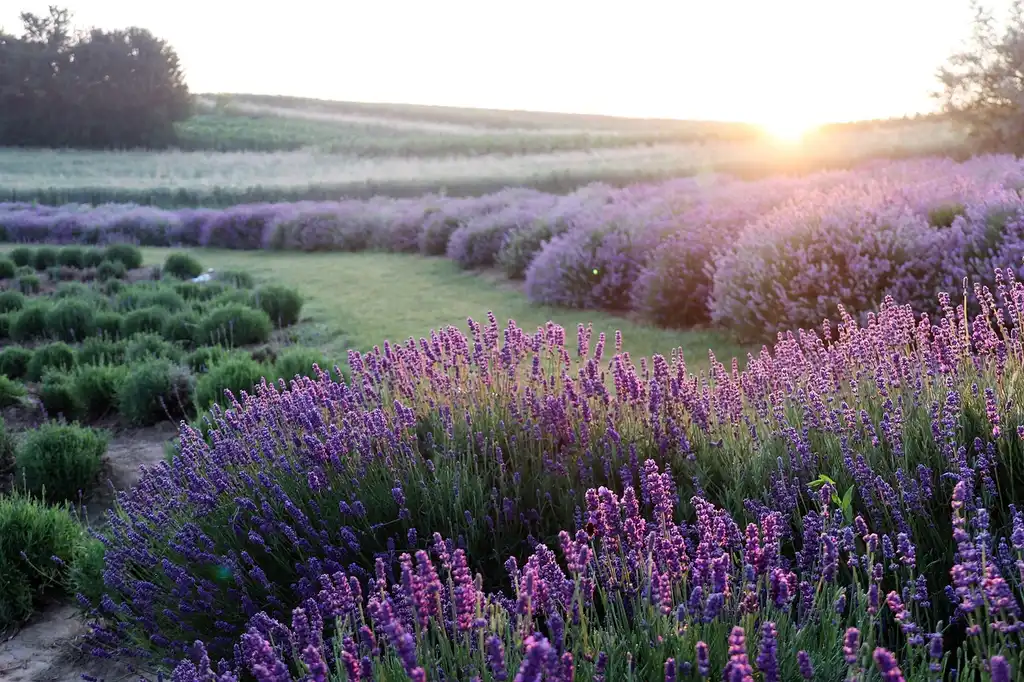


Use center-to-center spacing based on mature width, not nursery pot size. For most hedge plantings, 18 to 24 inches works for compact lavender, while 24 to 30 inches suits larger, more vigorous types. Tighter spacing fills in sooner, but wider spacing keeps air moving through the hedge and lowers disease pressure.
Lavender hedges work best when the spacing matches the finished plant size and the look you want. A denser line can suit a formal edge or low screen, while a more open hedge still looks full once the plants mature. In richer soil or irrigated beds, growth is often faster, so the wider end of the range is usually safer.
Mature width vs nursery pot size
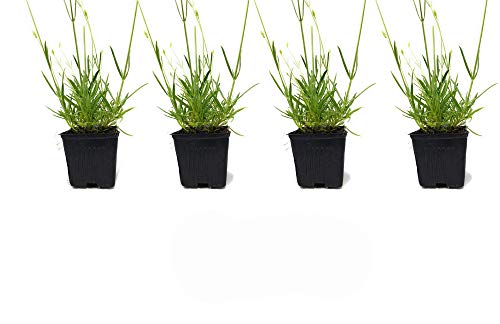
Spacing should follow mature width, because the pot you buy only shows the current root ball. A 1-gallon plant may still reach the same width as a larger nursery pot once established. Match the center-to-center distance to the plant’s adult spread, then adjust for the look you want and the site’s vigor.
For lavender, a practical rule is to give each plant room to reach its natural width without crowding the next one too early. That helps reduce bare, woody centers and supports faster drying after rain or irrigation.
Which lavender type should you plant?
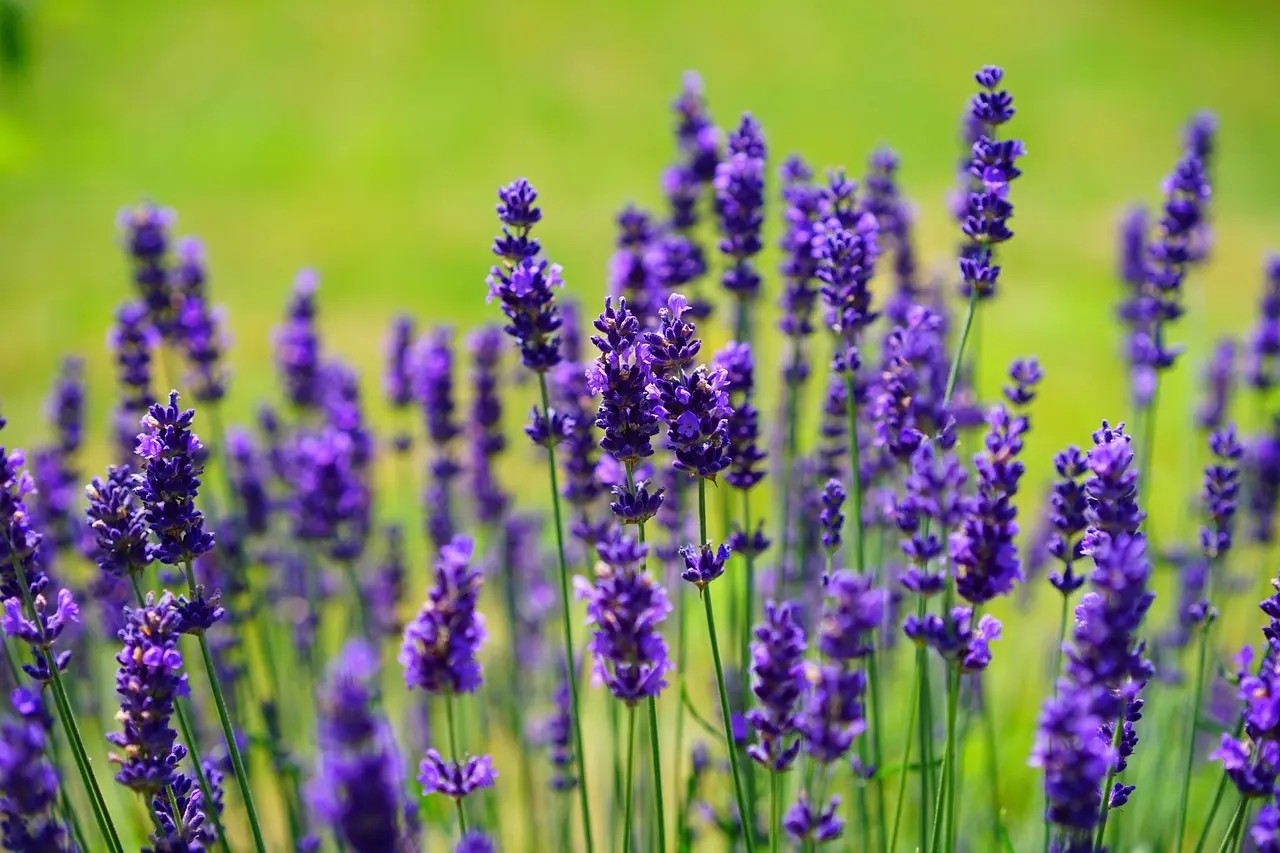
Choose the type first, then set spacing. Lavandula angustifolia is the compact hedge choice, while Lavandula x intermedia is larger and more vigorous. The right spacing differs because their mature widths differ, and the bigger type usually needs a wider gap to stay healthy over time.
Lavandula angustifolia
Lavandula angustifolia, often called English lavender, is the better fit for compact hedges and low borders. It commonly stays around 18 to 24 inches wide at maturity, depending on cultivar and growing conditions. It prefers full sun and is widely grown where winter cold is a factor.
For this type, 18 inches center to center makes a tighter line, while 24 inches gives a softer hedge with better airflow. In a fertile bed or irrigated border, the wider end often holds its shape better as the plants size up.
Lavandula x intermedia
Lavandula x intermedia, or lavandin, grows larger and more vigorous than English lavender. Many selections reach roughly 24 to 36 inches wide, sometimes more in warm, open sites. That extra size makes it better for longer hedges, broader borders, and places where a bigger plant is welcome.
For lavandin, 24 inches is often the minimum sensible hedge spacing, and 30 inches can be the better choice for airflow and mature size. If planted too tightly, the hedge may close in fast but become harder to keep shapely and dry.
Lavender hedge spacing calculator
This table turns hedge length into plant count. It uses center-to-center spacing, so the first and last plants are included in the total. For a quick estimate, divide the hedge length in inches by the spacing, then round to the nearest whole plant and adjust for ends, gates, or corners.
| Hedge length | 12-inch spacing | 15-inch spacing | 18-inch spacing | 24-inch spacing |
|---|---|---|---|---|
| 10 feet | 11 plants | 9 plants | 7 plants | 6 plants |
| 12 feet | 13 plants | 10 plants | 9 plants | 7 plants |
| 15 feet | 16 plants | 13 plants | 10 plants | 8 plants |
| 20 feet | 21 plants | 17 plants | 14 plants | 11 plants |
| 25 feet | 26 plants | 21 plants | 17 plants | 13 plants |
For compact English lavender, the 15- to 18-inch rows are the most useful for a tight hedge. For larger hybrid lavender, the 18- to 24-inch rows usually fit the plant’s mature width better. If you want a faster visual line, use the tighter end of the range and keep pruning on schedule.
Say your hedge is 10 feet long and you want a compact English lavender line. At 18 inches apart, the table calls for 7 plants. If you switch to 24 inches, you need only 6 plants, but the hedge will take longer to close.
Can you plant lavender closer for a fuller hedge?
Yes, but only within reason. Closer spacing can create a fuller hedge faster, especially for a formal edge that needs to look filled in early. If plants are pushed too close, airflow drops, the center stays damp longer, and lower growth can thin out after a few seasons.
Single-row hedges
A single row is the standard choice for most lavender hedges. It is simpler to plant, easier to prune, and less likely to trap moisture. For a neat line, single-row planting usually gives the best mix of shape, airflow, and long-term maintenance.
Double-row hedges
A staggered double row can work when you want a fuller hedge or a broader planting band. Offset the second row so plants sit between the gaps of the first row, and leave enough room for each plant to receive light on all sides. This is more useful in larger borders than in narrow beds.
Use a double row only if the bed is wide enough to support mature spread without crowding the walkway or nearby plants. In tight spaces, one row is usually healthier and easier to manage.
How do you plant a lavender hedge?
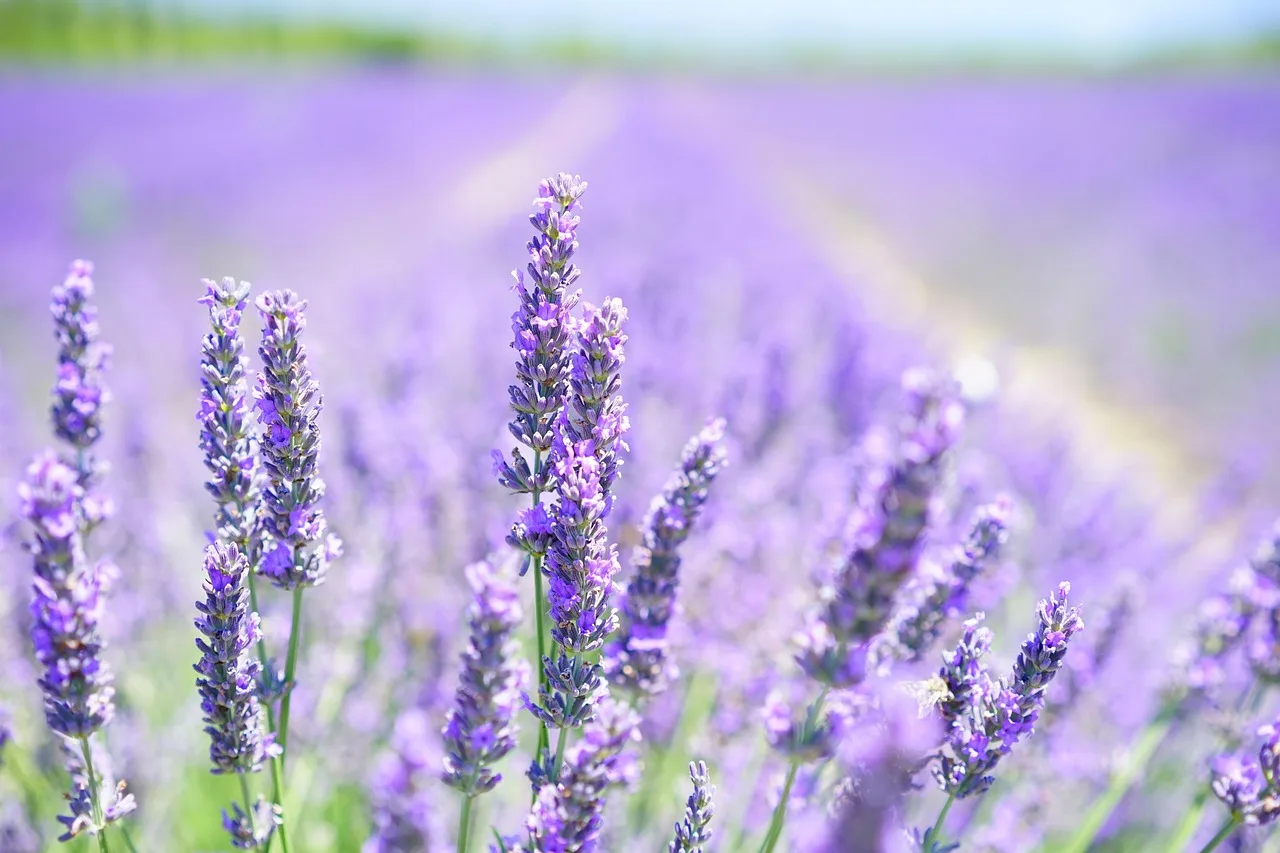
Plant a lavender hedge in a single straight line or a staggered pair of rows, depending on the width of the bed and the look you want. Set plants by mature width, not by the size of the nursery pot, and keep the crown just above the surrounding soil so water drains away quickly.
-
Measure the hedge line.
Mark the full length of the planting area and decide on your spacing before you dig. Use the calculator above to set the plant count first, since spacing mistakes are harder to fix after planting. -
Check soil drainage.
Dig a test hole and fill it with water. If water stays around the hole for hours, improve the site with a raised bed or berm, because lavender roots dislike wet soil and can rot in heavy clay. -
Set the spacing marks.
Place flags or stakes at the chosen center-to-center distance, such as 18 inches for a compact hedge or 24 inches for a looser one. Keep the line straight for a formal hedge, or stagger a second row if you want more width. -
Plant at crown level.
Set each plant so the crown sits slightly above grade. Backfill with loose soil, firm it gently, and water once to settle the roots without soaking the bed. -
Mulch lightly.
Use a thin mulch layer that does not crowd the stems. Keep mulch away from the crown so the base dries quickly and the plant does not stay wet after irrigation or rain.
Drainage and sun requirements
Lavender needs full sun and well-drained soil. Full sun means at least 6 hours of direct light each day, and more is better for compact growth and heavy bloom. In shade, plants stretch, flower less, and lose the tight form that makes a hedge work.
Heavy soil raises root-rot risk, especially where water sits after rain or irrigation. If clay soil drains slowly, build a raised bed or a low berm so the roots sit higher and dry faster. That matters as much as spacing for long-term hedge quality.
A common first-timer mistake is planting lavender tightly in clay, then watering like a thirsty shrub border. The hedge may look fine for a season, but the center can thin out later because roots stay too wet and the lowest stems cannot dry well.
How do pruning and spacing work together?
Pruning after flowering keeps lavender compact and helps the hedge stay dense at the base. Spacing sets the starting shape, but pruning preserves it. Without regular trimming, even well-spaced plants can turn woody in the center and open up at the bottom.
Timing after flowering
Prune after the main bloom flush, while green growth is still active. Cut back only the soft growth and avoid cutting deep into old woody stems, which often resprout poorly. Light, regular pruning keeps the hedge even and reduces the chance of gaps.
Preventing woody centers
Woody centers are a spacing and pruning issue together. If plants are crowded, the lower stems receive less light and dry slowly; if pruning is skipped, the hedge rises on top and thins below. Keep each plant rounded, not tall and narrow, so the hedge closes from the base upward.
Suppose a 12-foot hedge is planted at 18-inch spacing but is never trimmed after bloom. It may still flower well at the top, yet the middle can open into bare stems within a few seasons. The spacing was fine; the pruning was not.
Frequently asked questions
How many lavender plants do I need for a 10-foot hedge?
For a 10-foot hedge, about 6 plants are needed at 24-inch spacing, 7 plants at 18 inches, 9 plants at 15 inches, or 11 plants at 12 inches. Compact English lavender usually fits the 18-inch option well; larger hybrid lavender often does better at 24 inches.
Can I plant lavender closer together for a denser hedge?
You can, but only within the plant’s mature width. Tighter spacing may close gaps faster, yet it also reduces airflow and can increase dieback if the site stays damp. For most gardens, 18 inches is tight enough for a dense hedge without forcing overcrowding.
What lavender variety is best for hedges?
Lavandula angustifolia is usually the best choice for compact hedges because it stays smaller and forms a tidy line. If you want a broader hedge or need a more vigorous plant for a large border, Lavandula x intermedia can be the better fit.
How wide does a mature lavender plant get?
Compact English lavender often reaches about 18 to 24 inches wide, while larger hybrid lavender can reach about 24 to 36 inches wide or more. Use the plant’s mature width, not the pot size at purchase, to choose spacing and avoid crowding later.
Should I space lavender differently in clay soil?
Yes. In clay soil, the spacing may stay the same, but the site usually needs better drainage. If clay holds water, use a raised bed or berm and consider wider spacing for better airflow. Wet soil is a bigger risk than slightly wider gaps.
How long does it take lavender to fill in as a hedge?
Many lavender hedges start to knit together in 1 to 2 growing seasons, but the exact timing depends on variety, sun, pruning, and watering. Tighter spacing fills in sooner, while wider spacing takes longer and usually looks better long term if the hedge gets larger.
Can I use one plant per foot in a lavender hedge?
One plant per foot means 12-inch spacing, which is very tight for most lavender hedges. It can work only for very compact selections in excellent drainage and full sun. For most gardens, 18 to 24 inches is a safer range and easier to maintain.