How Many Plants Can Grow in a Grow Bag?
A 5-gallon fabric grow bag usually holds about 1 tomato, 1 pepper, or 1 potato plant; about 10 gallons can handle 1 tomato, 2 peppers, 2 to 3 potatoes, or 1 cucumber on a trellis; herbs can often be packed more tightly. When a bag is crowded, leaves shade each other, roots compete for water, and the mix dries unevenly. This guide gives plant-count rules for tomatoes, potatoes, peppers, cucumbers, herbs, and mixed planting by common grow-bag size.
Root space and plant habits determine how many fit
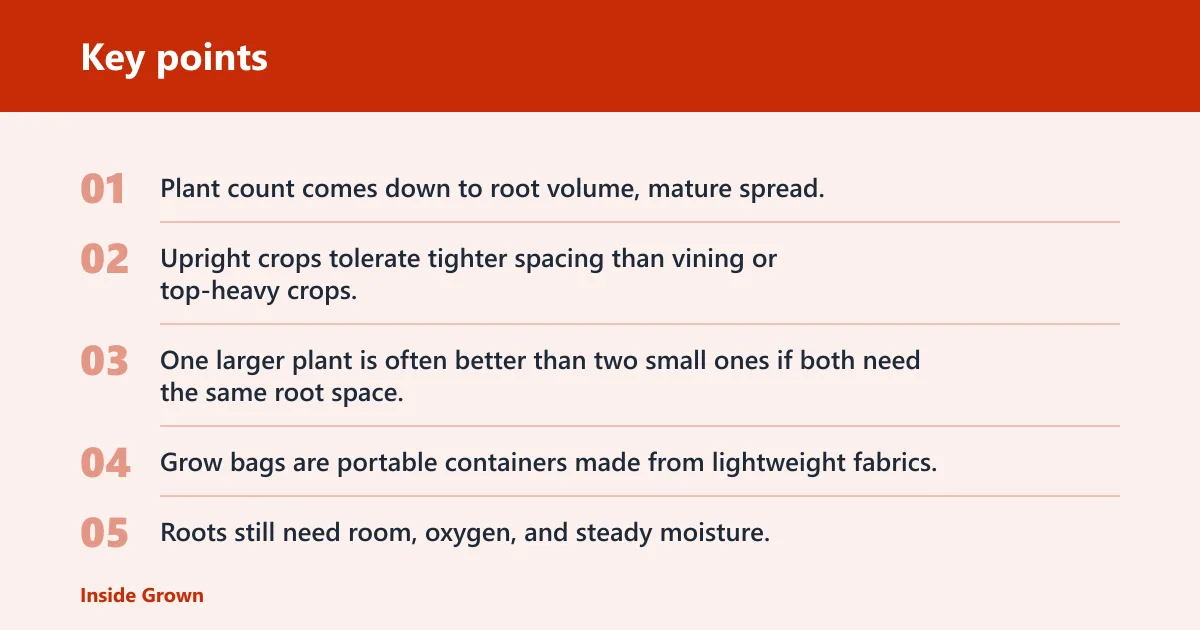


Plant count comes down to root volume, mature spread, and how the plant grows above the soil. Upright crops tolerate tighter spacing than vining or top-heavy crops, because they use less horizontal room and are easier to support. One larger plant is often better than two small ones if both need the same root space.
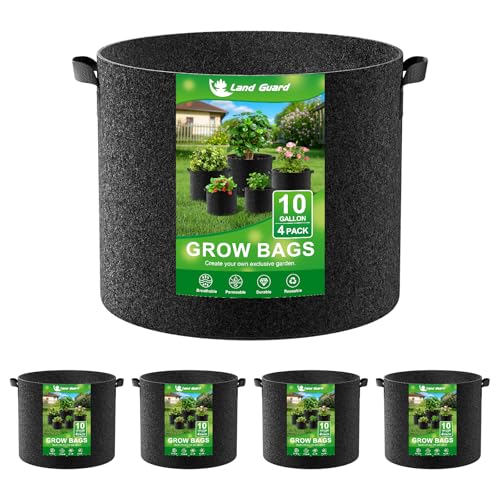
Grow bags are portable containers made from lightweight fabrics, so they are easy to place where light is best. That convenience does not change biology. Roots still need room, oxygen, and steady moisture. If a crop makes long vines, heavy fruit, or a wide canopy, it needs more space than a compact, bush, or patio type.
Root volume and mature spread
Think about the plant at harvest, not at transplant. A seedling looks small, but a mature tomato, cucumber, or potato plant fills the bag quickly. If the root ball and canopy are both expanding fast, the bag needs to be larger or the plant count needs to be lower.
Upright plants versus vining plants
Upright plants use vertical space better. Vining crops spread across the bag, nearby pots, or a trellis. That is why a trellised cucumber can fit in a 10-gallon bag on its own, while two cucumbers in the same bag usually become a tangle of roots, stems, and shaded leaves.
Why one large crop can beat two small ones
A single vigorous plant often outperforms two cramped plants because it gets more light, more root room, and steadier moisture. Fabric bags dry faster than raised beds or in-ground soil, so crowded roots feel the stress quickly. When roots compete, watering becomes less even and nutrients move through the bag more quickly.
Grow bag size and plant count
Use this table as a first-pass rule, then adjust for variety and plant habit. Compact cultivars usually fit the lower end of the range, while sprawling or indeterminate types need the larger bag or a single-plant setup. If two crops both want the same root space, do not pair them.
| Grow bag size | Tomatoes | Peppers | Cucumbers | Potatoes | Herbs | Do not combine |
|---|---|---|---|---|---|---|
| 2 gallons | 0 to 1, only a very small patio type | 1 small compact pepper | 0 | 0 to 1 seed potato | 2 to 4 small herbs | Do not pair tomato with pepper, cucumber, or potato |
| 5 gallons | 1 compact tomato or 1 very small determinate plant | 1 pepper | 0 | 1 to 2 seed potatoes | 2 to 5 herbs | Do not combine two fruiting crops in one bag |
| 10 gallons | 1 compact tomato; a larger plant should still be alone | 1 to 2 peppers | 1 trellised cucumber | 2 to 3 seed potatoes | 3 to 6 herbs | Do not combine tomato with cucumber or potato |
| 15 gallons | 1 tomato, including one indeterminate plant | 2 peppers if both are compact | 1 cucumber with a strong trellis | 3 seed potatoes at most | 4 to 8 herbs | Do not mix indeterminate tomato with another heavy feeder |
| 25 gallons | 1 large tomato or 2 smaller determinate plants only if separated well | 3 to 4 compact peppers | 1 to 2 cucumbers with a trellis | 4 to 6 seed potatoes in a larger setup | 6 to 10 herbs | Do not crowd two large vining crops together |
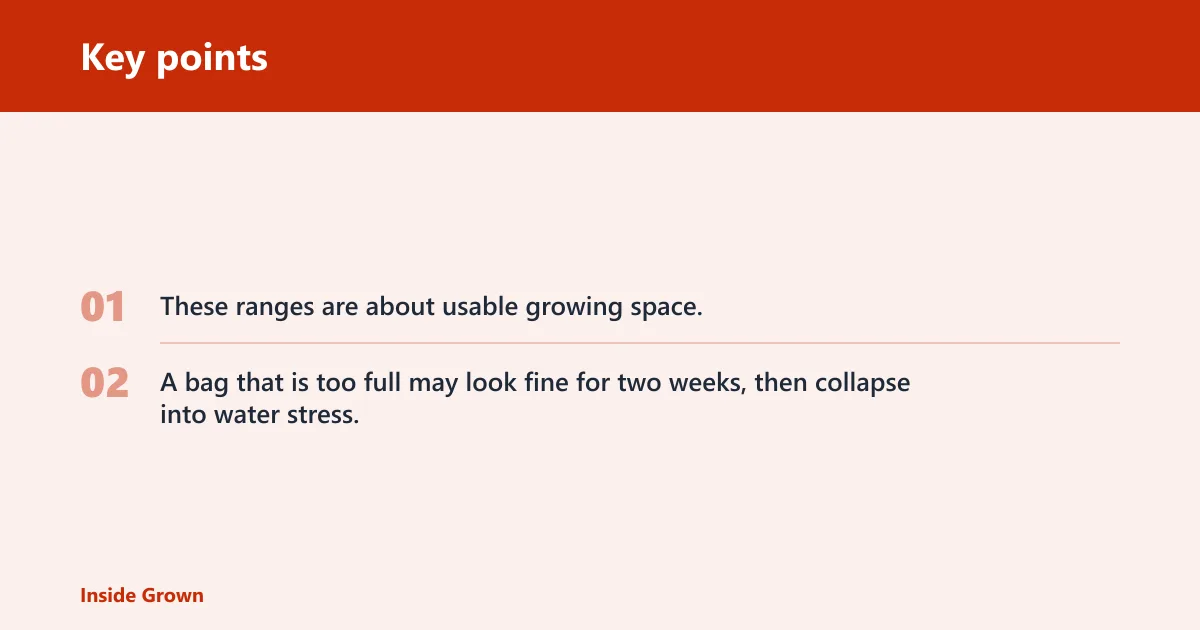
These ranges are about usable growing space, not just how many seedlings physically fit on transplant day. A bag that is too full may look fine for two weeks, then collapse into water stress, nutrient stress, or weak fruit set once roots fill the mix.
How many tomato plants fit?
For tomatoes, the safest rule is one plant per bag once you move beyond very small patio types. A 15-gallon bag fits one indeterminate tomato, and that single-plant setup is the clearest recommendation for strong growth. Smaller bags work best with compact or determinate varieties, not sprawling vines.
Determinate versus indeterminate tomatoes
Determinate tomatoes stay more compact and finish their fruit load in a shorter window. Indeterminate tomatoes keep growing and fruiting, so they need more root room and more support. That growth habit is why a single indeterminate tomato fits in a 15-gallon bag, while a shallow or crowded bag is a poor match for large varieties.
Compact patio tomatoes can work in a 5-gallon bag if the variety is truly small. Large variety tomato plants need deeper garden beds, and potato and large variety tomato plants are not ideal for shallow soil bags. When in doubt, choose the bigger bag and keep only one tomato in it.
Say your balcony has a 10-gallon bag and you want one tomato plus a basil plant. The tomato will usually take most of the water, light, and nutrients, and the herb will dry out, shade, or decline first. A better choice is one tomato alone, with herbs in a separate 2 to 5-gallon bag.
How many potato plants fit in one bag?
Potatoes do well in 10-gallon bags, and that size is a useful baseline for most home gardeners. A 10-gallon bucket should hold no more than three seed potatoes, and the bag needs room for mounding or earthing up as stems grow. More than that invites small tubers and tangled roots.
Seed potato count by bag size
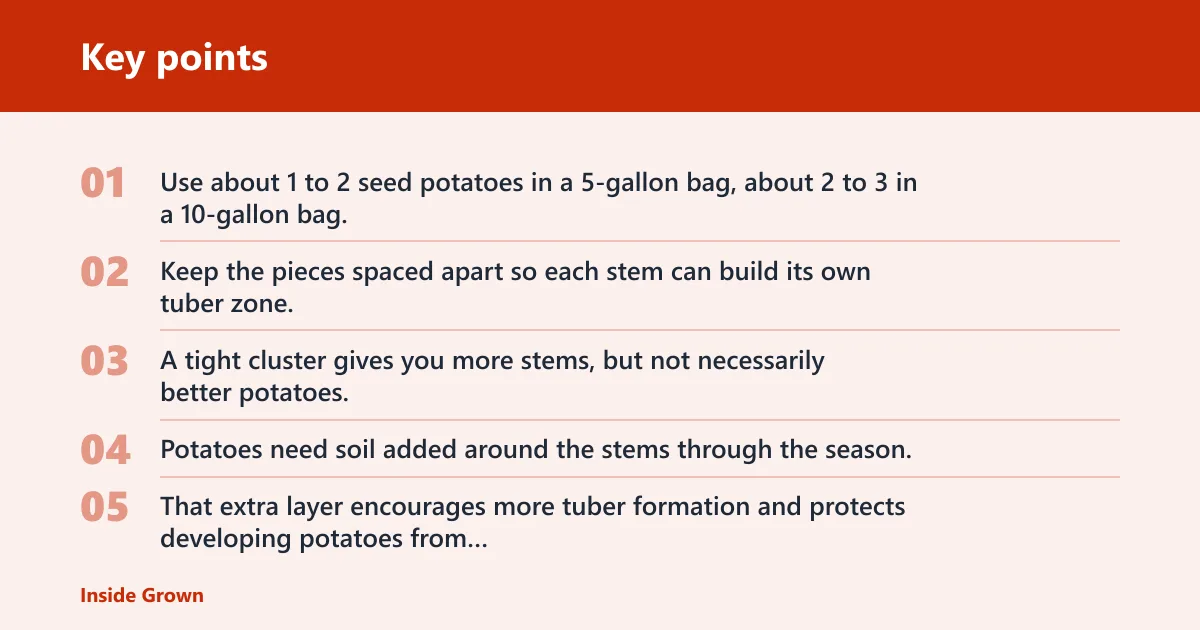
Use about 1 to 2 seed potatoes in a 5-gallon bag, about 2 to 3 in a 10-gallon bag, and more only in a much larger setup, such as around 25 gallons. Keep the pieces spaced apart so each stem can build its own tuber zone. A tight cluster gives you more stems, but not necessarily better potatoes.
Mounding and earthing up
Potatoes need soil added around the stems through the season. That extra layer encourages more tuber formation and protects developing potatoes from light. If the bag is already full at planting time, you lose the room needed for mounding. That is one reason a 10-gallon bag is a practical minimum for most gardeners.
Picture a 10-gallon bag with four seed potatoes packed into one corner. The stems rise unevenly, the center stays wet longer, and the bag dries in patches. The result is uneven tubers and more watering problems. Three seed potatoes is the ceiling for that size, not a target.
How many pepper plants can you grow in a 5 gallon grow bag?
One pepper plant is the best answer for a 5-gallon bag. Peppers do well in 10-gallon bags too, and a larger bag can support two compact plants if both are small and upright. In a 5-gallon bag, extra plants usually create root competition before they create extra harvest.
5 gallons versus 10 gallons
In a 5-gallon bag, a single pepper has enough room for roots and steady fruiting. In a 10-gallon bag, two peppers can work if they are compact varieties and you keep them evenly watered. Tall, heavy-fruiting types are better left alone, because the canopy becomes crowded and the bag dries faster under full sun.
Compact cultivars
Look for compact, bush, patio, or mini peppers when space is tight. These types stay easier to support and keep the root system within the bag’s limits. Chilies also fit well in this category. The main goal is to keep the plant upright and well lit without forcing roots to fight for every inch.
How many cucumber plants can grow in a 10 gallon grow bag?
One cucumber plant is the standard choice for a 10-gallon bag, especially if you train it on a trellis. Cucumbers do well in 10-gallon bags, but they are vining plants with fast top growth. One plant gets enough room to root, climb, and air out without turning the bag into a crowded thicket.
Trellised growth matters
A trellis changes the usable space above the bag, not the root space inside it. That is helpful, because cucumber vines want to spread. Still, the root system belongs to one plant in most 10-gallon bags. Two cucumbers in that size usually compete too much, even if they climb in different directions.
A common first-timer mistake is mixing a cucumber with a tomato in the same bag because both are vertical plants. The stems may rise separately, but the roots pull from the same limited mix, and the heavier feeder usually wins. Use separate bags unless the container is much larger and the crops are unusually compact.
What soil and drainage do grow bags need?
Use a potting mix blended with compost, coir, or castings so the bag holds moisture without turning soggy. Fabric bags drain well, but they still need a mix that retains nutrients and stays airy. Heavy garden soil is a poor choice because it compacts and slows root growth.
Bottom drainage and bag prep
Bottom drainage is required. Excess water must leave the bag so roots do not sit wet. Before filling, place the bag where runoff can escape, and make sure the base is not blocked. One drainage-prep example uses approximately 12 holes, which shows how much exit space a grow bag needs when water builds up after rain or watering.
Soil mix basics
A good blend usually starts with quality potting soil and is improved with compost, coir, or castings. That mix helps with nutrient retention, water retention, and drainage at the same time. If the mix is too light, water flashes through too quickly. If it is too dense, roots lose oxygen.
- Fill the bag with a loose potting mix blend, not native soil.
- Leave room for watering, mulching, and mounding if you are growing potatoes.
- Set the bag where runoff can drain freely.
- Check after the first watering to confirm the bottom drains well.
How should you water grow bags?
Grow bags dry faster than raised beds and in-ground soil, so watering has to be more attentive. Morning watering is the best default because plants can use the moisture during the heat of the day. A moisture meter helps, especially in hot weather or when the bag is filled with a thirsty crop.
Faster drying than in-ground beds
Fabric sides let air move through the mix, which is good for roots but also means more evaporation. That helps drainage and root health, yet it means nutrients and moisture leave the bag more quickly. Smaller bags dry even faster, and crowded plantings dry unevenly.
Morning watering and moisture meters
Water early enough for the mix to absorb moisture before the sun peaks. If the top dries while the center stays damp, a moisture meter can show the difference and help prevent overwatering. That matters in 5-gallon bags, where a single missed watering can stress peppers or tomatoes very quickly.
Choosing crops for tight space
Compact, bush, patio, and mini cultivars are the best match for small bags. They keep the canopy smaller and reduce the chance of root competition. For tomatoes, avoid large sprawling types in shallow bags. For potatoes, avoid crowding. For cucumbers, trellis one plant instead of trying to squeeze in extras.
When to avoid mixed planting
Do not mix two heavy feeders in one small bag. Tomato plus potato is a poor pairing. Tomato plus cucumber is usually a poor pairing. Pepper with herbs is easier, but only if the herbs are small and the pepper still gets enough root room. If the crop list sounds ambitious, it probably needs another bag.
When a larger bag is the better choice
If you want one productive crop without constant watering stress, choose the larger bag and keep the plant count low. A single tomato, a single cucumber on a trellis, or two to three potatoes in a 10-gallon bag is often better than squeezing several plants into a smaller container. More space usually means steadier growth.
Frequently asked questions
How many plants can you grow in a grow bag?
It depends on bag size and crop habit. Small herbs can be grouped in 2 to 5-gallon bags, while fruiting crops usually need more room. As a general rule, keep one large vegetable per bag and increase plant count only for small, compact crops that do not compete heavily for root space.
How many tomato plants can you grow in a grow bag?
Usually one tomato per bag is the safest rule. A 15-gallon bag fits one indeterminate tomato, and smaller bags work best only with compact patio or determinate types. If you try to fit more than one tomato into the same bag, the plants tend to compete for light, water, and nutrients.
How many potato plants can you grow in a grow bag?
In a 10-gallon bag, keep the count to 2 to 3 seed potatoes, with three as the maximum. Smaller bags should hold fewer. Potatoes also need room for mounding through the season, so the real limit is not just the starting count but the space needed for stem coverage later on.
How many tomato plants can I grow in a 10 gallon grow bag?
Usually one compact tomato, and one is still the safer choice even in a 10-gallon bag. If the tomato is indeterminate, give it its own 15-gallon bag instead. Two tomato plants in 10 gallons usually creates root competition and more watering stress than the bag can comfortably support.
What size grow bag do tomatoes, peppers, and potatoes need?
Tomatoes usually need 15 gallons for one indeterminate plant, while compact patio tomatoes can fit in smaller bags. Peppers do well in 10-gallon bags, though one pepper can also fit in 5 gallons. Potatoes do well in 10-gallon bags, with 2 to 3 seed potatoes as a practical count.
Can you overcrowd plants in a grow bag?
Yes, and it usually shows up as weaker growth, smaller harvests, and harder watering. Crowding reduces air flow, increases root competition, and makes the bag dry unevenly. The more vigorous or vining the crop, the faster overcrowding becomes a problem. One well-spaced plant often beats several cramped ones.