Winter Monstera Care: Light, Watering, and Split-Leaf Slowdowns
Water a winter Monstera deliciosa only when the top 2 to 3 inches of soil are dry and the pot feels much lighter, then check that it still has bright indirect light and warm indoor temperatures; the calendar matters less than those three checks. Watering on a schedule in winter can leave roots wet too long and cause yellowing leaves, stalled growth, and rot. This guide explains how light, temperature, and soil dry-down work together so you can adjust care before the split leaves slow down.
Winter monstera basics


Winter care for Monstera deliciosa is mostly about managing slower growth without adding extra water. The plant can pause older leaf growth, hold steady, and still be healthy if light is adequate, the room stays warm, and the soil dries at a sensible pace. The main winter risk is water sitting around roots for too long, not the slower growth itself.
Monstera deliciosa is a tropical aroid houseplant with thick roots that rot quickly in soggy soil. That is why winter care depends on placement as much as watering. A plant set close to a bright window dries faster than one moved into a dim corner for cold protection.
When to leave the plant alone
If the plant has firm stems, no soft black spots, and only slower new growth, that can be normal winter behavior. Older leaves may pause while the plant conserves energy. Hold off on pruning, repotting, or major training unless there is a clear problem such as rot, severe lean, or a broken stem.
Support is still useful. A moss pole or trellis can guide climbing growth and help future leaf size and fenestration, but winter is a poor time for aggressive repositioning or tight tying that disturbs roots and stems.
How much light does a monstera need in winter?
A monstera needs bright indirect light in winter, with an east or west window usually working well if harsh sun is softened by a sheer curtain or a small setback from the glass. Low light is tolerated, but it slows growth, delays dry-down, and raises the odds of overwatering.
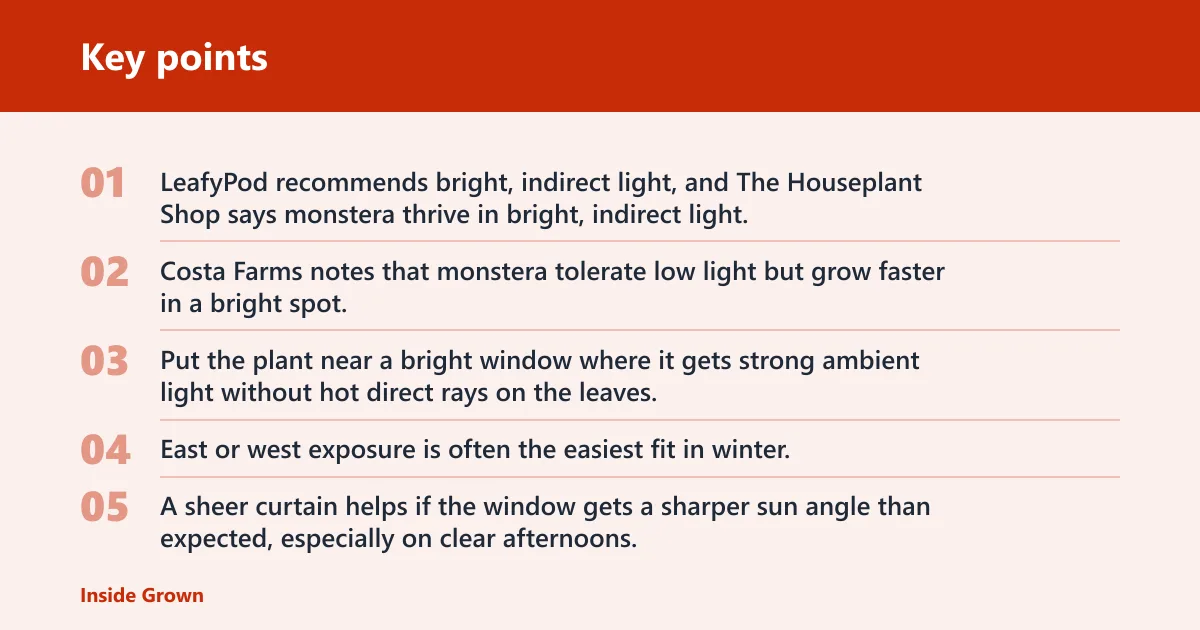
LeafyPod recommends bright, indirect light, and The Houseplant Shop says monstera thrive in bright, indirect light. Costa Farms notes that monstera tolerate low light but grow faster in a bright spot. That difference matters most in winter, when weaker light already slows metabolism.
Bright indirect light indoors
Put the plant near a bright window where it gets strong ambient light without hot direct rays on the leaves. East or west exposure is often the easiest fit in winter. A sheer curtain helps if the window gets a sharper sun angle than expected, especially on clear afternoons.
Gentle winter sun can be acceptable, but direct sunlight can bleach monstera leaves. A small step back from the glass often solves the problem without pushing the plant into a dimmer room.
When low light is acceptable
Low light can be acceptable for survival, not for quick growth. Expect slower dry-down, fewer splits and holes, and less reliable new leaf expansion. If the plant is already in lower light, water less often because soil stays wet longer and root rot becomes easier to trigger.
Say your monstera sits six feet from a north-facing window in a cool room. The soil may stay damp long after the surface looks dry, so the plant needs a deeper check before each watering. That placement can work, but only if you adjust the watering pace downward.
How to tell if light is too weak
A weak-light monstera often shows long gaps between new leaves, smaller leaves, and fewer fenestrations. The plant may also lean toward the nearest window. Those signs matter more when the soil is staying wet, because low light and slow dry-down often appear together in winter.
One common mistake is moving the plant farther from the window to avoid drafts, then watering as if nothing changed. That single move can lengthen dry-down enough to turn safe watering into a rot risk.
When should you water a monstera in winter?
Water a monstera in winter after the top 2 to 3 inches of soil are dry, or about the top 5 cm, instead of on a fixed schedule. Many plants land near every 3 weeks in winter, but bright windows dry faster and dim rooms dry slower. Always empty the saucer after watering.
The same source recommends watering every 1–2 weeks when the top 5 cm of soil is dry, and Costa Farms says water should be regular enough to keep soil from drying out completely. Those ideas sound different until winter light is included. The right interval depends on placement.
-
Check the top layer.
Push a finger or wooden skewer into the soil to the top 2 to 3 inches. If it still feels cool and damp, wait. If that layer is dry and the pot feels much lighter, it is time to water.
-
Match light to pace.
A bright window may need water sooner than a medium-light room, and a dim room may need much less. The plant’s light level changes how fast the pot dries, so watering speed should change with placement.
-
Soak, then drain.
Water evenly until excess runs out of the drainage holes, then empty the saucer. Do not let the pot sit in collected water, because winter roots already move more slowly and stay exposed to rot longer.
Why saucer drainage matters
A drained saucer is part of winter watering, not an afterthought. A pot that reabsorbs runoff can keep lower roots wet even when the top layer feels fine. That hidden wet zone is one reason winter overwatering shows up first as yellowing lower leaves.
Why is my monstera growing so slowly in winter?
Slow winter growth is often normal. Older leaves may pause while the plant shifts energy to maintenance instead of extension. Real stress looks different: persistent yellowing, limp stems, foul soil, or a plant that keeps declining even after you improve light and dry-down.
Monstera deliciosa is more forgiving than many tropical houseplants, but thick roots rot quickly in soggy soil. That means the question is not whether the plant is slower. It is whether the slowdown fits the room, the light, and the soil.
Normal slowdown versus stress
Normal slowdown usually means fewer new leaves, slower unfurling, and a longer wait between growth points. Stress usually brings leaf drop, mushy stems, or a pot that never dries. If the plant still holds firm tissue and the leaves look stable, it may simply be resting through winter.
A common winter mistake is assuming a Monstera needs extra water and bright sun just because the leaves are growing more slowly. In a bright, warm room, a monstera may still push new growth in winter, just more slowly. In a dim, cool room, the same plant may stop almost entirely without being in immediate danger.
How low light affects splits and fenestrations
Low light reduces the plant’s energy budget, so new leaves are more likely to stay smaller and develop fewer splits or holes. That does not mean the plant is failing. It means it is not receiving enough light to spend energy on those features at the same rate.
If new leaves are still healthy but less divided, that often points to light, not disease. If the plant is also drying slowly, adjust both the light and the watering pace together.
Cold-room placement and stalled growth
Growth often stalls below 60°F, and LeafyPod gives a preferred range of 18–29°C, or 65–85°F, with the plant kept above 15°C, or 59°F. Cold rooms slow metabolism, slow evaporation, and make overwatering more likely because the soil stays wet longer.
That is why a plant moved away from a drafty window may suddenly seem to “need less water.” Often the real change is reduced light plus cooler air, which both slow dry-down. Watering should drop with the new placement.
Winter monstera decision table
Use this table to match watering and light changes to the plant’s winter placement. The dry-down speed is a guide, not a promise. Check the soil, watch the leaves, and change the watering trigger if the room is warmer or colder than expected.
| Placement | Likely dry-down speed | Watering trigger | Common warning sign | Add humidifier or grow light? |
|---|---|---|---|---|
| Bright window | Faster, often the quickest winter dry-down | Water when the top 2 to 3 inches are dry and the pot feels light | Leaves stay firm but soil dries sooner than expected | Usually no humidifier; add a grow light only if the window light drops too much |
| Medium light | Moderate, with slower winter growth | Water after the top 5 cm are dry | New leaves arrive slowly and may be smaller | Use a humidifier if the air is dry; a grow light can help if window light is weak |
| Low light | Slow, with the highest overwatering risk | Wait longer; check the lower soil before watering | Soil stays damp, leaves may yellow, and fenestration may stall | Yes, a grow light is often more useful than extra water; a humidifier helps if edges brown |
| Cold-room placement | Very slow, especially below 60°F | Water only when the pot is clearly light and the top layer is dry | Growth stalls, soil lingers wet, and lower leaves may yellow | Move to a warmer spot first; use a humidifier only after temperature is fixed |
Humidity, temperature, and soil mix
Humidity, temperature, and soil mix all affect winter care at the same time. Dry air can make leaf edges brown, cool rooms slow growth, and dense soil keep roots too wet. The best winter setup keeps air moving, roots airy, and the plant warm enough to keep working.
Humidity targets and brown-edge symptoms
PlantFix says monstera prefers 50–70% humidity. Dry winter air can cause brown edges, especially when heat runs often. A humidifier helps more than misting because it changes the room air instead of briefly wetting the leaf surface.
Misting is short-lived. It can leave droplets on the leaves without solving dry air around the plant. If the room is already warm and bright, a humidifier is the more useful fix.
Temperature limits to watch
Keep monstera above 15°C, or 59°F, and aim for 18–29°C, or 65–85°F, for best performance. Growth stalls below 60°F. Keep the plant away from cold drafts, unsealed windows, heaters, and vents that swing between hot and dry.
Why chunky aroid mix helps in winter
A chunky aroid mix with bark, perlite, and potting soil drains faster and leaves more air around the roots. That structure matters in winter because the plant uses water more slowly and soggy soil lingers longer. Better drainage lowers the risk of rot without forcing the pot to stay bone-dry.
If a plant is in a dense mix, even careful watering can stay wet too long after a cloudy week. In that case, drying speed comes from both placement and soil structure, not from watering less on its own.
Frequently asked questions
How do you care for a monstera in winter?
Give it bright indirect light, warm indoor temperatures, and a watering rhythm based on dry soil rather than the calendar. Keep the top 2 to 3 inches dry before watering, empty the saucer, and avoid major pruning or repotting unless there is clear damage or rot.
How often should you water a monstera in winter?
There is no fixed winter schedule that fits every room. Many plants end up around every 3 weeks, but bright windows dry faster and low-light rooms dry much slower. Check the top 2 to 3 inches of soil and the pot weight before you water.
Why are my monstera leaves turning yellow in winter?
Yellowing leaves in winter often point to overwatering, especially lower leaves. Cold rooms, dim light, and a saucer full of runoff all slow dry-down and keep roots wet. Check the soil depth first, then look at placement and temperature before changing anything else.
Can a monstera handle low light in winter?
It can tolerate low light, but it will grow more slowly and is more likely to stay wet too long. That means fewer splits, fewer new leaves, and a higher risk of rot. If the plant is in low light, water with extra caution and consider a grow light.
Should I fertilize my monstera in winter?
Usually less feeding is needed in winter because growth slows. If the plant is not actively pushing new leaves, hold off or feed very lightly. Fertilizer does not fix low light or cold air, and it will not help a stressed root system in soggy soil.
How do I know if my monstera is overwatered in winter?
Look for yellow lower leaves, a pot that stays heavy, soil that stays wet, and stems that feel soft instead of firm. Overwatered monsteras often sit in a cool, damp mix for too long. Check placement, temperature, and drainage before watering again.