What to Do When Houseplant Soil Stays Wet Too Long in Winter
If houseplant soil stays wet for about 7 to 10 days in winter, stop watering, check drainage and root health, and repot only if the mix is sour, moldy, or roots are brown and mushy. That timing is a common warning threshold, but it varies by plant type, pot size, and mix.
Common reasons for wet winter soil


| Scenario | Setup | First check | Likely cause | Safest action | Wait, dry faster, or unpot? | Risk level |
|---|---|---|---|---|---|---|
| Plastic pot with drainage holes | Healthy plant, no standing water | Top 1 inch of mix | Slower evaporation in winter | Wait if the top layer is still damp; tip out the saucer 15 minutes after watering. | Wait | Low to moderate |
| Clay pot in bright light | Drainage hole present, leaves look firm | Top 1 inch of mix | Normal slow dry-down | Check by finger and water only when the top layer has dried. | Wait | Low |
| No drainage hole or standing saucer water | Bottom of pot stays wet | Bottom of the pot | Water trapped around roots | Dry faster only if the plant is stable. If the mix stays soaked, unpot and move into a pot with a hole in the bottom. | Unpot | High |
| Cold windowsill or dark corner | Weak light, cooler nights | Light level, night temperature | Low light and cool air slowing evaporation | Move the plant to the brightest safe window you have and keep nights no colder than 50°F. | Dry faster | Moderate |
| Oversized pot or compacted mix | Small root ball in a large container | Root ball size, depth of wet mix | Extra mix holding water around roots | Wait if the plant is firm and healthy. Unpot if the root ball is tiny compared with the container and the mix stays wet for days. | Wait or unpot | Moderate to high |
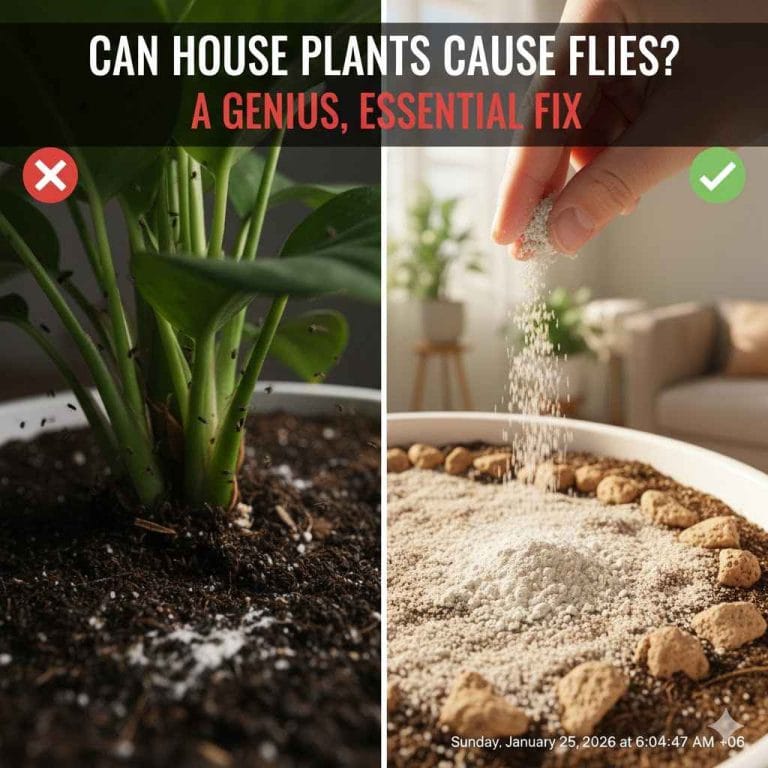
| Surface mold or fungus gnats | Top layer fuzz, flying adults, smell | Top layer fuzz, flying adults, smell | Wet surface and decaying bits in the mix | Scrape off about 1/2 inch of the surface layer and let the pot dry farther before watering again. | Dry faster | Low to moderate |
| Drooping plant with wet soil | Stem softness, bad smell, leaf drop | Stem firmness, smell, root color | Possible root rot | Unpot and inspect roots if the soil is wet and the plant droops, especially if stems soften or the mix smells rotten. | Unpot | High |
| Bright window with moving air | Healthy plant, drainage is good | Top 1 inch, pot spacing, fan setting | Slow surface drying | Dry faster with a small fan on low nearby and spaced-out pots if the plant is healthy and drainage is good. | Dry faster | Low |
Why is my houseplant soil still wet?
Winter slows dry-down because light is weaker, rooms are cooler, and evaporation drops. A clay pot dries faster than plastic, while an oversized container or dense mix can hold water far longer than the roots can use it. In low light, the mix may stay wet for days.
Low winter light slows dry-down
Low winter light makes soil stay wet for days. A brighter window often dries the mix faster, while a dark corner can keep a pot damp long after the top surface looks dry. That matters more in winter because plants use less water and the air often moves less.
Cool rooms and cold windows reduce evaporation
Most houseplants prefer steady temperatures between 65 and 75 degrees during the day, and they should be no colder than 50 at night. Cooler rooms slow evaporation from the pot and from the mix itself, so watering on a warm indoor schedule often leaves winter soil wet too long.
Pot material changes drying speed
Plain clay dries faster than plastic, so the same plant can need very different watering timing in those two pots. That difference matters most in winter, when every small slowdown adds up. If the plant already struggles in low light, a plastic pot can keep the mix wet far longer than expected.
Too much mix for the root ball
An oversized pot holds extra wet soil around a small root system. The plant cannot draw that water down quickly, so the outer mix can stay soggy while the roots sit in damp pockets. Compacted mix does the same thing by blocking air and slowing drainage through the pot.
Say a fern sits in a 10-inch plastic pot on a north-facing shelf. If the top inch is still damp after a week, the problem may be the light and the pot size together, not a single bad watering.
What should you check first?
Start with the top 1 inch of soil, then check the pot and the plant itself. If the top 1 inch is dry, or the top 2 inches in a big pot, you can wait before watering again. If the mix is wet, inspect drainage holes, saucer water, smell, stems, and roots.
Top 1 inch or top 2 inches
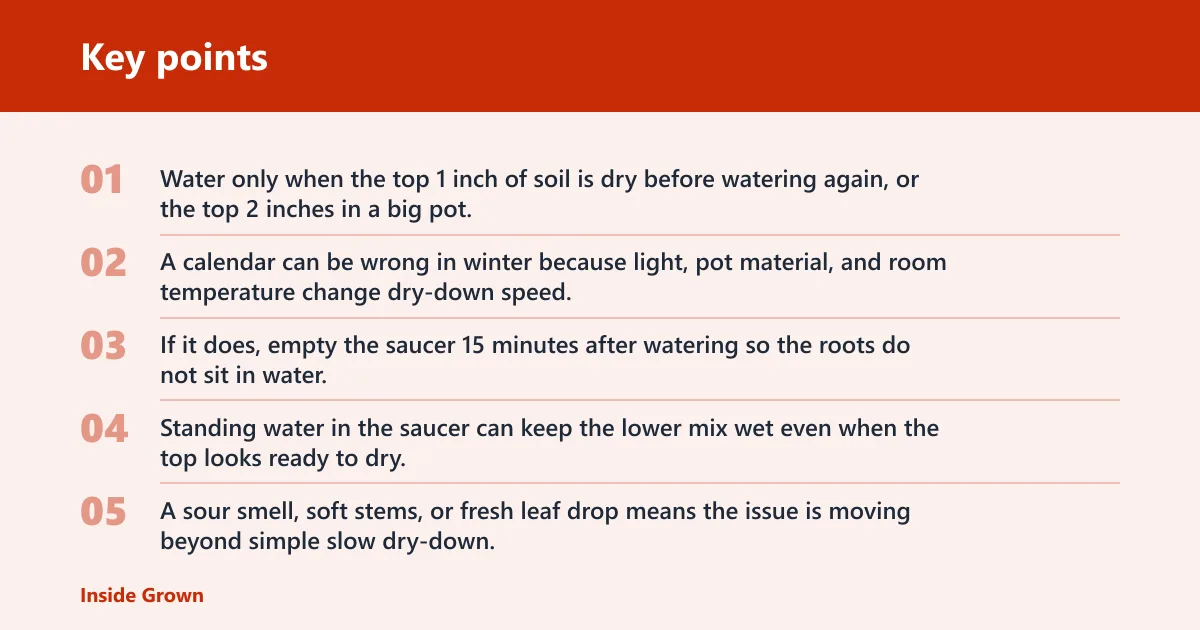
Check moisture by finger, not by schedule. Water only when the top 1 inch of soil is dry before watering again, or the top 2 inches in a big pot. A calendar can be wrong in winter because light, pot material, and room temperature change dry-down speed.
Drainage holes and saucer water
The pot should have a hole in the bottom. If it does, empty the saucer 15 minutes after watering so the roots do not sit in water. Standing water in the saucer can keep the lower mix wet even when the top looks ready to dry.
Soil smell, stem firmness, and leaf drop
A sour smell, soft stems, or fresh leaf drop means the issue is moving beyond simple slow dry-down. If the plant is drooping while the soil is still wet, inspect roots for brown, mushy tissue. That points to root rot, which is more serious than surface mold.
Surface fuzz versus root damage
Houseplant soil mold is usually soft white fuzz on the surface. It is usually harmless fungus feeding on dead bits in the mix, but it also means the soil stayed wet too long. Brown, mushy roots are a different problem and need faster action than a thin mold layer does.
How do you dry soil faster without stressing the plant?
Move the plant to the brightest safe window you have, add gentle airflow, and keep temperatures steady. Use the least risky change first. A healthy plant with drainage can often dry out safely with better light and a small fan on low nearby, while a wet pot with no drainage may need repotting instead.
Move it to brighter light. Put the pot in the brightest safe window you have. Low winter light makes soil stay wet for days, so this is often the fastest low-risk change.
Set a small fan nearby. A small fan on low nearby helps move air around the pot. Keep it gentle, not blasting the leaves, because moving air speeds dry-down and helps stop mold from returning.
Space the pots apart. Leave room between containers so air can reach the sides of each pot. Crowded pots trap moisture and slow surface drying, especially in cool rooms.
Keep temperatures steady. Aim for 65 to 75°F during the day and no colder than 50°F at night. Warm, stable conditions help evaporation without pushing the plant into extra stress.
Pause on extra watering. Do not water again until the top 1 inch is dry, or the top 2 inches in a big pot. Watering on a schedule is the fastest way to kill houseplants in winter.
Picture a pothos in a clay pot on a bright east window ledge. If the top inch dries in a few days after you move it, waiting is safer than repotting. The same plant in a dark hallway may need far more time between waterings and more air around the pot.
When should you unpot the plant?
Unpot when the plant is wet and getting worse, not merely slow to dry. Brown, mushy roots, a sour smell, a no-drainage container, or a plant that keeps drooping while soil stays wet all point toward root rot or waterlogged mix. If the plant is firm and the surface is only fuzzy, waiting is usually safer.
Signs that point to root rot
Root rot is the more serious problem. Look for brown, mushy roots, a rotten smell, soft stems, or a plant that droops even though the soil is still wet. If those signs show up together, inspect the roots instead of waiting for the mix to dry on its own.
When waiting is safer than repotting
If the plant is firm, the leaves are still holding shape, and the issue is only slow dry-down, repotting can add stress in winter. In that case, improve light, airflow, and temperature first. A healthy plant in a draining pot often needs only a longer pause between waterings.
How much of the wet mix to remove
If the problem is surface mold only, scrape off about 1/2 inch of moldy soil to reach clean soil. If the whole root ball is soggy, remove the plant from the pot and trim away wet, sour mix around damaged roots. Then move it into fresh mix and a pot with drainage holes.
Frequently asked questions
Why is my houseplant soil staying wet for so long in winter?
Winter light is weaker, rooms are cooler, and pots lose water more slowly. Plastic pots dry slower than clay, and oversized containers or compacted mix hold moisture even longer. If the plant is in a dark corner or near a cold window, the mix may stay wet for days.
How do I dry out wet soil without killing the plant?
Move the plant to the brightest safe window, keep temperatures steady, and use a small fan on low nearby. Space pots apart and stop watering until the top 1 inch is dry, or the top 2 inches in a big pot. Those changes dry the mix without forcing a harsh repot.
Should I repot a plant if the soil stays wet for days?
Not always. Repot if the pot has no drainage hole, the mix smells sour, or roots are brown and mushy. If the plant is firm and only drying slowly, wait and improve light, airflow, and temperature first. Winter repotting adds stress, so only do it when the signs point to rot.
How do I tell root rot from harmless mold on soil?
Harmless soil mold usually looks like soft white fuzz on the surface. Scrape off about 1/2 inch and the plant can often recover if the rest is healthy. Root rot shows up below the surface as brown, mushy roots, soft stems, a rotten smell, or drooping while the soil is still wet.
Does a plastic pot keep soil wetter than a clay pot?
Yes. Plain clay dries faster than plastic, so plastic often holds moisture longer in winter. That does not mean every plastic pot is a problem, but it does mean you should check the top 1 inch by finger instead of watering on a fixed schedule.
When is soggy winter soil an emergency?
It is urgent when the plant droops while the soil is wet, smells rotten, has no drainage hole, or shows brown, mushy roots. Fungus gnats, surface mold, and a slow-drying pot are less urgent. The plant can often wait if it is still firm and the roots are not damaged.