Can You Propagate Houseplants in Winter Successfully?
You can often propagate houseplants in winter if you keep them at about 65 to 80°F, place them in bright light that does not hit the cutting directly, and choose a plant that typically roots well from that method; otherwise, waiting until spring may be easier. Cold, dim conditions can slow rooting, increase the risk of rot, and may kill a cutting before it forms roots. This guide explains which plants and methods work indoors, what setup you need, and when to hold off.
Winter propagation decision table


This table separates three things that are often mixed together: whether a plant can root in winter, whether it roots fast enough to be worth the effort, and whether division is the safer choice. Use it as a quick filter before you cut anything.
| Plant type | Safest propagation method | Winter risk level | Propagate now / wait until spring / divide instead |
|---|---|---|---|
| Pothos | Water propagation or soil propagation from a node | Low | Propagate now if you have warmth and bright, indirect light |
| Philodendron | Water propagation from a stem cutting with at least one node | Low to moderate | Propagate now if the room stays warm and bright |
| Tradescantia | Water propagation or direct soil rooting | Low | Propagate now; it roots quickly under favorable conditions |
| Spider plant | Water or soil for plantlets | Low | Propagate now if plantlets are formed and the room is warm |
| Snake plant | Division instead of cuttings | High for cuttings, low for division | Divide instead |
| ZZ plant | Division | High for cuttings, low for division | Divide instead |
| Succulents | Soil propagation from leaves or stem sections | Moderate | Propagate now only if the mix stays barely moist and the room is warm |
| Hoya | Water propagation or soil propagation from stem cuttings | Moderate | Propagate now if you can keep conditions stable |
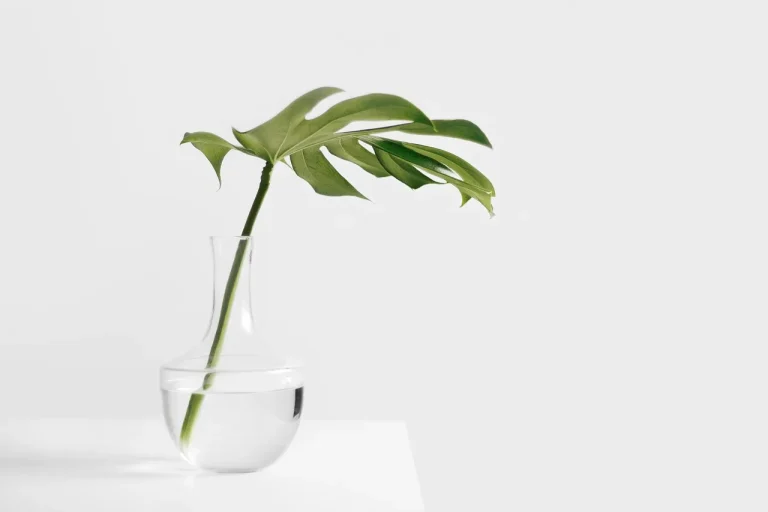
| Monstera | Water propagation from a node with an aerial root | Low to moderate | Propagate now if you have a healthy node and strong indoor light |
| African violet | Leaf cuttings in a warm, bright area | Moderate | Propagate now only with stable warmth and bright, indirect light |
Can you propagate houseplants in winter?
Yes, but only under controlled indoor conditions. Winter propagation works best when the room stays warm, the light is bright but indirect, and the plant is one that roots reliably from the chosen method. If any of those are missing, the cutting may stall, rot, or stretch weakly instead of rooting.
When winter propagation is worth trying
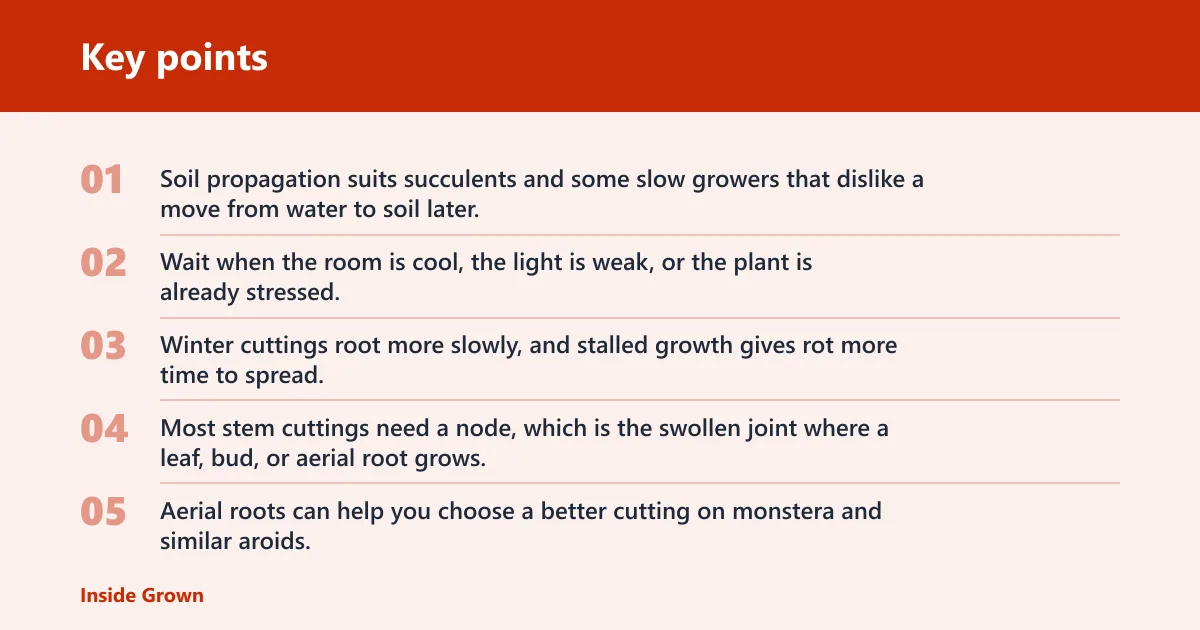
Try it when the plant is healthy, the room stays near the rooting range, and you can keep the medium or water clean and stable. Water propagation suits plants like pothos, philodendron, monstera, tradescantia, and hoya because the roots are easy to monitor. Soil propagation suits succulents and some slow growers that dislike a move from water to soil later.
When to wait until spring
Wait when the room is cool, the light is weak, or the plant is already stressed. Winter cuttings root more slowly, and stalled growth gives rot more time to spread. If the parent plant is already dropping leaves, showing mushy stems, or sitting on a cold windowsill, spring is the better choice.
What cuttings need to root indoors
Most stem cuttings need a node, which is the swollen joint where a leaf, bud, or aerial root grows. That is where new roots form on many plants. Clean, sharp scissors or snips should be sterilized before cutting, and the cut should be made just below a node so the rooting tissue stays intact.
Aerial roots can help you choose a better cutting on monstera and similar aroids. If a stem already has one, it often roots faster than a bare section because the plant has already formed root-ready tissue at that node.
Rooting hormone is optional, but it can help harder species. It belongs on the trimmed end, not in the bottle. Use only a light coating; too much does not speed rooting and can complicate moisture control.
Warm room temperature and bright, indirect light
Warm rooms are the best base for winter propagation. A rooting range of about 64 to 80°F usually works better than a cold windowsill, because it helps keep callus formation and root growth moving. Bright light that does not strike the cutting directly gives enough energy without scorching tender tissue.
Cold glass and dark corners are both problems. A cutting on a chilly sill may sit wet for days, and that extra time raises the chance of rot. Bright, indirect light near a warm room is the better setup.
Moisture control and rooting hormone
Moisture control matters more in winter than almost anything else. Soil should be lightly moist, not soaked, and leaves should stay out of water. In water propagation, the roots should be kept in water, but no leaves should be submerged, and the water should be replaced completely after one week.
A pothos cutting in a clear jar on a bright shelf in a room around 70°F may develop roots in about 2 to 4 weeks If the water stays fresh and only the node is underwater, roots can develop in about 2 to 4 weeks. If the same cutting sits in a cold room with cloudy water and a submerged leaf, rot risk rises fast.
Should you use water or soil in winter?
Use the method that fits the plant, not the one that is trendy. Water propagation works best when you want to watch roots form and the species roots easily. Soil propagation fits plants that do poorly when moved from water to mix later, especially succulents and some slower growers. Division is the cleanest choice for plants that make clumps or separate crowns.
Water propagation for visible-root plants
Water propagation is a strong choice for pothos, philodendron, monstera, tradescantia, and hoya. Most water-propagated houseplants take about 2 to 4 weeks to root, and pothos is one of the easiest plants to root in water. Pothos cuttings usually develop new roots after about 2 to 4 weeks.
Use a clean container, keep only the node underwater, and change the water completely after one week. When roots are about 1 inch long, the cutting is often ready for potting. Wait too long in water and the roots may adapt poorly when moved to soil.
Soil propagation for plants that hate transplant shock
Soil propagation uses a lightly moist, well-draining mix and often reduces transplant shock compared with water roots. This approach fits succulents better than water, and it can work for some stem-cutting plants if the mix drains well and the room stays warm. Keep the medium barely damp, not wet.
String of Hearts can be propagated in water or directly in soil, which makes it a useful example of a plant that can work either way. Even then, winter success still depends on warmth and light. A cool shelf and soggy mix can ruin an otherwise easy plant.
When division is the better choice
Division is the best winter option for plants that grow from multiple crowns or rhizomes rather than from simple stem cuttings. ZZ plant is easy to propagate by dividing the plant in half. Snake plant is also better divided than pushed through a weak winter cutting. Each section should have roots and leaves.
That is the key difference: division gives you an already-rooted section, while cuttings must build roots first. In winter, that extra step matters. If you can divide instead of waiting for a cutting to root, you usually lower the risk of loss.
Which houseplants are easiest to propagate in winter?
The easiest winter candidates are the plants that root reliably, tolerate indoor conditions, and do not need a long rooting period to stay viable. Pothos, philodendron, tradescantia, spider plant, and some hoya are the strongest cutting choices. ZZ plant and snake plant are better divided, not cut.
Easy winter cuttings
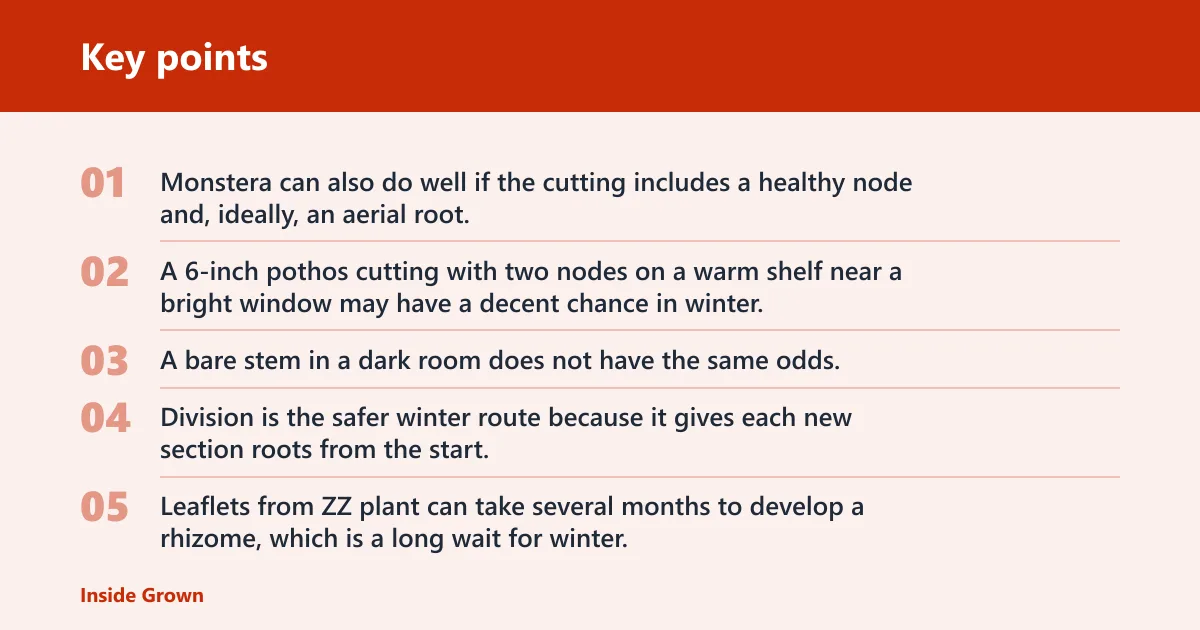
Pothos is the clearest yes. Tradescantia can root within a couple of weeks under favorable conditions, and spider plant plantlets are usually straightforward if you already have offsets. Monstera can also do well if the cutting includes a healthy node and, ideally, an aerial root.
A 6-inch pothos cutting with two nodes on a warm shelf near a bright window may have a decent chance in winter. That cutting has a fair chance in winter because the method matches the plant and the environment supports rooting. A bare stem in a dark room does not have the same odds.
Plants to divide instead
ZZ plant and snake plant belong here. Division is the safer winter route because it gives each new section roots from the start. Peace lily and calathea are also often better handled by division than by forcing weak winter cuttings, especially when the indoor light is poor.
High-risk plants to hold until spring
Hold off on species that root slowly, bruise easily, or stall badly in short-day conditions unless you can give them strong indoor light and steady warmth. Leaflets from ZZ plant can take several months to develop a rhizome, which is a long wait for winter. If the plant is already struggling, spring is the safer season.
How to stop winter cuttings from rotting
Rot prevention starts before the cutting is even placed in water or mix. Use sterilized tools, make a clean cut below the node, and remove any leaves that would sit in water or wet medium. Then keep the setup stable, because winter rot usually begins when cool conditions and excess moisture meet.
-
Sterilize the snips.
Wipe or clean the blades before cutting so you do not move disease from one stem to another. Clean, sharp scissors or snips make a cleaner wound and lower the chance of rot. -
Cut below a node.
Take the cutting just below the swollen joint where roots are likely to form. Most stem cuttings need that node for successful rooting. -
Remove low leaves.
Strip off any leaves that would touch water or sit below the soil line. Leaves in water or buried in wet mix rot quickly. -
Control moisture.
Keep soil lightly moist, not soaked, and refresh water completely after one week. In winter, overwatering is the fastest path to stem rot. -
Keep it warm.
Place the cutting in a room near the rooting range rather than on a cold sill. Warmth speeds callus and root development and shortens the time rot has to start.
A common first-timer mistake is leaving a soft stem in a cool jar for two weeks because the water looks clear. The cutting may still fail if the room is cold and the node never gets enough warmth to root before tissue breaks down.
What temperature do cuttings need to root?
Winter cuttings often root best in a warm room, commonly around 64 to 80°F. That range is more stable than a cold windowsill and supports faster callus and root development. If the room feels chilly enough that you avoid sitting there, the cutting will likely feel it too.
Cold windowsills are a frequent problem because the air temperature near the glass can be lower than the rest of the room. That slows rooting and keeps the cutting wet for longer. A shelf a little farther from the glass often works better than the sill itself.
Simple indoor setup checks
-
Check the room first.
If the space is not warm enough for a person to sit comfortably, it is probably not warm enough for fast rooting. -
Move away from cold glass.
Keep cuttings off direct contact with windows, especially at night. A few feet can make a difference in winter. -
Keep conditions steady.
Avoid moving cuttings back and forth between warm and cool rooms. Stability matters more than chasing the brightest spot.
How much light do winter cuttings need?
Winter cuttings need bright light that does not hit them directly. A bright window or a room with strong ambient light works, but the stems and leaf cuttings should not sit in harsh sun. That balance gives enough energy for rooting without drying or scorching tender tissue.
Direct sun can stress fresh cuts, especially in a dry winter room. A bright east-facing or filtered south-facing spot often works well if the cutting is not sitting in the beam. If the leaves bleach, curl, or dry at the edges, the light is too intense.
Best placement near a bright window
Put the cutting close enough to get strong light, but not pressed to the glass. A sheer curtain, nearby shelf, or plant stand just off the window often gives the right balance. The goal is bright, indirect light with a warm room behind it.
Say an African violet leaf cutting is in a warm area with bright, indirect light. That is the setup it prefers in winter. Put the same leaf in a hot sunbeam, and the tissue can dry before roots form.
Can you propagate pothos, monstera, or ZZ plant in winter?
Pothos and monstera can often be propagated in winter if the cutting has a node and the room stays warm and bright. ZZ plant is the exception: cuttings are slow, and division is the better winter method. So the answer depends on the plant and the method, not the calendar alone.
Pothos is one of the easiest plants to root in water, and monstera cuttings with an aerial root are especially useful. ZZ plant leaflets may take several months to develop a rhizome, which is too slow for most winter setups. Divide a ZZ instead of waiting on a cutting.
Frequently asked questions
Can you propagate houseplants in winter successfully?
Yes, if you can provide about 64 to 80°F, bright, indirect light, and a method that fits the plant. Winter success is less about the month and more about stable indoor conditions. If the room is cool or dim, wait until spring instead of forcing a weak cutting through short days.
What houseplants are easiest to propagate indoors in winter?
Pothos, philodendron, tradescantia, spider plant, monstera, and some hoya are among the easier winter candidates. They root reliably when conditions are warm and bright. ZZ plant and snake plant are usually better divided, not taken as cuttings, during the colder months.
Do cuttings root slower in winter?
Yes. Short days, cooler rooms, and slower plant growth all stretch the rooting timeline. A cutting that might root in a couple of weeks in spring can take longer in winter, and that extra time raises the risk of rot if moisture is not controlled carefully.
Should I use water or soil propagation in winter?
Use water for plants that root easily and where you want to watch progress, such as pothos, philodendron, monstera, tradescantia, and hoya. Use soil for succulents and some slower growers. Choose division for ZZ plant and snake plant, which are safer split than forced through cuttings.
What temperature do plant cuttings need to root?
A warm room in the 64 to 80°F range is a practical target for winter rooting. Cold windowsills slow callus and root growth, so a stable indoor spot away from cold glass is usually better. Consistent warmth matters more than chasing the brightest but coldest corner.
How do I stop winter cuttings from rotting?
Use sterilized tools, cut below a node, keep leaves out of water, and keep the medium lightly moist rather than soaked. Replace water completely after one week. Bright light that does not strike the cutting directly and a warm room help the cutting root before decay gets started.
When is the best time of year to propagate houseplants?
Houseplant propagation is best during the growing season, usually early spring through early fall. Rooting is faster then, and plants recover more readily. Winter can still work indoors, but only when warmth, light, and method all line up well.