Should You Mist Houseplants in Winter?
Mist houseplants in winter only as a short-term cosmetic fix, and skip it if the room is cold, the air barely moves, or the plant is prone to leaf disease. Wet leaves in cool, still conditions can lead to spotting, rot, and fungal problems. This guide explains when misting helps, when it backfires, and better ways to raise humidity.
Winter risks of misting foliage plants
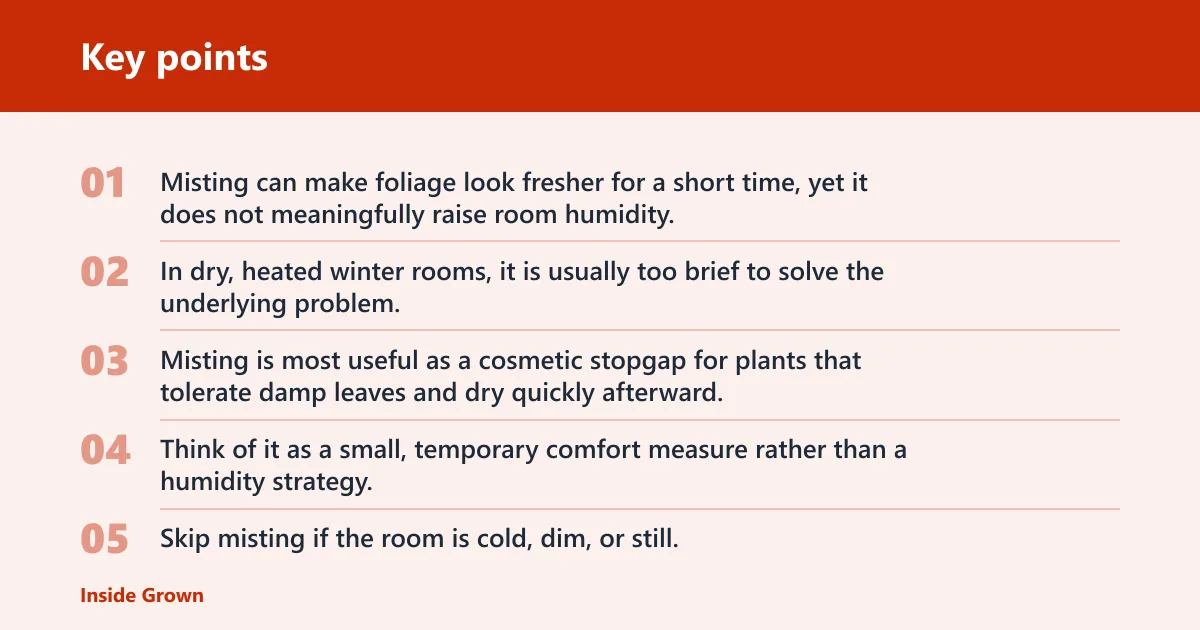


Yes, but only in limited situations. Misting can make foliage look fresher for a short time, yet it does not meaningfully raise room humidity. In dry, heated winter rooms, it is usually too brief to solve the underlying problem.
When misting helps a little
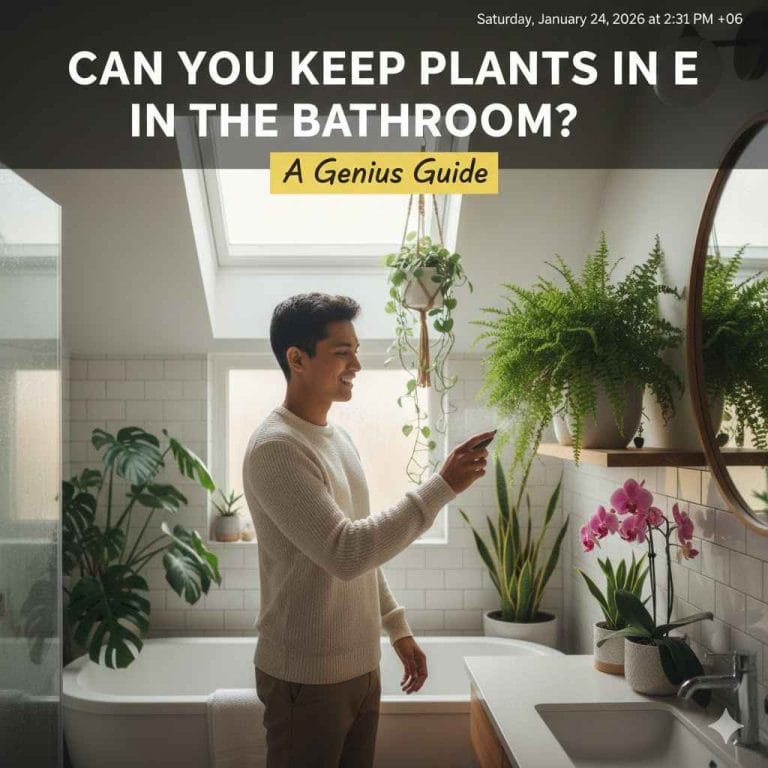
Misting is most useful as a cosmetic stopgap for plants that tolerate damp leaves and dry quickly afterward. That can include some tropical foliage plants in a bright bathroom or another room with decent air movement. Think of it as a small, temporary comfort measure rather than a humidity strategy.
When to skip it
Skip misting if the room is cold, dim, or still. In winter, heating dries indoor air and slows drying on leaf surfaces, which can increase spotting and fungal trouble. If the plant already has leaf issues, misting can add risk without fixing the real cause.
Say your plant is a peace lily on a living-room shelf near a vent. A light mist may make the leaves look better for an hour, but the room is still dry, and the foliage may stay wet long enough to create problems. A humidifier or a different room is the better fix.
What does misting actually do?
Misting puts water on the leaf surface, not into the room air. That is why the effect fades quickly. It can freshen a plant’s appearance, but it does not replace normal watering, improve root-zone moisture, or correct winter dryness in a lasting way.
Temporary surface moisture
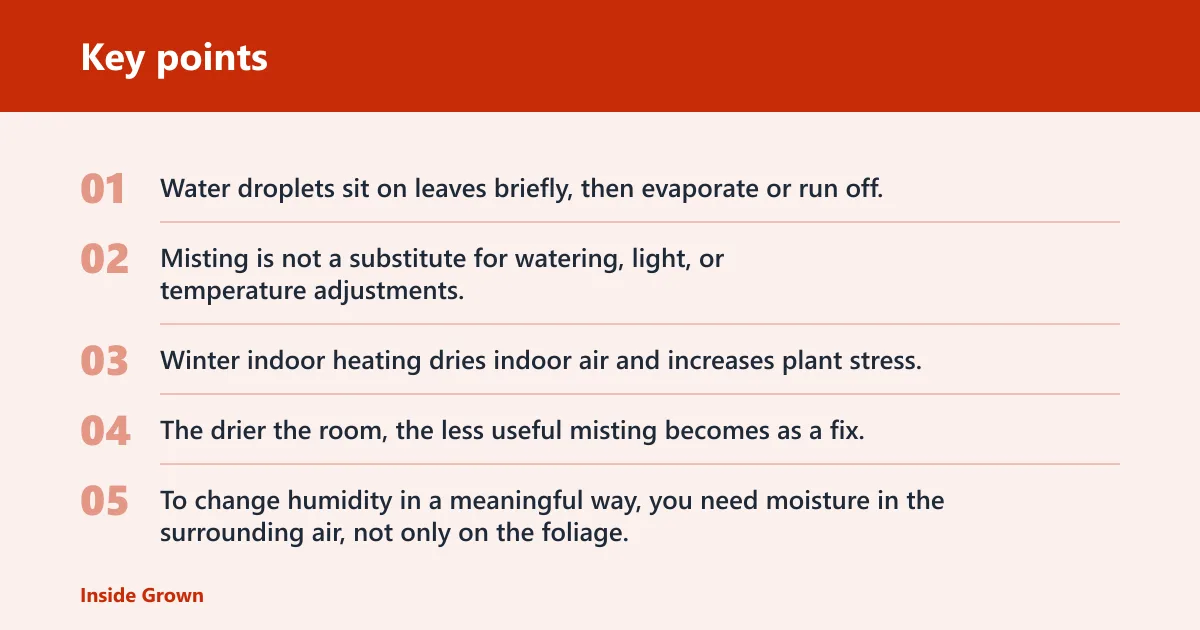
Water droplets sit on leaves briefly, then evaporate or run off. That can make a plant look less dusty and slightly perkier for a moment, but it does not feed roots or solve dry-air stress. Misting is not a substitute for watering, light, or temperature adjustments.
Why it fails in heated rooms
Winter indoor heating dries indoor air and increases plant stress. In that environment, misting may evaporate too fast to matter, or it may sit on leaves in exactly the places you would rather keep dry. The drier the room, the less useful misting becomes as a fix.
Why it is not a humidity fix
To change humidity in a meaningful way, you need moisture in the surrounding air, not only on the foliage. A humidifier is often more effective than misting because it raises ambient humidity around plants. Grouping plants can also create a small humid microclimate when pots sit close together.
Can misting make problems worse?
Yes. Misting can worsen winter foliage problems when plants already face low light, poor airflow, or cool temperatures. Wet leaves are not automatically bad, but they become a liability when they dry slowly or when disease pressure is already high.
Fungal and bacterial risk on wet leaves
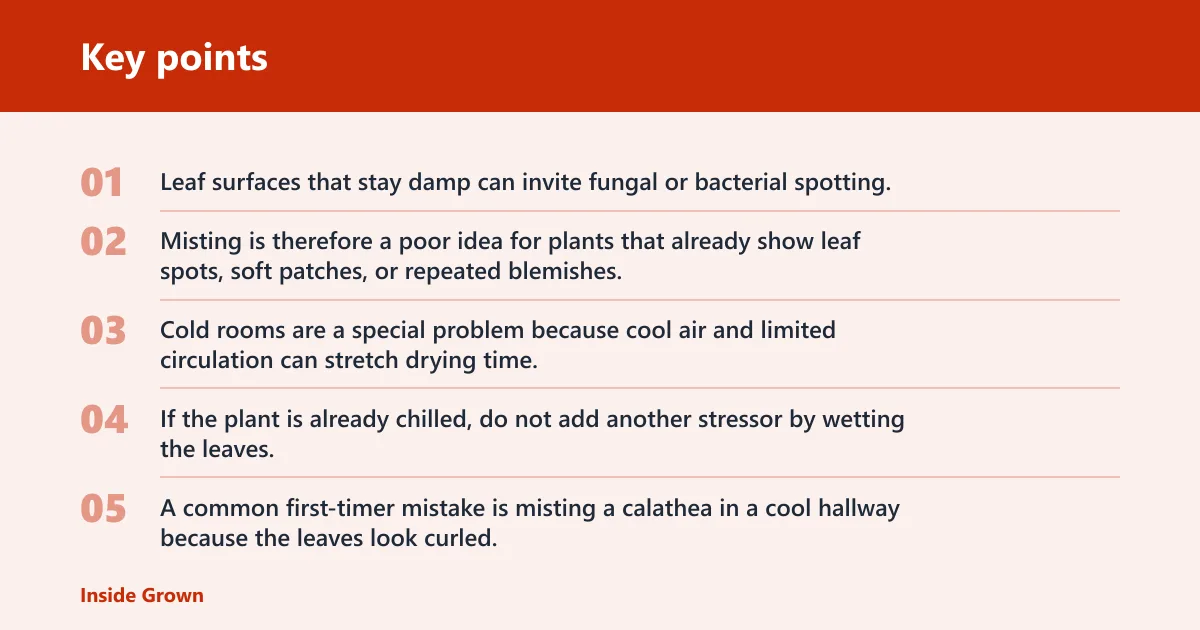
Leaf surfaces that stay damp can invite fungal or bacterial spotting. Misting is therefore a poor idea for plants that already show leaf spots, soft patches, or repeated blemishes. It adds moisture where you want dryness and air exchange instead.
Low light and poor airflow
Low light slows drying. Poor airflow slows it even more. In a dim winter corner, misting can leave droplets on the plant long enough to matter, while the room still stays too dry to help the plant in a useful way.
Cold rooms and slow drying
Cold rooms are a special problem because cool air and limited circulation can stretch drying time. That is when wet foliage becomes a liability rather than a harmless refresh. If the plant is already chilled, do not add another stressor by wetting the leaves.
A common first-timer mistake is misting a calathea in a cool hallway because the leaves look curled. The curling may be a dryness signal, but if the air is cold and still, misting only wets the foliage. A warmer site and better ambient humidity help more than a spray bottle.
Houseplant humidity decision table
Use this quick rule set to match the method to the plant, the room, and the risk level. The best choice is the one that addresses the air around the plant, not just the leaf surface.
| Plant type | Room condition | Whether misting helps | Better alternative |
|---|---|---|---|
| Tropical foliage plants | Bright, warm room with decent airflow | Yes, briefly; the leaves dry quickly, so misting can work as a short cosmetic boost. | Humidifier or plant grouping for a steadier humidity boost. |
| Tropical foliage plants | Dim, cold, or still winter room | No; wet leaves dry slowly, and the extra moisture can raise disease risk. | Move the plant closer to safe light and use a humidifier. |
| Succulents | Typical heated living room | No; dry-adapted plants usually do not benefit from routine misting and may do worse with extra leaf moisture. | Keep watering focused on the soil and let the mix dry properly. |
| Bathroom plants | Bathroom with regular steam and good light | Usually no; for a bathroom plant, the room already provides the humidity misting would try to add. | Monitor soil moisture and avoid adding extra leaf wetness. |
| Mixed houseplant shelf | Heated living room with multiple pots close together | Maybe; it can help only as a light cosmetic boost for tolerant plants, not as a room-wide fix. | Group plants together and add a humidifier if the air stays dry. |
What should you do instead of misting?
If winter dryness is the real problem, focus on ambient humidity and room conditions. A humidifier is more effective than misting for raising the air around plants, and plant grouping can help at low cost. The best choice depends on how dry, bright, and warm the room is.
Use a humidifier
A humidifier is the clearest answer when several plants are showing winter dryness in the same room. It raises humidity around the group rather than wetting one leaf surface at a time. That makes it far more useful in heated interiors where the air stays dry for long stretches.
Group plants together
Grouping plants can raise humidity around them a little by trapping moisture from transpiration in a small area. It works best when pots sit in close proximity. It is a low-cost alternative, but it is not equal to a humidifier, especially in very dry rooms.
Choose room-specific fixes
Bathroom conditions often support higher humidity, so plants that like moisture may do better there than on a heated shelf in the living room. For dry rooms, consider a humidifier first. For plants that resent wet foliage, leave the mist bottle alone and solve the room problem instead.
What should you check before you mist?
Check the room first, then decide whether misting is worth it. Temperature, light, airflow, and the plant’s overall condition matter more than a fixed spray schedule. In winter, the same mist that seems helpful in one room can be pointless or risky in another.
-
Check the room first.
Look at temperature, light, and airflow before deciding on misting. Winter indoor heating, still air, and low light all make misting less useful and more likely to leave wet leaves sitting too long.
-
Choose the humidity method.
If the room is dry and the plants are humidity-loving, use a humidifier or group pots together. If the plant is drought-tolerant, keep the focus on proper watering and drainage instead of leaf moisture.
-
Move plants if needed.
Place moisture-loving plants where they get bright, indirect light and better air movement. A bathroom can work for some species if the light is sufficient; a cold, dim room usually cannot.
-
Keep misting optional.
Use misting only for a short-lived cosmetic boost on plants that tolerate damp foliage. Stop if you see spotting, slow drying, or any sign that wet leaves are staying wet too long.
How do you know your plant is too dry in winter?
Brown leaf tips can signal low humidity stress, but they are not always caused by underwatering. Curling, crisping, and edge scorch can also point to dry air, especially in heated rooms. Check soil, light, and temperature too, because winter symptoms often overlap.
Brown leaf tips
Brown leaf tips are one of the clearest dry-air clues. They are common in winter because heating season dries indoor air even more. Still, do not assume the cause is only humidity; salt buildup, watering habits, and temperature swings can look similar.
Curling or crisping leaves
Leaves that curl, wrinkle, or turn crisp at the edges often point to stress. If the potting mix is also drying too fast, the room may be too warm, too bright, or too dry for that plant. Misting will not fix those underlying issues.
Check soil, light, and temperature too
Before changing your humidity routine, check whether the root zone is dry, the plant has lost winter light, or the room temperature has dropped. Winter care should be adjusted overall, and one symptom should not trigger a one-size-fits-all response.
Frequently asked questions
Should you mist houseplants in winter?
Only sometimes. Mist houseplants in winter if you want a short-term cosmetic refresh and the plant tolerates damp leaves. Skip it in cold, still, or disease-prone rooms, because the leaves may stay wet long enough to create more problems than it solves.
Does misting houseplants actually increase humidity?
Not in any meaningful or lasting way. The same source puts moisture on the leaf surface, but it does not raise ambient humidity around the plant for long. A humidifier does that job better, especially in heated winter interiors.
Can misting cause fungus or leaf spot in winter?
Yes, it can. Wet foliage is a concern when air circulation is poor, light is low, or the room is cold. In those conditions, droplets can sit on leaves longer, which raises the chance of fungal or bacterial problems.
Which houseplants benefit from misting in winter?
Mostly tropical foliage plants that tolerate or prefer higher humidity and have room to dry quickly afterward. Even then, misting is only a brief stopgap. Succulents and many dry-adapted plants usually do not benefit from it and may be better left dry.
How often should I mist houseplants when heating is on?
There is no useful fixed schedule for every plant. If you mist at all, do it sparingly and only for plants that tolerate wet leaves in a room with decent airflow. Heating dries the air, but it also makes misting less effective as a fix.
What should I do instead of misting to raise humidity?
Use a humidifier first if the room is dry. Group plants together for a small microclimate, and move moisture-loving plants to rooms with naturally higher humidity if light levels still work. Those changes affect the air, not just the leaf surface.