Is a Humidifier Good for Houseplants?
Yes, if your indoor air stays below about 40% relative humidity in winter, a humidifier can help many houseplants, especially tropical foliage plants. If humidity is already moderate, it usually is not worth the extra effort. Used badly, it can leave you with mold, dusty film, and watering mistakes that hide the real cause of leaf damage. This guide explains when a humidifier is worth using, when it is not, and how to set it up without creating moisture problems.
When a humidifier helps or hurts
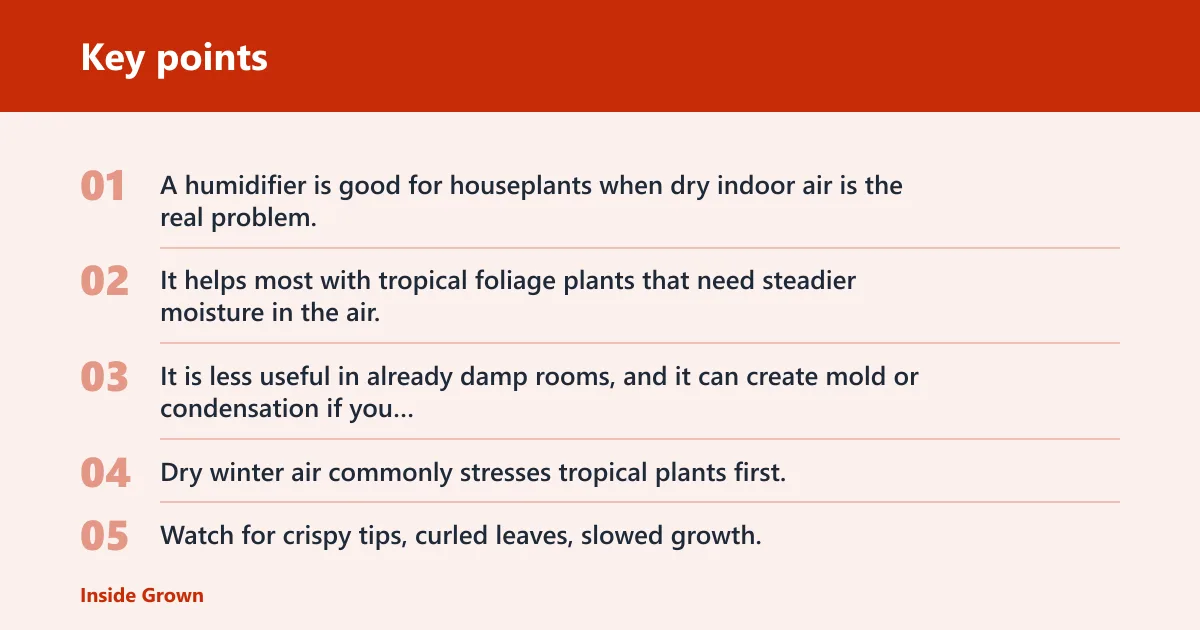


A humidifier is good for houseplants when dry indoor air is the real problem, especially in heated winter rooms where relative humidity drops below about 40%. It helps most with tropical foliage plants that need steadier moisture in the air, such as calatheas, ferns, and anthuriums. It is less useful in already damp rooms, and it can create mold or condensation if you push humidity too high.
When added humidity helps most
Dry winter air commonly stresses tropical plants first. Watch for crispy tips, curled leaves, slowed growth, and edges that dry out while the potting mix still feels normal. That pattern points to low air moisture, not a watering shortage.
Humidity also matters more in rooms with forced-air heat, leaky windows, or a small cluster of plants near a vent. A humidifier can steady the plant zone when the whole room falls dry for weeks at a time.
When it is unnecessary or risky
If your room already stays in the 40% to 60% range, a humidifier may add little. If windows fog, a wall feels damp, or soil stays wet longer than expected, adding more humidity can make things worse.
It is also a poor fix for pests, root rot, nutrient issues, or low light. Those problems can look like humidity stress, but extra moisture will not solve them.
What changes in winter indoor air
Heating systems lower relative humidity fast. That is why a plant that looked fine in autumn can start showing dry leaf edges by midwinter. A hygrometer, placed in the plant area, tells you whether the air is actually dry or whether the problem lies elsewhere.
What humidity levels do houseplants need?
Most houseplants do well around 40% to 60% relative humidity, and that range is a practical target for many homes. Below roughly 40% relative humidity, tropical foliage plants often show stress. Above it, especially in enclosed rooms, mold and mildew risk rises. A hygrometer is the only reliable way to verify the reading where the plants actually sit.
Why a hygrometer matters
Room humidity can differ from one corner to another. A reading by a doorway or thermostat may not match the plant shelf. Put the hygrometer in the growing area and check it at different times of day, especially after the heat runs.
If the number stays stable in range, you do not need to guess. If it swings widely, adjust the humidifier or move the plants before symptoms become confusing.
How room conditions change by season
Winter air is usually the driest season for indoor growing. Summer can bring naturally higher humidity, especially in humid climates or rooms without heavy air conditioning. In those months, the humidifier often moves from helpful to unnecessary.
Picture a living room that reads 34% on a cold morning and 46% by afternoon. That room may need added humidity only during heating hours, not all day. A schedule that follows the room beats one that runs blindly.
Houseplant humidity matrix
This decision table helps you match plant type and room conditions to a useful humidity target, the humidifier style that fits best, and the main sign that says to stop or scale back. It is most useful when you are deciding whether the unit belongs in the room at all.
| Plant type | Current RH | Likely benefit | Best humidifier type | Placement note | When to skip it |
|---|---|---|---|---|---|
| Tropical foliage: calatheas, ferns, anthuriums, alocasias, monstera | Below 40% | High; dry air often shows up as crispy edges, curl, and stalled growth | Cool-mist ultrasonic | Place in the plant zone, about 3 to 6 feet away, with airflow nearby but not on the leaves | Skip if windows condense, soil stays wet, or RH already holds near 50% to 60% |
| Tropical foliage | 40% to 50% | Moderate; useful only if symptoms match dry air and the room swings low at night | Cool-mist ultrasonic | Run on low and verify with a hygrometer in the same zone | Skip if leaves are healthy and the room stays steady |
| Tropical foliage | Above 60% | Low; extra moisture can increase mold, mildew, and leaf-spot risk | Usually none | Use airflow instead of more humidity | Skip when condensation, stale air, or fungal spots appear |
| Mixed room with HVAC dryness and several plants | Below 40% | Moderate to high if the plants cluster together and symptoms are widespread | Cool-mist ultrasonic | Keep the unit in the same room, but not aimed at foliage or shelves | Skip if only one plant looks stressed; check light, watering, and roots first |
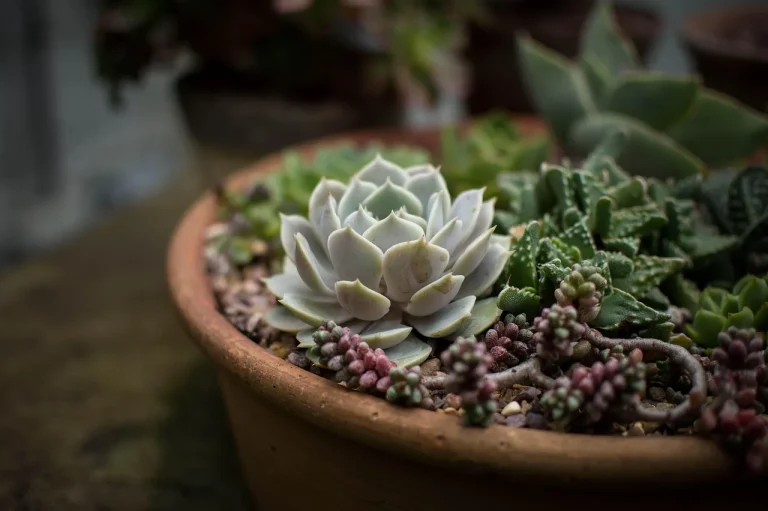
| Succulents and cacti | Any typical indoor RH | Low; these plants are adapted to dry air | Usually none | Keep them away from humid plant zones | Skip unless the space is unusually arid and the plants share a room with tropicals |
What the table is telling you
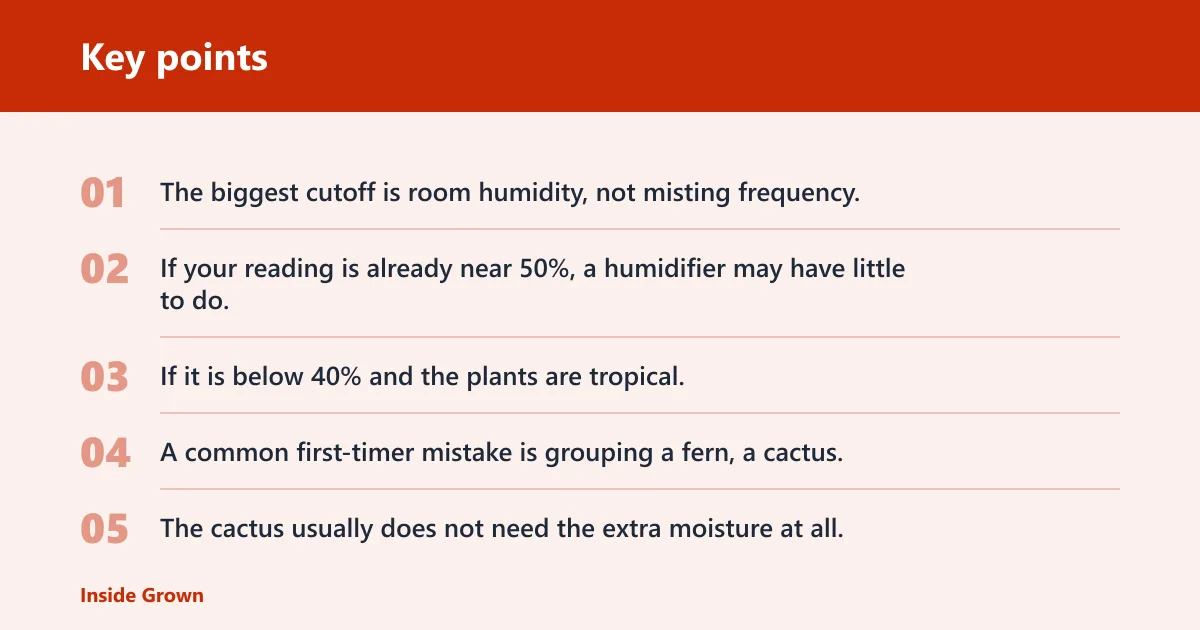
The biggest cutoff is room humidity, not misting frequency. If your reading is already near 50%, a humidifier may have little to do. If it is below 40% and the plants are tropical, the odds improve that added moisture will help.
A common first-timer mistake is grouping a fern, a cactus, and a pothos under one humidity plan. The fern may respond well. The cactus usually does not need the extra moisture at all.
Cool mist or warm mist for plants?
Cool-mist humidifiers are the usual pick for houseplants because they use ultrasonic operation, run quietly, and use less energy. Warm-mist units boil water into steam, which can warm the room a bit, but they are less common for plants and use more energy. For most indoor plant setups, cool mist is the safer default.
Why cool mist is the usual pick
Cool-mist units fit the plant room better because they raise humidity without adding heat to a space that already gets warm from lamps or radiators. Wirecutter recommends the Levoit LV600S as a top humidifier pick, and Wirecutter describes it as a smart hybrid ultrasonic humidifier. Good Housekeeping names the Levoit Classic 300S its best overall humidifier and says it is a cool-mist ultrasonic humidifier.
Good Housekeeping also notes that humidifiers can help protect wood floors, artwork, and electronics from low humidity. That is useful context for plant rooms, where dry air often affects more than one thing.
What warm mist changes in the room
Warm mist can make sense if the room is cold and the plants are in a space that benefits from a little extra warmth. Even then, it is less common for plants. The higher energy use and steam make it a poorer default choice for shelves, small rooms, and mixed plant areas.
When each type makes sense
Use cool mist for most tropical plant rooms. Consider warm mist only when you want gentle room warmth along with humidity and you can keep it away from children, pets, and crowded plant surfaces. For most readers, cool mist still wins on practicality.
How far should a humidifier be from houseplants?
Place the humidifier in the immediate growing area, but not so close that leaves stay wet. A practical starting distance is about 3 to 6 feet away from the nearest plant. That keeps the air moist without creating damp foliage, puddling, or a fogged shelf.
Why leaves should stay dry
Wet leaves invite leaf-spot issues and make it harder to tell whether damage comes from humidity, disease, or overwatering. A humidifier should change the room air, not sit like a mist nozzle over the canopy.
How to avoid condensation and stagnant air
Watch windows, cold walls, and tight corners. If condensation appears, the humidifier is too strong, too close, or running too long for the room. If air feels heavy and still, add airflow before you add more moisture.
Suppose a plant shelf sits 2 feet from a cool-mist unit and the lowest leaves stay damp by morning. Move the unit farther away, lower the output, and check the hygrometer again after the room settles. The goal is steady humidity, not wet plants.
Can a humidifier cause mold on houseplants?
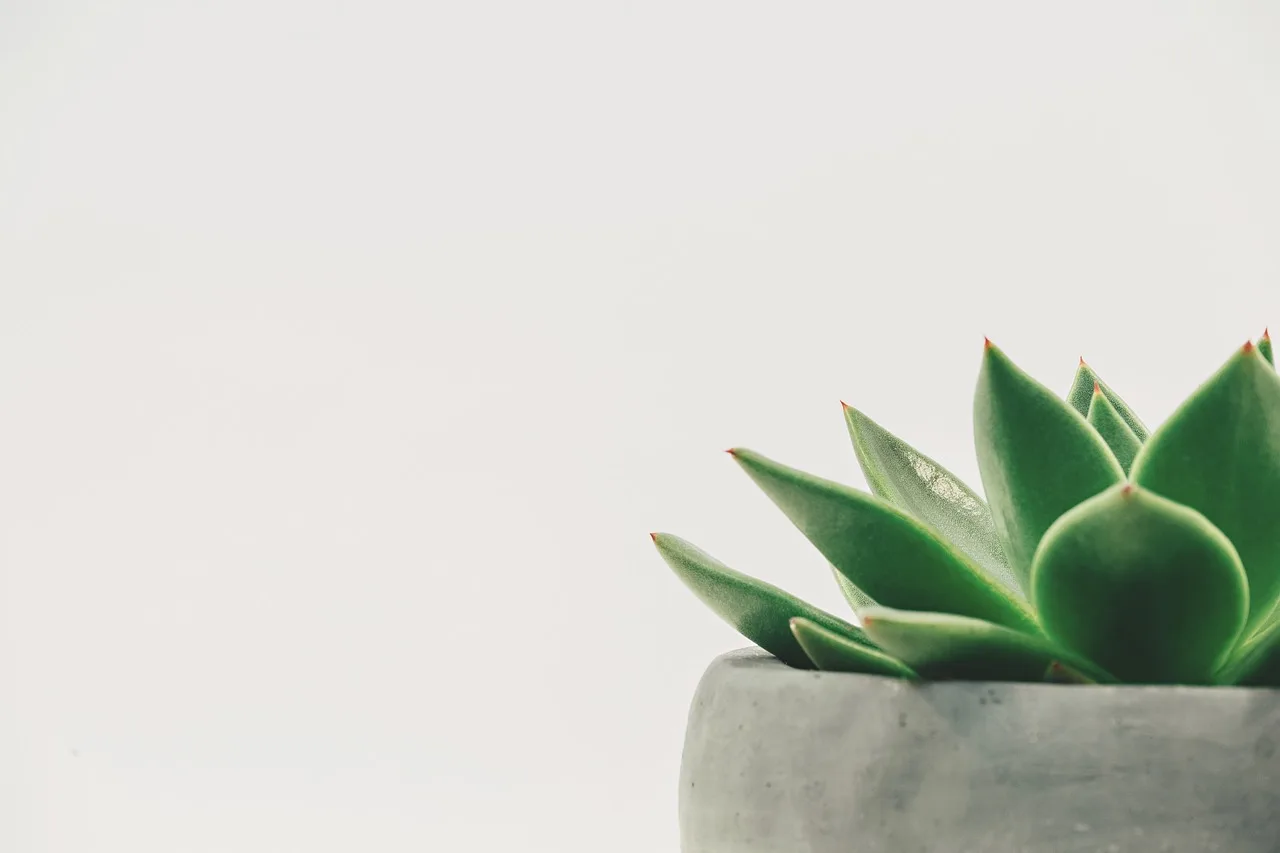
Yes. Too much humidity, poor airflow, and damp surfaces can raise mold and mildew risk around plants and in the room itself. The warning signs include fuzzy soil growth, leaf-spot lesions, condensed windows, and a stale smell. If those show up, the setup needs less moisture and more movement.
Why airflow matters
Airflow keeps humidity from turning stagnant. A small fan can help, but it should not blow directly on foliage. Direct airflow dries leaves too fast and can push mist around in a way that defeats the point of humidifying the room.
Use a gentle cross-breeze or a fan aimed past the plants, not through them. That helps leaves dry normally and lowers the chance of fungal problems.
Warning signs to watch
Condensation on windows means the room may be too humid for the temperature. Fungal leaf spot often shows as dark or tan lesions that spread, not as crispy edges. Mineral dust looks like a pale film on leaves or furniture and usually points to hard water in an ultrasonic unit. Damp soil alone is not proof of benefit.
Water, cleaning, and mineral dust
Distilled water helps reduce white dust from ultrasonic humidifiers and limits mineral residue on leaves and nearby surfaces. It is the simplest way to keep the room cleaner if your tap water is hard. Regular cleaning matters too, because residue and standing water can turn the unit into a maintenance problem.
Why distilled water helps
Ultrasonic humidifiers break water into a fine mist, and dissolved minerals can travel with it. Those minerals can settle as a white film on furniture, shelves, and foliage. Distilled water greatly reduces that problem.
How to reduce white dust
- Use distilled water in the reservoir.
- Keep the unit in the plant zone, not directly beside leaves.
- Run the humidifier on the lowest setting that holds the target range.
- Check the hygrometer in the same area, not across the room.
- Wipe leaves and surfaces if a film appears.
Maintenance habits that keep the unit safe
Empty the tank regularly, let it dry, and descale on schedule so buildup does not collect inside. Follow the manufacturer’s cleaning steps, and inspect for slime, odor, or visible residue. If the unit smells off, scale builds fast, or the mist leaves a powdery film, it needs a deeper clean before it goes back near the plants.
How do you know if your humidifier is helping your plants?
You know it is helping when the hygrometer stays in the target range and the plants stop showing new dry-edge damage. Look for fewer crispy tips, less leaf curl, and slower loss of moisture from tender foliage. The room should read stable, not spike and crash around the plants.
What improvement looks like
Improvement usually shows up slowly over days, not hours. New leaves may open more normally, and older leaves may stop worsening. The humidifier is working if the plant zone holds around 40% to 60% and the same dry-air symptoms no longer spread.
How to tell if the problem is something else
If leaves still yellow, spots spread, or soil stays wet for too long, humidity is probably not the main issue. Check roots, light, and watering habits first. Humidity helps dry-air stress; it does not repair rot or poor drainage.
Frequently asked questions
Is a humidifier good for houseplants?
Yes, especially for tropical plants in winter dry air. It helps most when room humidity falls below about 40% and the plants show crispy edges, curl, or stalled growth. If the room already stays near 40% to 60%, the benefit is usually small.
Is a cool mist humidifier good for house plants?
Yes. A cool-mist humidifier is the usual choice for plants because it is quiet, energy-efficient, and less likely to warm the room. Keep it in the growing area, not aimed at leaves, and use a hygrometer to confirm the room stays in range.
Should I use cool mist or warm mist for plants?
Cool mist is the default for most houseplant setups. Warm mist boils water into steam and may warm the room, but it uses more energy and is less common for plants. Choose warm mist only if the room needs both gentle warmth and added humidity.
Do succulents need a humidifier?
Usually not. Succulents and cacti are adapted to low humidity and generally do not need extra moisture in the air. Keep them away from humid plant zones so they do not sit in a room setup built for tropical foliage instead.