How to Clean Houseplant Leaves in Winter Safely
Use a dry microfiber cloth for smooth leaves, a barely damp cloth for firm matte leaves, and skip wiping fuzzy or water-sensitive foliage. Keep the room at least about 65°F before cleaning. Bad timing can bruise leaves, leave spots, or chill tropical plants enough to slow growth. This guide gives a winter-safe decision tree for leaf type, room temperature, and moisture sensitivity, plus the safest dust-removal method for each.
What you’ll need



- Soft microfiber cloth
- Soft sponge
- Soft paintbrush or makeup brush
- Dusting feather
- Clean spray bottle
- Lukewarm shower spray
- Plain water
- Very mild soap solution for sticky residue
Do you need to clean them today?
Clean today only if the plant is warm, settled, and visibly dusty, or if you need to inspect for pests. Winter light is weaker, so dust removal matters more, but cold rooms, wet soil, and recently stressed plants raise the damage risk. If the room is chilly or the plant is already struggling, wait.
- Clean today. The room stays at or above 65°F, the plant is dry on top, and the leaves only have dust or light spots.
- Wait. The plant was watered recently, the room is close to a cold window, or heating has left the foliage limp and dry.
- Skip wiping. The plant has fuzzy, hairy, very thin, or waxy leaves that bruise or spot easily.
Do not clean today checklist
- Room below 65°F.
- Plant sits beside a cold window tonight.
- Leaves look wilted, sunken, or stressed.
- Soil was watered recently and foliage is still damp.
- Plant is a succulent, cactus, or another moisture-sensitive type that does not need wiping.
Winter leaf cleaning decision table
| Leaf type | Safest method | Water temperature | Dry-time warning | Red flags to stop cleaning |
|---|---|---|---|---|
| Smooth tropicals | Dry microfiber cloth, then barely damp cloth if dust clings | Lukewarm | Dry naturally within about 30 to 60 minutes in a warm room | Streaking, soft spots, or leaves that feel cold after wiping |
| Large leathery leaves | Soft sponge or damp microfiber cloth; support the leaf from below | Lukewarm | Do not let water sit in the leaf base or on the underside | Over-wiping, bent stems, or white mineral spots |
| Fuzzy leaves | Soft paintbrush or makeup brush; skip wet wiping | None unless a brush is slightly damp | Avoid moisture unless a spot must be lifted from the edge | Matting, dark patches, or rubbed-down fuzz |
| Small delicate leaves | Dusting feather or very soft brush | None or barely lukewarm mist on the cloth, not the plant | Handle in short passes so the foliage does not bend | Bruising, snapped stems, or water trapped in tight clusters |
| Palms | Shower spray or soft rinse; finish with gentle shake-off | Lukewarm | Keep away from cold windows until fully dry | Browning tips, chill, or water sitting in crowns |
| Ferns | Fine lukewarm shower or very light rinse | Lukewarm | Needs airflow and natural drying; no hot sun | Fronds that fold, crisp, or cling together after cleaning |
| Succulents and cacti | Dry brush only, or skip unless dust is heavy | None | Any added moisture can linger too long in winter | Softening, spotting, or water caught between stems and leaves |
How to clean houseplant leaves safely

- Check the room first. Clean only when the room is at least 65°F and the plant is away from a cold window. Winter light is weaker, so damaged leaves recover more slowly.
- Match the method to the leaf. Use a dry microfiber cloth for smooth leaves, a soft sponge for firm leathery leaves, and a soft brush for fuzzy or tiny foliage. Support each leaf with your free hand so the stem does not snap.
- Wipe from base to tip. Make one light pass, then stop. Repeating the same spot can bruise leaves and strip the natural coating that helps them shed water.
- Clean the undersides carefully. Turn the leaf only as far as it bends easily. Dust on the undersides matters too, but tight twisting can tear petioles and crease new growth.
- Rinse only the right plants. Use lukewarm shower spray for ferns, orchids, and palms when dust is heavy. Hold the pot steady, keep the spray gentle, and avoid blasting the crown or soil.
- Let leaves dry naturally. Move the plant out of direct sun and away from a cold pane while it dries. Hot sun after cleaning can scorch damp foliage, and cold glass can chill it fast.
Say your palm sits on a shelf near a drafty window and the room drops fast at night. A lukewarm shower can still work, but only if the plant has time to dry fully before evening. Move it back to the window only after the fronds are dry and the room is warm again.
Can you use water, soap, or vinegar?
Plain water is the standard choice for dust, very mild soap is a backup for sticky residue, and vinegar or lemon mixes are for stubborn mineral film only. Strong mixes can burn leaves, and hard water can leave white marks. Keep every solution weak, rinse lightly if needed, and stop if the leaf surface looks dull or patchy.
Plain water for most dust
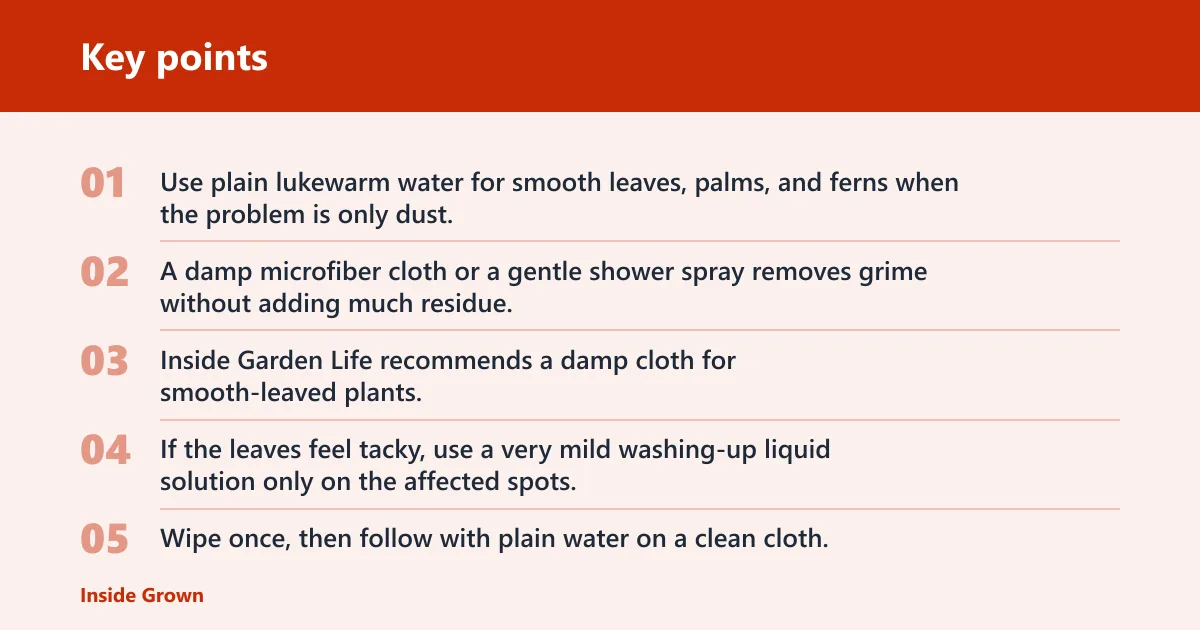
Use plain lukewarm water for smooth leaves, palms, and ferns when the problem is only dust. A damp microfiber cloth or a gentle shower spray removes grime without adding much residue. Inside Garden Life recommends a damp cloth for smooth-leaved plants.
Mild soap solution for sticky residue
If the leaves feel tacky, use a very mild washing-up liquid solution only on the affected spots. Wipe once, then follow with plain water on a clean cloth. The same source says washing-up liquid belongs only in a very mild, heavily diluted form for sticky residue.
Hard-water spots need a different response from sap or honeydew. White residue often comes from mineral deposits, while sticky residue usually points to plant sap or pests. Keep the fix narrow so you do not over-clean healthy foliage.
When diluted vinegar or lemon juice is risky
Diluted vinegar or diluted lemon juice can remove mineral film, but both can also burn leaves if the mix is too strong or left on too long. JoyusGarden warns that vinegar needs care because too much can damage foliage. Use these only on stubborn mineral spots, and test one leaf first.
How often should you clean leaves in winter?
For most houseplants, a monthly cleaning is a practical winter rhythm, especially in rooms that collect dust or sit under heating vents. Homes & Gardens suggests a monthly session, and Inside Garden Life also recommends monthly cleaning for most rooms. Dust builds faster in heated homes, so some plants may need attention more often.
- Monthly. Smooth tropicals, palms, and other visible foliage in average rooms.
- Every few months. Deeper rinses for ferns, larger plants, or collections that only gather light dust.
- More often. Dusty homes, rooms with forced-air heat, or plants near busy entryways.
- After pest treatment. Clean again once the plant is dry and stable, so you can inspect for missed pests or residue.
Common mistakes
Most winter damage comes from overdoing a good idea. A gentle method done at the wrong time can bruise foliage, leave spots, or chill a plant that was already coping with dry indoor air.
- Using leaf shine. Avoid commercial leaf shine products and oily sprays. The Sill warns that oily sprays can clog stomata, and Inside Garden Life says leaf shine products can clog pores and attract dust.
- Scrubbing fuzzy leaves. Fuzzy or hairy leaves, such as African violets, should not be scrubbed. Use a soft brush or skip cleaning if the fuzz is heavy.
- Cleaning right before a cold night. Do not wash a plant and then leave it near a cold window. Let it dry naturally first, and keep it out of hot sun while it dries.
- Using cold or hot water. Lukewarm water is the safer middle ground for showering or rinsing. Extreme temperatures can shock foliage.
- Relying on misting. Misting may raise humidity briefly, but it does not remove dust well. It is not a cleaning method.
Suppose a ficus has a thin layer of dust plus a few white spots near the edge of one leaf. Wiping hard across every leaf can smear the spots and bruise the surface. A damp cloth on the dusty leaves, then a separate treatment for the mineral mark, is the safer split.
Frequently asked questions
How do you clean houseplant leaves without damaging them?
Pick the least forceful method that fits the leaf. Dry microfiber for smooth leaves, a soft brush for fuzzy or small foliage, and lukewarm water only for plants that tolerate rinsing. Support the leaf with one hand and stop as soon as the dust lifts.
Can I wipe houseplant leaves in winter?
Yes, if the room is warm enough and the plant is not stressed. Keep the temperature at least 65°F, avoid cold windows, and use a barely damp cloth only when dry wiping is not enough. Winter leaves dry more slowly, so do not soak them.
What should I use to clean dusty houseplant leaves?
Start with a soft microfiber cloth. If the dust is stubborn, switch to a clean spray bottle with plain lukewarm water, then wipe once. For palms and ferns, a lukewarm shower spray can work well, but keep the spray gentle and the drying area warm.
Should I use water, soap, or vinegar on plant leaves?
Use water for ordinary dust, a very mild soap solution for sticky residue, and vinegar only for stubborn mineral spots. If you choose vinegar, dilute it carefully and test one leaf first. Strong mixes can burn foliage, especially in dry winter air.
How do you clean fuzzy houseplant leaves?
Use a soft paintbrush or makeup brush and move in one direction. Do not scrub, rub, or spray the fuzz unless a label or species-specific need clearly calls for it. Fuzzy leaves bruise and hold moisture in the hairs, which raises spotting risk.
Can you use leaf shine on houseplants?
It is better to avoid it. Oily leaf shine products can clog pores and attract more dust, so they often create the opposite of the desired result. If leaves already have residue, wipe them with plain water or a very mild soap solution instead.
How often should I clean my houseplant leaves in winter?
Monthly works for most rooms. If your home is dusty or heated air leaves visible buildup sooner, clean a bit more often. For plants that get showered or rinsed, a deeper clean every few months is usually enough unless pests or residue appear sooner.
Is misting enough to clean plant leaves?
No. Misting adds moisture but does not remove settled dust well. Use it only if a plant likes higher humidity, and treat it as a humidity step rather than a cleaning method. For dust, use a cloth, brush, or gentle rinse.
How do I clean sticky residue off houseplant leaves?
Wipe the residue with a cloth dampened in a very mild soap solution, then go back over the area with plain water. Sticky film often comes from sap or pest honeydew, so inspect stems and leaf undersides after cleaning. If the stickiness returns, check for pests.
Should I shower houseplants to clean the leaves?
Yes, for some plants. The Sill says showering works well for ferns, orchids, and palms, and it recommends lukewarm water rather than cold or hot water. Skip the shower for succulents, cacti, and fuzzy leaves that spot or rot easily.