Winter Houseplant Care for Beginners: Easy Plants to Keep Alive
The easiest winter houseplants for beginners are snake plant, ZZ plant, pothos, spider plant, and cast iron plant, ranked from toughest to less fussy; in winter, water only after the soil has dried more than it would in summer. Skip winter care, and roots rot, leaves drop, and slow-growing plants can decline for months. This guide ranks the easiest options and pairs each one with the single winter mistake most likely to kill it.
Which houseplants are easiest in winter?


Snake plant and ZZ plant are the best winter starter picks because they handle lower light, dry indoor air, and missed waterings better than thirstier plants. Pothos and spider plant are next best when they get bright indirect light. The easiest plants all share one trait: they fail from too much care before they fail from being ignored.
What makes a beginner plant forgiving?
For winter, a forgiving plant keeps growing slowly, stores water in roots or leaves, and does not collapse after one dry week. That matters because indoor humidity can sometimes fall to about 10–20%, while many houseplants prefer closer to about 50% humidity. Plants that handle that swing are the ones to start with.
Which traits matter most in cold months?
Three traits matter most: low-light tolerance, drought tolerance, and roots that dislike soggy soil less than others. Many common houseplants do best around 65° to 75°F during the day and 55° to 65°F at night, but species differ on how much light they need. The easiest plants handle those winter conditions without asking for constant attention.
Why overwatering is the main failure
In winter, growth slows and soil dries more slowly, so the same watering habit that worked in summer can swamp roots. It waters houseplants every 10–21 days in winter, with watering volume cut by roughly 25%. That shift matters most for plants like succulents, ZZ plants, and snake plants, which rot fast if kept wet.
Winter plant matchup table
This quick table ranks eight beginner-friendly plants by winter tolerance and the mistake most likely to kill them. Use it to match the plant to your room, your watering habits, and how dry your air gets.
| Rank | Plant | Light tolerance | Watering frequency band | Humidity need | Cold-risk level | Top winter failure mode |
|---|---|---|---|---|---|---|
| 1 | Snake plant | Low to bright indirect | Every 2–4 weeks | Low | Low | Overwatering in slow soil |
| 2 | ZZ plant | Low to bright indirect | Every 2–4 weeks | Low | Low | Wet mix after a fixed schedule |
| 3 | Pothos | Low to bright indirect | Every 1–2 weeks | Low to moderate | Low | Keeping soil evenly damp |
| 4 | Spider plant | Bright indirect | Every 1–2 weeks | Moderate | Medium | Dry air plus missed watering |
| 5 | Cast iron plant | Low to bright indirect | Every 2–3 weeks | Low | Low | Too much water in dim rooms |
| 6 | Peace lily | Low to bright indirect | Every 1–2 weeks | Moderate to high | Medium | Letting it dry out too far |
| 7 | Philodendron | Low to bright indirect | Every 1–2 weeks | Moderate | Medium | Cold glass and waterlogged soil |
| 8 | Succulents and aloe | Bright indirect to sun | Every 3–5 weeks | Low | High near cold windows | Rot from overwatering |
| Best for your home: Dim room + very forgetful = snake plant or ZZ plant. Bright indirect light + moderate forgetfulness = pothos or spider plant. Brighter room + careful watering = succulents and aloe. Cold windowsills or drafty spots are best avoided by peace lily and philodendron. | ||||||
Best beginner plants for winter
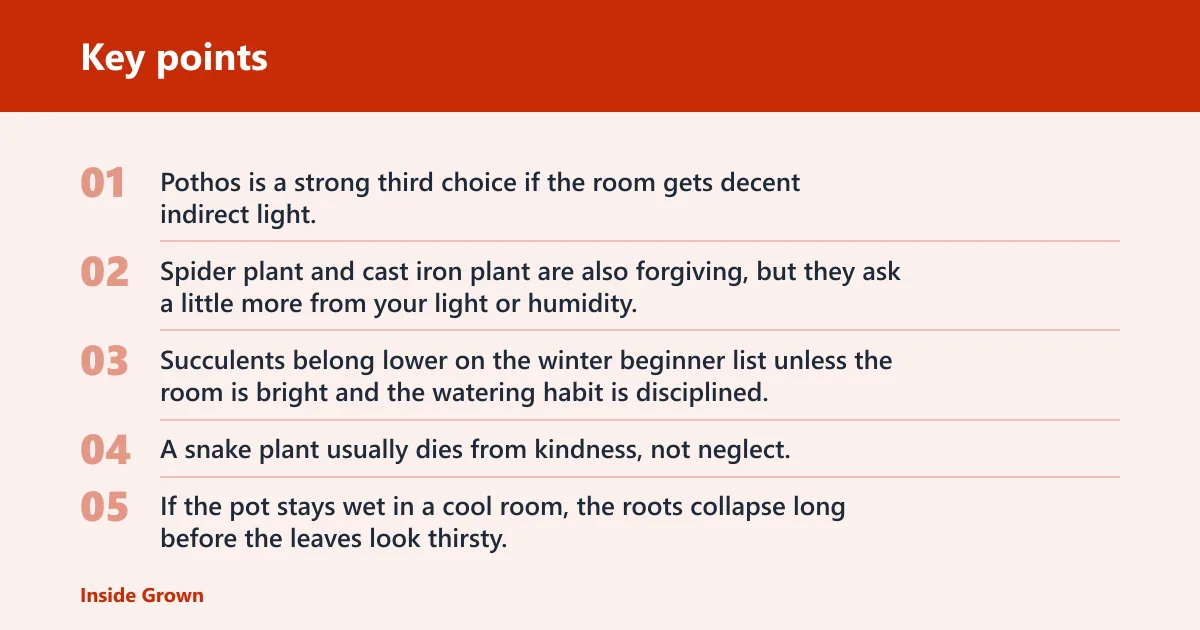
Snake plant and ZZ plant are the safest first buys for a dim room, because both handle lower-maintenance indoor conditions and do not need frequent watering. Pothos is a strong third choice if the room gets decent indirect light. Spider plant and cast iron plant are also forgiving, but they ask a little more from your light or humidity.
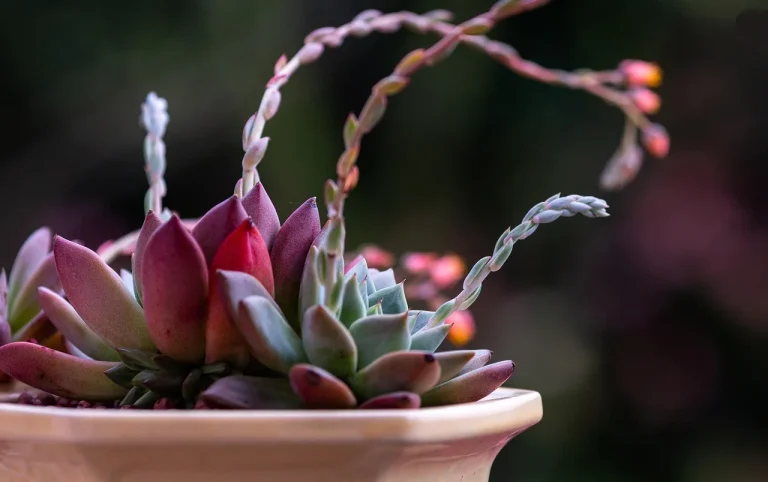
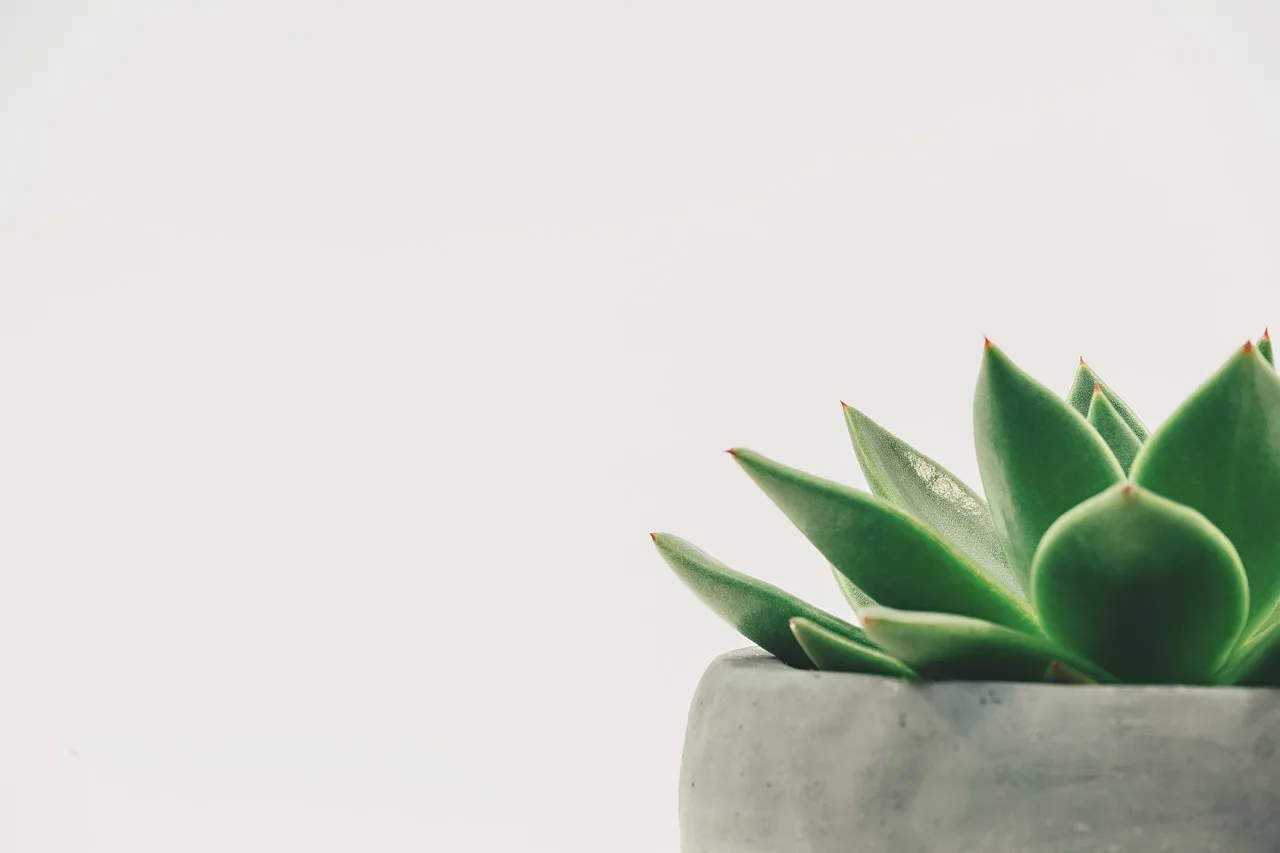
Succulents belong lower on the winter beginner list unless the room is bright and the watering habit is disciplined. They need even less frequent watering in winter, prefer to dry between waterings, and are prone to rot if overwatered. Aloe follows the same rule.
Single winter mistake by plant type
A snake plant usually dies from kindness, not neglect. If the pot stays wet in a cool room, the roots collapse long before the leaves look thirsty.
ZZ plants fail the same way. A fixed weekly schedule is the problem, because the pot often stays damp far longer than it should in winter.
Pothos can look fine while the pot is still too wet, so the mistake is watering again just because the surface looks dry. Wait until more of the mix has dried before you water.
Spider plant usually struggles when dry indoor air and missed watering hit at the same time. It can recover from a short dry spell, but not from repeated stress combined with cold drafts.
Cast iron plant is most often harmed by too much water in low light. It tolerates dim rooms, but slow soil stays wet longer there, so a generous watering habit backfires fast.
Peace lily tends to suffer when it dries out too far. In winter, the leaves can droop hard, which tempts beginners to swing between drought and soaking instead of keeping moisture steady.
Philodendron is vulnerable to cold glass and waterlogged soil. Put it too close to a cold window and water it on a fixed schedule, and it can decline even if the room itself feels comfortable.
Succulents and aloe usually fail from overwatering, especially near cold windows. They need a dry stretch between waterings and much less moisture than tropical foliage plants.
How often should you water houseplants in winter?
Water only when the soil says to, not on a calendar. Many plants need less water in winter because light is weaker and growth slows, and one winter guide puts the range at every 10–21 days for many houseplants. That is only a range, though; pot size, light, and room heat change the timing.
Check soil before you water
-
Test the top layer.
Press a finger 1 to 2 inches into the mix, or use a wooden stick to check deeper in small pots. If it comes out cool and damp, wait. -
Water only when dry enough.
Give water slowly until it drains from the bottom, then stop. Empty the saucer so roots do not sit in runoff. -
Adjust for plant type.
Succulents and snake plants should dry more fully between waterings than pothos or peace lily. The drier the plant stores water, the more dangerous winter overwatering becomes.
How plant type changes the schedule
Succulents need the longest gaps, sometimes several weeks in winter, because they store water and hate wet roots. Snake plant and ZZ plant also prefer a dry stretch between waterings. Pothos, spider plant, peace lily, and philodendron want a little more moisture, but none of them want a constant swamp.
Why saucers and wet mix cause rot
Standing water in a saucer keeps the root zone wet long after the top of the soil looks dry. A fast-draining mix and drainage holes matter more in winter because evaporation slows. If the mix stays dense or soggy, the roots lose oxygen and rot risk climbs fast.
Do houseplants need grow lights in winter?
Some do, especially in rooms that get weak light all day or only a few hours of sun. Plants such as pothos, spider plant, and philodendron usually do best with bright, indirect light, while snake plant and ZZ plant tolerate less. A grow light helps when a plant sits far from a bright window or leans toward the dark.
Which rooms need extra light?
Rooms with north-facing windows, small windows, or heavy shade from trees are the first candidates. Snake plant and ZZ plant can handle lower light better than most, but even they stay healthier with brighter indirect light when possible. If a plant stretches, leans, or loses color, light is usually the issue before watering is.
Where to place pots near windows
South- or west-facing windows usually give the strongest winter light. Put plants near the glass, but not touching it, because cold windowsills can stress roots and leaves. A curtain between the plant and a freezing pane can help, as long as enough light still reaches the leaves.
Picture a pothos on a west-facing sill in January. If the leaves touch cold glass at night, edge damage can show up even though the room feels warm enough. Moving the pot a few inches back often solves the problem without changing anything else.
When a grow light is worth it
Use a grow light when the best window still leaves the plant pale, stretched, or dropping lower leaves. It is also useful for basements and interior rooms where natural light is too weak. Keep the light on a timer rather than running it all day; steady, moderate light beats random bursts.
How close can houseplants be to heaters?
Not very close. Direct heat vents, radiators, and fireplaces dry soil and leaves quickly, then force roots to work harder in already slow winter conditions. Many houseplants do well at 65° to 75°F during the day and 55° to 65°F at night, but hot blasts or cold swings cause stress even when the room average looks fine.
Why vents, fireplaces, and radiators dry plants fast
Heat moving straight onto a plant pulls moisture from the pot and the leaf surface. That can make a plant look thirsty, which tempts beginners to water too often. The safer fix is to move the pot away from the heat source instead of chasing the wilt with more water.
How cold glass and drafts hurt roots and leaves
Cold drafts can kill a houseplant by chilling the root ball or freezing the leaf edge over time. A cold windowpane can do the same. The plant does not need frost to suffer; a long stretch near a chilly pane is enough to slow growth and raise rot risk if the soil is wet.
Safe room temperature targets
Use a comfortable indoor range of roughly 65° to 75°F by day and about 55° to 65°F at night for many plants. The room should stay steady, without blasts from heaters or sudden nighttime chills. That balance matters more in winter than perfect humidity numbers do.
Winter watering, humidity, and soil basics
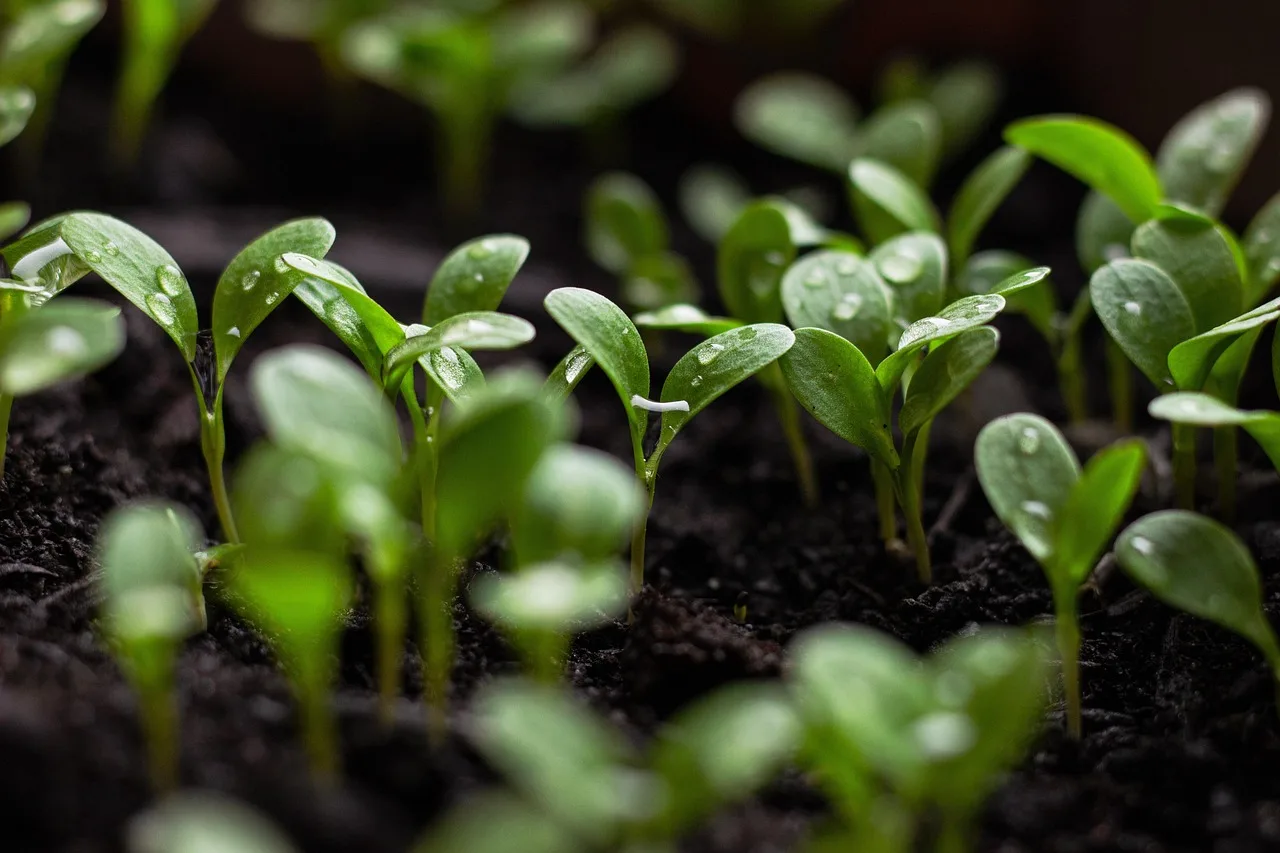
Winter care works best when watering, humidity, and potting mix are treated as one system. Dry air, slower growth, and cooler soil all push moisture to linger longer. That is why the easiest winter plants are also the ones least likely to rot from a small mistake.
Use fast-draining mix and drainage holes
-
Check the pot first.
Make sure the container has drainage holes. If it does not, repot into one that does before winter watering becomes a guessing game. -
Choose a quicker mix.
Use a fast-draining potting mix, or amend a general mix with perlite or similar coarse material. Faster drainage cuts the time roots stay wet. -
Clear the saucer after watering.
Dump any standing runoff a few minutes after watering. Wet saucers keep the bottom of the pot saturated and raise rot risk.
Add humidity the simple way
A humidifier is the most direct fix for very dry rooms, but pebble trays and grouping plants together also help. Those options do not change the whole apartment, they create a slightly moister pocket around the leaves. That matters when indoor humidity falls to 10–20% and plants prefer closer to 50%.
Skip heavy fertilizer and hold repotting until spring
Most houseplants slow down in winter, so heavy feeding is wasted at best and stressful at worst. Back off fertilizer until active growth returns unless a plant is growing strongly under bright light. Repotting can wait too, because disturbed roots recover better in spring.
A common first-timer mistake is feeding a ZZ plant in January, then watering more often because the fertilizer seems to “wake it up.” In a cool, dim room, that combination usually does the opposite and leaves the mix wet for too long.
How do I keep houseplants alive in winter as a beginner?
Start with one easy plant, place it in bright indirect light, water only after checking the soil, and keep it away from heat blasts and cold glass. Choose a fast-draining pot with holes, empty the saucer, and add humidity if the air feels very dry. That routine prevents most winter losses.
-
Pick a forgiving plant.
Start with snake plant, ZZ plant, pothos, spider plant, or cast iron plant. If the room is dim and watering is irregular, choose snake plant or ZZ plant first. -
Match the window.
Use a south- or west-facing window if possible, but keep the pot a few inches off the glass. Brighter indirect light is the goal, not direct winter sun through a cold pane. -
Water by soil, not schedule.
Check dryness before every watering. In winter, many plants need less water than they did in summer, and some need much less. -
Control the air around it.
Keep the plant away from heaters, vents, and fireplaces. Add a humidifier, pebble tray, or plant grouping if the room air is very dry. -
Pause extra care.
Skip heavy fertilizer and avoid repotting unless a plant is clearly failing from root-bound stress or broken drainage. Winter is the season for stability.
Frequently asked questions
What are the easiest houseplants to keep alive in winter?
Snake plant, ZZ plant, pothos, spider plant, and cast iron plant are the easiest winter choices for most beginners. They handle lower light better than many plants and recover better from missed waterings. Succulents can also be easy, but only if you are strict about letting them dry out.
Which houseplants need less water in winter?
Succulents, aloe, snake plant, and ZZ plant need less water in winter than pothos, spider plant, or peace lily. Their roots and leaves hold water longer, so keeping the soil damp is far more likely to cause rot than to help them. Drying between waterings is part of the plan.
Can a cold draft kill a houseplant?
Yes. A cold draft can chill roots, slow growth, and damage leaves, especially when the plant is already wet or sitting near a cold window. Many houseplants tolerate 55° to 65°F at night, but repeated cold blasts are a different problem from a steady cool room.