Winter Houseplant Care Checklist for New Plant Owners
Use a roughly 10-minute winter houseplant check: inspect leaves and soil, move plants away from cold glass and vents, skip routine watering unless the top 1–2 inches of soil are dry, and watch weekly for pests. Cold damage, wet roots, and pest flare-ups can ruin leaves and roots fast. This guide shows what to inspect, what to move, what to skip, and when to act.
Winter houseplant checklist
Winter care is less about adding tasks and more about checking a few key points in order. Start with soil moisture, then look for pests and cold stress, then change light, water, humidity, and temperature only if the plant needs it.
What to inspect first
- Check the soil first. Put a finger 1 to 2 inches deep into the mix. If it still feels damp, wait before watering; if it is dry at that depth and the pot feels noticeably lighter, water next.
- Scan leaves and stems. Look under leaves, along stems, and at the top of the soil for spider mites, mealybugs, aphids, whiteflies, and fungus gnats. Check especially after any outdoor plant comes inside.
- Test pot weight. Lift the pot before and after watering so you learn the difference between dry and moist soil. A moisture meter can help as a backup, but it should not replace the finger test and pot weight.
Say your pothos sits near a bright window and the top inch feels dry, but the pot still feels heavy. That usually means the root zone still holds enough water, so skip the watering can and check again in a few days.
What to move today
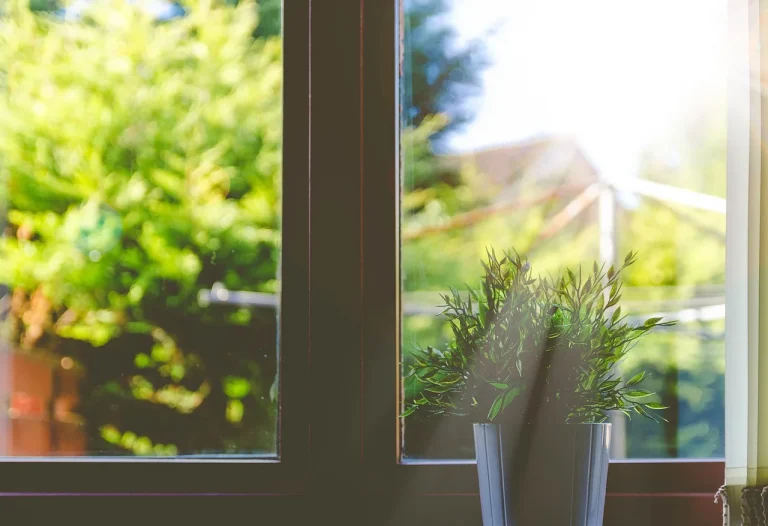
- Move plants off cold glass. Keep them away from cold windowsills at night, especially if the glass turns icy or the curtain traps cold air against the leaves. A few inches back can be enough.
- Clear heat and draft sources. Move pots away from radiators, fireplaces, heating vents, open windows, and doors that swing open often. Sudden temperature swings are harder on plants than a steady cool room.
- Shift brighter plants first. Move light-hungry plants closer to the brightest indoor spot available, such as a south- or west-facing window in the northern hemisphere, or the brightest equivalent exposure in your location.
What to skip until spring
- Skip routine feeding. Most houseplants slow down in winter, and they do not need regular fertilizer while growth is paused. Extra feed in a dark, cool room often builds salts instead of growth.
- Skip calendar watering. Do not water because a day of the week says so. Winter conditions change faster than a fixed schedule.
- Skip heavy repotting. Unless a plant is clearly rootbound, rotting, or failing in its current pot, spring is usually the better time for major changes.
Winter houseplant care decision checklist
| Symptom | Likely cause | Immediate action | When to escalate |
|---|---|---|---|
| Dry soil | Normal winter drying, especially in bright light or a warm room | Water thoroughly with room-temperature water, then let excess drain fully | Escalate if the pot dries in a day or two, or the plant wilts repeatedly despite watering |
| Soggy soil | Overwatering, poor drainage, or root stress | Pause watering, empty any saucer, and move to brighter light with better airflow | Escalate if soil stays wet for many days, roots smell bad, or leaves yellow and collapse |
| Brown tips | Dry air, salt buildup, or uneven watering | Check humidity, flush salts if needed, and water more evenly | Escalate if browning spreads fast or whole leaves crisp after a cold snap |
| Leaning growth | Insufficient light | Rotate the pot and move it closer to brighter light | Escalate if new growth stays stretched after two or three light adjustments |
| Leaf drop | Stress from low light, overwatering, cold drafts, or a sudden move | Check light, soil, and temperature before changing anything else | Escalate if many leaves drop after pests, rot, or a cold event |
| Mites/webbing | Spider mites or other pests | Isolate the plant and clean leaf undersides and stems | Escalate if webbing returns quickly or more than one plant shows speckling |
| Cold-window stress | Chilled leaves or roots from glass, drafts, or night cooling | Move the plant off the sill after dark and away from drafts | Escalate if leaf edges blacken, tissues go limp, or damage appears after every cold night |
| No new growth | Normal winter slowdown, especially in low light | Hold steady on water, improve light, and avoid fertilizer unless the plant is actively growing | Escalate if the plant also declines, loses leaves, or shows root or pest symptoms |
How often should you water houseplants in winter?
Water less often in winter, and cut back volume as well as frequency. Use the finger test, pot weight, and drainage as your guide instead of a fixed schedule. Many indoor plants prefer room-temperature water, but the real rule is to match watering to soil dryness, pot size, light, and room conditions.
Watering decision rule
If the top 1 to 2 inches of soil are dry and the pot feels light, water. If soil still feels cool or damp, wait. Bright window light, a small pot, and dry indoor air make soil dry faster; low light, a large pot, and cooler rooms make it stay wet longer.
- Gardeners’ World recommends reducing watering to once every fortnight for most house plants.
- Gardeners’ World says succulents should be watered every two to three weeks.
- For cacti, do not copy a rigid winter watering calendar; some types may need very little, while warm indoor conditions and active growth change the timing.
A common mistake is leaving a houseplant right beside a drafty window and assuming the same winter routine will keep it healthy. That breaks down fast in a south- or west-facing window, where soil dries sooner, and it also fails in a dim room, where wet soil can sit too long and invite root problems.
How much light do winter plants need?
Winter light drops fast, so brighter exposure matters more than any single compass direction. Move plants to the brightest practical window in your home, rotate pots regularly, and clean the glass. If natural light is still not enough, a grow light is the next step, not the first.
Window placement and hemisphere note
In the northern hemisphere, a south-facing window usually gives the strongest winter light, with west-facing windows helping in many homes. In the southern hemisphere, the brightest exposures differ, so start with the brightest available window rather than the same compass direction everywhere.
Cleaning glass and rotating pots
- Wipe the window clean. Dust and film cut light more than many beginners expect. A clear pane gives the plant more usable light without changing its location.
- Rotate the pot regularly. Garden Design recommends a quarter-turn every time you water. That helps reduce leaning growth and keeps one side from getting all the light.
- Watch for directional stretch. If stems lean toward the glass or leaves widen with long gaps between them, move the plant closer to the light or brighten the room.
When to add a grow light
Use a grow light when the brightest window still leaves the plant stretched, dropping leaves, or refusing new growth during the brighter part of winter. It is especially useful for plants that need more light than your windows can give. It is an option, not a requirement for every home.
Do houseplants need more humidity in winter?
Many common indoor plants do better around about 40 to 50% humidity, and home humidity in winter can fall to much lower levels. That said, humidity is only one part of winter care. Good watering, light, and temperature control can keep many plants steady even when air feels dry.
Which humidity fix to try first?
- Humidifier. This is the most effective option for first-time plant owners who want a measurable boost in a dry room.
- Grouping plants. Clustering pots creates a small microclimate and is easy to try without extra gear.
- Pebble tray. Use 1 inch of pebbles and 1/2 inch of water. It can help nearby plants, but it works best as a modest boost, not a full-room fix.
What misting can and cannot do
Misting may briefly raise humidity at leaf level, but the effect fades fast. It is not a substitute for a humidifier in a very dry room, and it will not solve root stress, low light, or cold-window damage. If you mist, do it as a small support measure, not the main plan.
When dry air is not the main problem
If a plant has brown tips, check whether the soil is drying too fast, whether salts are building up, or whether the pot is sitting in direct heat. Dry indoor air can stress tropical plants, but it is often part of a larger winter pattern, not the only issue.
Temperature and draft checks
Most house plants do well at 12 to 18°C in winter, and many common indoor plants are comfortable around 70 to 75°F by day and 60 to 65°F at night. Sudden changes are the bigger problem. Keep plants away from radiators, fireplaces, vents, open windows, and cold glass after dark.
Cold windows and night movement
How far should houseplants be from cold windows in winter? Far enough that the leaves do not touch the glass, and far enough that they are not chilling overnight. If a sill gets very cold, move the plant off the sill after dark and return it in the morning if the spot warms safely.
Heat sources and vents
- Check the air path. Stand where the plant sits and feel for warm blasts, cold leaks, or direct dry air. If you can feel the draft, the plant can too.
- Relocate the pot. Move it out of the path of heaters, vents, and fireplaces. Heat can dry the pot unevenly and stress foliage.
- Keep curtains practical. Open them when safe during the day so the glass can warm and the room can keep light. Close them only if they help block an especially cold pane at night.
Signs of cold stress
Cold injury often looks like limp leaves, dark or water-soaked patches, sudden drop, or tissue that seems fine one day and damaged the next after a chilly night. That pattern points more to temperature than to watering. If the problem follows a window, draft, or open door, move the plant first.
Should you fertilize houseplants in winter?
Most plants should skip feeding during winter dormancy or slowdown. Exceptions include actively growing plants and some winter-flowering species that are clearly putting on new growth. For most foliage plants, wait until late winter or spring, then resume feeding when fresh growth starts.
Plants that usually pause feeding
Fertilizer does little when light is low and growth is slow. Extra nutrients can build up in the pot and add salt stress when the plant is already dealing with winter conditions.
Exceptions for active growers and winter bloomers
If a plant is still pushing new leaves or flowering in winter, a light feeding schedule may still make sense. Follow the plant’s label or the manufacturer’s directions for that species, because the need depends on the plant’s growth pattern, not the calendar alone.
Common winter mistakes
The biggest winter errors are simple: watering on a schedule, ignoring pests, and reading slow growth as failure. Winter slowdown is normal for many houseplants. What is not normal is a plant that keeps declining, even after light, water, temperature, and pest checks are corrected.
- Overwatering on a calendar. Soil dries more slowly in low light and cool rooms, so fixed watering days often cause soggy roots.
- Ignoring pests after indoor moves. Outdoor plants can bring in spider mites, aphids, whiteflies, mealybugs, or fungus gnats.
- Misreading winter slowdown. No new growth can be normal, especially in shorter days. Look for decline, not just slowness.
- Using misting as a cure-all. It does not replace better humidity, light, or watering decisions.
Suppose a fiddle leaf fig is near a bright window, the soil feels dry on top, and leaves still drop after watering. The next check is not “more water.” It is the root zone, drainage, temperature, and whether the plant is sitting in a cold draft or under a heat vent.
Must-have
These are the three tools that fit a beginner winter audit best. Based on the manufacturer’s specs and published product details, they cover the core checks without turning the routine into a full setup project.
 Our pickTempPro · Indoor thermometer · humidity meter · tabletop/magnetic
- Shows DRY/COMFORT/WET humidity guidance
- Displays temperature and humidity trends
- Tabletop stand and magnetic back
Drawback: Check the size and fit against your project before buying.$9.97Price as of 27 Nov 2026View on Amazon →As an Amazon Associate we earn from qualifying purchases. Prices and availability are accurate as of the date shown and are subject to change.

- Shows DRY/COMFORT/WET humidity guidance
- Displays temperature and humidity trends
- Tabletop stand and magnetic back
TempPro TP50 Digital Hygrometer Indoor Thermometer Room Thermometer
This is the easiest first buy if the room feels dry and you want a quick read on humidity and temperature. The display shows temperature and humidity trends, and the tabletop stand plus magnetic back make it easy to place near plants. A drawback: it only measures the room, so it cannot tell you whether a pot is wet or dry.
Also greatXLUX · Single-probe moisture meter · battery-free · indoor/outdoor- Battery-free, instant-read soil checks
- Slim probe helps protect roots
- Clear dial is easy for beginners
Drawback: Check the size and fit against your project before buying.$8.48Price as of 27 Nov 2026View on Amazon →As an Amazon Associate we earn from qualifying purchases. Prices and availability are accurate as of the date shown and are subject to change.

- Battery-free, instant-read soil checks
- Slim probe helps protect roots
- Clear dial is easy for beginners
XLUX Plant Soil Moisture Meter
This is the most useful soil-check backup for beginners who want another data point before watering. The slim single probe is gentler than a bulky meter, and the battery-free design keeps it simple. The downside is that moisture meters can be inconsistent in some mixes, so treat it as a helper, not the final word.
Pair with itTrademark Innovations · Plant dolly · wheeled · large caddy- Makes heavy planters easier to move
- Adjustable grabber helps secure pots
- Works on hard surfaces, grass, or gravel
Drawback: Check the size and fit against your project before buying.$40.77Price as of 27 Nov 2026View on Amazon →As an Amazon Associate we earn from qualifying purchases. Prices and availability are accurate as of the date shown and are subject to change.

- Makes heavy planters easier to move
- Adjustable grabber helps secure pots
- Works on hard surfaces, grass, or gravel
Trademark Innovations Planter Dolly, Plant Mover with Wheels
This makes sense if you need to move a heavy pot away from a cold window or into brighter light more often than a two-handed carry allows. It is especially useful for larger containers and hard floors. The drawback is obvious: it is only worth it for heavy planters, and it adds bulk to a small room.
Nice-to-have
These options help when your windows are dim or your room is especially dry, but they are not the first things a new plant owner needs.
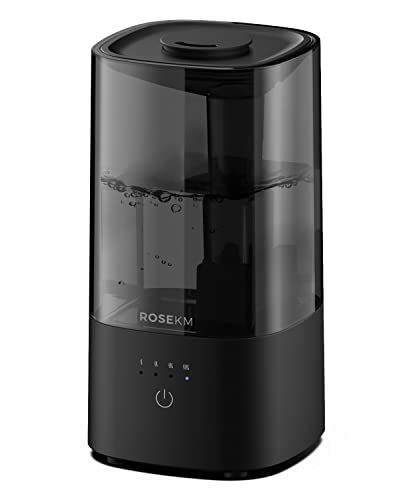
Upgrade pickRosekm · 2L cool mist humidifier · quiet · black- Up to 24 hours of cool mist
- Quiet operation for bedrooms
- Four mist levels with 360° nozzle
Drawback: Check the size and fit against your project before buying.$20.39Price as of 27 Nov 2026View on Amazon →As an Amazon Associate we earn from qualifying purchases. Prices and availability are accurate as of the date shown and are subject to change.
- Up to 24 hours of cool mist
- Quiet operation for bedrooms
- Four mist levels with 360° nozzle
ROSEKM 2L Cool Mist Humidifier for Bedroom and Plants
This is the best humidity tool in the group for most first-time plant owners because it changes the room, not just the leaf surface. The 2L tank, quiet operation, four mist levels, and low-water shutoff make it practical for dry winter air. The tradeoff is maintenance: a humidifier needs regular refilling and cleaning.
Pair with itAokrean · 3-pack grow light · adjustable · timer- Three lighting modes for different plants
- Built-in timer with 3/9/12-hour options
- Height and angle adjust to suit plants
Drawback: Check the size and fit against your project before buying.$22.09Price as of 27 Nov 2026View on Amazon →As an Amazon Associate we earn from qualifying purchases. Prices and availability are accurate as of the date shown and are subject to change.

- Three lighting modes for different plants
- Built-in timer with 3/9/12-hour options
- Height and angle adjust to suit plants
Aokrean Grow Lights for Indoor Plants, Full Spectrum Plant Light with Base
Choose this only when the brightest window is still not enough. The three lighting modes, timer, and adjustable height make it flexible for small plants or a shelf. Its drawback is size and placement: it helps the right plant, but it does not replace good window light for every houseplant.
Consumables and spares
This section is short by design. Winter care does not need a lot of extras, and beginners usually get farther by checking soil, light, and drafts than by buying more gear.
as an Amazon Associate we earn from qualifying purchases. Prices and availability are accurate as of the date shown and are subject to change.
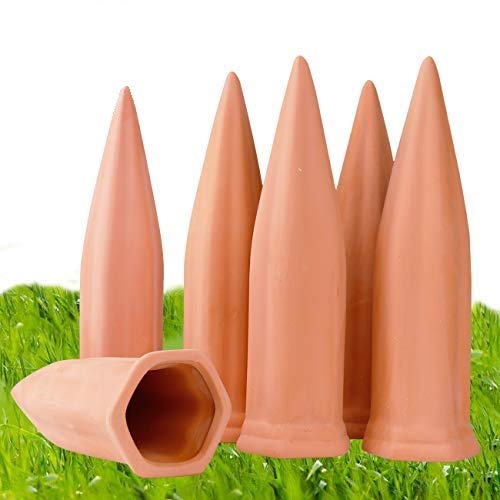
Plant Watering Devices 6 Pack Terracotta Vacation Plant Waterer Wine Bottle Watering Stakes
This is the least essential item here, but it can help if a single plant dries too quickly between checks and you need slower release from a bottle setup. The drawback is that it is easy to overtrust and harder to fine-tune than hand watering, especially in winter when plants need less water overall.
Budget setups
| Setup | What it covers | Suggested items | Total |
|---|---|---|---|
| Starter | Room check and soil check | TempPro TP50 Digital Hygrometer Indoor Thermometer Room Thermometer; XLUX Plant Soil Moisture Meter | $18.45 |
| Mid | Add humidity support and light help | TempPro TP50 Digital Hygrometer Indoor Thermometer Room Thermometer; ROSEKM 2L Cool Mist Humidifier for Bedroom and Plants; XLUX Plant Soil Moisture Meter | $38.84 |
| Serious | Full winter room audit | TempPro TP50 Digital Hygrometer Indoor Thermometer Room Thermometer; XLUX Plant Soil Moisture Meter; ROSEKM 2L Cool Mist Humidifier for Bedroom and Plants; Aokrean Grow Lights for Indoor Plants, Full Spectrum Plant Light with Base; Trademark Innovations Planter Dolly, Plant Mover with Wheels | $79.51 |
Frequently asked questions
What should I check on my houseplants in winter?
Start with soil moisture, leaf undersides, stems, pot weight, and placement near windows or heat sources. That order catches the most common winter problems fast: dry soil, soggy roots, pests, and cold stress. If the plant looks slow but otherwise healthy, that can be normal winter behavior.
Should I use a humidifier for houseplants in winter?
If your indoor air is very dry, a humidifier is the most effective first choice. Many indoor plants prefer humidity closer to 50 percent, while winter home humidity can fall as low as 10 to 20 percent. Grouping plants and pebble trays help too, but they are smaller effects.
How far should houseplants be from cold windows in winter?
Keep leaves off the glass and move the pot far enough back to avoid overnight chilling. If the window gets very cold, move the plant off the sill after dark. Brighter light still matters, so the goal is to stay near the window without letting cold glass touch the plant.
Do houseplants need grow lights in winter?
Not always. Use a grow light when the brightest window still leaves the plant stretched, leaning, or stalled. It is an option for low-light homes, not a requirement for every houseplant. Cleaning the glass and rotating the pot are simpler first steps before adding another device.
How do I know if my houseplant is too cold or drafty?
Look for sudden limpness, dark patches, leaf drop after a chilly night, or damage that appears near windows, vents, or doors. Cold injury often follows placement, not watering. If symptoms improve when the plant is moved away from the draft, temperature was probably part of the problem.
What are the most common winter houseplant mistakes?
The biggest mistakes are watering on a schedule, leaving plants in cold drafts, feeding when growth has slowed, and missing pests after bringing plants inside. Another common error is assuming every slow plant is failing. Winter slowdown is normal; worsening leaves, soggy soil, and webbing are not.
How do I tell if my plant needs water instead of just following a schedule?
Use the finger test 1 to 2 inches deep, then lift the pot. If the soil is dry at that depth and the pot feels light, water it. If it still feels damp or heavy, wait. A moisture meter can help, but it should back up those checks, not replace them.