Can Dry Indoor Heat Cause Crispy Houseplant Leaves in Winter?
Yes, dry heated indoor air can make houseplant leaves turn crisp in winter, but one-sided damage, leaf tips nearest a vent, or only window-facing leaves usually points to heater blast or cold glass instead. If you miss the source, you keep repeating the damage and fix the wrong problem. This guide shows how to tell dry air from vent damage, cold glass, low watering, and pests.
Can dry indoor heat crisp leaves?


Dry winter heat can certainly crisp houseplant leaves. Heated homes can drop to about 10 to 20 percent relative humidity, while many houseplants prefer closer to 40 to 50 percent. In that dry air, leaves lose water faster than roots can replace it, so edges brown first, then tips, then whole sections dry out.
Which leaf symptoms fit dry air?
Dry air damage often appears on several leaves at once, with fine browning along the margins, papery tips, or a generally dry look rather than a single dark spot. It also makes spider mites more likely. If the room feels stale and the plant sits far from windows, low humidity is a strong suspect.
Dry air is more convincing when the soil is not bone-dry and the damage is spread across the plant, not concentrated on one side. It can also pair with slow winter growth, which means the plant uses less water and needs less fertilizer than it did in summer.
What else causes crispy winter leaves?
Heater blast, cold glass, watering errors, and spider mites can all create crisp, dry-looking leaves. The fastest way to avoid the wrong fix is to match the damage pattern to the plant’s location, soil moisture, and pest signs before changing your routine.
Heater blast and radiator damage
Plants placed next to vents, radiators, or fireplaces can dry out quickly even when the soil stays damp. Hot air pulls moisture from foliage fast, so leaves near the heat source often brown first. Keep plants away from direct heat and do not place them where airflow hits one side all day.
Cold glass and window-side burn
Cold windowsills and glass can damage leaves that touch them at night. The injury often shows up on the window-facing side only, while the rest of the plant looks normal. Keep leaves from touching cold glass, even if the window is the brightest spot in the room.
Suppose a pothos sits six inches from a radiator. The leaves nearest the heat turn crisp while the pot mix still feels moist two inches down. That pattern points to heater blast, not drought, so moving the plant matters more than watering sooner.
Watering mistakes and dry soil
Underwatering can also cause crisping, but the clue is dry mix, a light pot, and curled leaves. Use the finger test to the top inch or second knuckle, then compare the pot’s weight before watering. In winter, slower growth means many plants need less frequent water than in spring and summer.
Spider mites in dry rooms
Spider mites thrive in dry conditions and often show up when leaves look dull, stippled, or dusty. Check the undersides of leaves for fine webbing. Dry air makes infestations more likely, so humidity changes can help, but a pest check matters when the damage appears even though the soil is still moist.
Winter leaf triage table
Use this table as a quick pass before you change care. Start with the symptom pattern, then check the likely cause, do the fastest test, and act on the strongest clue first.
| Symptom pattern | Most likely cause | Quick test | Immediate fix | First move |
|---|---|---|---|---|
| Crispy brown edges on several leaves | Dry indoor air | Check room humidity and look for other plants with tip burn | Raise room humidity and move the plant away from dry airflow | Raise humidity |
| Crispy tips on leaves nearest a vent | Heater blast | Feel for warm moving air and check whether the plant sits in the airflow path | Move the plant out of direct vent or radiator blast | Move the plant |
| Whole leaf crisping near vents | Hot, dry air hitting one side | See whether damage is strongest on the side facing the heat source | Relocate the plant farther from the source of hot air | Move the plant |
| Damage on the window side only | Cold glass or cold sill | Check for leaf contact with glass after night temperatures drop | Pull the plant back so leaves do not touch the window | Move the plant |
| Curling leaves with dry soil | Underwatering | Use the finger test to the top inch or second knuckle, then lift the pot | Water thoroughly if the mix is dry enough for the species | Change watering |
| Crispy leaves despite moist soil | Spider mites or heat stress | Inspect the undersides for webbing and look for fine stippling | Check for pests first, then adjust humidity and plant placement | Inspect for pests |
How do you fix humidity fast?
The best home humidity fix is a humidifier. If a plant is sensitive to dry air, place the humidifier near it and keep the output aimed into the room, not straight at the leaves. Misting can help for a short time, but it does not replace room humidity.
Humidifier placement for sensitive plants
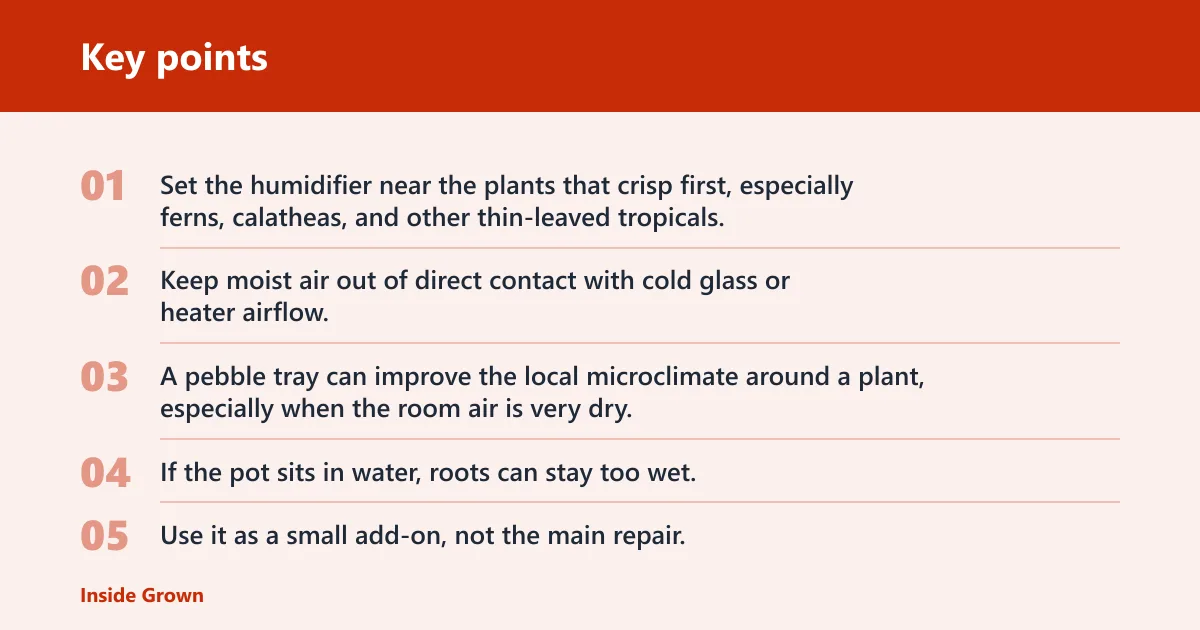
Set the humidifier near the plants that crisp first, especially ferns, calatheas, and other thin-leaved tropicals. Many houseplants do best at 40 to 50 percent humidity, so a humidifier is the most effective way to raise the room toward that range. Keep moist air out of direct contact with cold glass or heater airflow.
Pebble trays that actually help
A pebble tray can improve the local microclimate around a plant, especially when the room air is very dry. A common rule of thumb is to use a tray wider than the pot, add about 1 inch of pebbles and about 1/2 inch of water, and keep the pot bottom above the waterline. If the pot sits in water, roots can stay too wet.
Where misting fits, and where it does not
Misting gives only short-lived results. It may help discourage spider mites in dry conditions, but it is not a substitute for room humidity and it does not fix heater blast or cold glass. Use it as a small add-on, not the main repair.
Picture a calathea on a shelf beside a south window in January. The leaves closest to the glass turn crispy on the edge, and the room reads dry on the hygrometer. The better fix is to move the plant back from the glass, then raise humidity, instead of misting every morning and hoping for the best.
How much should you water in winter?
Water less often only when the mix is actually drying out. Many plants slow down in winter, so they take up less water and may need watering every 10 to 21 days, depending on species, pot size, light, and room temperature. A fixed schedule causes more mistakes than a soil check.
Finger test and lift-the-pot test
- Check the top inch. Push a finger into the mix to the top inch, or to the second knuckle for larger pots. If the soil feels cool and damp, wait.
- Lift the pot. Compare the weight to a freshly watered pot of the same size, or simply notice whether it feels light. A light pot usually means the root zone has dried farther down.
- Water only when ready. Water enough to moisten the root ball evenly, then let excess drain away. Dry air can make leaves look thirsty even while the soil is still wet, so the check comes first.
Why slower growth changes watering needs
Winter growth slowdown changes the plant’s water demand. Lower light and cooler indoor conditions mean many foliage plants rest or move into semi-dormant growth, so feeding and watering should both slow down. More water than the plant can use raises the risk of root stress.
When dry soil means water now
If the top inch is dry, the pot feels light, and the leaves are curling rather than simply browning at the edge, water now. That pattern fits drought stress more than humidity loss. If the damage is only on one side, check for heat or cold injury before assuming thirst.
Which plants are most likely to get crispy leaves from dry air?
Ferns, calatheas, and other thin-leaved tropicals usually show dry-air stress first. They often react with crispy edges, tip burn, or curled leaves when winter humidity falls. Plants with thicker, waxier leaves can tolerate drier rooms better, though they can still suffer near vents or cold glass.
Ferns and calatheas
These plants usually need steadier humidity than many common houseplants. If a fern or calathea starts crisping in winter, check room air first, then check whether the plant sits near a heater or window. They often decline faster than thicker-leaved plants when the air dries out.
Other thin-leaved tropicals
Prayer plants, marantas, many philodendrons, and similar tropical foliage plants can also crisp at the edges when heated indoor air stays dry. They are often the first to show a problem, so they work well as early warning plants. If they look rough, inspect the rest of the room for the same stress.
How can you prevent repeat damage?
Prevention is mostly placement and monitoring. Keep plants away from vents and radiators, protect them from cold glass, and check for mites during dry spells. That combination removes the most common winter triggers before the leaves start crisping again.
Keep plants away from vents and radiators
Move plants out of direct heater blast, even if the soil stays damp. Hot air dries foliage quickly and can create leaf-edge browning that looks like thirst. Most foliage houseplants manage well with daytime temperatures of 65 to 70°F and nighttime temperatures of 60 to 65°F, so avoid hot spots near the source.
Protect foliage from cold glass
Do not let leaves touch cold glass or a freezing sill. Plants should be moved close to bright windows but not touching cold glass, because night chill can blacken or damage the contacted tissue. A small gap is often enough to prevent repeat injury.
Watch for pests during dry spells
Dry winter air gives spider mites a better shot at spreading. Check leaf undersides during routine watering, especially if you see fine stippling or webbing. Catching mites early matters because their damage can look a lot like drought or low humidity.
Frequently asked questions
Can dry indoor heat cause crispy houseplant leaves in winter?
Yes. Dry heated air can make leaf edges brown and tips crisp, especially when indoor humidity falls toward 10 to 20 percent. The key is to separate that from heater blast, cold glass, and underwatering, because each one needs a different fix.
Why are my houseplant leaf edges turning brown in winter?
Brown edges in winter often point to dry air, but they can also come from hot vents, cold window contact, or a watering mistake. Check the plant’s location first, then check soil moisture and the underside of leaves for mites before changing care.
How do I raise humidity for houseplants in winter?
The most effective fix is a humidifier. Pebble trays can help nearby plants, and grouping plants can slightly improve the local air around them, but both are smaller fixes. The same source gives only short-lived results, so it should not be the main plan.
Should I mist houseplants to stop crispy leaves?
Misting can give a brief humidity bump, but it does not replace room humidity. It may help discourage spider mites in dry conditions, yet it will not solve vent damage or cold glass injury. Use it as a small extra step, not the whole answer.
How close can a houseplant be to a heater or vent?
Not close enough to feel direct hot air. Keep plants away from radiators, vents, and fireplaces, because moving hot air dries foliage quickly even if the potting mix stays wet. If leaves on one side crisp first, the plant is probably too close.
Can cold windows make houseplant leaves crispy?
Yes. Leaves that touch cold glass or a cold sill can be damaged at night, and the injury often appears only on the window side. Pull the plant back so no foliage touches the glass, while still keeping it in the brightest available window light.