Can You Use a Pebble Tray for Houseplants in Winter?
A pebble tray can provide only a small humidity boost in winter, especially if the pot sits above the waterline and the room is only mildly dry. Used alone, it will not fix dry-air stress, and still water can create problems. This guide explains when a tray is worth using, how to set one up, where it works best, and when a humidifier or other fix works better.
Pebble tray humidity table


The point of this table is simple: a pebble tray is worth trying for some plants, but it is not a cure-all. Use it when the plant group likes humid air and the room is only a little dry; skip it when the plant already prefers drier conditions or winter air is very low in humidity.
| Plant type | Worth using a pebble tray? | Expected benefit level | Common examples | Better alternatives when humidity is very low |
|---|---|---|---|---|
| Tropical foliage plants | Yes | Modest to moderate, depending on room dryness | Monstera, calathea, philodendron, fern | Humidifier, plant grouping, moving plants away from vents |
| Medium-tolerance houseplants | Sometimes | Small | Pothos, peace lily, dracaena, spider plant | Grouping plants, watering on schedule, room humidifier if symptoms continue |
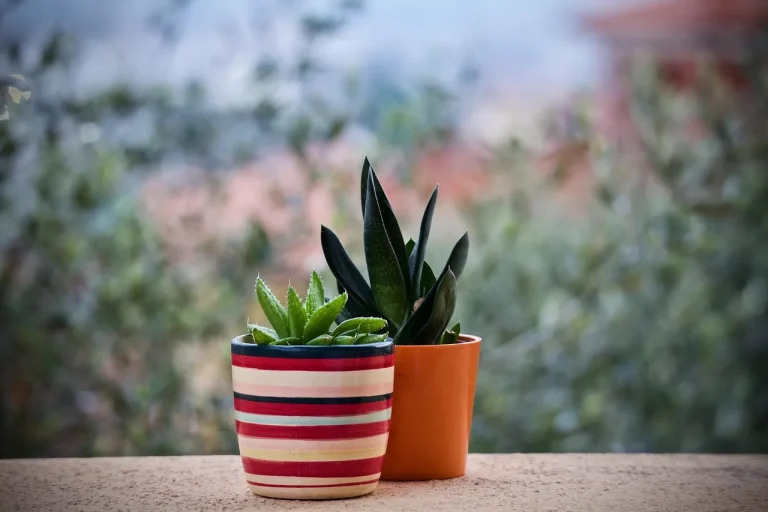
| Dry-climate plants | No | Little to none | Succulents, cacti, jade plant, snake plant | Keep conditions drier, improve airflow, avoid extra moisture near the pot |
Can a pebble tray help houseplants in winter?
Yes, for the right plants and the right room. A pebble tray is a low dish or tray filled with pebbles or gravel and water, usually set under indoor plants to create localized humidity. It can help most when winter heating and conditioned air leave the room dry, but its effect stays close to the tray.
What a pebble tray actually changes
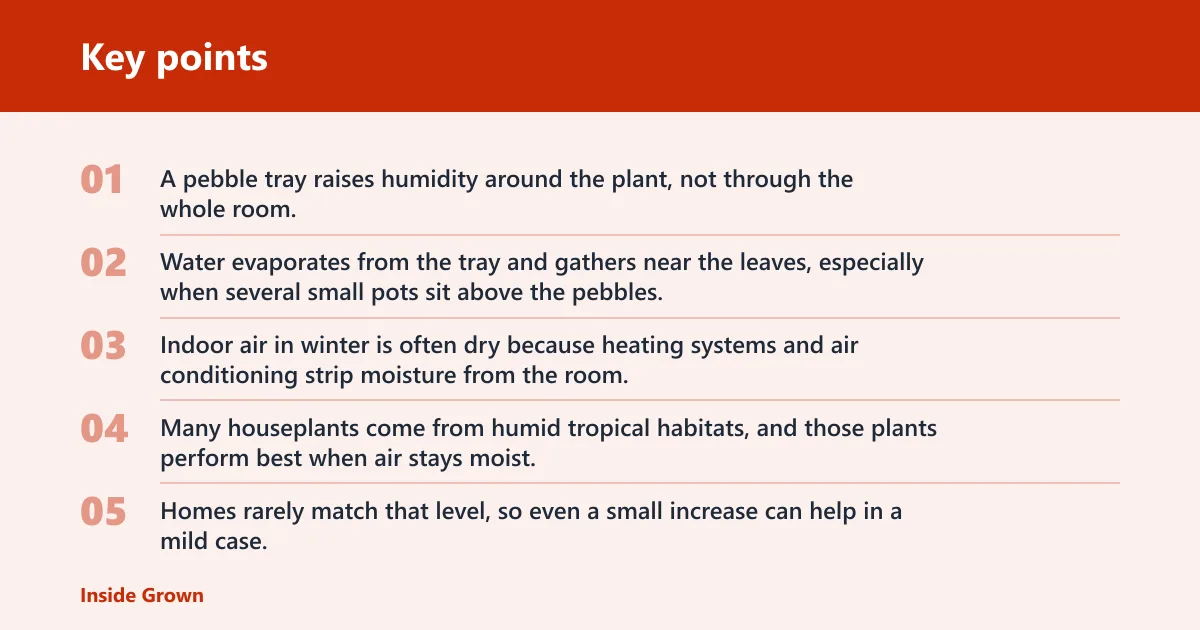
A pebble tray raises humidity around the plant, not through the whole room. Water evaporates from the tray and gathers near the leaves, especially when several small pots sit above the pebbles. That makes it a local fix, which is why it is often treated as an easy start rather than a full solution.
Why winter air makes the question matter
Indoor air in winter is often dry because heating systems and air conditioning strip moisture from the room. Many houseplants come from humid tropical habitats, and those plants perform best when air stays moist. Homes rarely match that level, so even a small increase can help in a mild case. Extra humidity in winter matters because dry air can stress foliage plants.
Where the effect usually falls short
The limits are just as important. A pebble tray is not a room humidifier, and it may do too little if the air is very dry. If leaves keep browning at the edges, curling, or crisping despite a tray, the plant may need a stronger fix than local moisture.
Picture a monstera on a windowsill above a shallow boot tray filled with pebbles and water. If the room is only a little dry, that setup may reduce stress at the leaf edges. Put the same plant in a heated room with very dry air, and the tray may help only slightly.
Which plants benefit most?
The best candidates are tropical foliage plants, because they are the group most likely to want extra humidity in winter. Medium-tolerance houseplants may respond a little, but the gain is often modest. Dry-climate plants usually do not need the extra moisture and may do better with drier air and less fuss.
Tropical foliage plants
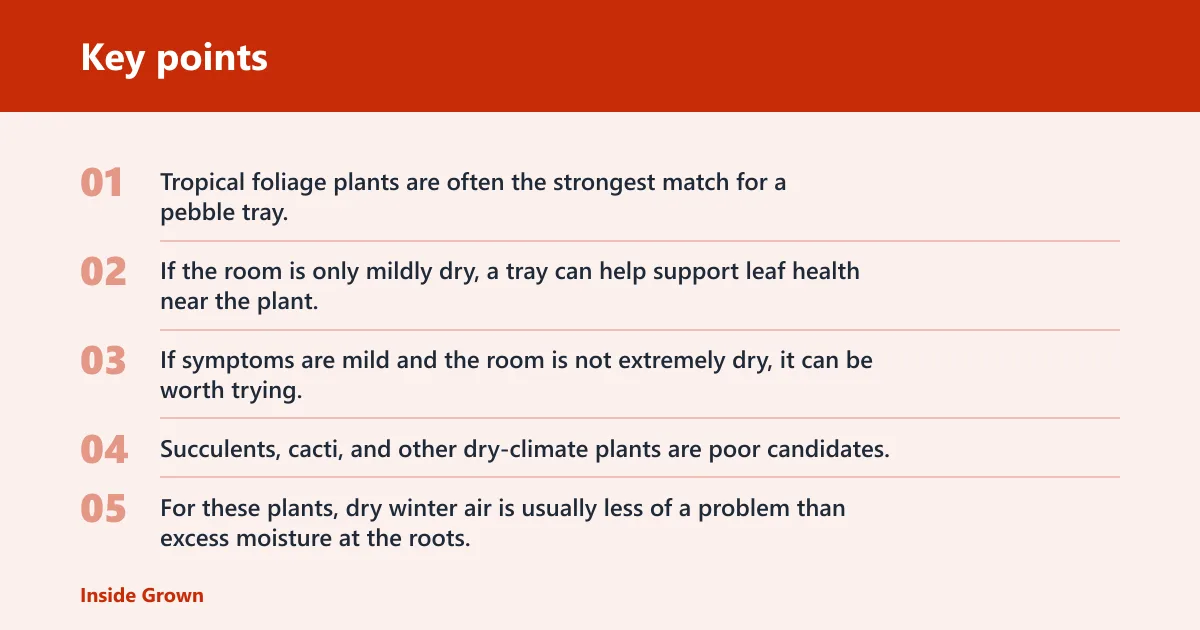
Tropical foliage plants are often the strongest match for a pebble tray. Many common indoor plants fall into this group because they come from humid, jungle-like environments and are sold as houseplants for that reason. If the room is only mildly dry, a tray can help support leaf health near the plant.
Medium-tolerance houseplants
These plants may benefit enough to justify a tray if the setup is easy. The response is usually smaller than with tropical foliage, so a tray works best as one part of care rather than the main fix. If symptoms are mild and the room is not extremely dry, it can be worth trying.
Dry-climate plants that need little or no extra humidity
Succulents, cacti, and other dry-climate plants are poor candidates. They generally do not need the extra moisture a pebble tray creates, and too much dampness near the pot can be counterproductive. For these plants, dry winter air is usually less of a problem than excess moisture at the roots.
A common first-timer mistake is putting a pebble tray under a jade plant because the pot fits neatly on top. The tray may keep the area damp without helping the plant, which can be the wrong tradeoff for a plant that prefers faster drying and lower humidity.
How to make and place one
A simple DIY tray is enough for most indoor setups. A boot tray and pebbles can be used to make one, and a shallow saucer also works for a single pot. The main goal is to keep the pot above the water while giving evaporation a surface to work from.
-
Choose a shallow tray.
Pick a boot tray, shallow saucer, or other low dish that fits the pot or group of pots. A wider tray supports more evaporation and gives you more stable placement. -
Add pebbles or gravel.
Fill the tray with pebbles or gravel in a single layer deep enough to lift the pot above the water. The pot should sit on the stones, not in standing water. -
Pour in water carefully.
Add water until it sits below the top surface of the pebbles. That keeps the pot base dry while still letting water evaporate around it. -
Set the plant above the stones.
Place the pot on the pebbles so the drainage holes stay clear and the base is not touching water. This helps prevent root problems and keeps the setup cleaner. -
Position it near the plant.
Put the tray where the plant already lives, away from heating vents and drafty windows when possible. The effect is local, so distance matters.
Does a pebble tray really raise humidity?
Yes, but the increase is local and usually modest. A pebble tray adds moisture right around the plant rather than changing the whole room. If the air is only slightly dry, that can be enough for some plants. If the room is very dry, the boost may be too small to matter.
What local humidity means
Local humidity means the air directly around the plant is a little moister than the rest of the room. That can reduce stress on leaves that lose moisture quickly. It does not mean the room itself becomes humid in any meaningful way, especially in a large space.
What to use instead when air stays very dry
If winter dryness is severe, a humidifier is usually the better call. Grouping plants together can also help because several pots create a small shared moisture zone. Moving plants away from heat registers, radiators, and furnace vents matters too, because those spots dry leaves quickly.
How to tell whether it is helping
Use a hygrometer if possible. If the reading near the plant stays very low and the tray does not change the symptoms, the setup is too weak. Signs of low humidity can include crispy leaf edges, curling, drooping that is not solved by watering, or new growth that opens small and dry.
Common mistakes and fixes
Most pebble tray problems come from water level, placement, or cleanup. The tray works best when the pot stays above the waterline and the tray is large enough to matter for the plant you are trying to support. Small, shallow, or neglected trays can create mess without much benefit.
Water level problems
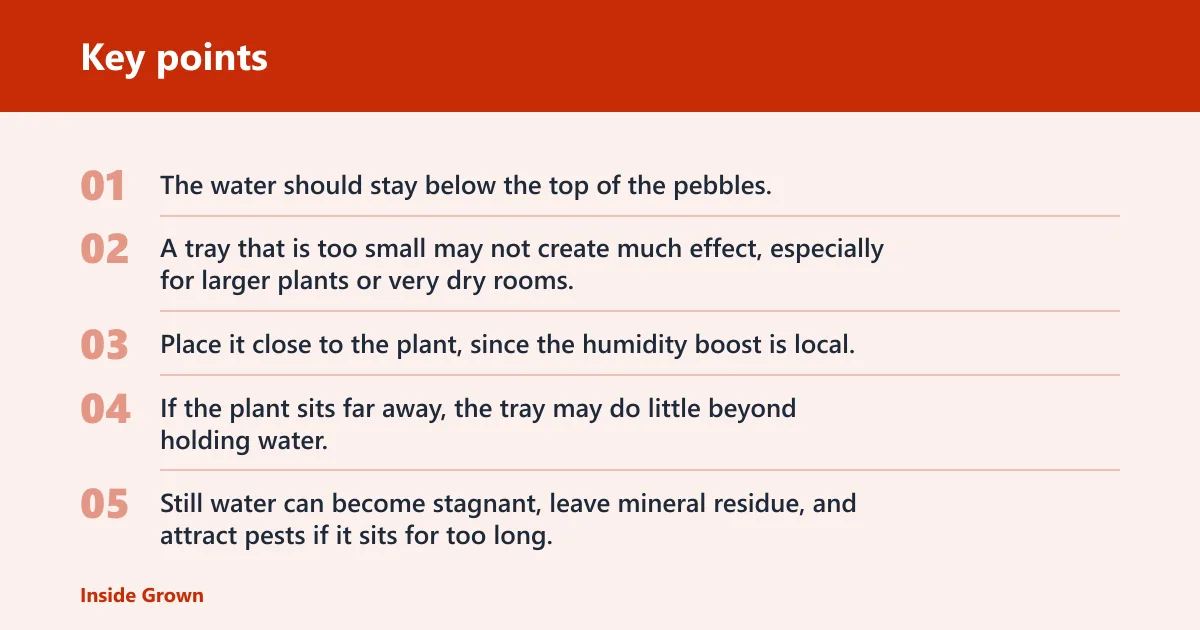
The water should stay below the top of the pebbles. If the pot base sits in standing water, the tray is no longer acting as a proper humidity aid and may function more like a wet saucer. That increases the risk of root issues and makes the setup less useful.
Tray size and placement
A tray that is too small may not create much effect, especially for larger plants or very dry rooms. Place it close to the plant, since the humidity boost is local. If the plant sits far away, the tray may do little beyond holding water.
Stagnant water and cleanup
Still water can become stagnant, leave mineral residue, and attract pests if it sits for too long. Empty and rinse the tray regularly, especially in warm rooms. If algae or buildup appears, scrub the pebbles and refresh the water so the tray stays useful instead of becoming a maintenance problem.
Suppose a small calathea sits on a tray in a bedroom with heating running at night. If the tray is wide enough, the waterline stays below the stones, and the leaves stop crisping at the edges, the tray is doing its job. If the same plant still curls and browns, the room likely needs a stronger humidity fix.
Frequently asked questions
Can you use a pebble tray for houseplants in winter?
Yes. Winter is one of the main times people use pebble trays because indoor air is often dry from heating and conditioned air. The tray can give tropical and other moisture-loving plants a small local boost, but it is usually not enough on its own in very dry rooms.
Does a pebble tray really increase humidity around houseplants?
Yes, but only around the plant and usually in a modest way. It does not humidify the whole room. The benefit is strongest when the pot sits above the waterline, the tray is close to the plant, and the room is only mildly dry to begin with.
Which houseplants benefit most from a pebble tray?
Tropical foliage plants benefit most because they prefer humid environments. Many common indoor plants fall into this group. Medium-tolerance plants may get a small boost, but succulents, cacti, and other dry-climate plants usually do not need the extra moisture and may prefer drier air.
How much water should be in a pebble tray?
Enough to sit below the top of the pebbles, not above them. The pot should rest on the stones, not in standing water. If the water level reaches the pot base, reduce it. That keeps the tray focused on humidity instead of creating a wet root zone.
Should a pebble tray replace a humidifier in winter?
No. A pebble tray is a local fix, while a humidifier changes the room more broadly. If several plants show dry-air stress or the room feels very dry, a humidifier is usually the better choice. A pebble tray can still help as a small add-on for one or two plants.
How do you keep a pebble tray from becoming a mess or mosquito risk?
Refresh the water regularly, clean the tray before buildup forms, and keep the water below the pebbles. That limits stagnation and mineral residue. Indoors, mosquitoes are less likely than in outdoor standing water, but routine cleanup still matters if the tray sits unused for long periods.