Why Vegetable Plants Bolt Early and What to Do
Vegetable plants usually bolt early when heat, long days, water stress, or cold shock push them from leaf growth toward seed; fix the trigger first, because once flowering starts, harvest quality drops fast. If you guess wrong, you can lose a crop of lettuce, spinach, cilantro, or radishes in days. This guide helps you identify the most likely cause by crop and season, then choose the right fix quickly.
What bolting means
Bolting means a plant sends up a flower stalk before harvest. That shift often makes leaves bitter, stems tough, or roots woody and low quality, so the crop may no longer be worth eating. It is a normal reproductive move, but it is bad timing for the gardener.
Cool-season crops are the usual problem group. Lettuce, spinach, cilantro, arugula, pak choi, radish, carrot, beet, broccoli, and cabbage all tend to react badly when conditions push them from steady growth into flowering.
Why taste and texture change fast
Once a plant starts flower development, sugars and growth energy move away from the edible part. Leaves can turn sharper and more bitter. Roots can get pithy or woody. That is why a crop can look fine one week and be poor quality the next.
Why do plants bolt early?
Plants bolt early when growing conditions point them toward reproduction instead of harvest. The main triggers are increasing day length, heat, drought, cold snaps in some biennials, and transplant or root stress. The trigger is often crop-specific, so the fix should match the cause.
Day length and photoperiodism
Many leafy crops respond to photoperiodism, which is a day-length response that helps trigger flowering. Lettuce, coriander or cilantro, and pak choi are often especially sensitive to day length changes. These plants can “count” daylight hours, and once the season crosses their preferred range, bolting can begin even if the bed still looks healthy.
That is why a crop can bolt in late spring without any obvious disease or pest issue. Long days are enough for some varieties.
Heat and hot soil
Heat speeds bolting in cool-season crops. Warm air, hot soil, and sun-baked beds push lettuce, spinach, and similar crops toward seed stalks faster than they would in mild weather. If the same crop is fine in March but bolts in May, temperature is the likely trigger.
Drought, uneven watering, and other stress
Heat and water stress can speed bolting in cool-season crops. Uneven watering is a common cause because roots dry out, then get soaked, then dry again. A common rule of thumb is at least one inch of water per week, applied steadily rather than in short bursts.
Excess nitrogen can also backfire. Jung Seed advises not to over-fertilize, especially with high-nitrogen animal manures. Too much leafy push can make a plant race through growth, then switch early to flowering.
Cold snaps and transplant shock
Some biennial vegetables can bolt after a sudden cold snap. Others bolt after root disturbance, rootbound starts, or planting too late for the season. Cold stress can act like a signal that winter has passed, especially in biennials and winter annuals that already have a flowering cue built in.
A common first-timer mistake is moving a rootbound lettuce transplant into warm soil on a sunny afternoon and then keeping it dry. The plant gets three stressors at once: damaged roots, heat, and moisture loss. Bolting can follow quickly.
Which vegetables bolt the fastest in spring and summer?
The fastest bolters are usually cool-season crops exposed to warming weather, longer days, or both. Lettuce, spinach, cilantro, arugula, pak choi, radish, carrot, beet, broccoli, and cabbage are commonly noted as bolt-prone crops. Herbs and leaf crops usually show the first signs fastest.
Leaf crops
Lettuce and spinach are the classic spring bolters. Arugula can also send up a flower stalk once days lengthen and heat builds. Pak choi is another frequent early bolt crop, especially if it was planted too late for spring or left unshaded in a hot run.
Herbs
Cilantro bolts quickly in warming weather because it is very sensitive to day length and heat. Parsley is more forgiving, but direct sowing is still preferred to avoid root disturbance. Once either herb sends up a stalk, leaf quality drops fast.
Root crops
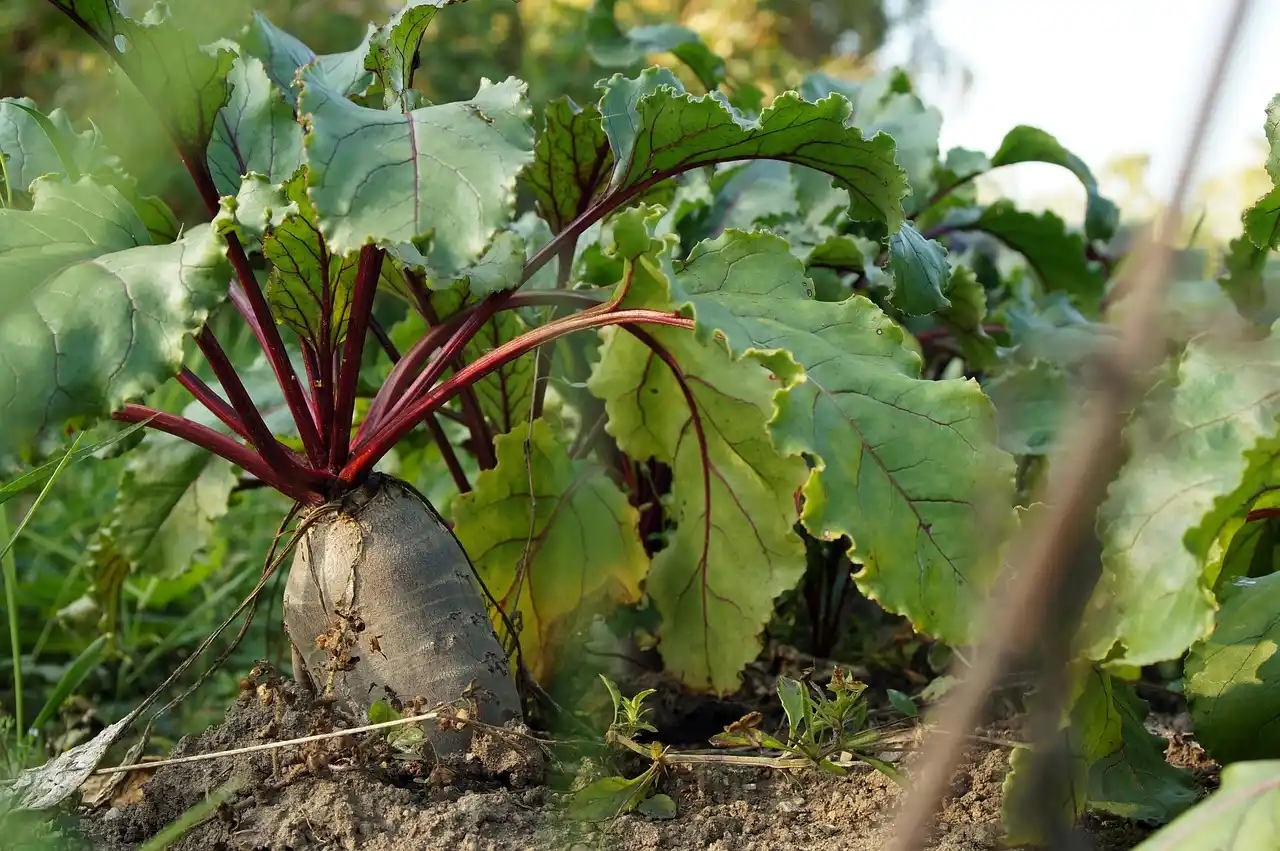
Radish can bolt quickly as spring weather warms. Carrot and beet can also bolt, especially if they are stressed early or planted at the wrong time. After bolting begins, the root often becomes tougher, woodier, or less worth harvesting.
Brassicas
Broccoli and cabbage can bolt when conditions turn sharply warm after cool growth. They are less about tender leaves and more about the plant shifting before the head or tight core is ready. A late start is a common reason these crops fail in spring.
Bolting triage table
| Crop type | Likely trigger | Visible symptom | Salvageable? | Best next action |
|---|---|---|---|---|
| Lettuce | Heat and longer days | Center shoots upward; leaves turn bitter | Sometimes | Harvest outer leaves at once; pull plants that are already sending a thick stalk |
| Spinach | Long days and heat | Upright stalk forms; leaves get tougher | Limited | Pick usable leaves immediately; remove plants that have shifted to flowering |
| Cilantro | Day length and heat | Fine leaves give way to a central stem | Briefly | Harvest foliage now; leave a plant only if you want seed or coriander |
| Radish | Heat and planting too late | Top growth races upward; roots stay small | Usually poor | Pull quickly and check roots; replant in cooler timing |
| Carrot | Root stress, heat, or cold shock | Tall stem and ferny flower buds | Low | Harvest any usable roots soon; discard woody roots and re-sow on time |
| Beet | Stress, heat, or root disturbance | Flower stalk from the crown | Low | Pull beets early if roots are still small; avoid transplanting in future crops |
| Brassicas | Warm spell after cool growth | Stem stretches before head fills | Sometimes | Cut usable side shoots or leaves; remove badly bolted plants and reset timing |
What should I do with a plant after it bolts?
Harvest what is still usable right away, then remove the crop if quality has dropped. Once flowering starts, leaves are often bitter and roots are often tough. The right move depends on the crop: some can be eaten for a few days, while others should come out immediately.
What is still edible?
Lettuce, spinach, and cilantro may still provide a little edible foliage if you harvest at once, before the stalk thickens. Radish tops can be useful only if the roots are still small and tender. With broccoli and cabbage, any side shoots or loose leaves may still be worth cutting.
Once a carrot or beet root has turned woody or pithy, the edible part is usually gone. If the crop has already shifted hard into flowering, do not wait for it to improve.
When to harvest immediately
Harvest immediately when you see a central stalk rising, flower buds forming, or a sudden change in leaf shape and flavor. If the crop is a leaf vegetable, a few days can matter. Pick in the cool part of the day and get the bed cleared or replanted soon after.
When to pull and compost
Pull the plant when flavor, texture, or root quality has clearly dropped and the crop is no longer useful. Composting is fine if the plant is healthy. Leaving a bolted plant in the bed can also send seeds that create more volunteer plants than you want.
How do I slow bolting?
You slow bolting by timing the crop to the season, keeping roots evenly watered, and reducing heat spikes around the root zone and leaves. The best prevention depends on whether you are growing a leafy crop, a root crop, or a biennial that dislikes stress.
Early spring sowing windows
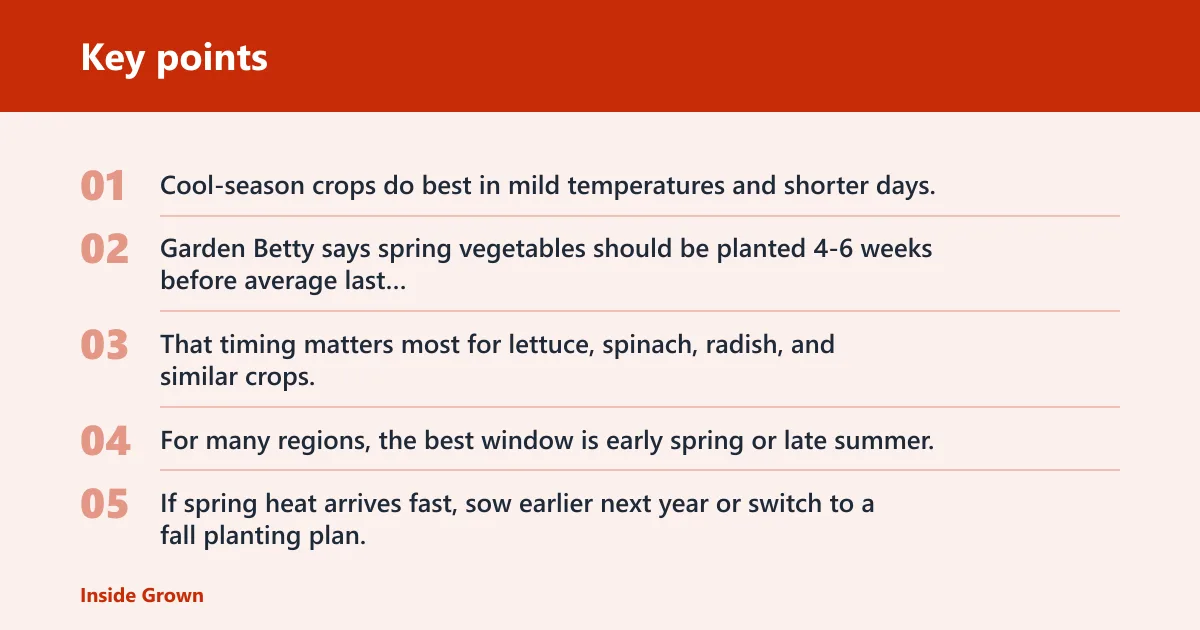
Cool-season crops do best in mild temperatures and shorter days. Garden Betty says spring vegetables should be planted 4-6 weeks before average last frost, which gives them a head start before long days and heat build. That timing matters most for lettuce, spinach, radish, and similar crops.
For many regions, the best window is early spring or late summer, not the heat of midsummer. If spring heat arrives fast, sow earlier next year or switch to a fall planting plan.
Fall planting and succession sowing
Fall planting can help avoid the strongest long-day pressure, especially for lettuce, spinach, arugula, and pak choi. Succession sowing also helps because younger plants are less likely to hit a stress peak all at once. Small, repeated sowings are safer than one big planting in a risky window.
Direct sowing for root crops
Direct sowing is recommended for carrots, beets, and parsley to avoid root stress. That matters because transplant shock and root disturbance can push a plant toward bolting. Root crops usually do better when the seed goes straight into the final bed.
Suppose a gardener starts carrots in trays, then transplants them after the roots have curled around the cells. The disturbed roots can stall, then the plant may bolt early instead of sizing up. Direct sowing avoids that failure case.
Mulch, shade cloth, and steady watering
Mulch helps reduce soil temperature swings and keeps moisture more even. Shade cloth or temporary garden shade can cool lettuce and spinach in hot weather, especially when used over taller companion crops or as a short-term cover during a hot spell. Even a modest drop in heat around the plant can buy time.
Watering consistency matters as much as volume. Keep soil evenly moist rather than swinging between dry and soggy. That is one of the few steps that helps several crops at once, especially lettuce and spinach.
Are bolt-resistant varieties worth buying?
Yes, especially if you garden in a warm spring or a fast-moving summer. Seed catalogs often use terms such as heat-tolerant, slow bolt, and bolt resistant. Those labels do not make a crop bolt-proof, but they can widen the safe harvest window.
What catalog terms mean
Names such as Boltardy beetroot, Slow Bolt cilantro, and Jericho romaine point to varieties selected for later flowering or better heat performance. That can matter most for crops that routinely fail in your season. A resistant variety still needs the right sowing date and water pattern.
When resistant varieties help most
They help most where long springs, early heat waves, or strong day-length pressure hit hard. A slow-bolt lettuce is useful in a hot climate. A heat-tolerant cilantro is useful when spring turns warm before the crop is mature. These are tools, not guarantees.
Limits of bolt resistance
Resistant varieties cannot fully cancel heat, drought, bad timing, or root disturbance. If a crop is planted too late, allowed to dry out, or overfed with nitrogen, it can still bolt early. Use resistant seed as part of the plan, not as the whole plan.
Frequently asked questions
Why do vegetable plants bolt early?
Vegetable plants bolt early when they shift from leaf or root growth into reproduction. The main triggers are longer days, heat, drought, cold snaps in some biennials, and root stress. Once that switch starts, leaves often taste bitter and roots can turn woody or low quality.
How do I stop lettuce from bolting in hot weather?
Plant lettuce early, before the weather turns hot, and keep the soil evenly moist. Mulch helps stabilize the bed, and shade cloth can cool the crop during heat spikes. In hot climates, choose bolt-resistant or heat-tolerant varieties and use succession sowing for a steadier harvest.
Can heat and drought make vegetables bolt sooner?
Yes. Heat and water stress can speed bolting in cool-season crops. Dry soil, uneven watering, and hot roots push plants toward flowering faster than steady moisture does. A practical target often used in garden advice is at least one inch of water per week, delivered consistently.
Should I direct sow crops that bolt easily?
Often, yes. Direct sowing is recommended for carrots, beets, and parsley because it avoids root disturbance and transplant shock. That is especially useful for crops that bolt when roots are stressed. Lettuce and cilantro can also be direct sown when the season is right.
Do some vegetables bolt because of cold snaps?
Yes. Some biennial vegetables can bolt after a sudden cold snap, especially when they are already close to the flowering stage. Vernalization, which is a cold trigger for flowering, can matter in biennials and winter annuals. That is why early cold exposure can create a later bolting problem.
Are there bolt-resistant varieties worth buying?
Yes. Catalog terms such as heat-tolerant, slow bolt, and bolt resistant are worth reading carefully if you garden in a warm spring or a long summer. They help most when paired with the right sowing date, steady water, and a season plan that avoids peak heat and long days.