How to Rotate Crops in a Vegetable Garden
Rotate crops by plant family, not by crop name. Move each family to a different bed each year, and keep the same family out of that spot for 3 to 4 years. That gap cuts pest carryover, slows soil-borne disease, and keeps one group from draining the same nutrients year after year. This guide shows a simple family-based map for small gardens and a fallback plan for beds too small to rotate perfectly.
How crop rotation works
Crop rotation is easier when you think in beds or zones, not in individual plants. The basic rule is simple: the same plant family should not return to the same spot for 3 or 4 years. If space allows, a 4-year rotation is the stronger choice.
Use the garden as a yearly map. Each bed gets a family for one season, then that family moves on and the next family takes its place. Rotating this way helps break the life cycle of soil-borne problems such as clubroot, white rot, and eelworm, which can stay active in soil for several years.
Rotation also helps with fertility by giving heavy feeders a fresh bed and making room for legumes to leave more usable nitrogen behind for later crops.
What you’ll need
- Paper or a simple digital garden map
- Labels, notes, or a photo log
- Any soil test results you already have
- A list of crop families in your garden
- Bed or zone names you can repeat each year
How do you group crops by family?
Group vegetables by botanical family first, then place each family in its own bed or zone. BBC Gardeners’ World groups onions, shallots, garlic, leeks, and spring onions in the allium family. It groups cabbage, kale, radish, rutabaga, and Brussels sprouts under brassicas, and peas, beans, clover, and vetch with legumes.
It also groups carrot, parsnip, celery, and celeriac as umbels, and potato, tomato, and eggplant in nightshades. Sweetcorn belongs with grasses, not with cucurbits. Cucurbits include crops such as squash, pumpkins, cucumbers, and gourds.
How do you build a 3-bed rotation?
A 3-bed rotation works best when each bed carries one family per year and then moves on. That gives each family a 3-year return cycle, which fits the minimum interval recommended for rotation. It is a good choice when space is tight and you want a simple system you can keep up with.
Use one bed for heavy feeders, one for legumes or a soil-building crop, and one for another family with different nutrient needs. Then shift each family to the next bed the following year.
How do you build a 4-bed rotation?
A 4-bed rotation is easier to manage if you have the space. Iowa State notes that four raised beds make rotation straightforward, and BBC Gardeners’ World says a four-year rotation is best if you have space. The extra bed gives you more room for heavy feeders and for beds that need a soil reset.
Spread brassicas, nightshades, legumes, and root crops or umbels across the cycle. Keep a compost-rich bed available for crops that need more fertility, such as brassicas and nightshades, and move them out before they land in the same bed again.
Crop rotation planner
Use this one-page planner to tie bed, family, and year together. Keep the same bed names every season, and write the family down before planting. The point is not perfection. The point is a clear record you can follow after a busy year or a crop failure.
| Bed/Zone | Current family | Next 3 years | Soil needs | Notes for pests/disease |
|---|---|---|---|---|
| Bed 1 | Brassicas | Year 2: legumes; Year 3: umbels/root crops; Year 4: alliums | Rich soil, steady compost, even moisture | Watch for clubroot; keep brassicas out for 3 to 4 years if symptoms appear |
| Bed 2 | Legumes | Year 2: nightshades; Year 3: alliums; Year 4: brassicas | Moderate fertility; avoid excess nitrogen | Legumes can leave nitrogen in the soil for the next crop |
| Bed 3 | Nightshades | Year 2: umbels/root crops; Year 3: alliums; Year 4: legumes | Richer soil, compost before planting | Keep tomatoes and potatoes out if disease pressure was high |
| Bed 4 | Alliums | Year 2: brassicas; Year 3: legumes; Year 4: nightshades | Moderate fertility, good drainage | White rot can persist for years, so avoid repeat alliums in the same place |
| Bed 5 | Cucurbits | Year 2: alliums; Year 3: brassicas; Year 4: legumes | Rich soil, regular water | Leave enough room for sprawling vines and keep debris out of the bed |
| Bed 6 | Sweetcorn | Year 2: legumes; Year 3: brassicas; Year 4: root crops | Good fertility and full sun | Treat as a grass family crop, not as a cucurbit |
| Bed 7 | Root crops / umbels | Year 2: alliums; Year 3: brassicas; Year 4: legumes | Fine, even soil; avoid fresh manure | Watch for eelworm and other soil pests that linger |
| Bed 8 | Fallback: diseased bed | Year 2: non-host crop; Year 3: non-host crop; Year 4: same family only if healthy | Soil test, compost only if needed, improve drainage | Remove the host crop, clean debris, and keep the same family out for several years |
Example 3-bed rotation map
In a 3-bed setup, divide the garden into three zones and shift each family one bed over each year. A simple pattern is brassicas in Bed 1, legumes in Bed 2, and nightshades in Bed 3 for year one. Next year, move each family forward one bed.
That means brassicas move to Bed 2, legumes move to Bed 3, and nightshades move to Bed 1. By year three, each family has spent time in all three beds and still gets a 3-year gap before returning to the first spot.
Example 4-bed rotation map
In a 4-bed garden, assign one family per bed and rotate the sequence each year. A strong pattern is brassicas, legumes, nightshades, and alliums in year one. In year two, shift each group one bed over and keep the same order.
This setup gives you more room to separate heavy feeders from lighter users of the soil. It also makes it easier to slot in a bed for cucurbits or sweetcorn when space and sunlight allow.
How do you rotate vegetables in your garden by family?
Start with the families that take the most from the soil or are most likely to carry soil-borne disease. Put brassicas, nightshades, and alliums on a written cycle first, then fit cucurbits, sweetcorn, legumes, and umbels into the remaining spaces. Keep the family name on the map, not just the crop name.
Say one bed had tomatoes this year and the bed also showed disease pressure. Next season, move in legumes or alliums, not another nightshade. That keeps the family out of the same soil while the problem breaks down.
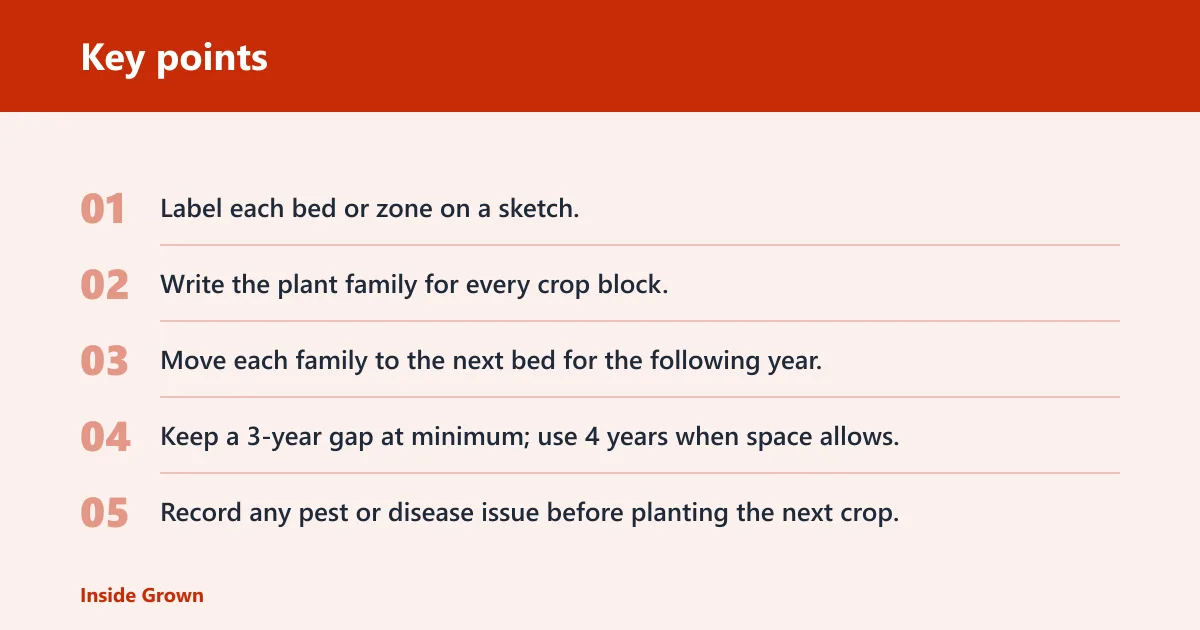
- Label each bed or zone on a sketch.
- Write the plant family for every crop block.
- Move each family to the next bed for the following year.
- Keep a 3-year gap at minimum; use 4 years when space allows.
- Record any pest or disease issue before planting the next crop.
- Add compost where heavy feeders are due, then recheck the map before sowing.
What should you do with soil, pests, and disease when rotating crops?

Soil, pests, and disease need their own notes in the plan. A soil test and compost can help you decide which beds need more fertility and which can rest. Heavy feeders need richer soil, while legumes can help add nitrogen. If a disease shows up, rotation still helps, but the bed needs a stronger reset.
If clubroot, white rot, or eelworm appears, remove the host crop and clear infected debris. Disease organisms may persist in soil for several years, so the same family should stay out of that spot for about 3 to 4 years, and longer if the problem was severe.
What if a bed gets diseased?
Move the diseased family out at once and do not replant that same family in the bed again right away. Use a non-host crop, or a crop from a different family, while the soil recovers. Write the problem on the map so the bed does not quietly cycle back to the same crop too soon.
Suppose a brassica bed shows clubroot. The next planting should be a non-brassica family, and the same family should stay out for several years. That single change can prevent a repeat outbreak.
What can you do if your garden is too small for perfect crop rotation?
Small gardens can still rotate. Use containers, pocket vegetable gardens, shared beds with neighbors, or short moves of a few feet when needed. A move of even a small distance can still help when the soil is separated by a pot, a new pocket, or a different bed edge.
If only one bed exists, rotate the highest-risk families first and use containers for the rest. That gives you a partial system instead of no system.
What should you do with soil and spacing after a tough year?
After a poor year, keep the bed out of the same family and add a clear note to the map. Rotate in a lower-risk family, top up compost where the next crop needs more fertility, and make sure drainage is not holding the same problem in place. If the bed is too tight for a full rest, use a container nearby for the next crop from that family.
Prevention is mostly recordkeeping: a dated note, a bed sketch, and a photo are enough to show what went where. Without that trail, rotation becomes guesswork.
Common mistakes
One common mistake is rotating by appearance instead of family. Carrots and parsnips are not the same as onions, and potatoes belong with nightshades, not in a separate potato-only box. Another mistake is treating a small bed as impossible to rotate. Even a short move or container swap can help.
Another problem is losing track after a partial crop failure. If part of a bed failed, write down what remained and what was removed. Do not assume the whole bed counts as empty. That gap in the record is where the next mistake starts.
Frequently asked questions
How do I crop rotate a vegetable garden?
Assign each bed or zone to a plant family, then move that family to the next bed every year. Keep the same family out of the same spot for 3 to 4 years. A simple sketch with year labels is enough to keep the plan clear.
How do I make a 3-year crop rotation plan?
Use three beds or three zones and move each family one position each year. Year one can hold brassicas, legumes, and nightshades. Year two and year three shift those families forward until each has had a 3-year gap before returning.
How do I make a 4-year crop rotation plan?
Use four beds if you can. BBC Gardeners’ World says a four-year rotation is best if you have space, and Iowa State says four raised beds make rotation straightforward. Add a fourth family or a soil-building year, then move the plan one bed each season.
Do I need to rotate crops in raised beds?
Yes. Raised beds still collect pests, disease, and nutrient patterns over time. Four raised beds make rotation easier, but even three beds can work if you keep the family schedule written down and shift crops every season.
Which vegetables do not need crop rotation?
No vegetable fully escapes soil history, but some are more flexible than others. Sweetcorn, peas, beans, squash, and cucumbers are often treated as lower-need rotation crops, while tomatoes, potatoes, brassicas, and alliums usually benefit more from strict family rotation.
How long should I wait before planting the same crop family in the same bed again?
Wait 3 or 4 years. That gap is the standard recommendation, and a 4-year wait is better when the garden has room. If disease showed up, keep the family out for the full interval and longer if the bed was badly affected.