How to Prevent Blossom End Rot in Tomatoes and Peppers
Keep tomatoes and peppers evenly watered. Mulch the soil, reduce root stress, and use calcium amendments only when a soil test shows they are needed. Blossom end rot starts when young fruit cannot move enough calcium during early growth, so the damaged spot appears later and will not heal. Fix water delivery first, then adjust pH or fertilizer only if the test supports it. For related guidance, see the tomato soil pH guide and container vegetable watering schedules.
What you’ll need


- A soil test kit or lab report that includes pH and nutrient levels
- Organic mulch such as compost, shredded leaves, straw, or grass clippings
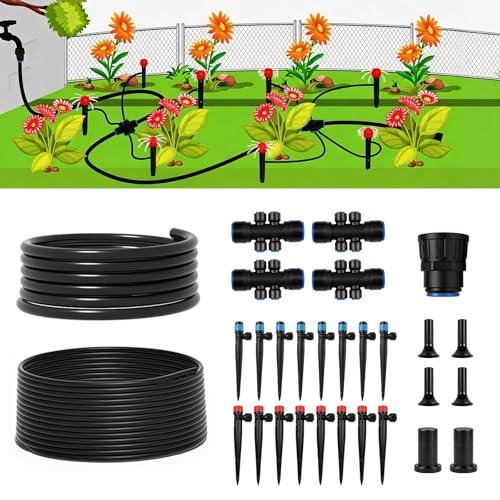
- A watering method you can control consistently, such as drip, a soaker hose, or a watering can
- A hose, bucket, or irrigation timer for steady watering
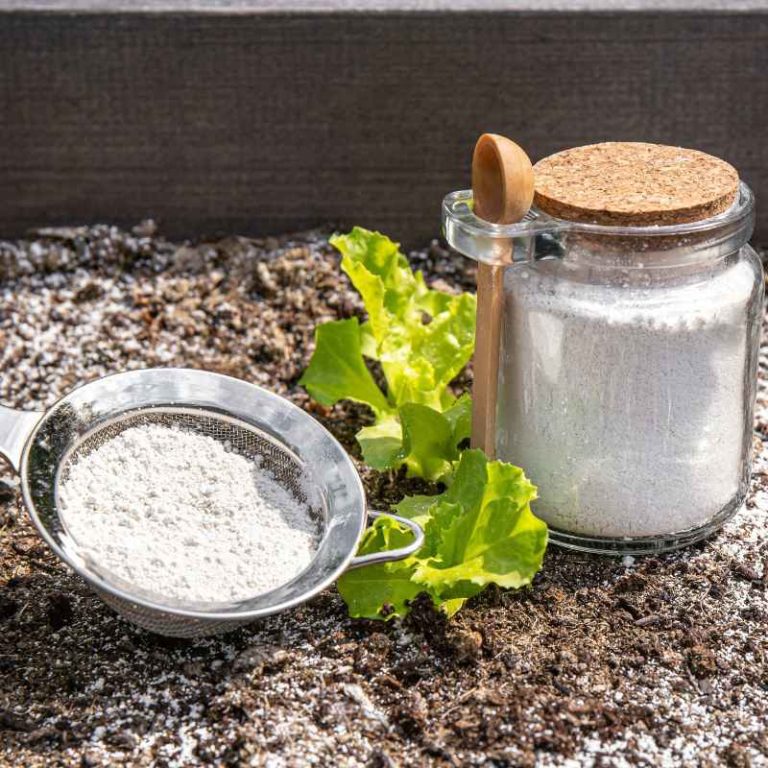
- Optional lime or sulfur, but only if the soil test points to a pH correction
- A tomato-appropriate fertilizer label to check nitrogen, potassium, and magnesium levels
How blossom end rot starts
Blossom end rot is a physiological disorder, not a fungal or bacterial disease. The symptom is a dark, sunken patch at the blossom end of the fruit, opposite the stem. Tomatoes and peppers are the main crops affected, and aubergines can be hit too. (WISC)
The timing matters. The calcium problem begins early in fruit development, before the spot shows. By the time the end of the fruit turns black and leathery, the damage is already set. That fruit will not recover, even if growing conditions improve later.
Why the spot shows up late
Calcium moves with steady water flow through the plant. Under stress, leaves get priority and fruit gets less calcium. Once the fruit skin thickens, foliar calcium sprays have limited effect. That is why fixing watering and roots matters more than chasing a spray after symptoms appear.
Why does watering control matter most?
Because calcium movement depends on continuous water flow, uneven watering is the first thing to fix. Dry soil, then a flood of water, creates the kind of swing that leaves fruit short of calcium early on. Keep the root zone evenly moist through fruit set and during hot, dry spells.
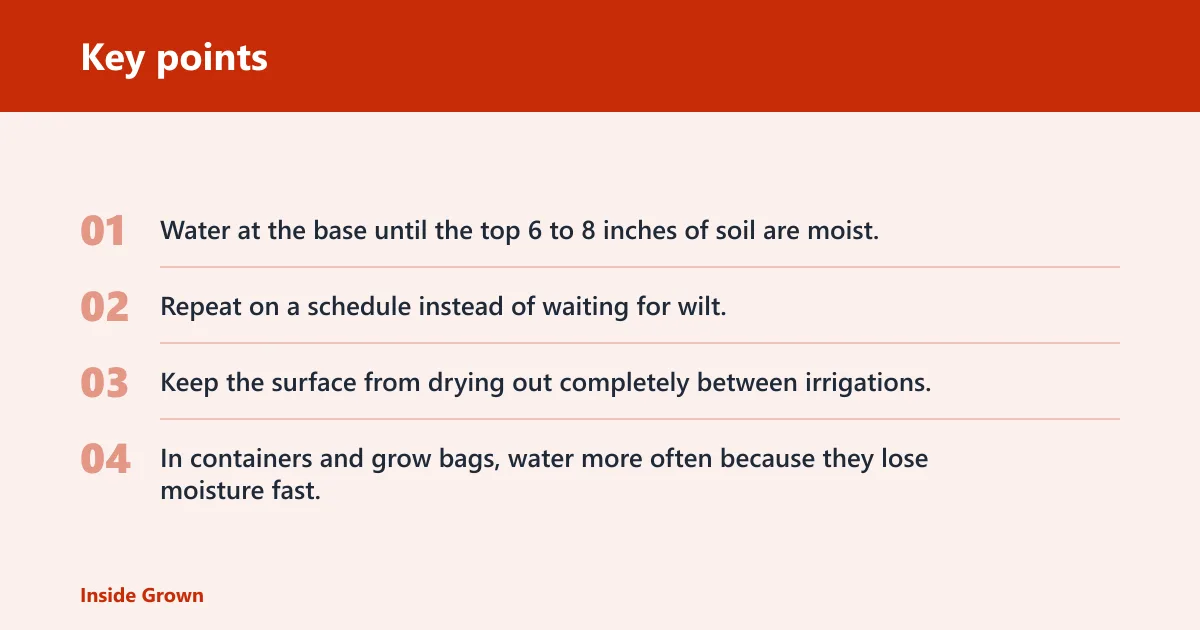
- Water at the base until the top 6 to 8 inches of soil are moist.
- Repeat on a schedule instead of waiting for wilt.
- Keep the surface from drying out completely between irrigations.
- In containers and grow bags, water more often because they lose moisture fast.
How often should you water tomatoes and peppers to prevent blossom end rot?
A common rule of thumb is about 1 to 1.5 inches of water per week, adjusted for heat, wind, rainfall, and soil type. The exact schedule matters less than evenness. One deep soak followed by several dry days is a poor pattern, especially while fruit is setting.
Say your tomatoes are in a 5-gallon container on a sunny patio. If the pot dries halfway down by afternoon, the fruit can be short of calcium long before the dark spot appears. A second watering the same day may be needed in warm weather.
Can blossom end rot happen in containers and grow bags?
Yes. Containers and grow bags are higher-risk because they dry out and re-wet faster than in-ground beds. RHS notes that pots or growing bags are most at risk of irregular water supply. Use a larger volume container, a moisture-retentive mix, and a watering schedule you can keep steady.
How do roots and mulch help?
Weak roots cannot move water and calcium well. Root damage, compaction, rot, pests, wet soil, and hot beds all cut uptake. Mulch helps by holding moisture steady and reducing temperature swings, which is especially useful in heat or dry spells.
- Check whether the soil is staying soggy or crusting hard.
- Gently loosen surface compaction without disturbing major roots.
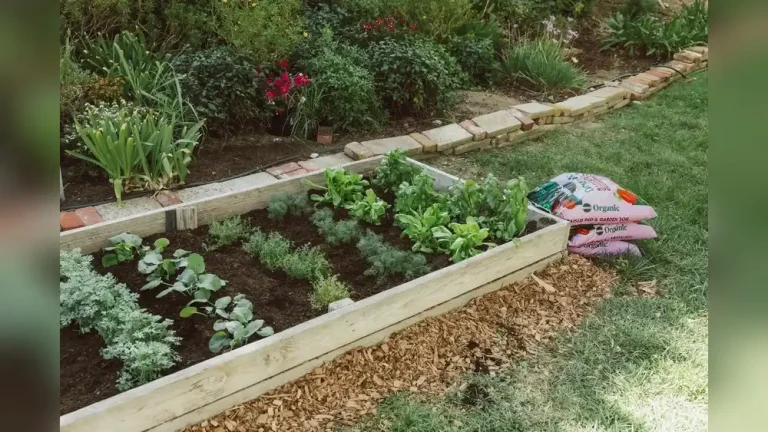
- Pull mulch back from the stem, then spread 2 to 3 inches around the plant.
- Improve drainage if water sits after irrigation or rain.
- Inspect roots if a plant stays stunted despite regular watering.
Suppose a pepper plant in a raised bed keeps developing new spots even after you water more often. If the bed stays wet for long periods, the issue may be poor drainage rather than drought. In that case, watering more can make root stress worse.
How do I stop blossom end rot from spreading to new fruit?
Stop the stress that is hitting new fruit now. Keep watering even, add mulch, and correct root problems or drainage issues. New fruit can be protected if the plant regains steady water flow early enough. Damaged fruit stays damaged, so focus on the next flush of fruit.
If the plant is in a container, move it out of direct afternoon heat if possible and check moisture daily. In a raised bed, mulch and more frequent irrigation often help faster than adding fertilizer.
Should you add calcium or change fertilizer?
Read the soil test before adding anything. Extra calcium above normal liming will not reduce blossom end rot on its own. If the test shows a deficiency or a pH issue, then lime or another amendment may be useful. If the test is fine, look harder at watering and roots. (UDEL)
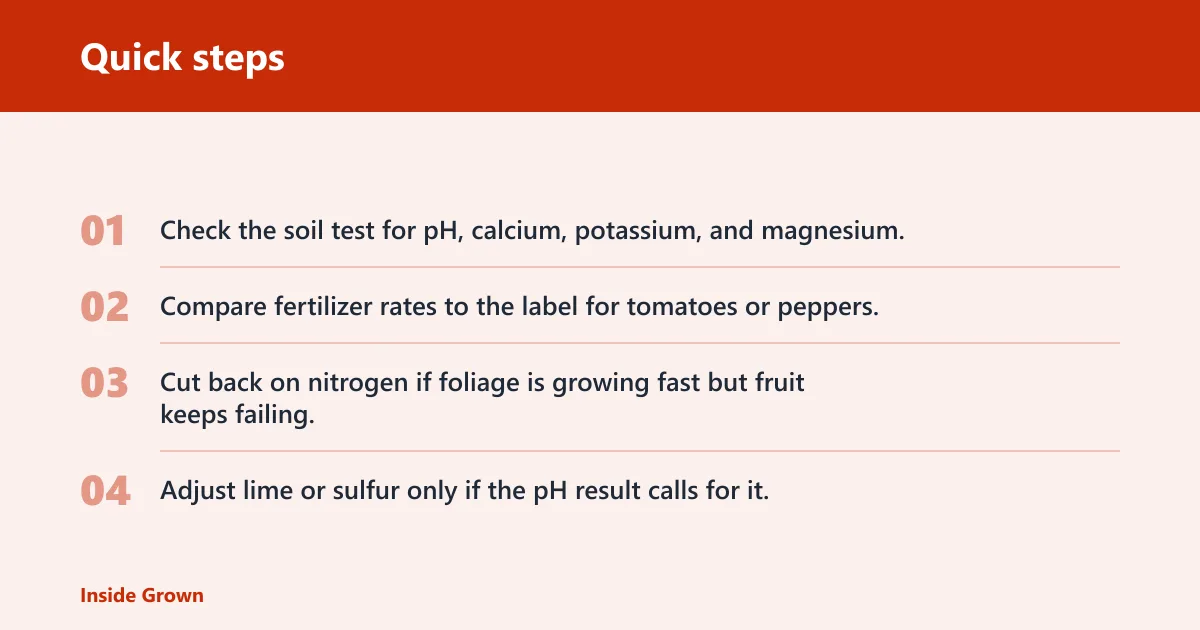
- Check the soil test for pH, calcium, potassium, and magnesium.
- Compare fertilizer rates to the label for tomatoes or peppers.
- Cut back on nitrogen if foliage is growing fast but fruit keeps failing.
- Adjust lime or sulfur only if the pH result calls for it.
What fertilizer causes blossom end rot in tomatoes and peppers?
Over-fertilizing is the problem, especially with too much nitrogen. It can push leaf growth at the expense of fruit balance. Too much potassium can interfere with calcium and magnesium uptake, and high magnesium can inhibit calcium uptake. Use tomato-appropriate feeding rates and let the soil test guide changes.
Tomatoes generally prefer a soil pH of about 6.0 to 6.5. Low pH can reduce calcium availability, so a low soil pH may point to lime rather than more fertilizer. That is a correction worth making before the next planting cycle if the test confirms it.
Does adding calcium fix blossom end rot?
Not by itself. Calcium sprays and quick fixes are limited once fruit skin is already thickening, and they do not correct dry swings, saturated soil, or damaged roots. If the plant cannot move water steadily, more calcium in the soil or on the leaves will not solve the root cause.
A common first-timer mistake is adding calcium the same day the dark spot appears and expecting that fruit to recover. The better move is to protect the next fruit set by fixing irrigation, checking the root zone, and using soil test results for any amendment choice.
Blossom end rot decision table
| Crop | Growing system | Symptom stage | Recent watering pattern | Soil test result | Likely cause | Fix now | Next season |
|---|---|---|---|---|---|---|---|
| Tomato | Container or grow bag | Small dark spot on new fruit | Dry, then soaked | Normal calcium, pH 6.2 | Water swing and root stress | Water daily as needed, add 2 to 3 inches mulch, move to cooler exposure if possible | Use a larger pot, water-retentive mix, and drip irrigation |
| Tomato | In-ground bed | Several fruit affected | Irregular irrigation during heat | Low pH | Low calcium availability plus water stress | Keep soil evenly moist, then lime only if the test supports it | Test soil before planting and correct pH in advance |
| Pepper | Raised bed | Blossom end spot on first set | Soil alternates between dry crust and wet soak | High potassium | Nutrient imbalance plus uneven moisture | Reduce potassium-heavy feeding and water on a steadier schedule | Choose a balanced fertilizer and mulch earlier in the season |
| Pepper | Container | Repeated damage on later fruit | Watered once after wilting | Magnesium elevated | Container stress with calcium uptake interference | Water before wilting, repot if rootbound, and avoid extra magnesium | Use a larger container and monitor moisture twice daily in heat |
Common mistakes
Adding calcium without checking water and roots is the biggest one. If the plant is drying out, staying wet, or fighting damaged roots, calcium alone will not fix the next fruit set.
Letting containers dry out between irrigations is another. Pots and grow bags are more vulnerable because water moves through them quickly.
Too much nitrogen can also backfire. Strong leafy growth can come with more fruit problems if the plant is fed beyond what tomatoes or peppers need.
Ignoring pH and nutrient balance leaves the real issue untouched. A soil test tells you whether lime, sulfur, or no amendment at all is the right next step.
Frequently asked questions
Q: What is blossom end rot? A: It is a physiological disorder that causes a dark, sunken patch at the blossom end of the fruit, opposite the stem.
Q: What should be fixed first? A: Fix watering and root stress first, because steady water flow is what helps the plant move calcium.
Q: Does adding calcium cure damaged fruit? A: No. Damaged fruit will not recover, so the focus should be on protecting the next fruit set.
Q: When should fertilizer or pH be adjusted? A: Only after a soil test shows that an amendment is needed.