Which Outdoor Plants Should Not Come Indoors for Winter?
Many outdoor plants should stay outside through winter. Hardy perennials, shrubs, bulbs, and cold-tolerant herbs usually do better outdoors or in dormant storage, while frost-tender tropicals are the main indoor candidates. Move the wrong plant inside and you often get pests, leaf drop, weak growth, or rot. This guide sorts outdoor plants into stay-outside, go-dormant, or replace categories.
Plants that should not come inside
The main reasons to keep a plant out of the house are simple: it needs winter chill, it is too large for indoor space, or it is likely to bring in pests that spread to houseplants. Some plants can survive indoors for a season, but that does not mean they should.
Large plants that outgrow indoor space
Big shrubs, tree forms, and mature container plants often fail indoors because the window space, light, and floor space are not enough. A plant that already fills a deck corner may also block airflow indoors, which makes pest and fungal problems more likely.
Plants that need winter chill or dormancy
Some outdoor plants are not meant to keep growing through winter. They need a cool rest, sometimes in the dark, and pushing them into a warm room can weaken them. For those, dormancy is the right winter plan.
Plants with pest problems or low recovery odds
If a plant is already covered in mealybugs, thrips, or spider mites, saving it indoors can cause more trouble than replacing it. The same is true for plants that are badly leggy, rootbound, or already declining from sunburn, drought, or disease.
When should you stop outdoor care?
For tender plants, the move-in trigger is before nighttime lows fall below about 50 to 55°F. Container plants cool faster than plants in the ground, so they need to come in sooner rather than later, and the first frost is the hard backup deadline.
Nighttime temperature thresholds
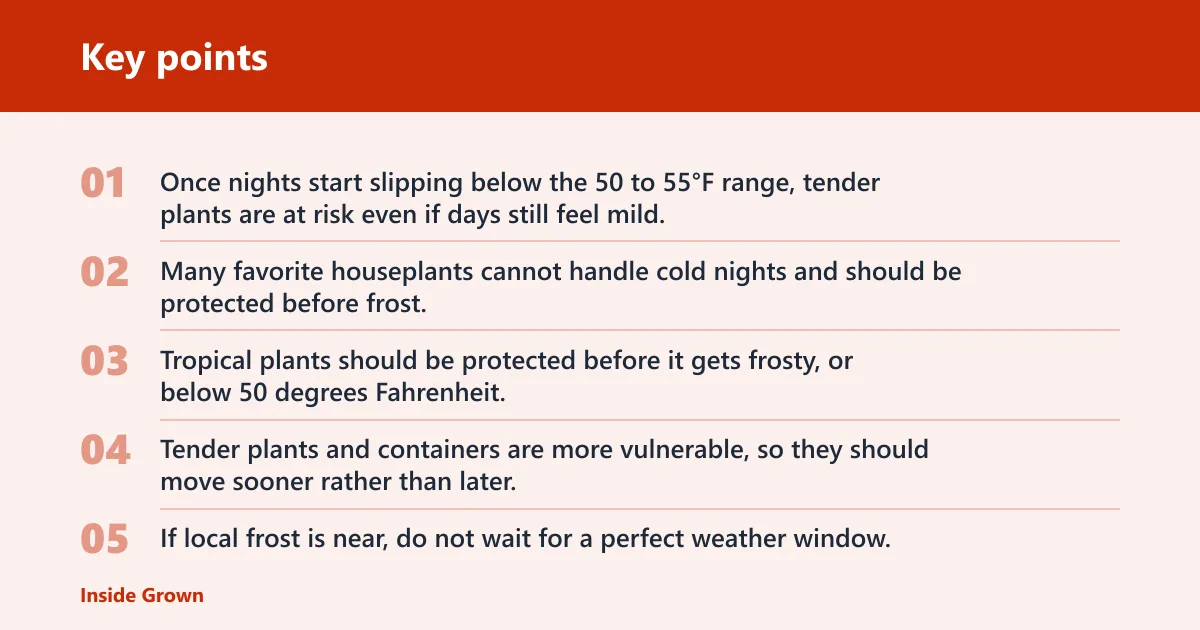
Once nights start slipping below the 50 to 55°F range, tender plants are at risk even if days still feel mild. Many favorite houseplants cannot handle cold nights and should be protected before frost. Tropical plants should be protected before it gets frosty, or below 50 degrees Fahrenheit.
Why containers cool faster than garden beds
A containerized plant should be rated for two zones colder to stay outdoors, because roots in a pot lose heat faster than roots in the ground. That means a plant that survives in the border may not be safe on a patio. Tender plants and containers are more vulnerable, so they should move sooner rather than later.
Using first frost as the backup deadline
If local frost is near, do not wait for a perfect weather window. The first frost can damage foliage, stems, and roots before a plant reaches a porch or sunroom. Move the plant while it is still in decent condition if you plan to keep it alive indoors.
Which plants should stay outside or go dormant?
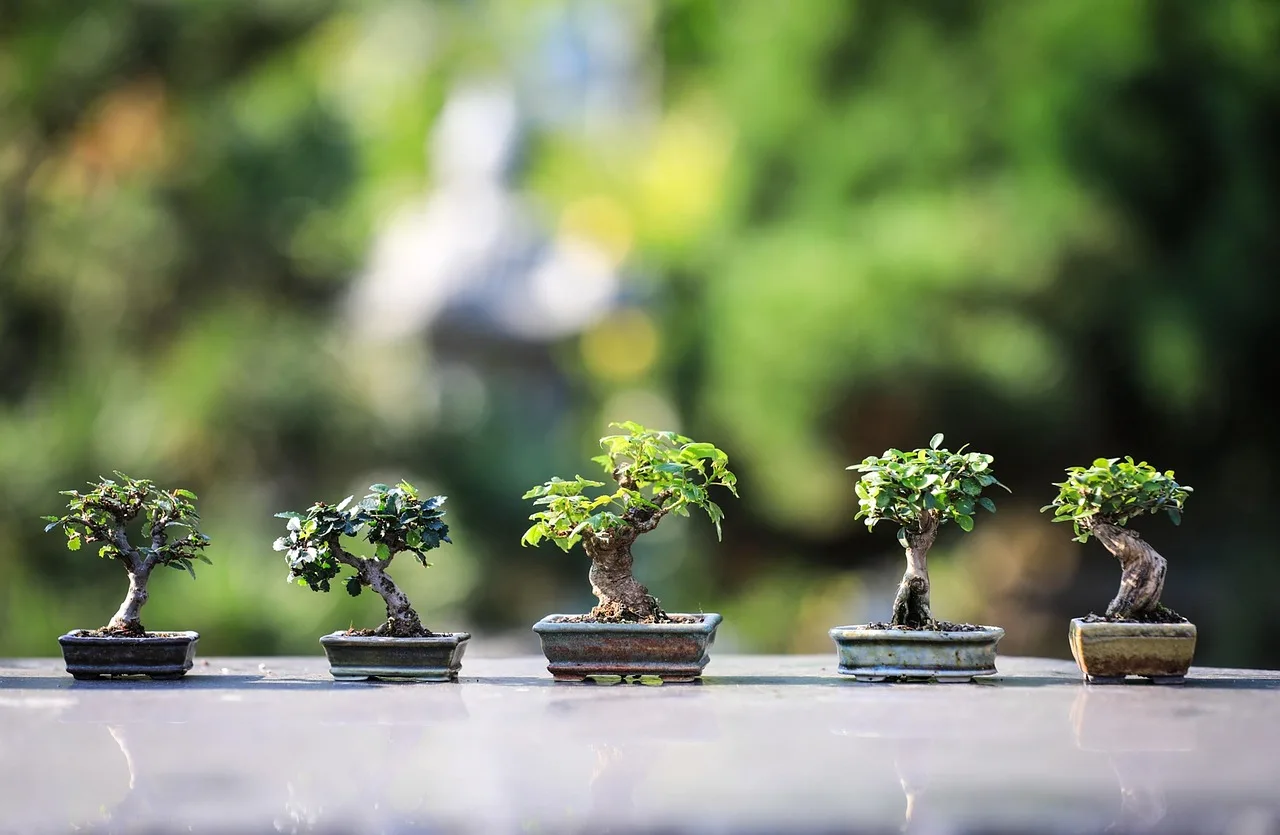
Plants that belong outdoors all winter fall into three buckets: they are hardy enough to stay in the ground, they need cool storage instead of a room, or they are not worth overwintering at all. That split matters because indoor care is not a universal fallback.
Plants better left in the ground
Hardy perennials, many shrubs, and cold-tolerant herbs usually do best where they are already planted. In the ground, they get more stable temperatures than a pot on a deck, and many are built to handle winter without extra help. If they are healthy outdoors, moving them inside can do more harm than good.
Plants that need cool, dark storage
Some bulbs, tubers, and woody plants do better with dormancy than with houseplant care. They may want a cool basement, an unheated garage, or another sheltered place where they stay dry and rest. A bright window can be the wrong setup if the plant is supposed to sleep.
Plants better replaced next season
Not every annual is worth saving. If a plant is inexpensive, already crowded with pests, or likely to need more light than you can give it, replacement next spring is often the better call. That is especially true for plants that decline fast indoors and then need pruning, spraying, and constant watch.
Indoor fail cases by plant type
The best candidates for indoor overwintering are usually frost-tender tropicals, but even those only work if your space can meet their light, humidity, and room needs. Many other common outdoor plants fail indoors because they need stronger light, a drier rest, or less fuss than a house can offer.
Tender tropicals and palms
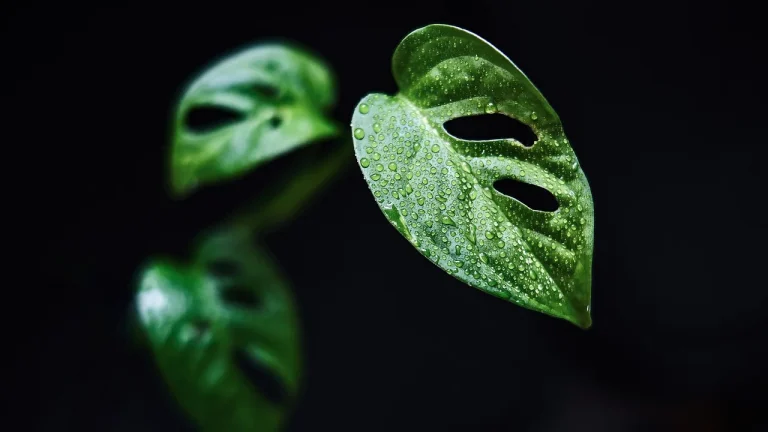
Tender tropical plants are often the first group people try to save indoors. Monstera, philodendron, bird of paradise, and palms can be good indoor candidates, but only if they fit near bright light and in a humid spot. Potted palms should come indoors and prefer a bright, humid spot.
Citrus trees and tropical hibiscus
Citrus trees in containers need to move inside before frost and do poorly in dry indoor air. They often drop leaves while acclimating, which can look alarming but is common. Tropical hibiscus is not frost-hardy, needs a sunny indoor spot, and may shed leaves indoors; reduced watering and fertilizing help once growth slows.
Rosemary, tender herbs, geraniums, coleus, succulents, and cacti
Rosemary is a good choice to bring inside if it cannot survive the cold in your area, but it still needs strong indoor light and well-draining soil. Basil is very sensitive to cold, while mint and chives can withstand cooler temperatures depending on type. Annual geraniums and coleus are generally frost-tender, though both can often be preserved as whole plants or from cuttings. Succulents and cacti are more complicated: cold tolerance can vary by species, they usually need very little water in winter, and some do better with a cool dormancy than with a warm room.
Say a rosemary pot has been sitting outside and the forecast now calls for nights around 48°F. If the plant is still compact and clean, it may be worth bringing in near a south window. If it is already woody, sparse, and covered in aphids, replacement may be easier than nursing it through winter.
Suppose a 12-inch coleus is still healthy but takes up a full shelf on a bright windowsill. Taking a cutting from a healthy stem is often the better move, because one small rooting cup can save the plant without crowding the room. Some plants are best preserved by taking a cutting from a healthy stem.
Winter plant decision table
This table separates common outdoor plants by failure mode, not by wishful thinking. Use it to decide whether a plant should stay outside, go dormant, be propagated, or simply be replaced next season.
| Plant type | Why it should not come indoors | Better winter strategy | Signs it is not worth moving |
|---|---|---|---|
| Hostas | Need outdoor dormancy and die back fully | Leave outside | No indoor foliage to keep; no room benefit |
| Daylilies | Hardy perennials that need winter rest | Leave outside | Plant is established in ground and healthy |
| Peonies | Need winter chill and stable garden soil | Leave outside | Large crown and no practical pot move |
| Lavender | Often dislikes warm, low-light indoor conditions | Leave outside or replace next season | Leggy growth and poor indoor light access |
| Rosemary | Needs strong light; can decline in dark rooms | Bring inside only if light is available | Plant is woody, sparse, or pest-prone |
| Basil | Very cold sensitive and short-lived indoors | Replace next season or take cuttings | Soft growth stops, even before frost |
| Mint | Can be messy and overgrow small indoor spaces | Leave outside or overwinter selectively | Pot is crowded and stems are sprawling |
| Annual geraniums (Pelargonium) | Need light and room; frost injures them fast | Whole plant or cuttings | Large pot, leggy stems, or limited windowsill space |
| Coleus | Cannot survive freezing temperatures | Cuttings for small spaces | Full plant is bulky and shades nearby plants |
| Citrus trees in containers | Need bright light and dislike dry indoor air | Move inside before frost | Already dropping leaves or carrying scale insects |
| Tropical hibiscus | Not frost-hardy and may shed leaves indoors | Move inside to a sunny spot | Weak light, dry air, or heavy pest pressure |
| Monstera and philodendron | Need bright light and higher humidity indoors | Indoor overwintering if space allows | Pot is large and the room is dim |
| Palms | Need bright, humid conditions and room to spread | Indoor overwintering only in suitable space | Dry heat, low light, or leaf tip burn |
| Succulents | Cold tolerance varies and winter water must stay low | Species-specific care or cool storage | Soft leaves, wet soil, or hidden pests |
| Cacti | Some need cool dormancy; others dislike warm wet care | Cool dormancy or leave outside if hardy | Species is unknown and watering needs are unclear |
How do you stop pests from moving indoors?
Before any plant comes inside, inspect leaves, stems, soil, and pot drainage holes for mealybugs, thrips, and spider mites. Clean off dead leaves and debris first, then quarantine the plant away from houseplants. That short pause can stop a small pest problem from becoming a room-wide one.
Check every surface. Look at the tops and undersides of leaves, stem joints, the soil line, and drainage holes. Pests often hide where stems meet leaves or where a pot stays damp.
Remove debris first. Pick off dead leaves, fallen flowers, and soil crust before the plant enters the house. Clean plants are easier to inspect, and they carry less pest habitat indoors.
Wash or wipe the plant. Use a gentle rinse or a damp cloth where the plant can tolerate it. The goal is to reduce visible pests and dust before the plant sits near other houseplants.
Quarantine it briefly. Keep the plant apart from the rest of your collection and check it again after a few days. New pest activity often shows up after the plant adjusts to indoor conditions.
How do you know it is not worth saving?
If a plant needs a bright window you do not have, takes up more space than you can spare, or is carrying pests that may spread, it is usually not worth forcing indoors. The same goes for plants that need dormancy but are being pushed into warm, dry air.
Light demand versus window space
Light-hungry plants need more than a dim room or a north window. If you cannot place the plant within a bright, unobstructed window zone, expect weak growth and leaf loss. In that case, a smaller cutting or a replacement is often the cleaner choice.
Pot size versus available room
A large container may fit the plant biologically but not logistically. Tall citrus, palms, and large tropicals can crowd walkways and block light for everything else. If the plant needs a full stand or a dedicated bright corner, it may be too much for the indoor setup.
Infestation, decline, and dormancy conflicts
Plants already stressed by insects, root issues, or poor shape have a lower chance of recovering indoors. If the plant also needs cool dormancy, warm indoor care is the wrong fix. A healthy cutting or a fresh replacement often costs less effort than saving a failing specimen.
Frequently asked questions
Which outdoor plants should stay outside for winter?
Hardy perennials, many shrubs, and plants that die back naturally are usually better left outside. They are built for winter rest, and forcing them indoors often causes weak growth or decline. If the plant needs a cold season to reset, the ground or a cool storage space is usually better than a warm room.
What plants should not be brought inside for winter?
Plants with pest outbreaks, large outdoor shrubs, and plants that need strong winter chill are poor indoor candidates. So are many cold-hardy herbs and perennials that expect dormancy. If the plant cannot fit your light, humidity, and space, it is better left outside or replaced next season.
Can annuals survive indoors over winter?
Some annuals can survive, but not all are worth the effort. Annual geraniums and coleus can be overwintered as whole plants or cuttings, while others are better replaced. Success depends on light, space, and whether the plant tolerates indoor dryness and lower winter growth.
Should I bring tropical plants inside before frost?
Yes, if they are frost-tender and you want to save them. Tropical plants should be protected before it gets frosty, or below 50 degrees Fahrenheit. Many do best indoors only if they get bright light, higher humidity, and enough room to adjust without crowding other plants.
Which plants should be left dormant instead of overwintered indoors?
Plants that need a cool rest period are better stored dormant than grown as houseplants. That includes some bulbs, tubers, and woody plants that do not want warm indoor care. A cool, dark storage spot is often better than a sunny window for those plants.
What plants are better overwintered as cuttings or roots?
Plants that are bulky, leggy, or short on indoor space are often better handled as cuttings. Annual geraniums and coleus are common examples. Taking a cutting from a healthy stem can preserve the plant without filling a window with a large pot that still needs regular attention.