What Size Plant Is Worth Bringing Inside for Winter?
The right size is the one that fits your brightest indoor spot without crowding it or making winter light a fight. In practice, that usually means a plant whose canopy stays narrow enough for a window zone, whose pot is easy to move, and whose root ball can go one pot size up at most.
Bring inside only plants that fit the brightest available window space and can stay compact through winter; a common practical cutoff is a plant in about an 8- to 12-inch pot. Larger plants often outgrow their spot, lose lower leaves, and demand more pruning, water, and cleanup than they repay. This guide shows how to judge size, light needs, and plant value so you keep only the winners.
Width, pot weight, and growth habit decide indoor fit
Size means more than height
Height matters, but width often decides the real fit. A tall plant with a slim habit may slide beside a window; a shorter plant with broad branches can block the glass, hit curtains, or lean into a walkway. Compact plants usually adapt better because they need less pruning to stay inside their footprint.
Use the pot and root ball too
The container is part of the size test. A pot that is too wide, too heavy, or too awkward to carry makes the move harder, and a root ball that fills the container leaves little room for winter adjustment. If the root ball already fills the pot tightly, shifting to a slightly smaller or equal-sized container is usually easier than trying to winter a sprawling oversized mass.
Why growth habit changes the answer
Form matters as much as inches. Compact plants are the easiest to tuck into bright windows. Upright plants need ceiling clearance and a narrow floor footprint. Trailing plants need a place where stems can drape without blocking light. Woody plants can take pruning better than many herbaceous annuals, but they often ask for more space and more light than a small houseplant-shaped specimen.
How much indoor space do you really have?
Measure the space before you move anything. A plant is only worth bringing in if it fits the brightest window zone, stays clear of heat vents and cold glass, and leaves enough room for air to move around the foliage. Pet and child access matters too; a plant that gets knocked over or chewed on is a poor winter project.
Window light and floor footprint
South- and east-facing windows usually give the strongest winter light, while west windows can work well if afternoon sun is not too harsh. North-facing windows are rarely enough for light-hungry plants. Also check the floor area under the window. A wide plant in a narrow room steals more usable space than its pot size suggests.
Ceiling height and plant spread
Ceiling height matters for upright shrubs and single-stem plants that keep extending after the move. Leafy tops that touch ceilings or lamps often get damaged, and cramped canopies block the light that lower leaves need. Trailing vines need horizontal room, while woody specimens may need a pruned crown to stay below the top of the window frame.
Humidity, airflow, and traffic around the plant
Indoor winter air is usually drier, and stale pockets around foliage can invite insects and disease. A plant packed too tightly against a wall or squeezed between furniture pieces dries unevenly and collects more dust. Keep it where air can move, but not in a draft path from a door or vent. Protect it from pets and from daily traffic that can bruise leaves.
Plants worth bringing inside
Small, slow, and light-matching plants are the best candidates. The strongest choices are usually compact specimens, woody plants that keep their form through winter, and trailing or upright plants that can tolerate some indoor drying and slower growth. A plant that recovers well after pruning is more likely to be worth the floor space it takes.
Compact plants that fit bright windows
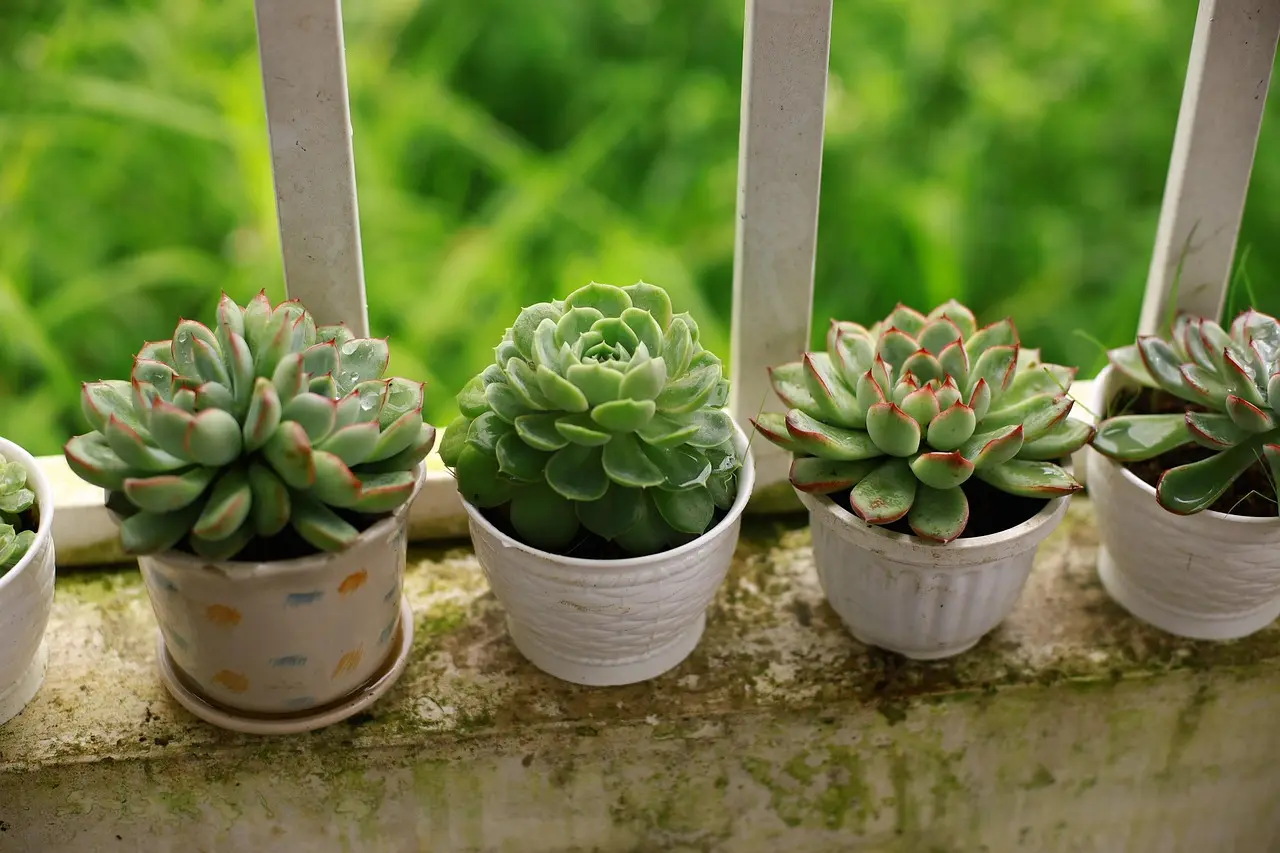
Compact plants are the easiest to keep alive indoors because they fit the brightest spot you have and do not demand constant rearranging. Succulents can be good candidates when their light needs match the window. Jade plant leaves are succulent and roundish, so it can handle a bright site if watering stays restrained. Houseleeks do better outdoors than indoors where winters are warm enough, so they are usually poor indoor choices unless conditions are unusually strong.
Woody plants that hold value through winter
Woody plants make sense when they are expensive to replace, easy to prune, and able to stay reasonably compact. Money trees are often sold with braided stems, which makes them easier to read as a single indoor specimen instead of a wide shrub. Lucky bamboo is not really bamboo, and it is sometimes sold growing in water rather than soil; that makes it a manageable indoor candidate when light is adequate. Peace lily is described as a houseplant that improves indoor air quality, and it often suits indoor winter conditions better than many outdoor plants because it already behaves like an indoor species.
Trailing and upright plants that tolerate indoor drying
Trailing and upright plants can be worth the effort if they do not collapse in low light. Chinese money plant leaves are round enough to look almost unreal, and the plant’s smaller scale makes it easier to place on a shelf or stand where light is strongest. Lucky bean plants can reach 6 feet when grown in a container, so that one needs a much stricter size check before it comes indoors. Desert rose stores moisture in its large belly, which helps it through drier indoor air, but it can rot if overwatered.
Decision matrix for winter plants
Use this table to sort plants by fit and payoff. Score each plant on width, height, winter light need, and recovery value. Add the points. Then use the total to decide whether to bring it in, prune it first, or leave it outside.
| Variable | 3 points | 2 points | 1 point |
|---|---|---|---|
| Plant width | 12 inches or less | 13 to 18 inches | More than 18 inches |
| Plant height | 24 inches or less | 25 to 48 inches | More than 48 inches |
| Winter light need | Low to moderate | Moderate | High, direct-light dependent |
| Recovery value | High value or hard to replace | Some value, replaceable | Low value or easy to replace |
Simple rule: total 10 to 12 points = bring in; 7 to 9 points = bring in only if pruned; 4 to 6 points = leave outside. If the plant needs more light than your brightest window can give, move it down one category even if the score looks good.
Which plants should stay outside?
Plants should stay outside when they outgrow the brightest indoor spot, need more winter light than a home can offer, or offer little recovery value after the stress of moving. A plant that is physically movable is still not worth wintering indoors if it will lose leaves, stretch badly, or become a pest magnet.
Plants that outgrow the brightest spot
Large container plants often fail the fit test before they fail the light test. A broad woody shrub, a wide trailing plant, or a container that takes two people to move may be technically overwinterable, but it can overwhelm the room. If pruning would remove most of the plant’s useful shape, leaving it outside is often the better choice.
Plants that need more light than winter can give
Bright direct light is the hardest indoor condition to supply in winter. South and east windows are the best starting points, but winter day length is short, so some plants still need supplemental grow light. If a plant insists on strong sun and your window gives only bright indirect light, expect leggy growth and weak recovery.
Plants with low recovery value after indoor stress
Some plants decline so fast indoors that the effort is hard to justify. Slow recovery, heavy leaf drop, and recurring insects can turn a seasonal rescue into a problem. Herbaceous annuals are often poor bets unless they are compact and especially valuable. Plants that are already stressed, rootbound, or badly shaped are also poor candidates.
Suppose a 28-inch woody plant in a 14-inch pot sits near a south window but spreads 30 inches wide. It may fit physically after pruning, but if the canopy blocks the glass and the plant needs direct winter sun, the score should drop. A smaller, upright plant with the same pot size may be a much better winter resident.
How to make a plant manageable before moving it
Prune before the move when width is the main problem. Check the pot and root ball next, then inspect for pests. Those three checks reduce the odds of dragging a bulky, infested, or poorly balanced plant into a room where it will be harder to manage.
-
Prune for width first.
Remove the longest, weakest, or most crowded growth so the plant fits the window zone without touching glass, walls, or curtains. Keep the outline compact. Heavy pruning is easier on woody and fast-growing plants than on plants that resent cutting.
-
Check the pot and root ball.
Make sure the container is not heavier or larger than your indoor space can handle. If the roots fill the pot tightly, move up only one size or keep the same container if drainage is still good. Oversized pots hold more wet soil and dry more slowly indoors.
-
Inspect for pests before the move.
Look under leaves, along stems, and at the soil surface for insects, webs, eggs, or sticky residue. Clean off debris and isolate the plant if needed. A pest problem is easier to control before the plant sits next to your healthy indoor plants.
What changes after the move indoors?
Winter indoors is slower. Watering drops, growth often stalls, and some leaf loss is normal as the plant adjusts to lower light. The main job is not to push new growth. It is to keep the plant alive, compact, and clean until spring.
Water less often
Indoor soil usually dries more slowly than outdoor soil because light, wind, and temperature are lower. Water only when the root zone has dried enough for that plant type. Desert rose is especially sensitive here because it stores moisture in its large belly and can rot if overwatered.
Expect slower growth or dormancy
Most plants do not grow strongly in winter light. Some slow down; some go semi-dormant; some stretch toward the window. That is normal. A plant that grows slowly is often healthier than one that tries to push soft, weak shoots in poor light.
Watch for leaf drop and insects
Leaf drop after the move is common, especially when light changes sharply or humidity falls. Insects also become more obvious indoors because there is nowhere to hide. Check weekly for mites, whiteflies, scale, and fungus gnats. Early action matters because small outbreaks spread fast in warm rooms.
A common first-timer mistake is moving a wide, leafy plant into a dim corner because the spot looks empty. Within two weeks, the plant leans toward the window, sheds lower leaves, and begins to look thin and tired. The problem is not the plant alone; it is the space chosen for it.
Frequently asked questions
What size plant is worth bringing inside for winter?
A plant is usually worth bringing inside when it fits your brightest window space in a pot around 8 to 12 inches and can stay compact with modest pruning. Larger plants can be worth saving, but only if they have high recovery value and do not crowd the room or starve for light.
Should I bring in small plants or let them stay outside?
Small plants are usually the better winter candidates because they fit brighter spots and need less pruning. Still, size alone is not the only test. If a small plant needs intense direct sun, dislikes dry indoor air, or has low value compared with the effort, leaving it outside may be the wiser call.
How big should a potted plant be before I move it indoors?
There is no single perfect number, but a practical cutoff is a plant that can stay narrow enough for a window zone and still leave space for airflow. If the pot is hard to carry, the canopy blocks light, or the root ball is oversized for the container, it is already near the limit.
Is it worth overwintering large container plants indoors?
Sometimes, but only when the plant is valuable, pruning will not ruin its form, and your indoor space can support its light needs. Large container plants often demand more floor space, more light, and more cleanup. If all three are tight, the plant usually loses the cost-benefit test.
Which plants are too big to bring inside for winter?
Plants that are wider than your brightest spot, taller than your ceiling clearance, or too heavy to move safely are poor indoor bets. Broad woody shrubs, oversized trailing plants, and container specimens that need direct winter sun are especially likely to fail the fit test even if they are cold-sensitive.
When should I bring container plants inside before frost?
Bring them in before the first frost, and inspect for pests before bringing them indoors. Moving early gives you time to prune, clean leaves, and place the plant where it gets the most winter light. Waiting until cold damage starts makes recovery harder and less certain.