Why Plants Drop Leaves After Coming Indoors
Plants often drop leaves indoors because the move can change light, watering rhythm, humidity, or root space; if leaf loss starts within about 2-4 weeks, it is often reasonable to treat it as acclimation first, then check those causes. Miss the cause, and a plant can lose most of its foliage and stall growth for months. This guide shows how to tell light shock, water mismatch, dry air, pests, and rootbound stress apart, then explains how to help the plant recover.
Triaging leaf loss through light, soil, and pest checks


A move indoors can trigger leaf drop because the plant is adjusting to lower light, less airflow, drier air, and a different watering pace at the same time. That reaction can be normal at first, but ongoing loss means you should look for a specific stressor instead of waiting it out.
Houseplants returning from a patio or porch face different conditions than they did outside. A plant that had bright sun, wind, and faster drying soil outside may shed leaves after being placed in a dimmer room with steady indoor heat.
-
Check the placement first.
Look at how much light the plant gets, whether it sits in a draft, and whether it is close to a vent. Light change is the most common first filter because a sharp drop in indoor brightness can make older leaves fall first.
-
Inspect the soil next.
Feel the top few inches of soil and check whether water is staying wet for too long or drying too fast. Plants can drop leaves from watering stress, and the fix depends on whether the root zone is staying soggy or becoming bone dry between waterings.
-
Look for pests and root stress.
Check leaf undersides, stems, and drainage holes for insects or cramped roots. If none of the early indoor-change issues fit, pests or a rootbound pot often explain why decline keeps going after the move.
Leaf drop triage table
| Symptom pattern | Most likely cause | Fastest fix | Wait vs act now |
|---|---|---|---|
| Older leaves near the base yellow, then fall after the move | Too little light | Move to bright indirect light near an east-facing window or a few feet back from a south or west window | Act now if the plant is shedding several leaves a week |
| Soil stays wet for many days and leaves soften or yellow | Too much water | Empty the saucer, let the mix dry to the plant’s needs, then water only when appropriate | Act now if the soil smells sour or stems feel mushy |
| Soil dries very fast and leaves crisp or curl before dropping | Too little water | Water thoroughly until excess drains, then adjust the schedule | Act now if the root ball is pulling away from the pot |
| Leaf edges drop near a cold window or vent | Cold drafts | Move the pot away from winter windows, doors, and vents | Act now during cold snaps |
| Tiny dots, webbing, or speckled leaves appear with decline | Spider mites or aphids | Isolate the plant and inspect nearby plants | Act now to stop spread |
| Cotton-like tufts, bumps, or sticky residue show up on stems | Mealybugs or scale | Quarantine the plant and remove visible pests | Act now |
| Water runs through too fast, roots circle, or roots emerge from drainage holes | Rootbound stress | Repot one size up if the plant keeps declining after placement and watering are corrected | Wait if the plant is otherwise stable; act now if growth has stalled and water issues keep returning |
| Only a few older leaves drop after a bright outdoor plant is moved inside | Normal acclimation | Hold steady, avoid overcorrecting, and watch for new growth | Wait if the drop slows and new leaves stay healthy |
Is the light too low?
Yes, low light is one of the first things to check when a plant starts dropping leaves indoors, especially for many houseplants after a move. Bright indirect light is the safest default for many houseplants after the move, while sun-loving plants may still need direct light, which means 6 or more hours of direct sun a day.
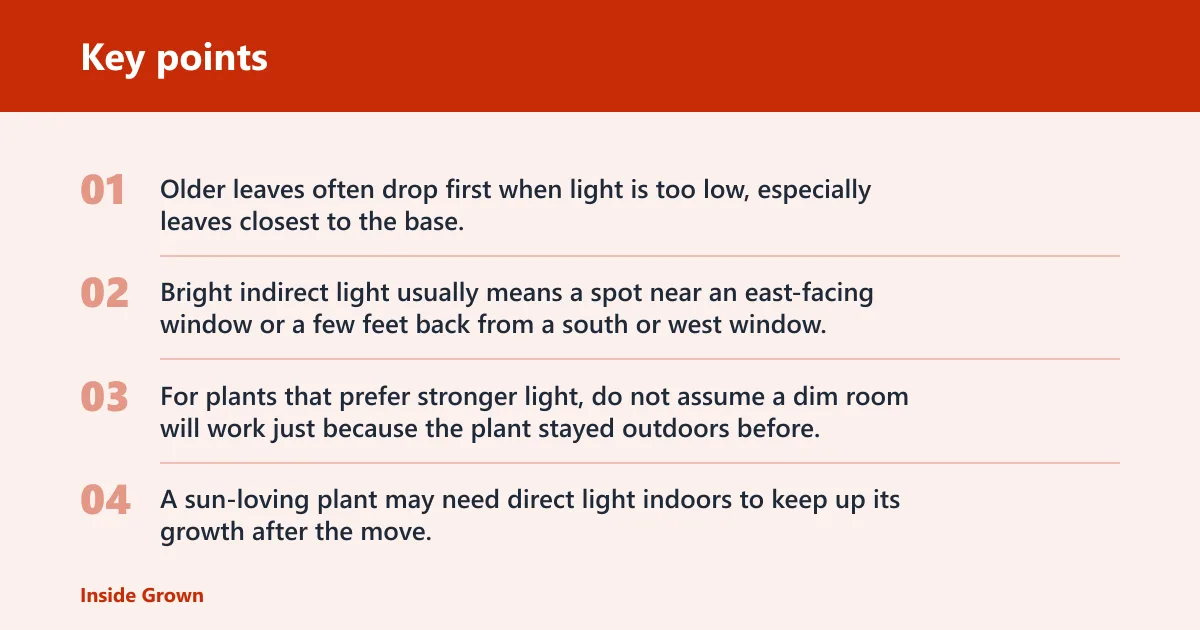
Older leaves often drop first when light is too low, especially leaves closest to the base. The plant can conserve energy by shedding lower leaves and keeping newer growth alive, so the pattern matters as much as the number of fallen leaves.
Use the right window placement
Bright indirect light usually means a spot near an east-facing window or a few feet back from a south or west window. That placement lowers stress from a sudden indoor drop in brightness without exposing tender foliage to harsh midday sun.
For plants that prefer stronger light, do not assume a dim room will work just because the plant stayed outdoors before. A sun-loving plant may need direct light indoors to keep up its growth after the move.
Say your pothos sat on a shaded porch all summer and now drops its oldest leaves from the bottom up beside a north window. The light change alone may explain the loss, and moving it a few feet closer to a brighter window often helps more than changing the watering schedule.
Should you change watering after the move?
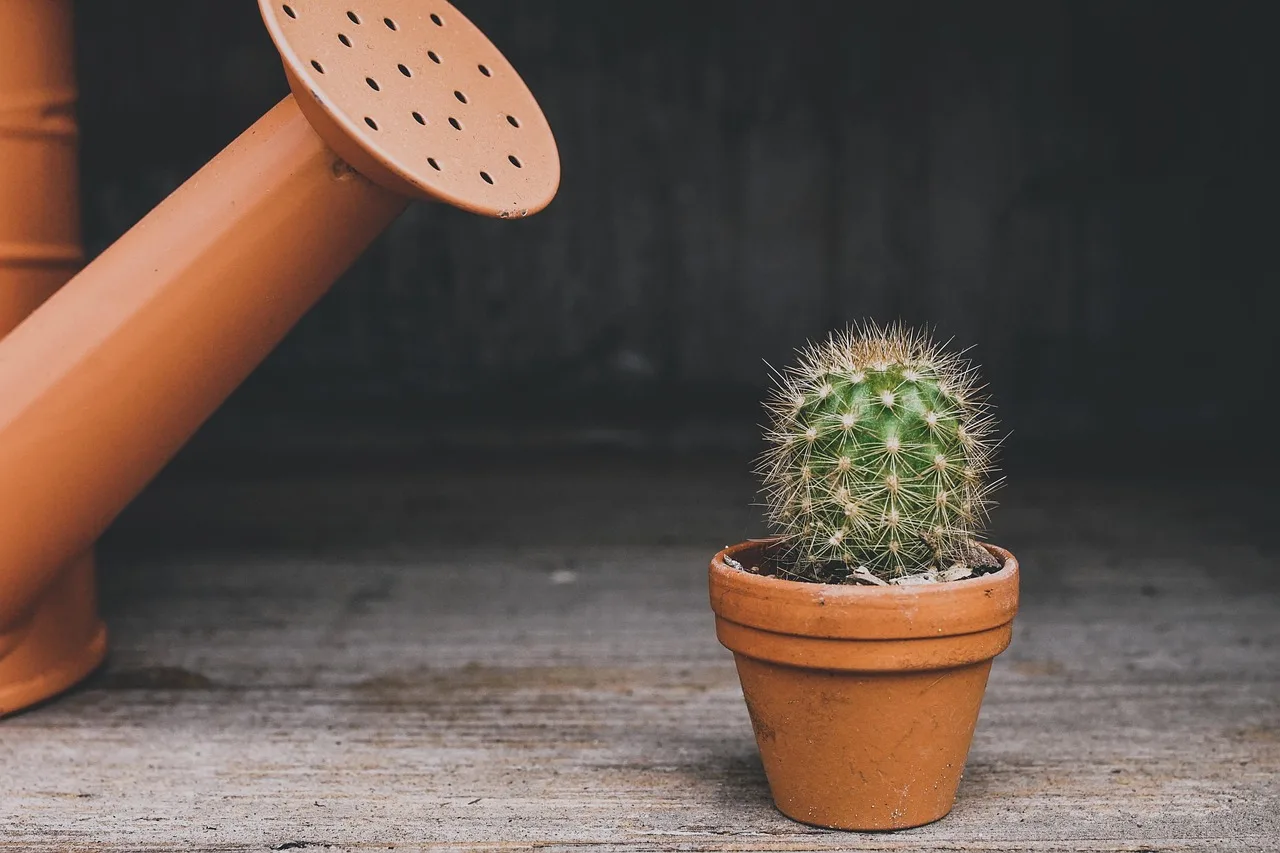
Often, yes. Indoor light, airflow, and temperature change how fast soil dries, so a schedule that worked outside may become too frequent or too sparse indoors. Plants can drop leaves from watering stress in either direction.
Too much water often shows up as yellowing, limp leaves and soil that stays wet for too long. Too little water usually brings dry soil, crispy leaf edges, and a plant that looks thirsty before leaves fall.
-
Check soil moisture.
Feel the soil before each watering instead of following the old outdoor rhythm. The right dryness level depends on the plant type, so a cactus, fern, and peace lily should not be watered on the same schedule.
-
Empty standing water.
Dump any water left in the saucer after watering. Leaving the pot in standing water can keep roots too wet and raise the risk of leaf drop from oxygen-starved roots.
-
Adjust to the plant.
Let drought-tolerant plants dry farther between waterings, and keep moisture-loving plants more evenly damp without waterlogging them. The goal is to match soil moisture to the plant type, not to a fixed calendar date.
Watering clues that separate overwatering from underwatering
- Overwatering: soil feels wet for days, leaves yellow, and lower growth softens before dropping.
- Underwatering: soil pulls away from the pot edge, leaves crisp at the tips, and foliage falls after wilting.
- Transition stress: the plant drops a few older leaves but the rest stays firm and new growth remains steady.
A common first-timer mistake is watering on the same schedule used outdoors because the pot dried that quickly in summer. Inside, the same pot may need much less frequent watering, especially in winter when light is lower and evaporation slows.
Drafts, dry air, and winter stress
Cold drafts can trigger leaf drop, especially near winter windows, exterior doors, or vents that blow directly on the plant. Low humidity is also common indoors in winter, and humidity-loving plants often react first with leaf loss, edge browning, or limp foliage.
If the plant sits near a draft, move it farther from the glass and away from forced air. If the air is dry, a humidifier, pebble tray, or light misting may help humidity-loving plants stay steadier, especially beside winter windows or heating vents.
Reduce indoor stress without overdoing it
- Move plants a few feet back from cold windows and door gaps.
- Keep leaves out of direct vent airflow.
- Group humidity-loving plants together if the room is dry.
- Use a humidifier when the room stays dry for long periods.
Could pests be causing the leaf drop?
Yes. Pests can hitchhike inside on plants from outdoors, and the move can reveal damage that was easy to miss outside. Mealybugs, scale, spider mites, and aphids can all be involved, and each may contribute to leaf drop if an infestation spreads.
Spider mites often leave fine webbing and tiny speckled dots. Mealybugs look like cotton-like tufts. Scale appears as small bumps on stems or leaf veins. Aphids can leave sticky residue and clusters of small insects on fresh growth.
Stop spread before it reaches nearby plants
-
Isolate the plant immediately.
Move it away from other houseplants as soon as you suspect pests. Quarantine makes sense even before the pest is confirmed if the plant shows webbing, sticky residue, or cotton-like growth.
-
Inspect nearby plants.
Check the leaves, stems, and undersides on the closest plants for the same signs. Pests often spread before the damage is obvious, so nearby foliage needs a quick look too.
-
Remove visible pests.
Wipe or treat the visible insects according to the plant’s needs and infestation level. Keep the plant separate until new growth looks clean and the old signs stop spreading.
Picture a fern moved indoors from a shaded porch that starts dropping leaflets and also shows sticky residue on nearby stems. That pattern points away from simple acclimation and toward pests, so quarantine matters more than waiting for the plant to settle.
When should you repot or move the plant?
Repotting is reasonable when the plant keeps declining after light, water, drafts, and pests have been checked, and the roots are clearly crowded. Roots circling the pot or emerging from drainage holes can limit water and nutrient access and may lead to leaf drop.
Do not repot just because a plant drops a few leaves after coming inside. If the plant is otherwise stable, a brighter spot and better watering often solve the problem without adding transplant stress.
Signs a rootbound pot is part of the problem
- Roots circle the inside of the pot.
- Roots emerge from drainage holes.
- The plant dries out much faster than expected.
- Water runs through before the root ball absorbs it.
- New growth stalls even after placement improves.
If the plant still drops leaves after being moved to brighter indirect light and watered correctly, a one-size-up repot can help. Keep the root ball intact and use fresh mix suited to the plant type so the roots can recover without a sudden shock.
Frequently asked questions
Why do plants drop leaves after being brought indoors?
They often lose leaves because the move changes light, humidity, airflow, and watering needs at once. That shift is especially hard on plants coming from a bright patio or porch, where they had more sun and faster drying soil than they do indoors.
Is leaf drop normal after moving plants inside for winter?
Some leaf drop can be normal, especially during the first few weeks after the move. A small amount of older leaf loss may settle down as the plant adjusts, but ongoing shedding, yellowing, or bare stems usually means one of the indoor conditions needs attention.
How long does it take for a plant to recover after coming indoors?
Recovery can take a few weeks for a mild transition issue, but slower or stressed plants may need longer. If new growth stays steady and leaf loss slows, the plant is likely adjusting. If decline keeps going past that, keep checking for light, water, draft, pest, or root issues.
Should I water less after bringing plants inside?
Often, yes, because indoor light and airflow usually slow drying. The right change depends on the plant type and the room. Check the soil before watering, and do not leave water in the saucer, since standing water can push roots toward decline and leaf drop.
How can I tell if leaf drop is from low light or pests?
Low light usually causes older leaves near the base to drop first, with otherwise healthy-looking stems and no pest signs. Pests leave clues such as webbing, dots, cotton-like tufts, bumps, or sticky residue. If those signs are present, quarantine the plant before it spreads.
Should I repot a plant that drops leaves after coming inside?
Only if the plant also shows rootbound signs, such as circling roots, roots from drainage holes, or poor water uptake that keeps returning after other fixes. Repotting is a later step, not the first one, because many plants improve after a light, water, or location correction alone.