How to Acclimate Outdoor Plants to Indoor Light Without Shock
Move outdoor plants inside over about 1 to 2 weeks: start in bright shade, then give them about 2 to 4 hours of direct indoor-window light, increasing gradually while keeping temperature steady and watering less. Skip the transition and leaves can scorch, yellow, or drop from light shock, while cold nights, soggy soil, and hidden pests add more stress. This guide gives a simple step-by-step plan for plant type, window exposure, watering, and pest checks.
Use this decision path to choose the first setup: sun-loving plants go to the brightest south- or west-facing window, while shade-tolerant plants start in bright indirect light near an east- or north-facing window. If window light is weak, use a grow light from day one. If the plant shows scorch, bleaching, or stretch, adjust the exposure before changing anything else.
What do you need before you move plants inside?


- A bright window with a clear orientation, or a full-spectrum or white grow light
- A timer for any grow light
- Clean pruning shears or scissors
- Rubbing alcohol or another tool sanitizer
- A hose, sink sprayer, or soft cloth for washing foliage
- Fresh saucer or tray to catch runoff
- Labels or notes for quarantine tracking
- Moisture check tool or your finger for soil checks
When should you bring plants inside?
Bring houseplants in once outdoor night temperatures reach 50°F (10°C) or less, and get them inside before they sit below 45°F (7°C). Cold-sensitive plants can take chilling injury fast, so temperature comes first; light acclimation starts only after the plant is out of the cold.
How do you move outdoor plants indoors without shock?
Move plants by changing light in stages, not by swinging from outdoor brightness to a dim room. The main goal is to cut the light drop, then match each plant to the right window or grow light. Sun-loving plants need more direct light than shade-tolerant plants, and both need a few days to adjust.
Sun-loving plants
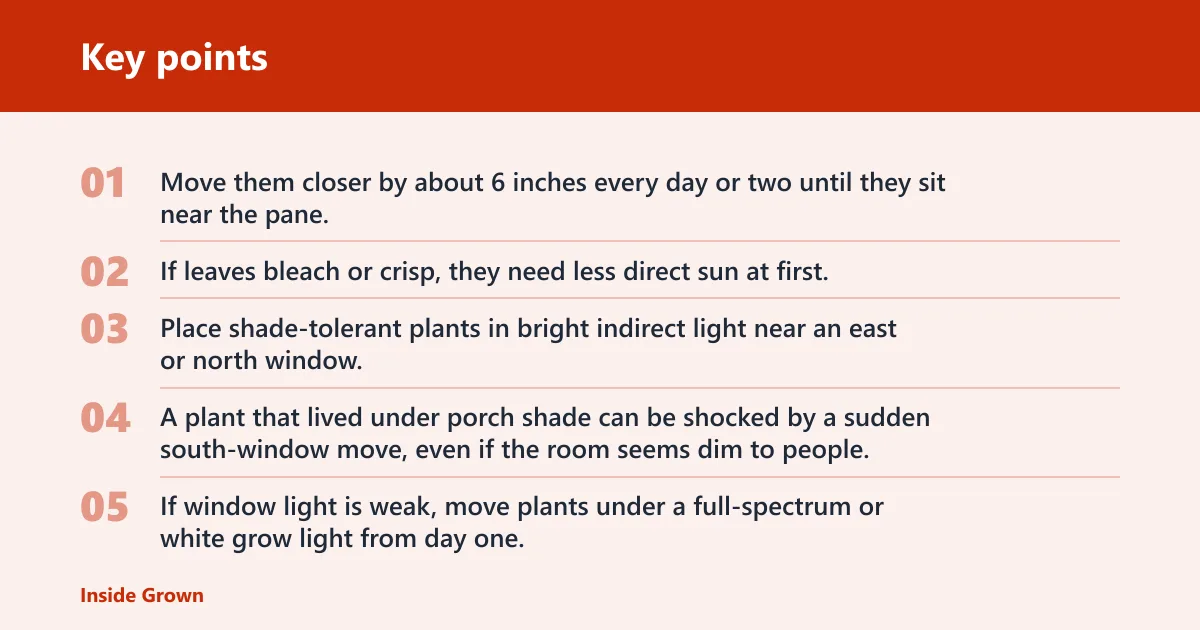
Set sun-lovers in the brightest south- or west-facing window you have, but start them a bit back from the glass if they had full outdoor sun. Move them closer by about 6 inches every day or two until they sit near the pane. If leaves bleach or crisp, they need less direct sun at first.
Shade-tolerant plants
Place shade-tolerant plants in bright indirect light near an east or north window. They often do better a few feet from direct sun than pressed against hot glass. A plant that lived under porch shade can be shocked by a sudden south-window move, even if the room seems dim to people.
Plants headed for a grow light
If window light is weak, move plants under a full-spectrum or white grow light from day one. Start the light 12 to 18 inches above foliage for many small houseplants, then adjust by plant response and manufacturer guidance. Use a timer so the photoperiod stays steady instead of drifting day by day.
What light changes stress plants most when moving indoors?
The biggest stress is a fast cut in light intensity, followed by a change in daily light hours. Direct sun matters too: south and west windows usually give the strongest exposure, east windows give gentler morning sun, and north windows are usually the weakest. Match exposure to the plant before mixing it with other houseplants.
Direct sun versus bright indirect light
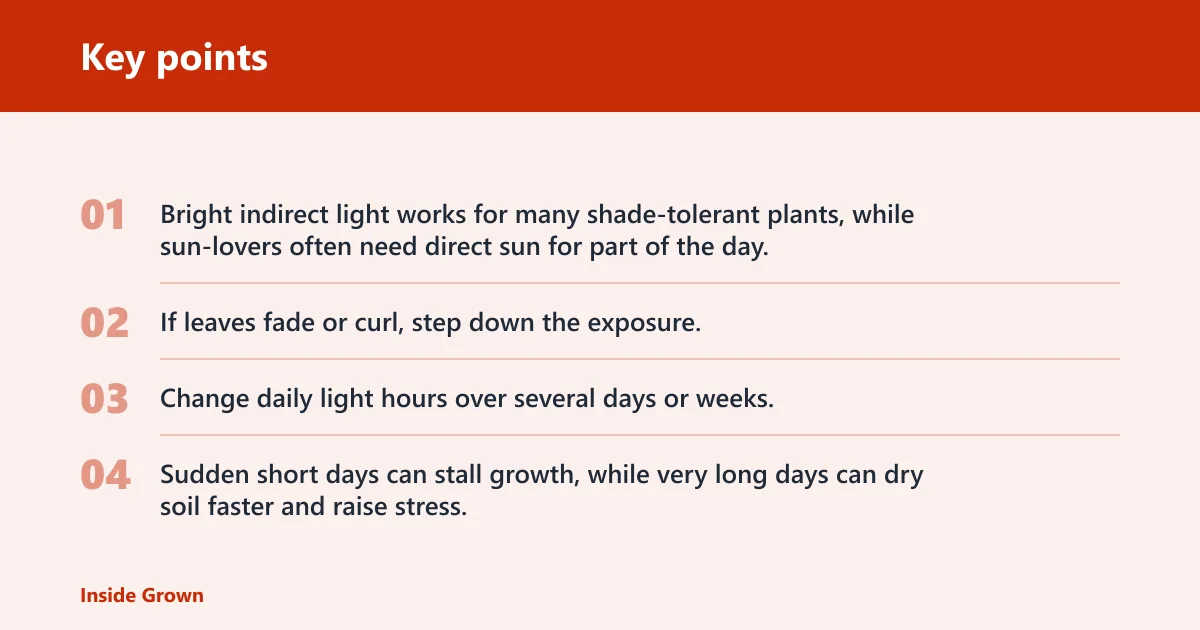
Bright indirect light works for many shade-tolerant plants, while sun-lovers often need direct sun for part of the day. After move-in, a plant that held up outside in filtered light can burn on a south-facing sill if it goes there all at once. If leaves fade or curl, step down the exposure.
Photoperiod and timer settings
Change daily light hours over several days or weeks. For grow lights, a common rule of thumb is to keep the timer at about 10 to 12 hours for most indoor houseplants, unless the plant type needs more or less. Sudden short days can stall growth, while very long days can dry soil faster and raise stress.
What should your indoor light ramp look like over 7 days?
This 7-day ramp matches plant type to window exposure. Increase placement or exposure each day only if leaves stay firm, color stays even, and the plant is not wilting from heat or dry soil. The switch to a grow light happens when the plant cannot hold color or shape at the window setting for that day.
| Day | Plant type | Window or light | Starting placement | Daily move or exposure increase | Warning signs | Switch to grow light when |
|---|---|---|---|---|---|---|
| Day 1 | Sun-loving | South or west window | 12 to 24 inches back from glass, 2 to 4 hours direct light | Hold placement steady while the plant settles | Bleached patches, crisp edges, leaf drop | Leaves scorch even at 12 inches back |
| Day 2 | Sun-loving | South or west window | Same starting placement | Move 6 inches closer if leaves stay firm | Bleaching or curled edges near the brightest side | Sun damage appears after the first move closer |
| Day 3 | Shade-tolerant | East or north window | 3 to 6 feet from direct sun, bright indirect light | Move 6 to 12 inches closer only if color stays even | Yellowing, limp stems, leaf scorch near glass | Leaves thin out near the window |
| Day 4 | Sun-loving | South or west window | Closer than Day 1, but still not pressed to the glass | Move another 6 inches closer if the plant is stable | Hot, dry leaf edges or faded patches | Direct sun causes crisping at the new spot |
| Day 5 | Shade-tolerant | East or north window | Bright indirect light, not against the pane | Move 6 to 12 inches closer or hold steady if the plant looks good | Leaf curl, washed-out color, no new growth | Plant declines in an east or north window |
| Day 6 | Sun-loving | South or west window | Near the pane if foliage is still firm | Keep the same spot if new growth is pale or stretched | Stretching, pale new growth, leaf drop | Growth stretches after repeated moves closer |
| Day 7 | Shade-tolerant | Grow light | 18 to 24 inches below light, 8 to 10 hours | Add 1 hour every 2 to 3 days if the plant stays compact | Leaf curl, washed-out color, no new growth | Light stays weak in the window after a full week |
What should you change besides light?
Watering, pruning, and quarantine all affect how well the plant handles the move. Indoor conditions usually lower water demand, pruning should stay limited, and quarantine is the buffer that keeps hidden pests from reaching the rest of your collection. These changes work together; none of them replaces the light ramp.
Check soil before watering. Use your finger or a moisture check tool before each watering. Water only when the top layer has dried enough for the plant type, because indoor evaporation is slower than outdoors. Less light and cooler indoor air mean the roots take up water more slowly, so soggy soil can linger and stress them.
Trim only damaged growth. Remove broken, yellow, or heavily infested leaves, but do not cut back more than one-third of the plant. Sanitize tools before and after each plant. Pruning overgrown sections improves air circulation and reduces hiding spots for pests.
Quarantine new arrivals. Keep the plant away from other houseplants for about two weeks after indoor arrival. Check the leaves, stems, pot sides, and soil line during that period for bugs, webs, eggs, and honeydew so a hidden outbreak does not spread.
Repot only when needed. If the pot is cramped, move up to a container at least 2 inches larger than the current one. Repotting during the move adds root stress, so do it only for a plant that is clearly potbound or drying out too fast.
Say your basil spent all summer in full sun and now sits 2 feet from a south window. If the top leaves bleach within two days, move it back 6 to 12 inches and keep the timer at 12 hours instead of adding more light. The problem is exposure, not lack of water.
Suppose a peace lily comes inside to an east window and starts dropping leaves while the soil stays wet for days. That points to too much water, not a light shortage. Keep it in bright indirect light, wait longer between waterings, and check whether the pot has proper drainage.
What are the most common mistakes?
The biggest failures come from mixing up light shock with other stresses. A plant can look bad because of cold nights, wet roots, or pests, even when the window is right. Use the symptom location to sort the cause: scorched leaf edges often point to light, while limp stems in wet soil point to water stress.
- Moving straight to a dim room. Put the plant near a bright window or under a grow light first.
- Putting sun-lovers in weak light. Use south or west exposure, or extend the photoperiod with a timer.
- Overwatering after the move. Check soil before each watering and slow down when indoor drying slows.
- Skipping quarantine. Two weeks of isolation gives time for pest checks.
- Pruning too hard. Keep removed growth below one-third to avoid a second stress hit.
Label the move-in date and keep the plant in quarantine until it has held steady for about two weeks. That small habit makes pest checks easier and keeps new problems from landing on nearby plants.
Frequently asked questions
How long should I acclimate plants before bringing them inside?
Plan on 7 to 14 days of light transition once the plant is indoors. The move itself should happen before nights reach 50°F (10°C), because many houseplants cannot stand temperatures below 45°F (7°C). Cold damage is a separate problem from light shock.
Can I put outdoor plants straight under a grow light indoors?
Yes, if the light is placed correctly and timed well. Set a full-spectrum or white grow light 12 to 18 inches above many sun-loving plants, or 18 to 24 inches above shade-tolerant ones, then use a timer for 8 to 12 hours to keep the photoperiod steady.
What light changes stress plants most when moving inside?
The harshest change is a sudden drop in brightness. A close second is a sudden change in daily light hours. South and west windows give the strongest indoor exposure, east windows are gentler, and north windows usually need help from a grow light for sun-loving plants.
Should I prune plants before bringing them inside for winter?
Yes, but only lightly. Remove damaged or infested growth, sanitize the tool, and keep pruning under one-third of the plant. That limits stress, improves airflow, and cuts down on places where pests can hide during the quarantine period.
Should I quarantine plants before moving them indoors?
Yes. Keep them apart from other houseplants for about two weeks and inspect for aphids, mealybugs, spider mites, webs, eggs, holes, and honeydew. Quarantine gives you time to catch problems before indoor conditions help them spread.
What is the best indoor spot for plants after moving them inside?
The best spot is the brightest window that matches the plant type, or a grow light with a timer if the window is weak. Sun-lovers usually do best near south or west exposure, while shade-tolerant plants often settle better in bright indirect light near east or north windows.