How to Identify Common Houseplant Pests Fast
A common quick-check rule is to spend about 2 minutes looking at where the pest lives, the damage it leaves, and the first plant-safe response. That usually identifies aphids, mites, mealybugs, thrips, scale, or fungus gnats fast. If the first signs are missed, a small infestation can spread to nearby plants in days. This guide gives a quick triage chart, the key signs by pest, and the first steps to take.
Houseplant pest fast-ID matrix


Start with location, then damage, then the fastest confirmation check. That order beats naming the insect first, and it helps separate sap-suckers, soil pests, and leaf miners in under two minutes.
| Pest | Where to look first | Visual cue | Damage pattern | Likely trigger | First action |
|---|---|---|---|---|---|
| Mealybugs | Leaf axils and under leaves | Cottony white clusters | Sticky residue, weak growth, rapid spread | New plant brought home, crowded plants | Isolate, wipe with rubbing alcohol, then repeat with insecticidal soap or horticultural oil |
| Scale insects | Stems and leaf undersides | Tan-brown oval bumps | Slow decline, yellowing, sticky leaves | Missed crawler stage, dusty plant surface | Isolate, scrape off visible bumps, then use alcohol, neem, or horticultural oil |
| Aphids | New growth and undersides of tender leaves | Pear-shaped soft bodies, often green but also other colors | Curled leaves, stunted growth, honeydew | Fresh flush of growth | Wash off with water, then use insecticidal soap or neem |
| Spider mites | Leaf undersides, especially in hot spots | Dust-like specks and fine webbing | Yellow or silver mottling, quick stress | Hot, dry air | Isolate, shower foliage, then treat with repeated soap or neem applications |
| Whiteflies | Undersides of leaves | Small white insects that fly when disturbed | Sticky leaves, fading vigor | Warm indoor conditions, crowded foliage | Isolate, trap adults, and repeat treatment until new adults stop appearing |
| Fungus gnats | Soil surface and drainage holes | Tiny flying pests near moist soil | Larvae in damp mix, poor root conditions | Overwatering and wet topsoil | Let soil dry, improve drainage, and reduce watering |
| Thrips | Flowers, new leaves, and undersides | Fast-moving thin insects | Fading, browning, or dying foliage | Soft new growth | Isolate and treat with spinosad or insecticidal soap |
| Leaf miners | Inside leaves | Trails or blotches in the leaf tissue | Marked leaves that cannot recover | Eggs laid in tender foliage | Remove badly damaged leaves and monitor new growth |
Which pest is most likely?
Match the location first, then the damage pattern, then use one fast check to confirm. If the pest is on the soil, think fungus gnats. If it is on new growth, think aphids or thrips. If it looks like cotton, bumps, or fine webbing, think mealybugs, scale, or spider mites.
Match the location first
Pests that cluster on new growth are usually sap-suckers. Aphids, thrips, mealybugs, scale, spider mites, and whiteflies all feed above ground, but they do not sit in the same place. Soil activity points somewhere else, often fungus gnats. Leaf tunnels point to leaf miners.
Say your pothos has tiny flies lifting off the pot every time you water it. That points first to fungus gnats, not a leaf pest. The fastest confirmation is the soil surface: if it stays wet for days, the problem often starts there.
Match the damage pattern second
Honeydew, sticky leaves, and curling new growth point to sap-suckers. Yellow or silver speckling points to spider mites. Trails or blotches inside the leaf point to leaf miners. Browning or dying tissue on tender growth points to thrips.
A common first-timer mistake is treating every pest the same way. A leaf miner inside the leaf will not be fixed by wiping the surface, and fungus gnat adults can disappear while larvae remain in the potting mix.
Use the fastest confirmation check
Lift the leaf, tap the stem, or disturb the pot. Mealybugs look cottony, scale feels like fixed bumps, aphids move in clusters, spider mites leave fine webbing, and whiteflies fly when disturbed. For gnats, check the soil. For leaf miners, look for trails that stay inside the leaf blade.
What do the common pests look like?
The key to fast identification is to compare body shape, movement, and where the pest hides. That tells you more than color alone, since several houseplant pests can look green, tan, white, or nearly invisible.
Mealybugs and scale
Mealybugs look like cottony white patches and often hide in leaf axils and under leaves. They reproduce rapidly, so a few insects can become a broad infestation. Scale insects look like tan-brown oval bumps on stems and leaf undersides. Scale has a crawler stage that is easiest to kill.
For mealybugs, rubbing alcohol on a swab can remove visible insects quickly, then insecticidal soap or horticultural oil helps with follow-up. For scale, scrape off what you can, then use alcohol, neem, or horticultural oil. If the plant is heavily coated, inspect the stems closely for live crawlers before treating again.
Aphids, spider mites, and whiteflies
Aphids are pear-shaped soft-bodied insects that cluster on new growth and under leaves. They can be green or other colors, and they often leave honeydew that makes leaves sticky. Spider mites are tiny specks, often dust-like, and they leave fine webbing while causing yellow or silver mottling. Whiteflies are small flying pests that show up when disturbed.
Spider mites thrive in hot, dry conditions, so dry air is a useful clue. Whiteflies and aphids both feed on sap, but whiteflies usually announce themselves by lifting off in a cloud. Aphids often distort tender growth first, while spider mites leave a speckled, faded look.
Fungus gnats, thrips, and leaf miners
Fungus gnats are tiny flying pests around moist soil. Their larvae feed on decaying organic matter and are associated with overwatering. Thrips are fast-moving thin insects that feed on sap, and the damage shows as fading, browning, or dying foliage. Leaf miners are identified by trails or blotches in leaves because the larvae feed between the leaf surfaces.
Garden Design lists leaf miners among common indoor pests, and that matters because their damage is easy to misread as disease or sun scorch. If the leaf itself contains a tunnel, surface sprays alone will not reverse that damage. Badly marked leaves often need removal.
How do you inspect a plant in 2 minutes?
Check the top and underside of leaves, then stems, nodes, petioles, and soil surface. The quickest pass is a visual scan with a thumb-and-forefinger lift of leaves, because many pests hide in the spots a casual glance misses. The goal is not perfection. It is speed and a correct first move.
Check the top and underside of leaves
Look at both sides of each leaf. The Almanac advises checking the tops and bottoms of leaves, and that matters because mealybugs, aphids, whiteflies, spider mites, and thrips often hide underneath first. Dust can hide movement, so wipe the leaf if needed to see what is actually there.
Gardeners Path says to examine plants when watering them, which is a practical habit because the pot is already in hand and the leaves are easy to turn. That is the best time to catch webbing, cottony residue, or speckling before it spreads.
Inspect stems, nodes, and petioles
Focus on joints and creases. Mealybugs like leaf axils. Scale often sits along stems and undersides. Aphids cluster on soft new growth. If the bumps do not move, check whether they are true scale or simply bark texture before treating the plant as infested.
Look at soil surface and drainage
Check the topsoil, not just the leaves. Homes and Gardens says moist topsoil attracts pests, and it recommends making sure the top couple inches of soil dry out. If tiny flies rise from the pot, fungus gnats move to the top of the list. Larvae can be found in moist soil.
What should you do first after finding pests?

First, isolate the plant from the rest of the collection. Then remove what you can by washing, wiping, or scraping, and choose the first treatment based on pest type. The sequence matters because it cuts spread before any spray is applied.
Isolate the plant
The Almanac says to isolate infected plants until treatment is done, and that is the right first move for nearly every indoor infestation. Keep the plant away from nearby pots and keep monitoring it for several weeks after treatment, because eggs, crawlers, or larvae can remain after adults are gone.
Isolation is especially important for whiteflies, mealybugs, scale, spider mites, and thrips because these pests can move quickly to nearby plants. If the plant sits under a shelf or in a crowded corner, move it out at once.
Wash, wipe, or scrape visible pests
Use water for aphids, whiteflies, and spider mites when the infestation is light. Wipe mealybugs with rubbing alcohol. Scrape scale where possible, especially the older bumps. This first pass does not replace treatment, but it removes enough pests to make follow-up more effective.
Choose the first treatment based on pest type
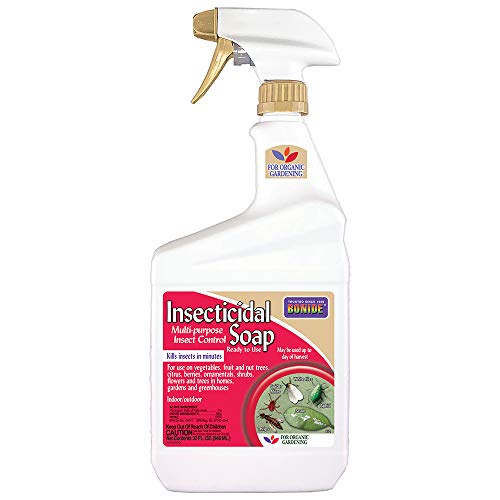
Insecticidal soap is commonly used as a contact spray on soft-bodied pests, including aphids, mealybugs, whiteflies, and young thrips. Neem oil is an oil-based suffocant treatment used on multiple common houseplant pests, but it still needs direct contact. Horticultural oil can also help with mealybugs and scale. For thrips, spinosad is often used when soap alone is not enough.
For fungus gnats, focus less on the adults and more on the potting mix. Dry the soil, improve drainage, and reduce watering frequency. Sticky traps can catch adults, but the soil still needs to dry enough to break the life cycle.
When do you need repeated treatment?
Repeated treatment is needed when eggs, crawlers, larvae, or new hatchlings remain after the first pass. One spray is often not enough because contact products only work on what they touch. Recheck weekly, and in some cases every few days, until new activity stops.
Why one spray is often not enough
Insecticidal soap and neem oil work by direct contact, so hidden pests or newly hatched pests can survive the first round. Scale is especially tricky because the crawler stage is easiest to kill, not the hardened bump. Whiteflies, spider mites, and mealybugs also rebound if only the visible adults are removed.
Weekly or every-few-days follow-up
A common approach is to repeat contact treatments weekly, or every few days when the infestation is active and the product label allows it. Recheck leaf undersides, stems, and new growth each time. If the pest is soil-based, keep checking the pot surface while the mix dries.
When to recheck for crawlers, larvae, or new hatch
Look for fresh cottony residue on mealybug-prone joints, new scale crawlers on stems, new whiteflies when the plant is disturbed, and renewed webbing from spider mites. For fungus gnats, watch for adults returning after watering. For leaf miners, check new leaves rather than old damaged ones.
When is the plant too far gone?
Discarding is worth considering when the plant is collapsing faster than treatment can reset it. If most foliage is damaged, stems are failing, or the pest keeps returning after multiple rounds of treatment, the plant may not recover cleanly enough to keep near the rest of the collection.
Signs the plant is failing fast
Look for severe yellowing, major leaf drop, widespread dieback, or a plant that keeps declining despite isolation and repeat treatment. When growth is stunted and pests are still active on most stems or leaves, the recovery odds drop. Severe root stress from overwatering can make fungus gnat problems worse too.
When to remove damaged leaves
Remove leaves that are heavily mined, badly browned, or too damaged to photosynthesize well. This helps with leaf miners and can reduce pest load in general. Do not strip healthy tissue just to be aggressive; keep enough foliage for the plant to keep growing if it is otherwise recoverable.
When to discard instead of treat
If the infestation is extensive, repeated treatment is not changing the trend, or the plant is so weakened that pests keep returning, discarding may be the cleaner choice. That is more likely with plants that are crowded, heavily infested, and already declining across multiple stems. Keep the remaining collection protected.
Frequently asked questions
How do I identify plant pests fast?
Start with location, then damage, then a quick confirmation check. Look under leaves, along stems, at new growth, and in the soil. Cottony clumps suggest mealybugs, bumps suggest scale, webbing suggests spider mites, flying adults suggest whiteflies or fungus gnats, and leaf trails point to leaf miners.
How do I get rid of houseplant pests?
Isolate the plant first, then remove visible pests by wiping, washing, or scraping. Use insecticidal soap, neem oil, horticultural oil, alcohol, or spinosad based on the pest. Repeat treatment as needed, because many pests survive the first round as eggs, crawlers, or larvae.
What are the most common indoor plant pests?
Common indoor plant pests often include aphids, mealybugs, scale, spider mites, whiteflies, fungus gnats, thrips, and leaf miners. Some guides list more, but those eight cover the pests most houseplant owners need to identify quickly. Soil moisture, new growth, and warm dry air are common triggers.
Why are there bugs on my houseplants?
They usually arrive on a new plant, ride in on already infested foliage, or move in when conditions favor them. Overwatering, moist topsoil, dust, and stressed plants make infestations easier to start and harder to clear. Crowding also helps pests spread from one pot to the next.
How do I tell if my houseplant has mealybugs, scale, or spider mites?
Mealybugs look cottony and hide in leaf axils and under leaves. Scale looks like tan-brown oval bumps on stems and undersides. Spider mites are tiny specks that leave webbing and cause yellow or silver mottling. The fastest check is to look where each pest hides, not just at the leaf surface.
What pests live in houseplant soil?
Fungus gnats are the main soil pest to check first. Their adults hover around pots, and their larvae live in moist soil and feed on decaying organic matter. If the topsoil stays wet, the infestation often keeps returning. Drying the soil and improving drainage are the first corrections.
How do I stop pests from spreading to other houseplants?
Isolate the infested plant immediately and keep it apart until treatment is finished. Check nearby pots, clean your tools, and monitor the collection for several weeks. A plant that looks clean today can still release new adults, crawlers, or hatchlings later.
When should I isolate a houseplant with pests?
Isolate it as soon as you see live insects, webbing, sticky residue, flying adults, or trails in the leaves. That is the safest default for mealybugs, scale, aphids, spider mites, whiteflies, fungus gnats, thrips, and leaf miners. Early separation prevents a small problem from becoming a collection-wide one.