Indoor Quarantine for Winter Plant Moves: How Long?
Quarantine indoor plants for 14 days after bringing them in, and release them only after two clean inspections 7 days apart with no pests, eggs, webbing, mold, or decline in vigor. Skip that step and mites, aphids, mealybugs, scale, fungus gnats, and leaf-spot pathogens can spread to nearby houseplants. This guide gives a day-by-day winter quarantine checklist, inspection points, treatment triggers, and a clear go/no-go rule.
What winter indoor conditions do to newly moved plants


Winter moves create a narrow problem window. A plant may look fine at the door, then show pests or disease after a few days of indoor heat, dry air, and lower light. A plant that looks healthy can still carry pests or fungal infections, so quarantine protects the rest of your collection before any shared surface or close contact lets the problem spread.
That matters most during the nursery-to-home adjustment period. Stress from transport, temperature change, and a new light level can make hidden issues easier to see, but also easier to spread. A plant on a crowded windowsill, beside a shared saucer, or under the same humidifier mist can pass pests or spores to nearby plants before you spot the first sign. Pre-quarantine prep matters here, especially if you are following winter plant moves as a broader indoor transition plan.
What winter conditions change
Indoor heat often dries leaf edges and air around the plant, which can speed spider mite activity and make fine webbing easier to miss until it is established. Low light can also slow new growth, so a plant may look stable while eggs, larvae, or a mild infection are still present.
Shared water is another winter hazard. Water splash from one pot to another can move fungal disease, and shared humidity trays can do the same. That is why quarantine should not mean “set it near the group and hope for the best.” It should mean physical separation plus repeated checks.
How long should quarantine last?
Use a 14-day quarantine for winter plant moves. That gives you time to catch delayed pests and disease signs, then confirm the plant stays clean through a second inspection window. If any symptom appears, extend quarantine and treat before the plant joins the rest of your houseplants.
Day 0: arrival and first inspection
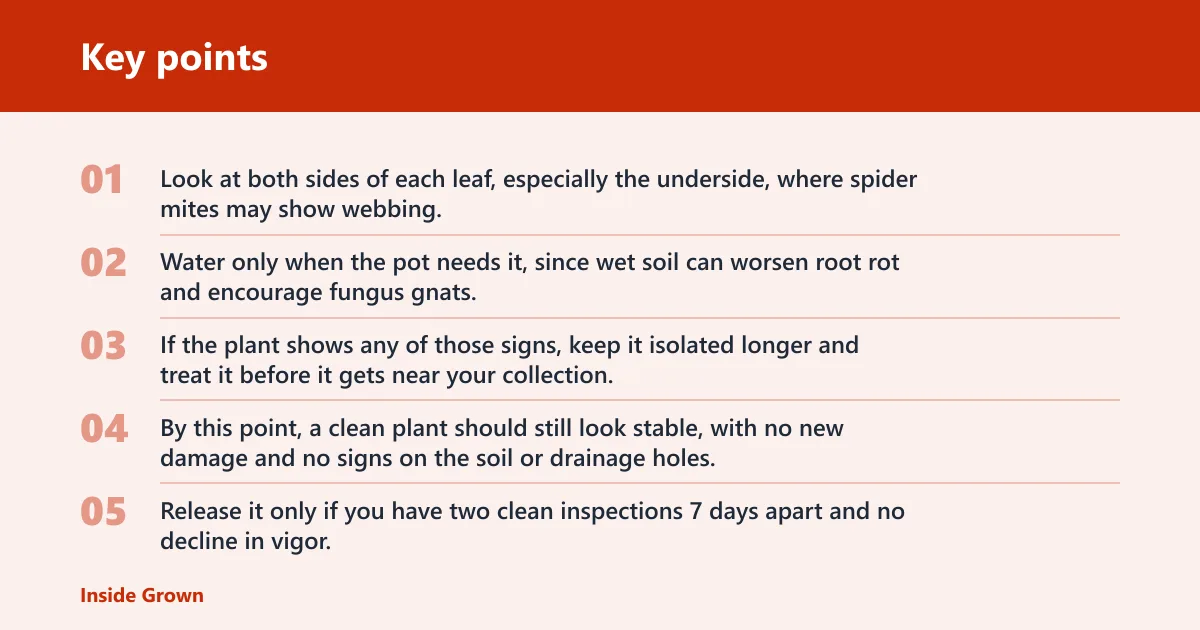
Unpack the plant, place it in its quarantine spot, and inspect leaves, stems, joints, soil surface, and drainage holes before it sits near anything else. Look at both sides of each leaf, especially the underside, where spider mites may show webbing. Check for black specks that can point to thrips, cottony clusters that can indicate mealybugs, and soil-level movement that may mean fungus gnat larvae.
Days 1-3: settle and watch for stress
Leave the plant in steady light and airflow. Do not crowd it against other pots while it settles, because winter heat can make a small infestation move fast once conditions stabilize indoors. Water only when the pot needs it, since wet soil can worsen root rot and encourage fungus gnats.
Days 4-7: repeat inspection and decide on treatment
Repeat the full inspection. Check for fresh webbing, new black specks, fuzzy powder on leaves, brown spots, white cottony clusters, or mold on the soil surface. If the plant shows any of those signs, keep it isolated longer and treat it before it gets near your collection.
Days 8-14: release only if the plant stays clean
By this point, a clean plant should still look stable, with no new damage and no signs on the soil or drainage holes. Release it only if you have two clean inspections 7 days apart and no decline in vigor. If the plant looks stressed but is not worsening, keep it quarantined until new growth or firm leaves show that it has settled. If a healthy-looking plant still sheds leaves, stalls, or wilts without visible pests, treat that as a release delay, not a pass.
Quarantine plant checklist
This checklist turns quarantine into a simple decision window. The goal is not perfect appearance. The goal is a clean run of observations with no pest movement, no disease spread, and no new symptoms after the plant has had time to adjust indoors.
| Day 0 | Days 1-3 | Days 4-7 | Days 8-14 |
|---|---|---|---|
| Inspect all leaf surfaces, stems, nodes, soil, and drainage holes before the plant joins other houseplants. | Keep the plant isolated, water only as needed, and watch for stress after the move indoors. | Repeat the full inspection and check for webbing, specks, cottony clusters, mildew, spots, or gnats. | Release only if two inspections 7 days apart stay clean and the plant keeps normal vigor. |
| Place it in a separate room if possible. | Keep airflow steady and avoid touching shared tools to other plants. | Look under leaves and along stems again after any watering. | Move it out of quarantine only after no new symptoms appear. |
| Note any preexisting damage so you can tell old marks from new ones. | Do not use shared saucers or shared humidity devices. | Trigger treatment if you see mold, mildew, leaf spot, or root problems. | Continue quarantine if growth stalls or leaf drop increases. |
What to inspect each day
Daily checks do not need to be long, but they need to be consistent. The best time is after the plant has settled into stable indoor conditions and before pests or disease spread to nearby pots. Focus on the parts most likely to hide a problem.
Leaves and undersides
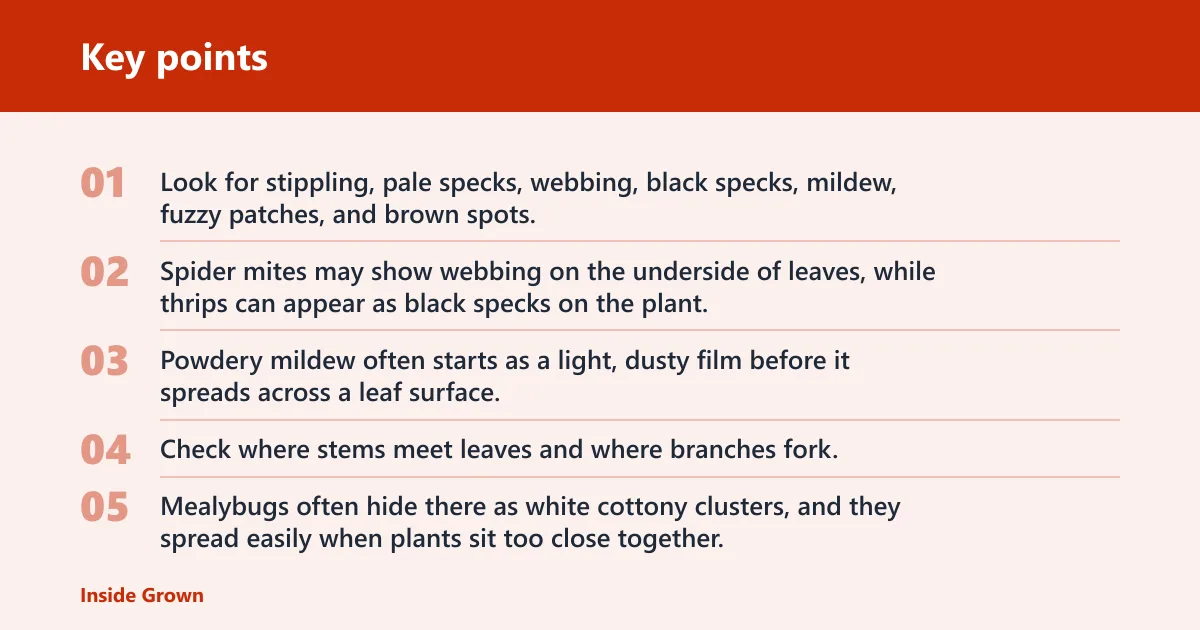
Look for stippling, pale specks, webbing, black specks, mildew, fuzzy patches, and brown spots. Spider mites may show webbing on the underside of leaves, while thrips can appear as black specks on the plant. Powdery mildew often starts as a light, dusty film before it spreads across a leaf surface.
Stems, joints, and nodes
Check where stems meet leaves and where branches fork. Mealybugs often hide there as white cottony clusters, and they spread easily when plants sit too close together. A close look at nodes also helps catch residue or small insects before they move into a shared plant area.
Soil surface and drainage holes
Inspect the top layer of mix and the pot base. Fungus gnat larvae may be visible on the soil surface, and mold or mildew on soil is a quarantine warning sign. Brown, mushy roots are harder to see from above, so if the plant wilts in wet soil, root rot should move up your concern list fast.
Shared water, saucers, and humidity sources
Do not let quarantined plants share saucers, runoff trays, or humidifying devices with the rest of the collection. Hidden fungal diseases can spread through shared humidity trays or water splashes. Keep the quarantine area on a different watering routine so a splash does not become a spread event.
Picture a 10-inch pothos moved in from a porch in late fall. It looks fine on day 0, then shows fine webbing under a few leaves on day 5 and more dust-like specks by day 7. That plant should stay isolated, get treated, and reset the quarantine clock before it ever sits near another pot.
What signs mean trouble?
Any visible pest or disease sign means quarantine continues. Do not wait for the plant to “work through it” beside your other houseplants. Winter indoor conditions can hide the full problem for days, then reveal it after the pest has already spread.
Spider mites and webbing
Spider mites are a common hitchhiking pest on winter plant moves. Their webbing often shows on the underside of leaves first, and the damage can spread quickly to nearby plants once indoor air is dry and warm. If you see webbing, isolate immediately and inspect nearby plants too. Neem oil may help suppress light activity, but it is not enough on its own for a heavy infestation or a plant that is already declining.
Thrips and black specks
Thrips may appear as black specks on the plant, and hidden eggs can show up after purchase or after a plant comes back inside. Check leaves and stems closely, especially on tender new growth. Thrips can move fast enough that a clean-looking plant one day may show feeding damage the next. If damage is spreading or new growth is distorted, quarantine should be extended and neem oil alone should not be the only response.
Mealybugs and cottony clusters
Mealybugs often show as white cottony clusters on stems or joints. They spread risk during close plant contact, so keep the plant away from others while you treat it. A small cluster near a node is enough to delay release from quarantine. If clusters keep returning after one treatment pass, neem oil alone is not a complete fix.
Fungus gnats, leaf spot, powdery mildew, and root rot
Fungus gnat larvae may be visible on the soil surface, especially when the potting mix stays moist. Leaf spot can show as brown spots on leaves and may spread through splashes or shared trays. Powdery mildew can spread silently as fuzzy patches, and root rot may follow overwatering in a cold, wet mix. These are the cues that call for soil and moisture changes first, not just a foliar spray.
Treatment escalation by issue
Use the symptom, then match the response. Spider mites and thrips usually call for isolation, leaf cleaning, and repeated treatment if the infestation is still active. Mealybugs need close-node inspection and repeated removal because visible clusters can persist in tucked spaces. Fungus gnats, leaf spot, powdery mildew, and suspected root rot need a moisture and soil check first, because neem oil alone does not solve the underlying cause.
A common first-timer mistake is moving a clean-looking fern next to the rest of the collection because the leaves seem fine. Three days later, the humidity tray under that fern has splashed onto a nearby pothos, and both pots now need separate treatment. The problem was not the leaves alone; it was the shared water.
How do you quarantine in a small space?
Small spaces can still work if you keep a hard separation rule. A quarantine setup needs distance, airflow, and a place where pests or spores are less likely to move on contact. Bathrooms, shelves, and bins can all work if you manage moisture and keep tools separate.
Separate room setup
A separate room is the preferred quarantine location. Experts recommend a separate space, ideally a different room, for quarantine, and that room should still have good airflow and light. Keep the plant away from heating vents and drafty windows, because those spots can stress the plant and complicate monitoring.
Bathroom or window shelf setup
If you only have a small apartment, a bathroom with a window or a single shelf can work. Use the shelf as a barrier and keep the plant isolated from splashes, shared towels, and other plant traffic. A clear plastic bin can help create a visible boundary, with room for airflow so moisture does not build up.
Distance buffers and airflow
When space is tight, keep quarantined plants three to six feet away from others. That buffer lowers the chance that a pest will crawl or a splash will reach the next pot. Do not stack plants tightly on one windowsill, because crowding makes inspection harder and spread easier.
Should you repot during quarantine?
Repotting is often useful when the plant arrives in wet, exhausted, or contaminated mix. If time allows, repotting into a sterile soil mix and clean pot is suggested. That can reduce hidden eggs, pathogens, and stale moisture that make winter problems harder to contain.
When a sterile soil mix helps
Use a sterile soil mix and a clean pot if the plant has mold, mildew, fungus gnats, or a soggy root ball. Root rot risk rises in wet soil, and starting fresh can make inspection easier. The new pot should be clean, and the old soil should not be reused around other plants.
When to wait before repotting
If the plant is already stressed from the move, wait until it steadies unless the soil itself is part of the problem. A plant with minor leaf damage but no soil warning signs may do better with a quiet quarantine first. Repot only when the benefit is clear enough to justify the extra stress.
Clean pots and tool hygiene
Use clean tools for every cut, every repot, and every inspection. Do not move a pruner from a quarantined plant to a clean one without cleaning it first. Shared misting bottles, shared humidifiers, and shared trays should stay out of the plan because they can carry pests or spores from one plant to another.
Suppose a rosemary pot comes in from the patio at about 50 degrees F. (10 C.) at night and the soil stays damp. If the plant then shows yellowing, a sour smell, and a wet root ball during quarantine, repotting into fresh sterile mix may be the better choice than waiting for the problem to deepen.
What should I do if I find spider mites or mealybugs during quarantine?
Keep the plant isolated and extend quarantine immediately. Clean nearby surfaces, inspect adjacent plants, and treat the affected plant before it returns to the collection. For spider mites or mealybugs, fast separation matters more than waiting for the damage to become obvious. If the infestation is heavy or keeps returning, neem oil alone is not enough.
Neem oil is a common preventative treatment during quarantine. Spray both sides of leaves and the stalk, then repeat only as the product label directs. Do not assume one spray ends the risk, because hidden eggs, tucked-in clusters, or surviving mites can remain after the first round. It is better suited to early suppression than to a plant that already shows widespread decline.
Frequently asked questions
How long should I quarantine plants after bringing them inside for winter?
Use 14 days as the practical winter quarantine period. Inspect at intake, again during days 4-7, and again during days 8-14. Release the plant only after two clean inspections 7 days apart with no pests, eggs, webbing, mold, or decline in vigor.
Why do I need to quarantine plants before putting them near my houseplants?
Quarantine blocks pests and disease before they reach the rest of your plants. Even healthy-looking plants can still carry hidden pests or fungal infections, and winter indoor conditions can make those problems show up later. Separation buys time to catch the issue before it spreads through shared air, water, or contact.
What signs of pests should I check for during quarantine?
Look at leaf undersides, stems, joints, soil, and drainage holes. Spider mites may show webbing on the underside of leaves, thrips can appear as black specks, mealybugs show as white cottony clusters, and fungus gnat larvae may be visible on the soil surface. Mold, mildew, and brown spots also count as warning signs. Healthy-looking plants that still lose leaves, wilt, or stall should stay quarantined until they stabilize.
Can I quarantine plants in a small apartment or bathroom?
Yes, if you keep a real buffer. A bathroom with a window, a shelf barrier, or a bin-based separation setup can work as long as the plant still gets airflow and light. Keep it three to six feet from other plants when possible, and avoid shared saucers or humidity devices.
Should I repot a plant before or during indoor quarantine?
Repot during quarantine if the soil is wet, contaminated, or full of visible pests. A sterile soil mix and clean pot can reduce hidden eggs and pathogens. If the plant seems stressed but the soil is not part of the problem, wait until it settles unless root rot or gnats force the issue.
What temperature should trigger moving plants indoors for winter?
Move plants in before nighttime temperatures reach 50 degrees F. (10 C.). That threshold gives tender plants a better chance to adjust before cold stress and winter dryness start compounding. Bring them in early enough to inspect, clean, and quarantine before they join the rest of the indoor collection.