First Frost Checklist for Moving Patio Plants Indoors
Move tender patio plants indoors when nighttime temperatures approach about 50°F. Before you carry anything in, separate healthy plants from those with pests, trim dead or damaged growth, and quarantine anything suspect for about 2 weeks. That simple triage helps prevent pests, disease, and sudden light shock from turning a routine move into leaf drop, infestations, and dieback. This guide shows what to bring inside, what to leave out with protection, and how to stage quarantine before the first frost.
What you’ll need
- A flashlight or headlamp for checking leaf undersides and stem joints
- Garden gloves and pruning snips
- Frost cloth, old sheets, or blankets for short cold snaps
- Plant caddy, dolly, or furniture slider for heavy containers
- Drip trays or saucers for indoor staging
- Sticky traps for flying pests
- Insecticidal soap for soft-bodied pests
- A room with bright light for quarantine
When should you act?
Act before the first frost advisory becomes a freeze or hard-freeze night. For many tropicals, subtropicals, and citrus, about 50°F is the practical warning line. Frost advisories are generally in the 33 to 36 degree range, freeze warnings around 29 to 32 degrees, and a hard freeze is 28°F or below for an extended period.
First frost date is a guide, not a trigger
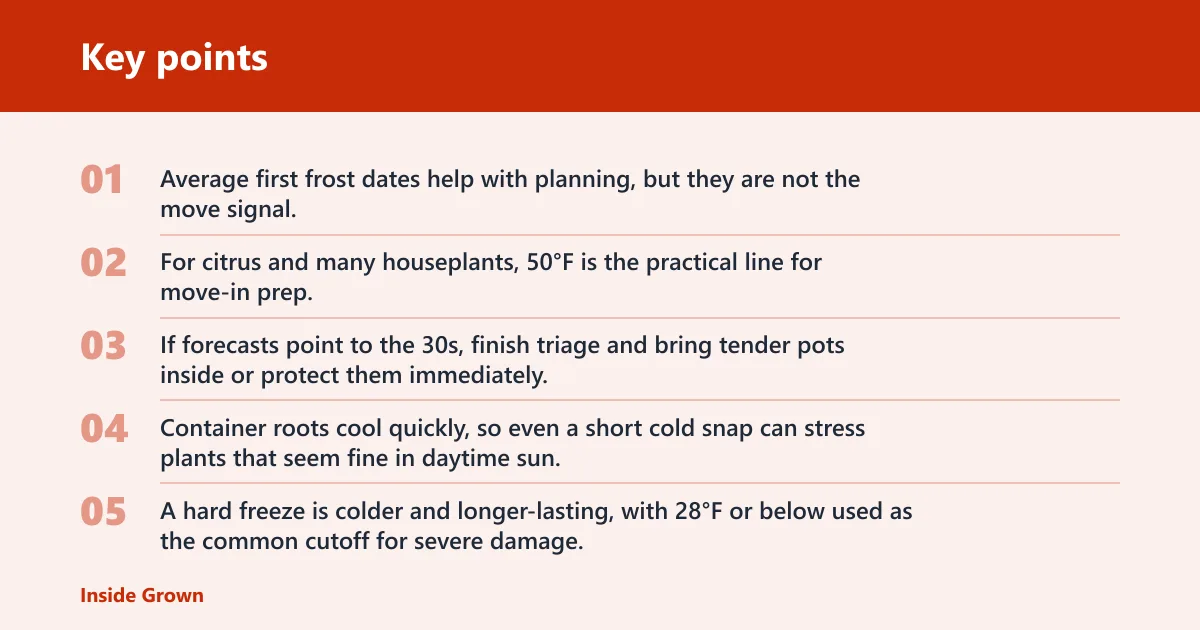
Average first frost dates help with planning, but they are not the move signal. Once nights slide toward the upper 40s, watch the forecast each evening, especially for pots sitting in open wind, on concrete, or near exposed railings where roots chill faster than in the ground.
Nighttime lows that call for action
For citrus and many houseplants, 50°F is the practical line for move-in prep. If forecasts point to the 30s, finish triage and bring tender pots inside or protect them immediately. Container roots cool quickly, so even a short cold snap can stress plants that seem fine in daytime sun.
Frost, freeze, and hard freeze
Frost is a surface event. A hard freeze is colder and longer-lasting, with 28°F or below used as the common cutoff for severe damage. A brief frost may still leave room for same-night cover or a quick move, but a hard freeze usually ends the option for tender plants outdoors.
What moves first?
Start with tender tropicals, then borderline container plants, then cold-hardy pots that can stay out. A citrus tree, a cactus, and a fuchsia do not need the same response when the forecast drops, so sort plants by cold sensitivity instead of moving everything at once.
Tender tropical and subtropical plants
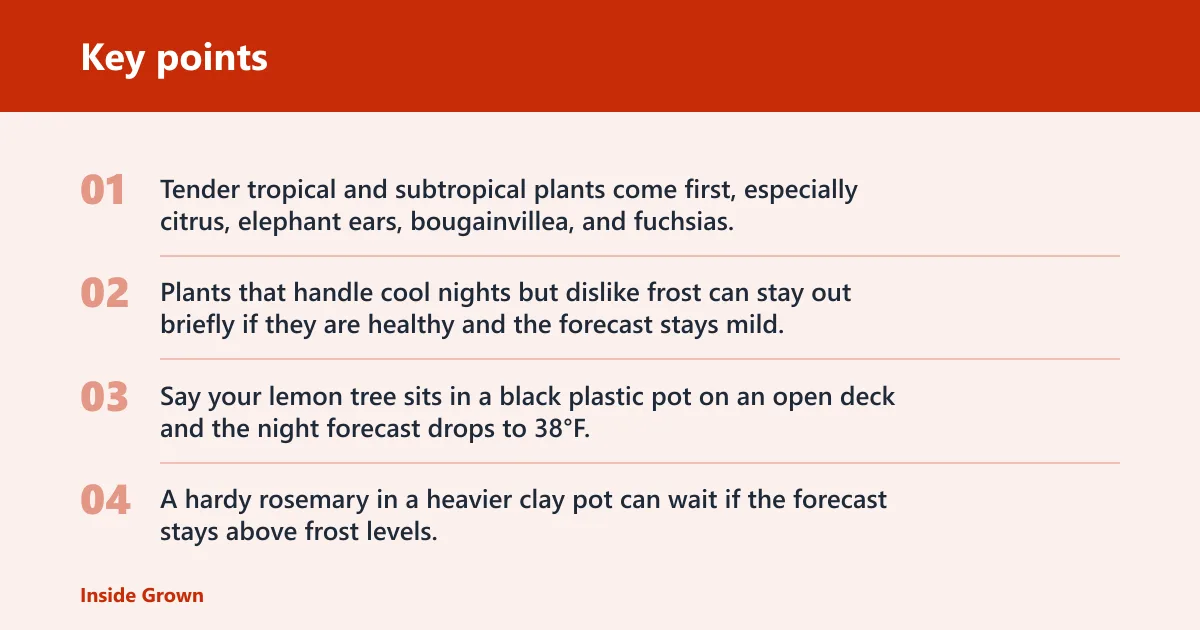
Tender tropical and subtropical plants come first, especially citrus, elephant ears, bougainvillea, and fuchsias. Citrus needs protection once nighttime temperatures fall below 50°F, and compact citrus often overwinter best in a greenhouse, conservatory, or sunroom with bright light and temperatures around 55-65°F.
Borderline container plants
Plants that handle cool nights but dislike frost can stay out briefly if they are healthy and the forecast stays mild. Group pots together, raise them off the cold ground, and cover them only for short protection when frost is predicted tonight.
Cold-hardy pots that can stay out
Hardy perennials and woody container plants can often remain outside during a light frost, especially if the pot is insulated and sheltered from wind. Even so, roots in containers are more exposed than roots in the ground, so material, drainage, and location still matter.
Say your lemon tree sits in a black plastic pot on an open deck and the night forecast drops to 38°F. That tree moves first because citrus is sensitive near 50°F, and the plastic pot chills fast. A hardy rosemary in a heavier clay pot can wait if the forecast stays above frost levels.
How do you inspect plants before indoor move-in?
Inspect every plant before it crosses the threshold. Check for aphids, spider mites, whiteflies, scale, mealybugs, ants, and slugs before you bring anything indoors. A quick inspection now is far easier than dealing with a spread inside your house later.
Leaf undersides and stems
Turn leaves over and check the stems where they meet the main plant. Aphids cluster on tender growth, spider mites leave fine speckling and webbing, whiteflies lift off in a cloud, and mealybugs hide as white cottony patches in leaf axils and joints.
Soil surface and pot rims
Check the soil line, drainage holes, and pot rims for ants, slugs, and scale. Sticky residue, black sooty film, or tiny raised bumps on stems are warning signs that pests have been feeding where a casual glance misses them.
Common hitchhikers to spot fast
- Aphids. Soft green, black, or tan clusters on new growth
- Spider mites. Fine webbing and pale stippling on leaves
- Whiteflies. Small white insects that lift when disturbed
- Scale. Hard bumps stuck to stems or leaf veins
- Mealybugs. White, waxy clusters in joints and folds
- Ants. Trails around pots, often feeding on honeydew
- Slugs. Chewed edges and shiny slime near the soil
What cleanup should happen before the move?
Remove dead, damaged, or diseased foliage before moving plants inside. That cuts pest harborage and disease spread, and it keeps weak tissue from collapsing after the plant adjusts to lower light. Trim only what is necessary; heavy pruning adds stress right before a move.
Trim only what is necessary
Snip off yellow, brown, split, or spotted leaves first. If a stem is clearly dead, remove it cleanly. Leave healthy green growth in place so the plant keeps enough leaf area to handle the move indoors.
Check drainage and dry the pot surface
Make sure water can drain freely before the plant comes in. Wipe wet pot exteriors and saucers so you do not drag mud, algae, or slug residue across the floor. Wet, cold plants are more likely to shock when they move from bright outdoor light to indoor conditions.
How should you stage plants indoors?
Quarantine new arrivals for about 7–14 days before placing them near houseplants. Start them in bright, stable light, then move them toward their final spot after they show no pest activity. A sudden shift from sun to dim room corners can drop leaves even when the plant is otherwise healthy.
Choose the right room first
Start in a bright room with temperatures close to the plant’s outdoor-to-indoor tolerance, not beside your best houseplants. A sunroom, spare bedroom, or bright window can serve as the holding area while you watch for pests, leaf drop, or soft stems.
Adjust light and temperature gradually
Do not move a sun-exposed patio plant straight into a dark corner. Give it bright indirect light for the quarantine period, and rotate it only after you know it is settling. If leaves were exposed to cold wind or frost, let the plant warm up before handling it more.
Suppose a potted bougainvillea comes in damp from a 42°F patio night and goes straight beside a couch in low light. The plant now faces cold stress, excess moisture, and weak light at once. A better sequence is to warm the plant, inspect it, then hold it near a bright window for 7–14 days.
How do you protect plants left outside tonight?
For a brief frost forecast, use frost cloth, old sheets, or blankets over plants that are staying outside. Cover before sunset, secure the edges, and remove the cover after temperatures rise. For potted plants, move pots off cold ground if possible, because roots in containers chill faster.
Use frost cloth, sheets, or blankets
Lightweight fabric traps a bit of warmth around the plant. Old sheets or blankets can work for one night if they reach the ground and are not pressed hard against leaves. Keep the cover dry if possible; wet fabric loses insulating value quickly.
Cover before sunset and remove after warming
Put covers on before the evening temperature drops, not after frost has already formed. Remove them once the cold passes so plants can get light and air again. Do not leave the cover on during daytime warmth.
Move pots off cold ground
Move pots off cold ground with bricks, pot feet, or a sheltered surface to reduce direct contact with cold concrete or frozen soil. Grouping pots together also cuts exposure. For container plants, the three useful moves are simple: protect tender plants, cluster pots, and insulate the base.
First frost move-in checklist
| Plant group | Cold trigger | Pest check | Cleanup step | Indoor quarantine time | Placement note |
|---|---|---|---|---|---|
| Tender tropicals | Nights near 50°F or lower | Undersides of leaves, stems, soil line | Remove dead, damaged, or diseased foliage | 7–14 days | Bright indirect light; keep away from houseplants |
| Citrus | Below 50°F at night | Aphids, scale, mealybugs, whiteflies | Light cleanup; avoid heavy pruning | 7–14 days | Brightest room available; aim for at least five hours of sunlight daily in winter quarters |
| Borderline container plants | Forecast near 35°F or frost advisory | Check for slugs, ants, spider mites | Remove weak foliage and spent blooms | 7 days if any doubt | Cool, bright holding area before final placement |
| Cold-hardy pots | Brief frost only | Quick visual check | Clear dead leaves from the pot surface | Usually none | Stay outside with cover or insulation |
What should you do with heavy pots and wet soil?
Use a caddy or dolly for large containers, especially when the pot is wet or the soil is still heavy. Check the pot material too: plastic is lighter but chills faster, while clay and ceramic are heavier and more brittle in cold weather. If a pot needs two hands and awkward lifting, get help.
Use a caddy or dolly
Rolling a pot reduces strain and keeps you from dropping a saturated container on stairs or thresholds. For large patio pots, a rolling tray or dolly is often the difference between moving the plant tonight and damaging roots or the container during the lift.
Mind pot material and drainage
Drainage holes matter more once plants come inside because standing water invites rot and mess. Put saucers under pots only after excess water has drained. Heavy ceramic or clay pots should be checked for cracks before you move them in cold weather.
Avoid damage during the move
Do not drag stems through doorways or stack plants too tightly in the car or hallway. Keep branches upright, support the pot from the base, and avoid setting a cold plant directly into a hot, bright window without a short adjustment period.
Common mistakes
The biggest mistake is waiting for visible frost before acting. By then, tender tropicals may already be stressed, and pests have had more time to spread. Another common miss is bringing a plant in without checking leaf undersides and the soil line.
- Skipping quarantine and placing new arrivals beside houseplants immediately
- Leaving a frost cloth on after temperatures rise
- Moving wet, cold plants straight into a dark room
- Pruning too hard right before the move
- Assuming every patio plant needs the same cold plan
Frequently asked questions
When should I bring patio plants inside before the first frost?
Move tender plants when nights near 50°F, not after frost appears. Start with citrus, tropicals, and anything already stressed. Use the forecast, not the calendar, because a few cold nights in the 30s can trigger damage before the average first frost date arrives.
What temperature is too cold for container plants outdoors?
For many houseplants and citrus, below 50°F is the warning point, and temperatures below 35° may cause some leaf damage. If the forecast points toward a frost advisory around 33 to 36 degrees, shift tender containers indoors or give them temporary cover.
Should I inspect plants for bugs before bringing them indoors?
Yes. Check undersides of leaves, stems, soil surface, and pot rims for aphids, spider mites, whiteflies, scale, mealybugs, ants, and slugs. Quarantine suspicious plants for 7–14 days so hidden pests do not spread to your houseplants.
Do I need to prune dead leaves before moving plants inside?
Remove dead, damaged, or diseased foliage before the move. That reduces hiding places for pests and slows disease spread. Keep pruning light unless a stem is clearly dead, because heavy cutting right before indoor transfer adds stress.
How do I protect potted plants if a frost is forecast tonight?
Cover them before sunset with frost cloth, old sheets, or blankets, then remove the cover after temperatures rise. Move pots off cold ground when possible, and group containers together to cut exposure. Do not leave wet covers on after the cold passes.
What is the difference between frost and a hard freeze?
Frost is a surface coating that can happen on a cold night. A hard freeze is more severe, with 28°F or below used as the common cutoff for extended cold damage. Tender plants usually do not survive it, so they need to be moved or covered ahead of time.
Must-have

- No mixing required
- Controls listed soft-bodied pests
- Can be used indoors and outdoors
Garden Safe Insecticidal Soap Spray. Based on the published product details, this ready-to-use spray fits the fast pest-cleanup step for aphids, mealybugs, and mites. The drawback: it only helps with listed soft-bodied pests, so it will not solve every infestation by itself, and visible insects still need repeated checks.

- Rolling wheels for easier moving
- Locking casters add stability
- Ready to use out of the box
Bamworld Plant Caddy 12 Inch Rolling Tray. For heavy pots, rolling support matters more than brute force. The downside is size: large or unusually shaped containers may not sit as neatly on a 12-inch tray, so measure the pot base before you rely on it for move night.

- Checks moisture without needle swing
- Five soil modes for different mixes
- Simple two-button operation
Baldr Soil Moisture Meter. The appeal here is quick moisture checking before indoor transfer, which helps you avoid moving a soggy root ball into low light. The drawback is that any meter gives a snapshot, not a full diagnosis, so drainage and pot weight still need a visual check.
Nice-to-have
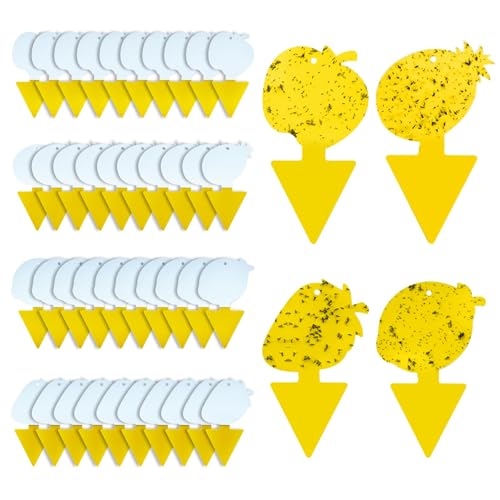
- Catches fruit flies and fungus gnats
- Easy peel-and-place setup
- Non-toxic and odorless
KIKALIFE Fruit Fly & Fungus Gnat Traps. Yellow sticky traps help monitor flying pests during quarantine, especially fruit flies, fungus gnats, whiteflies, and aphids. The drawback is obvious: sticky traps catch adults, but they do not treat the soil or stop hidden eggs and larvae on their own.

- Helps catch drainage water
- Heavy-duty plastic construction
- Works for indoor and outdoor plants
TITE Plant Saucer Heavy Duty Drip Trays. Drip trays help catch water under indoor staging pots and keep floors cleaner during the adjustment period. The trade-off is fit; a 10-inch tray will not suit every container, so match the tray to the pot footprint before the move.

- 3 lighting modes for different plants
- Built-in timer with 3 settings
- Adjustable height and angle
Aokrean Grow Lights for Indoor Plants. A small grow light can help bridge the gap if your quarantine room lacks strong winter light. The drawback is that a timer and adjustable height do not replace a proper window, so light-demanding plants still need thoughtful placement.
Budget setups
| Setup | Best for | Suggested items | Estimated total |
|---|---|---|---|
| Starter | One or two small plants | Sticky traps, insecticidal soap, simple saucer | $27.89 |
| Mid | Several mixed patio pots | Sticky traps, insecticidal soap, plant caddy, moisture meter | $45.86 |
| Serious | Many pots plus indoor quarantine | Grow lights, sticky traps, insecticidal soap, plant caddy, saucers, moisture meter | $77.91 |