Can You Overwinter Potted Perennials Indoors or in a Garage?
Use a bright indoor room only for tropical or tender perennials that keep growing. For most hardy potted perennials, an unheated garage is usually a better fit because it stays cold enough to keep the plant dormant. Put the plant in the wrong spot, and roots dry out, growth stays weak, or the plant can die before spring. This guide gives a simple way to choose between indoor rooms and garages, plus the light, temperature, and watering checks that matter most.
Indoor or garage?
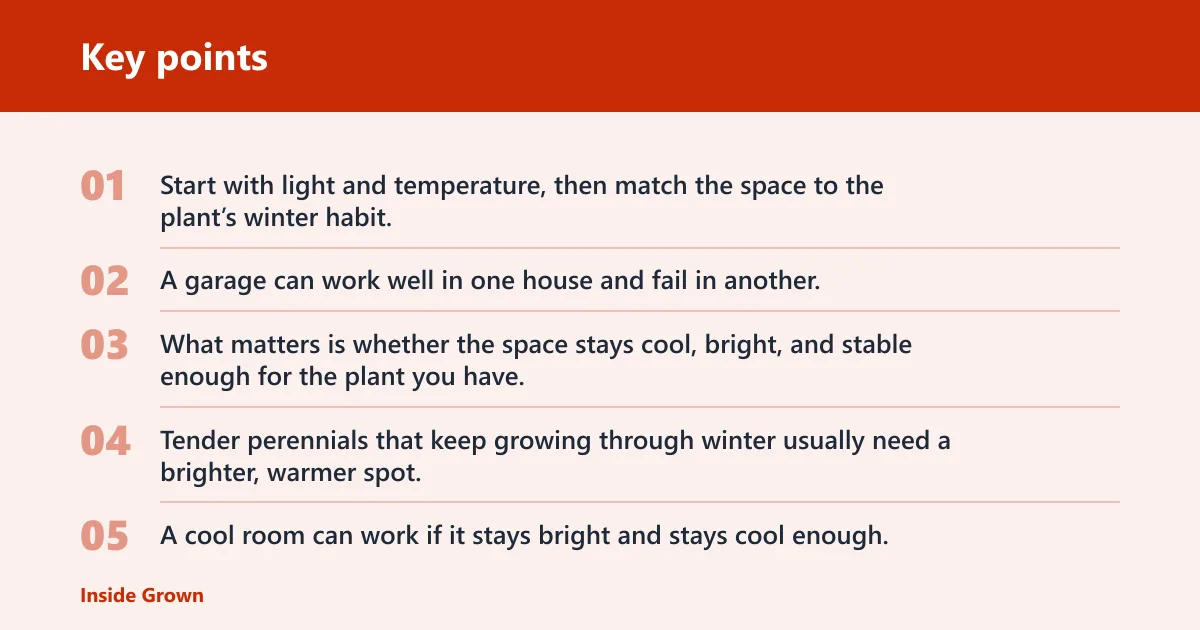
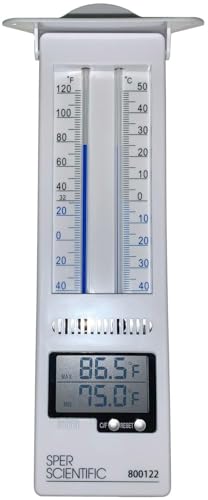

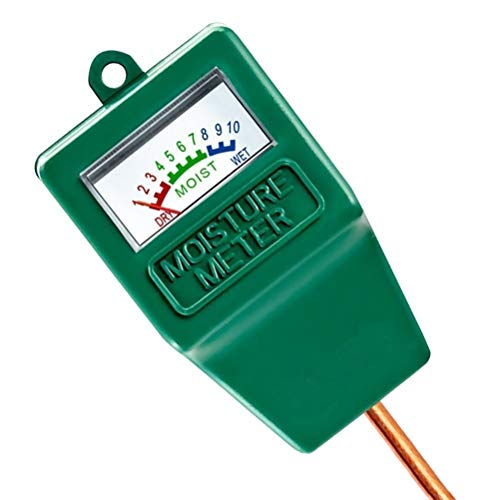
Start with light and temperature, then match the space to the plant’s winter habit. The best spot is the one that fits the plant’s needs and your home’s micro-climate: local temperature swings, sunlight exposure, and whether the space stays steady enough through winter.
Room labels matter less than conditions. A garage can work well in one house and fail in another. A basement in Montana may be much cooler than one in New Mexico, and some basements get useful southern exposure to sunlight. What matters is whether the space stays cool, bright, and stable enough for the plant you have.
Choose by plant type first
Tender perennials that keep growing through winter usually need a brighter, warmer spot. Hardy potted perennials that prefer dormancy usually do better in a cool garage, basement, or other protected space where temperatures stay low enough to slow growth without freezing the root ball solid. Semi-evergreen plants may fall between those two groups and need more light than a dormant storage plant, but less winter heat than an actively growing one.
A heated room is usually the last choice for hardy types, because warmth can wake them early and force weak growth when light is still limited. A cool room can work if it stays bright and stays cool enough. For garage storage, the real question is not just temperature; it is also whether the roots can tolerate the cold, whether the space stays dark enough for dormancy, and whether repeated freeze-thaw cycles could damage the plant.
Use the space you actually have
Garage conditions can vary widely. Some garages have windows and some have no sunlight at all. That difference decides whether the space can support dormant plants, cool-bright plants, or only storage plants that tolerate very low light. Garage suitability also depends on root hardiness, how much darkness the plant can handle, and whether the space gets repeated freeze-thaw exposure.
Basements are similar. They may be cooler or warmer depending on region, insulation, and grade, so judge the basement by temperature and light, not by its name. A basement that stays cool and steady can suit some dormant plants, while a warmer, dim basement may be better for plants that need a little more active winter light.
Winter temperature bands
The most useful winter bands are simple. A heated room is roughly about 60 to 70°F or warmer, which generally suits only plants that stay active. A cool room is roughly about 45 to 60°F. A garage often falls near about 35 to 50°F, though temperatures can vary with the weather. A basement may land anywhere from cool to room temperature depending on the home.
Use those bands as guides, not guarantees. The goal is to keep the plant cold enough to rest, but not so cold that the roots freeze or the stems rot after repeated thawing. Plants with different hardiness at the root level may need different placements even within the same temperature band.
Winter temperature bands
Temperature is the second half of the decision. Light can be added with a window or grow lights, but a space that freezes hard, heats up too much, or swings wildly from day to night can still fail. For many overwintering plants, a steady cool zone is more important than a slightly warmer one that keeps changing.
Heated room
Use this only for tender perennials that need to stay active or for plants that require bright light and warmth together. If a hardy perennial goes into a heated room, it usually needs much more light than a normal winter window can provide. Without that light, the plant is likely to stretch, lose leaves, or weaken before spring.
Cool room
This is the middle ground. A cool room can work for potted perennials that need some dormancy but still want more light than a dark garage provides. A south-, east-, or west-facing window is the best indoor light placement, especially for first-time indoor overwintering. If the room is cool but dim, it may still need supplemental light.
Garage
A garage often gives the cold dormancy many hardy perennials need. It may be the better choice when the room inside is too warm, too dry, or too bright for dormancy. The downside is that garages can also freeze, stay dark, attract rodents, or warm up too much on sunny days. Suitability depends on the plant’s root hardiness, how much darkness it can tolerate, and whether the garage goes through freeze-thaw swings.
Basement
A basement can be a workable alternative when it stays cool and the light is better than expected. Some basements have southern exposure and enough sun to keep certain plants from collapsing into complete darkness, but others are warmer than a garage and too dim for sun-loving plants. In practice, a basement is often the best backup only when its temperature and light are both predictable.
Potted perennial decision matrix
Use this table to match the plant to the space. Light need, winter temperature, and failure risk matter more than the room name.
| Plant type | Minimum light need | Preferred winter temperature band | Acceptable location | Common failure risks |
|---|---|---|---|---|
| Geraniums | Medium to bright | 45 to 60°F | Cool room, bright basement, garage with window | Too little light, drying out, weak leggy growth |
| Begonias | Bright | 55 to 65°F | Heated room, cool room with strong window light | Cold damage, leaf drop, rot from overwatering |
| Decorative sages | Bright | 55 to 65°F | Heated room near window, bright basement | Stretching, leaf loss, pests brought indoors |
| Calla lilies | Very low | 40 to 50°F | Garage, basement, cool dark place | Too warm, too wet, rot in storage |
| Dahlias | Very low | 40 to 50°F | Garage, basement, cool dark place | Freeze-thaw swings, rot, rodent damage |
| Agave plants | Bright | 45 to 55°F | Cool bright place, windowed garage, bright basement | Darkness, excess moisture, soft growth |
| Fuchsia | Medium to bright | 45 to 55°F | Cool room, bright basement, garage with light | Dry air, too much heat, loss of leaves |
| Hardy herbs in pots | Bright | 35 to 50°F | Garage, cool basement, unheated bright space | Freeze-thaw swings, overwatering, poor light |
Best fit / avoid: Geraniums fit a cool, bright spot; avoid a hot living room. Begonias fit a warm, bright room; avoid a cold, dark garage. Calla lilies and dahlias fit cool, dry storage when fully dormant; avoid warm indoor rooms. Agave plants fit a cool bright place; avoid total darkness. Decorative sages fit bright indoor light; avoid deep shade.
Which plants fit a garage?
Garages are best for plants that want cool dormancy, low to medium light, and a stable enough temperature that the root ball does not freeze solid. A garage can be too dark or too warm for other plants, so the fit depends on what is inside and how the space behaves through winter. The best garage candidates are the ones whose roots can handle cold, whose tops can handle darkness, and whose storage conditions stay steady.
Cool dark storage plants
Some plants do best in a cool dark place, including calla lilies and dahlias when they are fully dormant. For potted dahlias, that can mean either dry storage in the pot or lifting and storing the tubers separately, depending on how they were grown and how the gardener manages them. Those plants are candidates for a garage when the space stays cool, dry enough, and protected from hard freezes. They should not be kept in a warm room where they may break dormancy too early. They are a better match for a dark, cool storage setup than for an actively lit indoor room.
Cool bright storage plants
Agave plants are described as liking cool places but plenty of light. That makes a garage with windows, a bright basement, or another cool bright space a stronger fit than a dark garage corner. If the plant needs winter light to stay firm and healthy, a bright, cool room is safer than a cold space with no usable light.
Suppose a garage stays around 42°F and has a small east-facing window. That can work better for agave than a 68°F family room, because the plant gets enough winter rest without being pushed into soft growth. A similar rule applies to other semi-evergreen plants: cool plus bright is usually safer than warm plus dim.
Plants to keep out of a warm room
Warm rooms are poor choices for many hardy potted perennials. The heat speeds growth when winter light is weak, and the plant can come out thin, pale, or stressed before spring arrives. Even plants that tolerate some indoor light often decline if the room is warm enough to push growth but not bright enough to sustain it.
Geraniums are usually kept on the drier side in winter, and they are not well served by excess heat and low light. Begonias and decorative sages need warmth and light together, so they belong near a bright window, not in a dark garage. If the room cannot deliver both heat and strong light, the plant is usually better off somewhere cooler.
Do potted perennials need light indoors?
Yes, if they are overwintered indoors as active or semi-active plants. A south-, east-, or west-facing window is the best indoor light placement, and it is the first choice for people trying indoor overwintering for the first time. If natural light is limited, indoor plants often need extra help from a brighter spot or supplemental lighting.
Best window placement
Put the plant as close to the glass as practical without letting leaves touch freezing panes. South exposure gives the strongest winter light, while east and west windows often give enough light for many potted perennials if the room stays cool. The cooler the room, the more usable the window light usually becomes.
Rotate the pot a quarter turn each week so one side does not lean toward the window. That helps distribute light evenly and keeps the plant from stretching in one direction. It also makes it easier to notice early signs of weak growth, leaf drop, or uneven drying.
When to add grow lights
Grow lights are useful when daylight is not enough, especially for sun-loving plants that need a brighter winter setup than a window can provide. Simple T5 fluorescent fixtures can work for this purpose if they are kept close enough to the foliage to matter and run on a consistent daily schedule through the short winter day. They are most helpful when a bright window is not enough on its own.
If a plant is clearly reaching, leaning, or dropping leaves in a bright window, the issue may be winter light, not just water. Add light before the plant weakens too far. For container plants, using grow lights for overwintering can be the difference between holding shape and losing the plant’s structure over winter.
Prune before and after placement
Trim plants back when first brought in. Reducing the top growth lowers the mass the plant has to support and can make a dim winter room easier to manage. It also helps the plant fit the available light better, which matters more indoors than many growers expect.
A common first-timer mistake is bringing in a full, leggy pot and leaving it untouched. The plant then spends scarce energy supporting growth that winter light cannot maintain. Clean-up before storage also helps, especially when combined with cleaning plants before overwintering, so the plant enters winter with less debris, fewer pests, and less weak growth.
How much water should you give?
Water less in winter, but do not let the plant stay soggy. The basic rule is to water enough to keep the roots from drying out completely, while allowing the mix to dry partway between waterings. That applies across garage, basement, and indoor overwintering. In cold or low-light conditions, roots use water much more slowly, so overwatering becomes the bigger risk.
How dry the soil should
Check the mix with a finger or a simple moisture check before watering. For most overwintered perennials, the top layers should feel dry, and the root zone should not be wet and heavy. The best timing depends on temperature, light, and pot size, not on a fixed winter calendar.
If a plant is in a cool garage or basement, it often needs far less water than it did outdoors in summer. Cold, low-light conditions slow evaporation and root activity. A plant that dries slowly in winter is usually healthier than one kept evenly wet.
What to avoid in winter
Avoid feeding plants while they are indoors. Extra fertilizer pushes growth that winter light and temperature usually cannot support. That can leave the plant weak, stretched, or more prone to rot.
Also avoid watering on a schedule alone. A dry, cool basement and a warmer, brighter room do not lose moisture at the same rate. If the plant is indoors but still active, adjust watering to the room rather than to a fixed weekly routine.
Signs of too much water
Soft stems, sour potting mix, yellowing leaves, and persistent wet soil all point to excess moisture. In a garage or basement, overwatering can trigger rot long before the plant shows obvious collapse. If the space is cold, the soil should usually dry more slowly than it did outside, not stay wet indefinitely.
Say a 10-inch pot sits in a garage that stays around 38°F. If the soil is still damp after two weeks, the next watering should wait. Cold roots cannot use water quickly, and the pot can fail from wetness long before it dries on the surface. That same warning applies to most cool storage plants in winter. If an unheated garage drops below freezing for extended periods, move the plant to a slightly warmer protected space if possible, or add insulation and monitor the root zone closely so the pot does not freeze solid.
Prepare plants before storage
A short prep routine improves the odds before the plant moves indoors, into a garage, or into a basement. The goal is to bring in a clean plant with fewer pests, less top growth, and a manageable moisture level. Good prep also makes the winter spot easier to monitor once the plant is settled.
-
Inspect for pests.
Check leaf undersides, stems, and the soil line for insects, eggs, webbing, or sticky residue. Remove any obvious pests before the plant goes inside so one infested pot does not spread the problem. -
Trim back growth.
Cut back long or tender stems when the plant first comes in. Keep the cut simple and remove only what is necessary to reduce the mass the plant must support through winter. -
Clean the pot surface.
Remove dead leaves, fallen flowers, and loose debris from the soil surface. This lowers rot risk and makes it easier to see when the mix is drying out. -
Water once, then pause.
Give the plant a moderate watering only if the soil is dry enough to need it, then wait until the mix has dried partway before watering again. That prevents the common winter error of keeping roots constantly wet.
Frequently asked questions
Can you overwinter potted perennials indoors or is a garage better?
Both can work, but they suit different plants. A bright indoor room is better for tender perennials that keep growing, while a garage is often better for hardy potted perennials that need cold dormancy. Light and temperature should decide the choice, not the room name. The better space is the one that matches the plant’s winter habit and the conditions you can actually provide.
What temperature is best for overwintering potted perennials?
The best temperature depends on the plant’s winter habit. Cool dormant plants usually do best around 35 to 50°F, while semi-active plants often need 45 to 60°F. Warm indoor rooms are mainly for plants that need to keep growing and can handle the light level. A plant’s cultivar hardiness can shift the exact target, so use the band as a guide rather than a hard rule.
Do potted perennials need light during winter indoors?
Yes, if they are being kept as active plants indoors. The best placement is near a south, east, or west facing window. If the plant is a sun lover and the window is not enough, add grow lights rather than letting it stretch in weak light. The brighter the plant’s winter needs, the more important consistent light becomes.
How much should I water overwintering potted perennials?
Water moderately, then let the soil dry partway before watering again. Winter roots use water slowly, especially in cool spaces. Overwatering is one of the fastest ways to lose a plant in a garage, basement, or dim indoor room. If the room is colder and darker, watering should usually be reduced even further.
Can a garage be too dark or too warm for overwintering plants?
Yes. A garage that stays too dark will not suit plants that need winter light, and one that stays too warm can wake hardy plants too early. Freeze-thaw swings, rodents, and total darkness are common garage failure cases to watch for. A garage works best when its temperature stays steady and the plant can tolerate both low light and cold roots.
Should I cut back potted perennials before bringing them inside?
Usually yes. Trimming plants back when first brought in can help by reducing the amount of growth the plant must support through winter. Keep the cut modest and remove weak, crowded, or overly long stems before placing the pot in its winter spot. A cleaner, smaller plant is easier to overwinter and easier to keep in the right light.