When To Plant Grass Seed In Indiana
The lush, green lawns that line Indiana’s neighborhoods and rural landscapes don’t happen by accident. Achieving a healthy, vibrant yard starts with timing, specifically, knowing when to plant grass seed in Indiana. Whether you’re renovating a patchy lawn or starting from scratch, choosing the right season and understanding Indiana’s unique climate factors are crucial. The right timing can mean the difference between a thick, resilient turf and a disappointing spread of weeds or bare spots.
Many homeowners mistakenly assume grass seed can be tossed down at any time of year, but Indiana’s climate, with its cold winters, humid summers, and unpredictable rainfall, demands a strategic approach. In this comprehensive guide, you’ll discover the science and best practices behind seeding lawns in Indiana, backed by research, local expertise, and practical examples.
By the end, you’ll be equipped to make informed decisions and maximize your chances of cultivating a yard that stands out for its beauty and durability.
Key Takeaways
- Optimal seeding time in Indiana is late summer to early fall for cool-season grasses.
- Spring seeding is possible but comes with increased risks of weeds and drought stress.
- Local climate, soil type, and grass species all impact the best seeding schedule.
- Proper site preparation and post-seeding care are essential for strong root development.
- Over-seeding and renovation strategies can revive patchy or thinning lawns.
- Data-driven comparisons help identify the best grass varieties for Indiana’s conditions.
Understanding Indiana’s Climate And Its Impact On Grass Seeding
Indiana’s climate is classified as humid continental, with distinct seasonal changes that directly affect grass growth. Knowing how temperature, precipitation, and soil conditions influence seed germination will help you select the most effective seeding window.
Temperature Patterns And Growing Seasons
Indiana experiences warm summers, cold winters, and moderate rainfall. The average annual temperature ranges from 48°F in northern regions to 54°F in the south. According to the National Weather Service, frost dates typically occur from mid-October to early April, which defines the growing season.
- Spring: Temperatures rise, but soil can remain cold and wet, delaying germination.
- Summer: Warm, sometimes hot and humid, but risks of drought and disease increase.
- Fall: Cooler temps and consistent moisture create ideal conditions for seed establishment.
- Winter: Dormant period, seeding is ineffective.
Rainfall And Soil Moisture
Annual precipitation averages about 40 inches, with peaks in spring and fall. However, excessive spring rains can wash away seeds, while summer droughts stress new grass. Indiana’s soils range from sandy loam to clay, affecting drainage and seed-to-soil contact.
- Clay soils retain moisture but can compact easily.
- Sandy soils drain quickly, requiring more frequent watering.
Choosing The Right Grass Species
Indiana falls squarely within the cool-season grass zone. These species thrive in spring and fall, and tolerate Indiana’s cold winters better than warm-season varieties.
Common cool-season grasses for Indiana include:
- Kentucky Bluegrass
- Perennial Ryegrass
- Tall Fescue
- Fine Fescue
Warm-season grasses like Bermuda or Zoysia are generally not recommended except in extreme southern Indiana.

Credit: www.shadesofgreenlawncare.com
The Best Times To Plant Grass Seed In Indiana
Planting grass seed at the optimal time ensures strong germination, minimizes weed competition, and promotes healthy root systems. Each season offers pros and cons, but one stands out as the clear favorite.
Late Summer To Early Fall: The Gold Standard
According to Purdue University Extension, the ideal time to plant cool-season grass seed in Indiana is mid-August to mid-September. This period offers:
- Warm soil temperatures (60, 75°F) for rapid germination.
- Moderate air temperatures for reduced heat stress.
- Consistent rainfall for moisture.
- Fewer weed competitors.
Example: A homeowner in Indianapolis planted tall fescue in late August. By October, the lawn had filled in with dense, vibrant turf, outcompeting weeds and surviving winter with minimal damage.
Spring Seeding: Second Best, With Caveats
If fall seeding isn’t possible, spring (late March to early May) is the next best option. However:
- Soil may be cold and slow to warm.
- Heavy rains can cause erosion and wash away seeds.
- Weed growth peaks in spring, competing with new grass.
Pro Tip: Use a starter fertilizer and pre-emergent weed control to help spring-seeded lawns establish.
Summer And Winter Seeding: High Risk, Low Reward
- Summer: High temperatures and drought stress can kill seedlings.
- Winter: Seeds remain dormant, risking rot and predation.
Warning: Avoid seeding during these periods unless using “dormant seeding” strategies, which require specialized knowledge and timing.
Data-driven Comparison Table
| Seeding Season | Germination Rate | Weed Competition | Root Establishment | Success Likelihood |
|---|---|---|---|---|
| Late Summer/Early Fall | High (80-90%) | Low | Excellent | Very High |
| Spring | Moderate (60-75%) | High | Good | Moderate |
| Summer | Low (30-50%) | Moderate | Poor | Low |
| Winter | Very Low (10-20%) | Low | Minimal | Very Low |

Credit: lawnlove.com
Selecting The Best Grass Seed For Indiana Lawns
Choosing the right grass seed is just as important as timing. Indiana’s climate favors cool-season grasses, but each species has distinct characteristics, advantages, and challenges.
Kentucky Bluegrass
Kentucky Bluegrass is prized for its fine texture and rich color. It spreads via underground rhizomes, repairing itself and forming dense turf.
- Best for: Homeowners seeking a soft, attractive lawn.
- Needs frequent irrigation and fertilization.
- Slow to germinate (14, 21 days).
Example: In my experience, Kentucky Bluegrass performed beautifully in northern Indiana, especially when overseeded in fall.
Tall Fescue
Tall Fescue is drought-tolerant and adapts well to Indiana’s clay soils. It establishes quickly (7, 14 days), making it ideal for high-traffic areas.
- Best for: Families, pet owners, and sports fields.
- Deep roots provide resilience.
- Coarser texture than bluegrass.
Perennial Ryegrass
Perennial Ryegrass germinates rapidly (5, 7 days), providing quick coverage and erosion control. It’s often mixed with other grasses for overseeding.
- Best for: Mixed lawns, erosion-prone sites.
- Not as cold-tolerant as fescue or bluegrass.
Fine Fescue
Fine Fescue thrives in shade and low-fertility soils. It’s less tolerant of heavy traffic but perfect for woodland or shaded lawns.
- Best for: Shady areas, low-maintenance lawns.
- Thin blades and soft texture.
Comparison Table: Popular Indiana Grass Seeds
| Grass Type | Texture | Drought Tolerance | Shade Tolerance | Germination Speed | Best Use |
|---|---|---|---|---|---|
| Kentucky Bluegrass | Fine | Moderate | Moderate | Slow | Residential lawns |
| Tall Fescue | Coarse | High | Low | Medium | High-traffic areas |
| Perennial Ryegrass | Medium | Low | Low | Fast | Mixed lawns |
| Fine Fescue | Fine | Moderate | High | Medium | Shaded lawns |

Credit: lawnlove.com
Preparing The Lawn For Seeding
Proper preparation is a critical step that can dramatically improve seeding results. Skipping these steps can lead to poor germination, uneven growth, and persistent weed problems.
Soil Testing And Amendment
Begin with a soil test to determine pH, nutrient levels, and organic matter. Indiana soils often test acidic (pH < 6.0) or low in phosphorus.
- Adjust pH with lime if needed.
- Apply phosphorus-rich starter fertilizer based on test recommendations.
Example: Purdue University Extension recommends a soil pH between 6.2 and 7.0 for cool-season grasses.
Clearing Debris And Weeds
Remove rocks, sticks, and existing weeds. If weeds are dense, use a non-selective herbicide two weeks before seeding.
- Rake to loosen soil and ensure good seed-to-soil contact.
- Mow existing grass short before overseeding.
Tilling And Grading
For new lawns, till to a depth of 4, 6 inches. Grade to prevent water pooling and ensure even coverage.
- Fill low spots and level high areas.
- Use a roller to firm soil before seeding.
Seeding Techniques
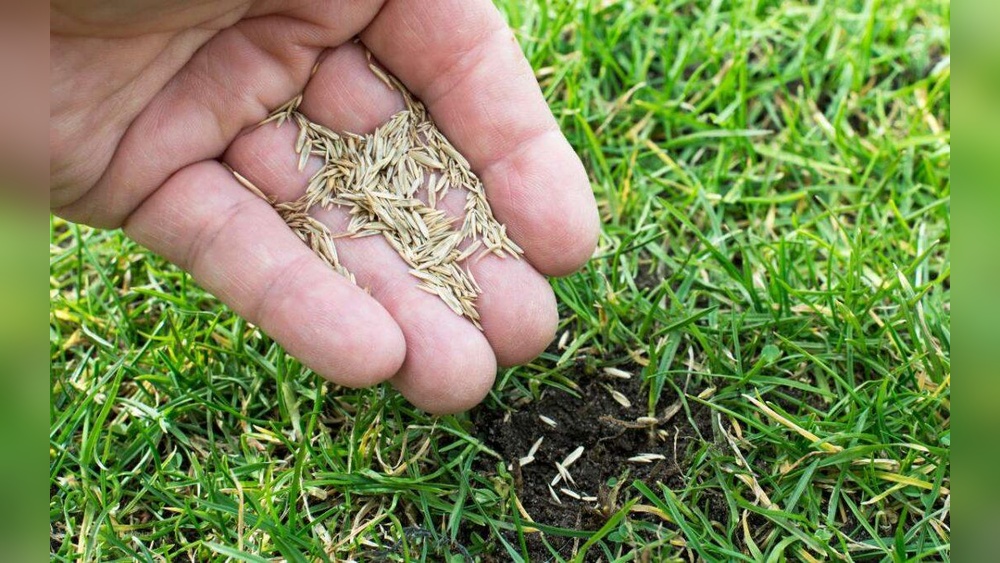
- Broadcast seeding: Spread seed evenly with a rotary or drop spreader.
- Slit seeding: Cuts grooves in soil, ensuring better seed placement.
- Hydroseeding: Sprays seed, mulch, and fertilizer, ideal for large or sloped areas.
Pro Tip: For best results, seed at the recommended rate (e.g., 3, 5 lbs per 1,000 sq ft for most cool-season grasses).
Data Table: Seeding Rates And Methods
| Grass Type | Recommended Rate (lbs/1,000 sq ft) | Seeding Method | Coverage Quality |
|---|---|---|---|
| Kentucky Bluegrass | 2, 3 | Broadcast/Slit | Fine, dense |
| Tall Fescue | 5, 6 | Broadcast/Hydroseed | Coarse, resilient |
| Perennial Ryegrass | 4, 5 | Broadcast/Slit | Quick, uniform |
Post-seeding Care And Maintenance
Once the seed is down, the work isn’t finished. Proper post-seeding care ensures seeds germinate, roots establish, and turf matures into a healthy lawn.
Watering Schedule
Newly seeded lawns need consistent moisture, but not saturation.
- Water lightly 2, 3 times daily for the first 2 weeks.
- Gradually shift to deeper, less frequent watering as seedlings mature.
Pro Tip: Keep soil moist but not soggy; avoid runoff.
Mowing
Wait until grass reaches 3, 4 inches before the first mow. Use sharp blades and avoid cutting more than 1/3 of the height.
- Early mowing encourages tillering and density.
- Set mower to high setting for first few cuts.
Fertilizing
Apply a starter fertilizer (high in phosphorus) at planting. Follow up with a balanced fertilizer 4, 6 weeks after germination.
Warning: Over-fertilizing can cause burning and excessive growth.
Weed Control
Avoid using herbicides until grass is well-established (typically after 3 mowings).
- Hand-pull weeds during early establishment.
- Consider a light pre-emergent for spring-seeded lawns.
Disease And Pest Monitoring
Monitor for fungal diseases and insect pests, especially in wet or shaded areas.
- Brown patch and dollar spot are common in tall fescue and ryegrass.
- Treat promptly with appropriate fungicides or insecticides if needed.
Overseeding And Lawn Renovation Strategies
Overseeding and renovation are powerful tools for maintaining Indiana lawns, especially after damage from drought, disease, or heavy use.
When To Overseed
Overseeding is best done during the same window as primary seeding: late summer to early fall.
- Revives thin or patchy areas.
- Introduces improved grass varieties.
Example: A homeowner in Bloomington overseeded with perennial ryegrass after summer drought. The lawn recovered its thickness and color by late October.
How To Overseed Effectively
- Mow existing grass short.
- Aerate soil to improve seed-to-soil contact.
- Spread seed at recommended rates.
- Water consistently.
Pro Tip: Combine overseeding with aeration for best results.
Renovation Vs. Reseeding
- Renovation: Improving an existing lawn with overseeding, fertilization, and weed control.
- Reseeding: Removing old turf and starting anew, recommended for severely damaged lawns.
Warning: Renovation is less disruptive but may not resolve deep soil or pest issues.
Case Study: Urban Lawn Recovery
A community park in Fort Wayne undertook renovation after heavy foot traffic left large bare spots. Overseeding with tall fescue and regular watering restored the lawn to full coverage within two months.
Common Challenges And Solutions When Planting Grass Seed In Indiana
Indiana homeowners face several unique challenges when establishing lawns. Recognizing and addressing these will increase your chances of success.
Dealing With Heavy Clay Soils
Clay soils are common in central and southern Indiana. They retain moisture but compact easily, restricting root growth.
- Amend with organic matter or sand.
- Aerate regularly.
Managing Shade And Sun Exposure
Many lawns have areas of deep shade, especially near trees.
- Use fine fescue or shade-tolerant blends.
- Prune trees to increase light penetration.
Controlling Weeds
Weed pressure is highest during spring and early summer.
- Seed in fall to reduce weed competition.
- Apply pre-emergent herbicides in spring.
Addressing Drought And Heat Stress
Summer droughts can devastate new seedlings.
- Water deeply during dry spells.
- Choose drought-tolerant species like tall fescue.
Example: Suburban Lawn Challenge
A Carmel homeowner struggled with patchy grass under large oak trees. Switching to a fine fescue blend and thinning branches improved coverage and reduced maintenance.
Real-world Examples: Success Stories From Indiana
Learning from others’ experiences can provide valuable insights and inspiration. Here are three real-world examples of successful seeding projects in Indiana.
Example 1: Fall Seeding Triumph
In Indianapolis, a family planted a Kentucky Bluegrass blend in mid-September following a soil test and site preparation. Consistent watering and starter fertilizer produced a thick, green lawn by late October. The turf remained healthy through winter and required minimal overseeding the following year.
Example 2: Spring Reseeding After Renovation
A Lafayette homeowner reseeded with tall fescue in early April after removing old, weed-infested turf. Despite heavy rains, proper grading and drainage prevented erosion. The lawn established well, but required additional weed control due to spring competition.
Example 3: Community Park Overseeding
Fort Wayne’s community park used overseeding and aeration to revive bare spots left by summer events. The mix of perennial ryegrass and tall fescue produced rapid coverage and resilient turf that withstood heavy use through the fall season.
Frequently Asked Questions
What Grass Seed Is Best For High-traffic Lawns In Indiana?
For high-traffic areas, tall fescue is often the best choice due to its deep roots and durability. It tolerates foot traffic, pets, and sports activities better than Kentucky Bluegrass or fine fescue. Blend tall fescue with perennial ryegrass for faster coverage and improved resilience.
Can I Plant Grass Seed In Indiana During Winter?
Winter seeding, also known as dormant seeding, involves spreading grass seed in late fall or early winter when the ground is cold but not frozen. The seed remains dormant until spring. While this method can work, it carries risks of seed loss due to birds, runoff, and inconsistent germination. Consult your local extension office for site-specific advice.
How Can I Improve Germination Rates For Spring Seeding?
To enhance spring germination rates, ensure soil temperatures are above 55°F, use high-quality seed, and apply a starter fertilizer. Consider covering seeds with straw mulch to retain moisture and protect from heavy rains. Avoid seeding too early, as cold soil delays germination and increases weed competition.
Is Hydroseeding A Good Option For Indiana Lawns?
Hydroseeding is effective for large areas, slopes, and erosion-prone sites. It combines seed, fertilizer, and mulch in a slurry that’s sprayed onto the soil. While more expensive than traditional methods, hydroseeding provides quick coverage and reduces erosion risks. It’s especially popular for commercial projects and new subdivisions.
Should I Use Starter Fertilizer When Planting Grass Seed?
Applying a starter fertilizer (high in phosphorus) supports root development and early growth. Indiana soils often lack sufficient phosphorus, so a soil test can help determine the proper amount. Avoid excessive nitrogen, which can promote weed growth and burn new seedlings.
Planting grass seed in Indiana is both an art and a science. By understanding the state’s climate, choosing the right timing and seed, and following proven preparation and care techniques, you can create a lawn that’s beautiful, resilient, and sustainable. Whether you’re a homeowner, landscaper, or community manager, these strategies will help you achieve lasting success. For more information on turf management and seeding schedules, consult resources like Purdue University Extension and National Weather Service. With the right approach, your Indiana lawn can become a source of pride and enjoyment for years to come.