What Are Soil Horizons and How Gardeners Can Read Them?
Soil horizons are distinct layers in a profile, and they are often described as O, A, E, B, C, and sometimes R. They tell you how water moves, how deep roots can go, and how much topsoil remains. Read them poorly, and you can plant into a wet pan, shallow subsoil, or a disturbed bed that fails to hold nutrients. This guide shows how to spot each horizon, judge drainage and rooting depth, and read common clues from color, texture, and structure.
What are soil horizons?


A soil profile is the vertical cross-section of soil layers from surface organic material down toward parent material and bedrock. Each soil horizon is one distinct layer in that profile, with its own color, texture, structure, roots, and organic matter. Not every garden soil has every horizon, and many beds show a mixed or shortened sequence.
For gardeners, the point is practical. Horizons hint at where water slows, where roots spread, and whether the bed still has a usable topsoil layer or only a thin skin over dense subsoil. The soil profile also helps explain why two beds on the same property can behave very differently after rain.
How horizons form
Layers form as organic matter accumulates at the surface, minerals move downward with water, and deeper material weathers over time. Some layers become darker and looser, while others become denser or paler. Disturbance from digging, grading, or imported soil can interrupt that sequence.
What do O, A, E, B, C, and R mean?
The common horizon sequence runs from O at the surface through A, E, B, and C, with R for bedrock below. The letters are useful shorthand, but the visible properties matter more than the label alone. Color, texture, structure, and organic matter tell you what the layer is doing for plants.
O horizon
The O horizon is commonly described as surface organic litter or decomposed material. It is common in wooded or less disturbed areas and may be thin or absent in cultivated gardens. In beds with heavy mulching, it can look like a dark surface mat rather than a separate soil layer.
A horizon
The A horizon is topsoil and is often described as one of the most biologically active layers. It tends to have more roots, more organic matter, and more aggregates than layers below it. In a healthy garden, this is often the layer you want to preserve rather than strip away.
E horizon
The E horizon is a light-colored, leached layer where clay, iron, or organic material has moved out. It does not appear in every soil. When present, it often looks paler than the layers above and below it, and that pale color can signal strong downward movement of water over time.
B horizon
The B horizon is commonly described as a subsoil accumulation layer. It is often denser and less organic than topsoil, and it can collect clay, iron, or aluminum. In gardening terms, a strong B horizon may slow drainage or limit how easily roots move deeper.
C horizon
The C horizon is weathered parent material with little biological activity. It is less developed than the layers above it and may contain partially broken rock, coarse fragments, or loose mineral material. Plants can root into it if conditions allow, but it usually offers fewer signs of active soil life.
R horizon
The R horizon is commonly described as bedrock, or solid rock beneath the soil. It can stop roots abruptly and set a hard limit on rooting depth. In shallow soils, the R horizon may sit much closer to the surface than gardeners expect.
How do you read soil horizons in a garden?
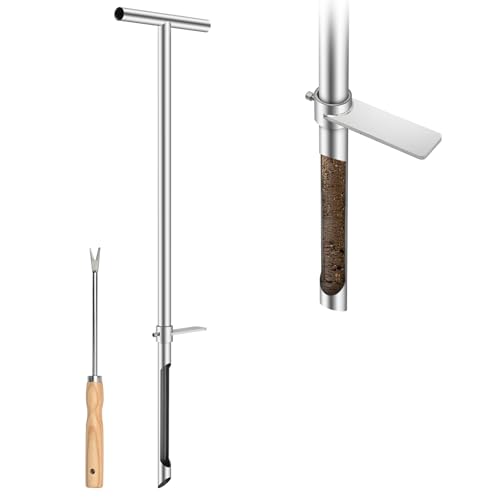
You read horizons by looking at a dug hole or soil pit, then comparing color, texture, structure, roots, and visible boundaries. Start near the side wall of the hole, not just loose spoil on the surface. A clean face shows the profile more clearly than churned soil does.
Observe color, texture, and structure
Dark surface layers usually signal more organic matter and active rooting. Pale or grayish layers can point to leaching or poor aeration, while reddish, yellowish, or brown tones often reflect oxidation patterns in subsoil. Texture matters too: gritty layers drain faster, while clayey layers hold more water and often feel sticky when wet.
Look for roots, pores, and mottling
Dense root networks and visible pores usually mean the layer is easier for roots and water to move through. Rusty spots, gray patches, or a mix of colors can indicate wet-and-dry cycles and slower drainage. A sharp boundary between layers often matters more than the layer name, because it can mark a sudden change in movement or rooting.
Use a dug hole or soil pit safely
A shallow hole is enough for many garden checks, but the side wall should be stable before you inspect it. If the soil is loose, cut back the wall slightly so it does not collapse. Avoid entering a deep or narrow pit without proper support.
- Choose a representative spot. Pick an area that reflects the bed, not a corner that was recently backfilled or trampled. A spot beside the main planting area usually shows the same layering without extra disturbance.
- Expose a clean face. Dig a hole about 12 to 18 inches wide and deep enough to see more than the surface mulch, then smooth one side with a spade. A clean face reveals real boundaries better than crumbly spoil does.
- Compare layers carefully. Note color shifts, texture changes, and whether roots thin out or stop. The goal is to separate true horizons from random clods or recent fill.
- Check for abrupt changes. Look for a sudden jump from dark to pale, loose to dense, or fine to gravelly. Those shifts often tell you more about drainage and root restriction than the letter labels alone.
- Record the deepest effective layer. Estimate where roots would likely slow or stop, especially if you reach dense clay, gravel, or rock fragments. That depth helps you decide where to place deep-rooted plants and where to avoid overworking the soil.
Say your vegetable bed has a 4-inch dark A horizon over a pale, sticky B horizon that stays slick after rain. That pattern suggests good surface fertility but slower drainage below, so raised planting rows or careful irrigation timing may matter more than extra fertilizer.
What does a horizon tell you about drainage and roots?
Horizon patterns can point to drainage problems, rooting depth limits, and likely fertility. Dark, crumbly topsoil usually supports active roots and nutrient cycling. Pale, dense, or mottled subsoil often means water moves more slowly, oxygen is less available, or roots will face a physical barrier sooner than expected.
Drainage clues from color and mottling
Very dark A horizons often indicate more organic matter, which usually helps structure and water holding in the upper layer. Gray, blue-gray, or mottled subsoil can suggest saturation or poor aeration at times of the year. A pale E horizon may mean water has moved through strongly enough to wash fine material downward.
Rooting depth limits
Roots can extend as far as the soil allows, not as far as the plant label hopes. A dense B horizon, gravelly C horizon, or shallow R horizon can stop deeper rooting, especially when soil is compacted. In shallow soil, even drought-tolerant plants may need more frequent watering.
What dense subsoil suggests
A dense subsoil can mean slower infiltration, perched water above the dense layer, and a narrower zone for roots to explore. That does not make the bed useless, but it changes what will thrive. Shallow-rooted crops and plants that tolerate periodic wetness usually cope better than deep-rooted trees or shrubs.
| Visible clue | Likely gardening implication | Drainage? | Rooting depth? | Likely disturbance? |
|---|---|---|---|---|
| Dark surface | More organic matter, active roots, and better nutrient holding in the top layer | No | No | No |
| Pale leached layer | Material has been washed out; may signal stronger downward water movement | Maybe | No | No |
| Abrupt color change | Sharp boundary may mark a sudden shift in texture, structure, or management history | Maybe | Maybe | Yes |
| Dense clayey subsoil | Slower infiltration and a likely root barrier below the topsoil | Yes | Yes | No |
| Gravelly parent material | Fast drainage, low storage, and limited fine soil for roots to explore | Yes | Yes | No |
| Shallow bedrock | Very limited rooting depth and little room for moisture storage below the surface | No | Yes | No |
A common first-timer mistake is to see a dark imported top layer and assume the whole bed behaves the same way. If that top 6 inches sits over compacted fill, water may linger after rain while roots hit a hard stop below. The surface looks promising, but the profile says otherwise.
What if your bed has no clear horizons?
Many garden beds do not show clean horizons at all. Imported topsoil, fill, repeated rototilling, grading, and compaction can mix layers until the profile looks blurred. In that case, the absence of obvious horizons is itself useful information about the site history.
Disturbed soil
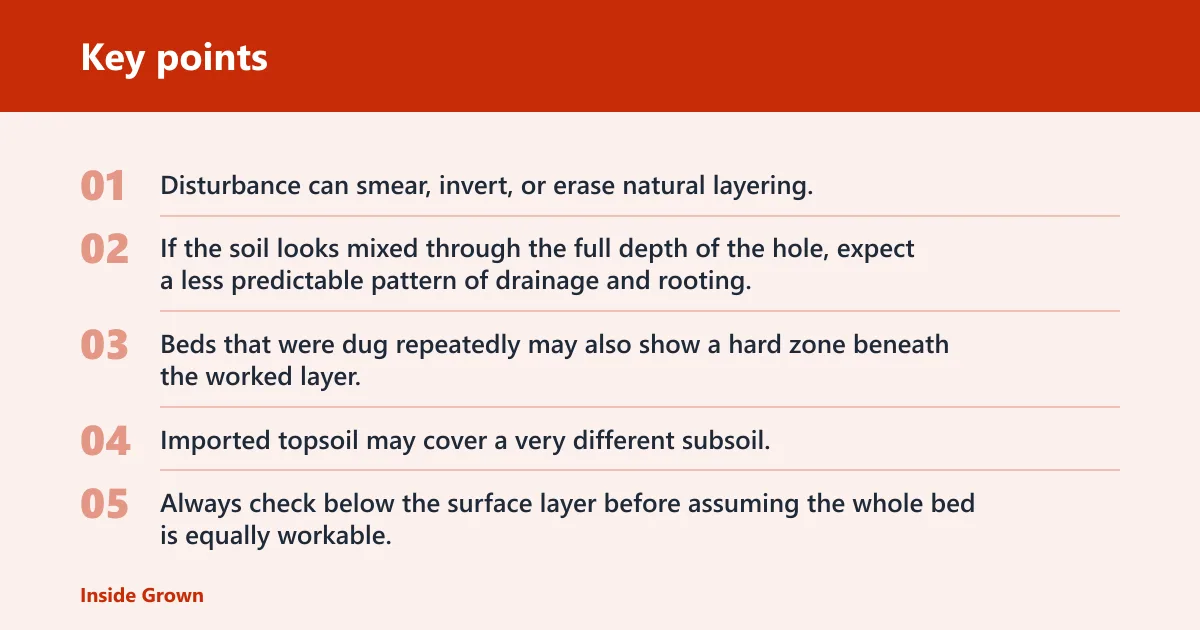
Disturbance can smear, invert, or erase natural layering. If the soil looks mixed through the full depth of the hole, expect a less predictable pattern of drainage and rooting. Beds that were dug repeatedly may also show a hard zone beneath the worked layer.
Imported topsoil
Imported topsoil may cover a very different subsoil. That means the top 4 to 8 inches can look productive while the material below behaves like compacted fill, clay, or gravel. Always check below the surface layer before assuming the whole bed is equally workable.
Fill, compaction, and mixed layers
Fill often contains mixed textures, construction debris, or abrupt color changes that do not match a natural profile. Compaction reduces pore space and can make even fertile soil drain slowly. If the profile looks patchy, expect root growth and water movement to vary more than the surface suggests.
What is a diagnostic soil horizon?
A diagnostic horizon is a recognized layer defined by observable properties and formation processes, not just by a simple letter label. It helps classification systems interpret how a soil behaves. For gardeners, that matters because a diagnostic horizon can explain drainage, fertility, or root restriction more clearly than O, A, B, or C alone.
How diagnostic horizons differ from simple labels
O, A, E, B, C, and R are general horizon labels. Diagnostic horizons are more specific and are identified by features such as clay accumulation, strong leaching, or unusual organic build-up. A soil may have a B horizon, for example, but only some B horizons meet diagnostic criteria that say something precise about function.
Why gardeners should care
Gardeners do not need to classify soils from scratch to benefit from the idea. A diagnostic horizon is a reminder that visible features can have practical meaning beyond the label. If a layer is dense, pale, mottled, or sharply bounded, it may affect planting depth, drainage, or fertilizer use more than the horizon letter suggests.
Frequently asked questions
How do I identify soil horizons in my garden?
Dig or expose a clean sidewall, then compare color, texture, structure, roots, and boundary sharpness from top to bottom. Dark, crumbly material is often topsoil; pale or dense layers often point to leaching or subsoil. Do not rely on one clue alone, because disturbed beds can blur the pattern.
What do O, A, B, C, and R horizons mean?
O is surface organic material, A is biologically active topsoil, B is subsoil where clay or iron may accumulate, C is weathered parent material, and R is solid bedrock. E may sit between A and B when leaching has removed fine material. Not every soil has every layer.
What does it mean if my garden has no obvious horizons?
No clear horizons often means the soil has been mixed by digging, grading, or imported fill. It can also mean the bed is young or heavily compacted. In practice, that usually calls for closer checking of drainage and root depth before planting anything that needs deep, even soil.
How deep do soil horizons typically go?
There is no single depth that fits every site. Some soils show clear layers within a foot, while others extend much deeper before bedrock or strong subsoil appears. The useful question is not the exact total depth, but where roots stop moving freely and water starts slowing down.
What can soil horizons tell you about drainage and fertility?
Dark, loose upper layers usually suggest more organic matter and better biological activity. Pale, mottled, or dense lower layers often suggest slower drainage or less oxygen. Together, those clues help you decide whether a bed can support deep roots, needs organic matter, or may need drainage changes.
How do soil horizons differ in a disturbed or imported garden bed?
Disturbed or imported beds often have blurred, abrupt, or missing layers instead of a natural sequence. The topsoil may look fine while the subsoil is compacted fill, rubble, or mixed clay. That mismatch matters because the surface can hide the real limit on rooting depth and water movement.
What are the soil horizons: they are the visible?
They are the visible or felt layers in a soil profile, usually listed as O, A, E, B, C, and R. Gardeners use them to read the ground beneath a plant bed, not to memorize labels. The key is how the layers affect water, roots, and soil life.
What is a diagnostic soil horizon: it is a horizon defined?
It is a horizon defined by specific features and formation processes that soil classification systems can recognize. For gardeners, the practical value is in the behavior it signals. A diagnostic horizon can help explain why a bed drains slowly, roots stall, or topsoil seems thin.