How to Estimate Soil Volume for Landscaping Projects
Estimate soil volume by multiplying bed length × width × depth in feet, then divide by 27 to get cubic yards; adding about 10% to 15% for settling and uneven grading is a common rule of thumb. Miscalculating usually means shorting the bed or paying for extra deliveries. This guide shows how to measure rectangular beds, raised beds, and irregular shapes, then turn the result into a bulk soil order.
Why soil volume matters before you order



Soil volume decides whether you buy the right amount the first time. Topsoil is commonly sold by cubic foot or cubic yard, so a quick volume estimate helps you compare bulk delivery, bagged product, and the space you need to fill.
Measure the bed’s length and width, then record the fill depth you want. Keep every number in the same unit system. That keeps the math clean and avoids guessing at delivery quantities.
Tools you need
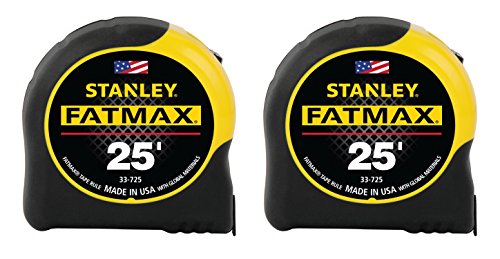
Measure the area. Use a tape measure for short runs and a laser distance measurer for longer spans or awkward corners. Write everything down in feet and inches, or meters if you prefer metric, but convert to one system before calculating.
Record the depth. Note the fill depth in inches, since that is how most beds are planned. Depth must be converted to feet before you calculate volume.
Keep a calculator handy. A phone calculator works fine. You will use it for multiplication, then for dividing cubic feet by 27 when you convert to cubic yards.
Say your front bed is 12 feet long and 4 feet wide, and you want 6 inches of topsoil. Those numbers are enough to calculate the order without guessing. The same method works for a new garden bed, a grading repair, or a raised bed.
How to calculate soil volume
Use length × width × depth. If the depth is listed in inches, divide by 12 first to convert it to feet. That gives you cubic feet, which you can then convert to cubic yards by dividing by 27.
A common first-timer mistake is mixing inches and feet in the same formula. If one measurement is in inches and the others are in feet, the result will be wrong. Convert before you calculate.
Convert inches to feet first
Convert the depth. Divide inches by 12. For example, 6 inches becomes 0.5 feet, and 9 inches becomes 0.75 feet.
Multiply the dimensions. Multiply length × width × converted depth. The answer is volume in cubic feet.
Convert for delivery. Divide cubic feet by 27 to get cubic yards. Bulk soil is often priced and delivered this way.
Simple formula examples
Suppose a rectangular bed is 10 feet long, 5 feet wide, and 6 inches deep. Convert 6 inches to 0.5 feet. Then 10 × 5 × 0.5 = 25 cubic feet. Divide 25 by 27 and you get 0.93 cubic yards, before any buffer.
For a square foot check, 1 cubic yard equals 27 cubic feet, which is a cube 3 feet on each side. That conversion matters because a “yard of soil” is a volume unit, not a linear yard.
How much soil do you need for a raised bed?
Raised bed volume uses the inside dimensions only. Wall thickness does not count toward fill volume, because soil fills the interior space, not the exterior footprint. Measure the inside length, inside width, and the actual fill depth.
If the wall is 2 inches thick on each side, the outside size can overstate the volume by a noticeable amount. That difference grows on wider beds. Use the interior measurements instead.
Inside dimensions versus outside dimensions
Picture a raised bed with outside dimensions of 8 feet by 4 feet, but 2-inch-thick boards on all sides. The inside dimensions are smaller than the outside dimensions, so using the outer size would overorder soil. The fill depth still comes from the inside height you plan to fill.
Measure inside length. Place the tape at the inner edge of one wall and measure to the opposite inner edge.
Measure inside width. Repeat across the short side. Record the smaller interior span, not the outside board length.
Measure fill depth. Measure from the bottom of the bed to the soil line you want, then convert that number from inches to feet.
For a raised bed that is 6 feet by 3 feet by 10 inches deep, convert 10 inches to 0.833 feet. The volume is 6 × 3 × 0.833 = 15 cubic feet, or about 0.56 cubic yards.
How to estimate soil for irregular beds

Split irregular beds into smaller shapes, then total the partial volumes. Most awkward outlines can be handled as rectangles, circles, or a mix of both. Sloped beds need one extra judgment: use an average depth when the fill height changes across the area.
That method works for L-shaped beds, curved borders, and stepped layouts. It keeps each section simple, which is easier than trying to guess the whole shape at once.
Split the area into sections
Draw the outline. Sketch the bed and mark each section as a rectangle, circle, or triangle-like segment you can approximate with a rectangle.
Measure each section. Record the dimensions for each piece separately. Use the same depth for the full bed only if the fill height is truly uniform.
Add the volumes. Calculate each section, then total the cubic feet before converting to cubic yards.
Suppose an L-shaped bed can be split into a 6-by-4-foot rectangle and a 3-by-3-foot square, both filled to 8 inches. Convert 8 inches to 0.667 feet. The first section is 6 × 4 × 0.667 = 16.0 cubic feet. The second is 3 × 3 × 0.667 = 6.0 cubic feet. Total: 22.0 cubic feet, or 0.81 cubic yards.
For a sloped bed, measure depth at several points and use the average. If one end is 4 inches deep and the other is 10 inches deep, the average is 7 inches, or 0.583 feet. Use that average in the same formula.
Soil volume worksheet
This worksheet shows the math in plain text. It includes a rectangular bed, a circular bed, and an L-shaped bed. Each example lists the measurements, the formula, the volume in cubic feet, the cubic yard conversion, and a practical buffer for settling and waste.
| Shape | Measurements | Formula used | Volume in cubic feet | Volume in cubic yards | Buffer |
|---|---|---|---|---|---|
| Rectangle | 12 ft × 4 ft × 6 in | 12 × 4 × 0.5 | 24.0 | 0.89 | 10% = 26.4 cu ft, or 0.98 cu yd |
| Circle | Diameter 8 ft, depth 9 in | Area = π × 4²; then area × 0.75 | 37.7 | 1.40 | 15% = 43.4 cu ft, or 1.61 cu yd |
| L-shape | 6 ft × 4 ft × 8 in plus 3 ft × 3 ft × 8 in | (6 × 4 × 0.667) + (3 × 3 × 0.667) | 22.0 | 0.81 | 10% = 24.2 cu ft, or 0.90 cu yd |
Worksheet note: For the circular bed, use radius in feet. An 8-foot diameter has a 4-foot radius, so area is π × 4² = 50.27 square feet. Multiply by 0.75 feet of depth to get 37.7 cubic feet.
How much extra soil should you order?
Add 10% to 15% for settling, uneven grading, and small losses during spreading. Loose or dry soil can settle more after watering, so a higher allowance makes sense when the fill is fluffy or the bed needs fine grading.
Use the lower end of that range for a level bed with firm soil. Use the higher end when the shape is irregular, the soil is very dry, or the fill must finish flush with an edge.
Topsoil is often bought in bulk by cubic yard, so rounding up slightly is practical. A soil order of 0.9 cubic yards may still be easier to place as 1 cubic yard than to split a small remainder into bags.
When to round up more
- When the bed has several corners or curved edges.
- When the fill depth varies across the area.
- When the soil is dry, loose, or likely to settle after watering.
- When you need extra material for light grading beyond the bed itself.
How much does a yard of soil cover? That depends on depth. One cubic yard equals 27 cubic feet, so at 3 inches deep it covers about 108 square feet; at 6 inches deep, it covers about 54 square feet. Square footage alone is not enough unless you also know the target depth.
Frequently asked questions
How do I calculate soil volume for landscaping?
Measure length, width, and depth, then multiply them after converting depth to feet. That gives cubic feet. Divide by 27 to get cubic yards for bulk ordering. If the area is irregular, split it into smaller shapes and total the parts before converting.
What units should I use to calculate soil volume?
Use one unit system from start to finish. Feet and inches are common for garden beds, but depth must be converted to feet before multiplying. For delivery, cubic feet and cubic yards are the key units, with 27 cubic feet equal to 1 cubic yard.
How do I calculate soil for a raised bed or irregular shape?
For a raised bed, use the inside dimensions only, because wall thickness does not add fill space. For an irregular shape, divide the bed into rectangles, circles, or other simple sections, calculate each piece, and add the volumes together before adding a settling allowance.
How much extra soil should I order for settling and waste?
A common allowance is 10% to 15%. Use the lower end for firm, even fill and the higher end for loose, dry, or uneven soil. If the bed is sloped or the outline is hard to measure cleanly, a larger buffer helps avoid a short delivery.
How do I convert cubic feet to cubic yards for soil?
Divide cubic feet by 27. That is the standard conversion because 1 cubic yard equals 27 cubic feet. For example, 54 cubic feet equals 2 cubic yards, and 13.5 cubic feet equals 0.5 cubic yard.
How much topsoil do I need for square footage?
Square footage only tells part of the story. You also need depth. Multiply the square feet by the fill depth in feet to get cubic feet, then divide by 27 for cubic yards. A 100-square-foot bed at 3 inches deep needs 25 cubic feet.