How to Water Bonsai Trees When You Go on Vacation
For about 1–3 days away, water the bonsai deeply before you leave. For about 4–7 days away, arrange a person, or set up a controlled wick or capillary system. For about 8–14 days away, use a caregiver, an automatic bonsai watering system, or both. Small pots hold very little moisture in the root zone.
Bonsai vacation watering plan


Trip length matters more than a fixed schedule
Bonsai watering changes with species, tree size, pot size, season, soil mix, and climate, so a fixed daily schedule fails fast. Use the soil as the trigger: check moisture directly, and water when the top layer feels slightly dry, not when the calendar says so.
Indoor bonsai usually need closer watch than outdoor bonsai, but location alone does not set the plan. Sun, wind, heat, humidity, and pot volume can dry a tree faster than the indoor or outdoor label suggests. A sheltered outdoor tree may still need more water than an indoor tree in steady light.
Choose the backup method before you pack
Pick the backup from the trip length and the light and heat the tree will face. A short trip can often be handled with a thorough soak and one human check. A longer trip needs either a reliable person with exact instructions or a watering system that delivers water at a steady rate.
Do not choose a method only because it is automated. Bonsai pots are shallow, and the root mass is small, so a setup that works for larger houseplants can overwater one container and miss another. Match the backup to the pot, the soil mix, and the travel window.
Set the plant’s location first, then the watering method
Before you touch the watering tools, decide where the bonsai will sit while you are away. Brighter, windier, or hotter spots raise water demand. If you move the tree, move it for a reason that lowers stress, such as avoiding direct afternoon sun or a drying vent.
For indoor bonsai, a sink or tub can work as a temporary holding area during a short absence if drainage is reliable. For outdoor bonsai, stable shade and shelter slow drying, but they do not replace watering. Placement should support the watering plan, not stand in for it.
How do I water my bonsai tree before going on vacation?
Water the bonsai thoroughly right before you leave, after checking the root zone by touch. Use the finger test about one centimeter deep for a beginner-friendly check, and water only if the soil feels slightly dry. Then keep watering until water runs from the bottom drainage holes.
Check moisture at the root zone, not on a calendar
A routine schedule can miss what the root ball is doing. Bonsai soil dries from the top down, and the surface may feel dry while the lower layer still holds enough moisture. A finger check works better than guessing by date, especially when travel adds risk.
Use a simple rule: if the soil is slightly dry, water; if it still feels wet, wait. That matters because bonsai can dry out fast in a small pot. The root mass has little reserve, and full drying can injure fine roots.
Water thoroughly until runoff from the drainage holes
Use a watering can with a fine nozzle so the stream stays gentle and does not wash soil out of the pot. Apply water slowly across the surface until it runs from the bottom drainage holes. Runoff shows that water reached the full root zone.
If the soil is very dry, one pass may not be enough. Water, let it settle for a moment, then water again until the substrate takes moisture. A bonsai should not leave for travel in a dry state, because the goal is to start with a fully hydrated root mass.
Move the tree only if the new spot changes light, wind, or heat
Do not move the bonsai casually. Move it only when the new location will lower stress, such as cutting strong wind, harsh sun, or a drying draft. A stable spot with similar light can be better than a last-minute change that forces the tree to adjust twice.
Say your bonsai sits on a west-facing balcony in a shallow pot with a fast-draining mix. If a heat wave is forecast, shifting it to bright shade before you leave can slow drying enough to make the watering plan work. The move helps because it changes exposure, not because it replaces water.
Bonsai vacation watering table
This table gives a trip-length-based decision tool. It assumes the soil is healthy and not already bone dry. If the tree is already drying too fast, move to the failure-case guidance below before you leave.
| Trip length | Bonsai location | Recommended backup method | Pre-departure soak depth | Check frequency before leaving | Red-flag exceptions for hot weather or drying soil |
|---|---|---|---|---|---|
| 1 to 3 days | Indoor or outdoor | Thorough soak plus one same-day moisture check from a neighbor or friend if the site is hot | Water until runoff appears from drainage holes | Check once on departure day | Use a backup check if the pot is in strong sun, high wind, or a very dry room |
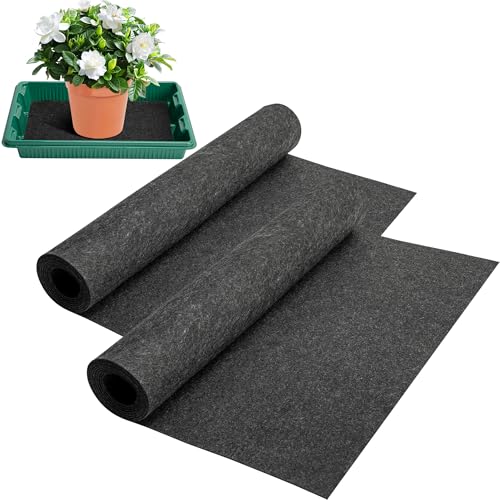
| 4 to 7 days | Indoor preferred for controlled placement; outdoor only if sheltered | Neighbor or friend watering, or a wick or capillary mat for a stable indoor setup | Water until runoff appears, then confirm the full root zone feels evenly moist | Check daily for 2 to 3 days before leaving | Use human watering instead of passive setup if the soil dries very quickly or the pot is small |
| 8 to 14 days | Indoor with stable light, or outdoor only with strong shelter and backup access | Automatic bonsai watering system, caregiver, or both | Water until runoff appears; confirm no dry pocket remains near the root mass | Check daily in the final stretch before departure | Avoid passive-only plans during heat, low humidity, or a fast-draining mix unless someone can verify moisture |
What backup method should you use by trip length?
For 1–3 days, a deep soak before departure is usually enough if the tree is not exposed to intense heat or wind. For 4–7 days, a human backup or a controlled holding setup is safer. For 8–14 days, a reliable watering system or an attentive caregiver becomes the better choice.
Neighbor or friend watering for short trips
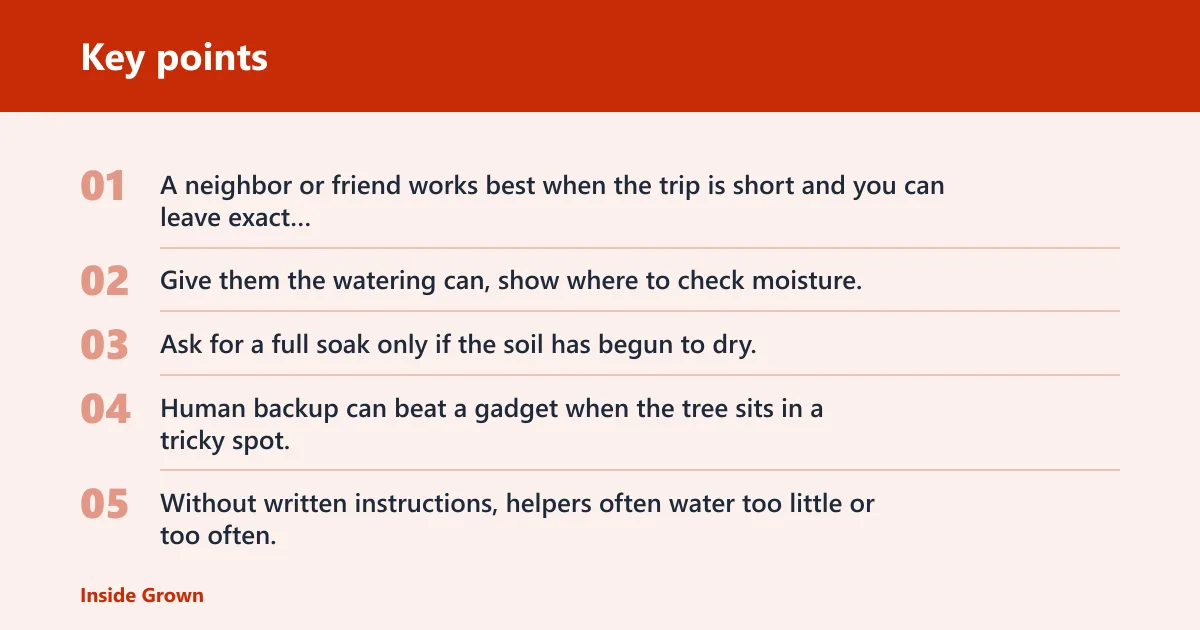
A neighbor or friend works best when the trip is short and you can leave exact instructions. Give them the watering can, show where to check moisture, and make the “water only if slightly dry” rule explicit. Ask for a full soak only if the soil has begun to dry.
Human backup can beat a gadget when the tree sits in a tricky spot, because a person can notice runoff, dry patches, or a leaning pot. The weak point is inconsistency. Without written instructions, helpers often water too little or too often.
Sink or tub setup for indoor bonsai
A sink or tub can be a useful temporary holding area for indoor bonsai while you travel briefly. The idea is not to leave the pot sitting in standing water. Instead, use the basin for thorough watering and drainage, then return the plant to its place once excess water has run off.
This setup is safest when the bonsai can drain freely and the container is not sealed against airflow. It works better for a short absence than for a long one, because it does not add new water on its own. It simply helps you water completely before you leave.
Automatic bonsai watering system for longer absences
An automatic bonsai watering system can be worth considering for 8–14 day trips, but it costs more and needs calibration. Bonsai pots are tiny compared with many other containers, so emitter rate, placement, and overspray matter. A system that is too generous can cause root rot.
Use automation as a backup, not as blind trust. Test the setup before travel if possible, and make sure the water reaches the root zone rather than the rim or the table. Consistent delivery matters more than fancy parts.
How do I keep my bonsai from drying out in hot weather while I’m gone?
In hot weather, the goal is to cut drying pressure before you leave. Move the tree away from harsh sun, strong wind, and drying drafts, then water thoroughly. Heat, low humidity, and a small pot can speed moisture loss even indoors.
Adjust for sun, wind, and low humidity
Sun exposure and wind can pull moisture from the pot faster than a calm, shaded spot. Low humidity can do the same indoors. If the forecast calls for heat, treat the tree as higher risk and shorten the time between your final checks before departure.
A common first-timer mistake is leaving a bonsai on a bright windowsill and assuming the indoor label makes it safe. If the glass warms the room or the window dries the air, the tree may lose water quickly. The location matters more than the label.
Watch for fast-drying soil mix and small pot volume
The soil mix changes how fast water moves through the pot. A common bonsai mix uses akadama, pumice, and lava rock in a 1/2 to 1/4 to 1/4 ratio. That mix balances drainage and water retention, but different species and climates may need other blends.
Akadama holds moisture, pumice improves pore space, and lava rock supports drainage. If the mix leans too heavily toward open drainage and the pot is shallow, drying can happen quickly. In that case, the backup plan should be more active, not less.
Use shade and sheltered placement as backup, not as a substitute for watering
Shade and shelter can slow water loss, but they do not remove the need to water before you go. Think of placement as a buffer. It buys time, which matters when travel is short or a helper can only water every few days.
Suppose a small outdoor juniper is in a shallow pot with gritty soil and the forecast shows several hot days. Moving it to bright shade, watering to runoff, and arranging a midweek check is safer than leaving it in direct sun and hoping the pot stays damp.
What if the soil is already too dry?
If the soil is already too dry, do not treat it like a normal vacation setup. Rewet the root ball slowly and fully before leaving, and repeat watering if the soil still resists moisture. Full drying is dangerous because roots can die, and a dry bonsai may not recover on its own.
Rewet the root ball slowly and fully
Dry bonsai soil can repel water at first. Apply water slowly, let it soak in, and repeat until the mix accepts moisture. The goal is to restore the root zone, not to splash the surface. A fine-nozzle watering can helps because it keeps the stream controlled.
If the pot is very dry, a short soak-and-drain cycle in a sink or tub can help water penetrate more evenly. Stop once water exits the drainage holes and the soil no longer looks dust-dry. Then monitor it again before departure.
Repeat watering until the soil accepts moisture again
One pass may not fix a dry root ball. Keep watering in stages until the soil darkens and runoff appears from the drainage holes. If water beads on the surface and disappears without soaking in, the mix still needs more time and another pass.
Do not leave a severely dried bonsai on a travel plan that assumes it can coast for days. In that condition, the tree needs immediate recovery attention, not a passive backup. Under-watering can cause the tree to dry out and die.
Know when a severely dried bonsai needs hands-on recovery instead of a vacation plan
If the soil is hard, light, and pulling away from the pot edge, the tree is already in a high-risk state. A caregiver, a sink or tub soak, or repeated manual watering is safer than walking away and hoping humidity will do the work. Vacation planning starts after the root zone is rehydrated.
How bonsai soil and water source change the plan
Bonsai soil and water source change how often you need to act before travel. A free-draining mix with little water retention dries faster than a tighter mix. Rainwater is preferred, but tap water is acceptable when rainwater is unavailable.
Akadama, pumice, and lava rock affect retention and drainage
The standard trio of akadama, pumice, and lava rock gives the grower a balance of drainage and retention. More drainage means less risk of stagnant water in a small root mass. More retention means the soil can hold moisture longer between checks.
Because bonsai watering frequency depends on species, tree size, pot size, season, soil mixture, and climate, the soil mix is part of the vacation decision. A porous mix in hot weather may need a human backup even for a short trip.
Rainwater is preferred, but tap water is acceptable
Rainwater is described as the best water for bonsai. It is often preferred because it has a lower chemical load than many household supplies. If rainwater is unavailable, tap water is an acceptable backup for normal watering and pre-departure soaking.
The source matters less than watering deeply enough to reach the root zone. Use the water you have, but do not underfill the pot. A bonsai that gets the right volume of tap water is in better shape than one that gets only a light misting with rainwater.
Why drainage holes matter when you check runoff
Bottom drainage holes are the clearest visual check that the pot has been watered through. Runoff tells you water reached the lower root mass. It also prevents standing water, which can keep the roots too wet for too long and contribute to root rot.
Watering to runoff is not wasteful; it is the signal that the entire root ball received moisture. Let the excess drain completely before the tree is returned to a tray, shelf, or windowsill. That keeps the pot from sitting in leftover water.
Frequently asked questions
How often do bonsai trees need to be watered while away?
There is no fixed vacation schedule, because watering depends on species, pot size, soil mix, climate, and season. For a short trip, one deep watering may be enough. For longer absences, arrange a person or a system that can check and water based on soil moisture.
Can I leave a bonsai in a sink or tub while I travel?
Yes, for indoor bonsai and short absences, a sink or tub can be a useful temporary watering station. The pot should drain freely after a thorough soak, not sit in standing water. Use the setup to water completely before leaving, not as a long-term reservoir.
What is the safest way to water a bonsai indoor tree on vacation?
For an indoor bonsai, the safest plan is usually a thorough soak before departure, followed by a trusted person or a controlled indoor backup if the trip is longer. A sink or tub can help you water evenly, but it does not replace a follow-up check on longer trips.
Should I ask a neighbor to water my bonsai or use a watering system?
Ask a neighbor or friend for short trips when you can give exact instructions and the tree is easy to reach. Use a watering system for longer absences, but only if it has been set up and checked for the right delivery rate. Human backup is simpler; automation is steadier.
What if my bonsai soil dries out completely while I’m away?
Do not assume the tree can recover on its own. Rewet the root ball slowly and fully as soon as possible, and repeat watering until the soil accepts moisture again. Complete drying can damage fine roots and may kill the tree if the dry period lasts too long.