How to Prune Bonsai Shoots for Finer Ramification
For finer ramification, a common rule of thumb is to let a new bonsai shoot extend to about 4–6 leaves, then cut it back to about 1–2 pairs of leaves or a short internode while keeping one outward-pointing bud. Skip this step and you get long internodes, coarse branches, and a sparse crown. This guide shows the extend, select, shorten, and recover cycle, with timing set by species group and growth stage.
What finer ramification means
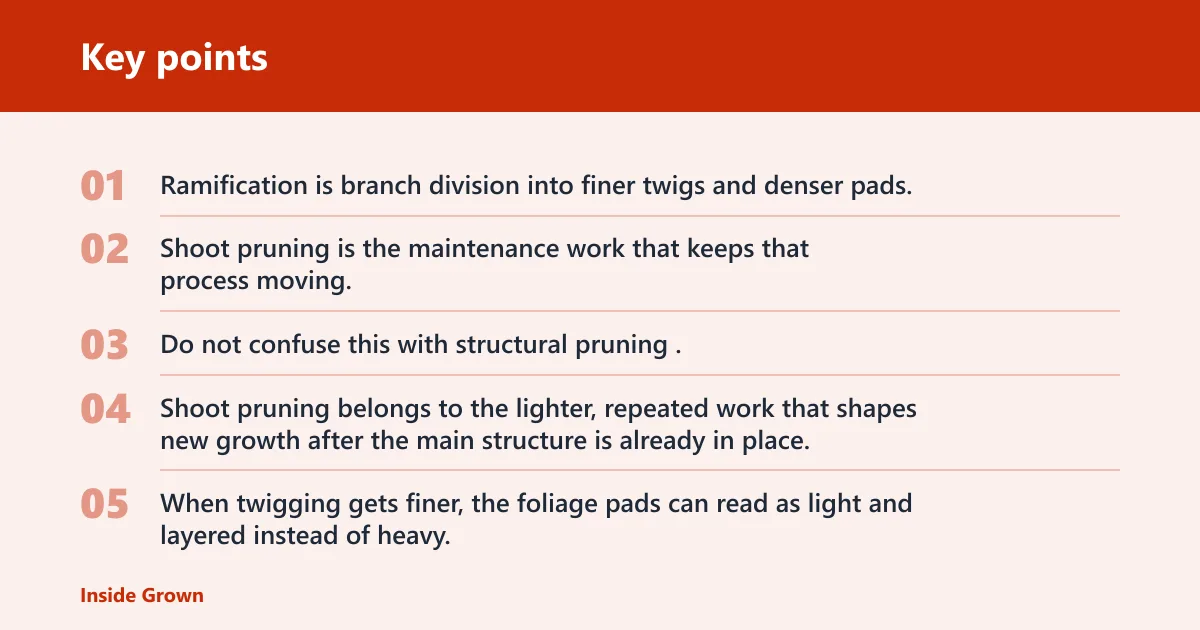

Ramification is branch division into finer twigs and denser pads. In bonsai, that usually means smaller leaves or needles at the tips, more side shoots along the branch, and a crown that reads as compact rather than bulky. Shoot pruning is the maintenance work that keeps that process moving.
Finer ramification matters because it lets light reach the branch interior, keeps the outline controllable, and supports back-budding closer to the trunk. It also changes the look of the tree from a few coarse branches to a layered network of short twigs. That shift takes time, and on many trees it takes several years.
Do not confuse this with structural pruning. Structural pruning removes or shortens thicker branches and is usually done once or twice a year, often in early spring or during dormancy. Shoot pruning belongs to the lighter, repeated work that shapes new growth after the main structure is already in place.
Why finer twigs matter for the silhouette
When twigging gets finer, the foliage pads can read as light and layered instead of heavy. The branch line stays visible. More importantly, repeated shortening of soft growth can move active buds farther back along the branch, which helps the tree hold depth instead of only pushing at the tips.
How New Shoots Drive Ramification
New bonsai shoots are soft extension growth. If you trim them lightly during the growing season after they have built a few sets of leaves, the tree often responds with back-budding and shorter replacement growth. That response is the engine behind finer ramification.
Leaf count and node spacing matter because the cut point determines where the next growth starts. Cut too early and the shoot may not have enough energy. Cut too late and the stem can harden, leaving a longer internode and a coarser look. The goal is controlled extension, not constant clipping.
When to Let Shoots Extend First
Let a shoot run when the branch needs energy, when the tree is weak, or when you need a sacrifice section to thicken a branch. Leaving it alone for a short run helps the tree store energy and can improve bud strength lower on the branch. That is especially useful before finer pruning begins.
Pinching and clipping are not the same. Pinching is gently plucking new growth with fingers, usually on very soft tips. Clipping uses bonsai scissors on firmer growth. For many broadleaf species, either can work if the shoot is still soft enough, but the choice depends on species, growth speed, and how hard the shoot has already pushed. On conifers, the method changes more by species and stage: pines are usually handled by needle or candle stage, while junipers are typically managed by trimming green tip growth rather than general leaf-count rules.
When Should You Prune Bonsai Shoots?
Prune bonsai shoots when the branch has extended enough to support recovery, but before the growth turns coarse. For many trees, that means during active growth after a shoot has made 4–6 leaves. Deciduous trees often take heavier seasonal pruning in early spring, while tropicals stay open to a longer pruning window.
Timing also depends on the result you want. If the tree needs energy, leave the shoot alone a bit longer. If the branch is shading itself, pushing long internodes, or blocking light to the interior, shorten it sooner. The right window is the one that fits the species group and the current growth stage.
Season Windows by Species Group
Most bonsai trees should be pruned in early spring or late autumn, depending on species. Deciduous species are commonly structurally pruned in early spring. Tropicals usually tolerate a longer pruning window because they keep growing longer in warm conditions. Flowering species are best pruned after flowering so you do not remove this season’s bloom buds.
Pines and junipers need a more cautious approach, and the right method differs by species, cultivar, and shoot stage. Pine pruning is usually tied to candle or needle development rather than a broad leaf-count rule, and hard shoot removal can weaken buds or trigger dieback if the tree has not built enough energy first. Junipers are generally worked on live green tips, with reductions made back to visible green foliage or a side shoot rather than into bare brown wood.
How Growth Stage Changes the Cut Point
A soft extension shoot can often be shortened to about 1–2 pairs of leaves if the tree is strong and the branch already has enough extension. If the shoot is still building energy, leave more foliage on it. If it has become long and coarse, shorten it back to a short internode, but avoid stripping it bare.
A common first-timer mistake is cutting all new growth off a branch because the outline looks too big. That can trigger weak interior buds, long internodes on the next flush, or dieback on thin twigs. A better result comes from leaving one outward-pointing bud and enough leaf area to keep the branch active.
How to Prune Bonsai Shoots for Finer Twigs
The repeatable pattern is simple: extend, select, shorten, recover. Let the new shoot grow until it has enough leaves to support the branch, choose the best direction and bud, then shorten the shoot to a controlled length. After that, let the tree recover before the next trim.
This is maintenance pruning, not structural pruning. It is done lightly and regularly, often every couple of weeks during the growing season. It keeps the silhouette tidy, supports interior light and air, and steers growth toward back-budding close to the trunk.
Let the shoot extend. Allow new growth to make a few sets of leaves before you cut. For many shoots, that means 4–6 leaves, which gives the branch enough energy to respond after trimming.
Select the next direction. Find the node or bud that points outward from the canopy. Keeping an outward-pointing bud reduces inward congestion and helps the next flush move into usable space.
Shorten to the target length. Cut back to 1–2 pairs of leaves, or to a short internode if the spacing is already tight. Use bonsai scissors for growth thinner than a pencil.
Protect larger wounds. If the cut is on a thicker section, use a clean branch-removal tool and apply cut paste. Large wounds should be protected with cut paste so the tree heals cleanly and dries less at the edges.
Allow recovery time. Leave the tree alone until the next flush begins to show. That pause keeps repeated pruning from weakening the branch and helps the next set of buds form closer to the trunk.
Suppose a maple shoot extends to 7 leaves in a warm week and the branch is already well lit. Cutting it back to 2 leaf pairs keeps the pad compact and often pushes smaller replacement growth lower on the same branch. If the same cut is made on a weak shaded branch, the result can be slow recovery and sparse interior buds.
Species Timing for Common Bonsai Groups
Species timing changes the result more than many beginners expect. Deciduous trees, tropicals, pines and junipers, and flowering bonsai all respond differently to the same cut. Match the pruning window to the species group first, then adjust by growth stage and branch strength.
Deciduous Trees
Maples and elms are commonly reported to respond well to shoot pruning during active growth, with heavier structural cuts often done in early spring. Maintenance trimming can be done every couple of weeks in season. These trees are often the easiest path to finer ramification because they back-bud readily when managed well.
Tropicals
Ficus and other tropical bonsai often have a longer pruning window because they keep growing under warm conditions. They can be trimmed through more of the year as long as light, water, and recovery stay steady. On vigorous tropical growth, repeated light cuts are usually better than one hard reduction.
Pines And Junipers
Pines and junipers should not be treated as if they were broadleaf trees. On pines, pruning decisions usually depend on candle strength, needle length, and whether the tree is strong enough to respond without weakening the branch. On junipers, trimming is usually limited to active green growth, with the cut made back to live foliage or a side shoot; leaving only brown wood behind often leads to dieback. In both groups, ramification methods differ by species and cultivar, so check the shoot stage before cutting.
Flowering Species
Flowering bonsai are pruned after flowering when the goal is to keep the next bloom cycle intact. If you cut too early, you may remove buds that would have opened. Once flowering is done, shoot pruning can help restore shape and redirect growth back toward finer twigging.
Shoot Pruning Decision Table
This table gives a practical choice guide for shoot pruning. Use it to decide whether to pinch, clip, or wait, and to match the cut point to the species group and the shoot stage.
| Species group | Shoot stage | Cut point | Timing window | Expected ramification effect | Common mistake to avoid |
|---|---|---|---|---|---|
| Deciduous trees | Soft extension with 4–6 leaves | 1–2 leaf pairs, keep one outward bud | Growing season; heavier work often in early spring | Stronger back-budding and shorter replacement shoots | Cutting to bare wood and forcing weak interior buds |
| Tropicals | Active flush with firming leaves | 1–2 pairs of leaves or a short internode | Longer pruning window in warm growth periods | Repeated fine twigs and tighter pads | Waiting too long and allowing coarse internodes |
| Pines | Needle extension or soft candle stage | Shorten with caution; preserve active growth | Species-specific window, usually not by a fixed calendar rule | More controlled density without weakening the branch | Hard cutting that triggers weak buds or dieback |
| Junipers | Soft green tip growth | Trim back to a live side shoot or visible green foliage | During active growth, with light repeat trims | Better light penetration and tighter foliage pads | Removing all green from a section |
| Flowering species | Post-bloom shoot growth | Shorten to 1–2 leaf pairs after flowering | After flowers fade | Maintains shape while preserving the next bloom cycle | Pruning before bloom and losing flower buds |
What Tools and Follow-Up Care Do You Need?
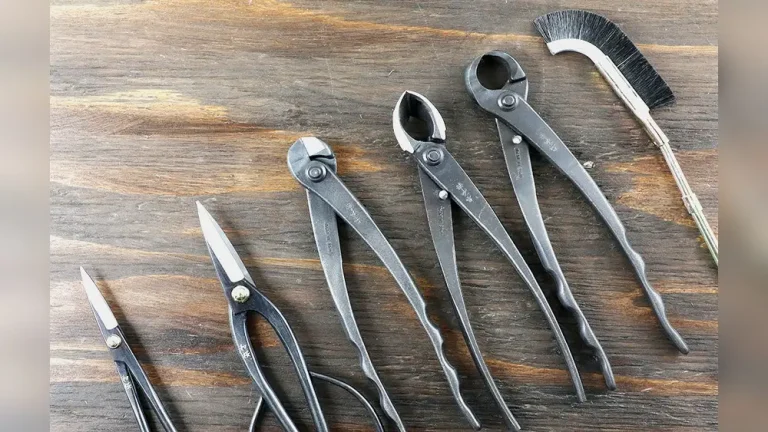
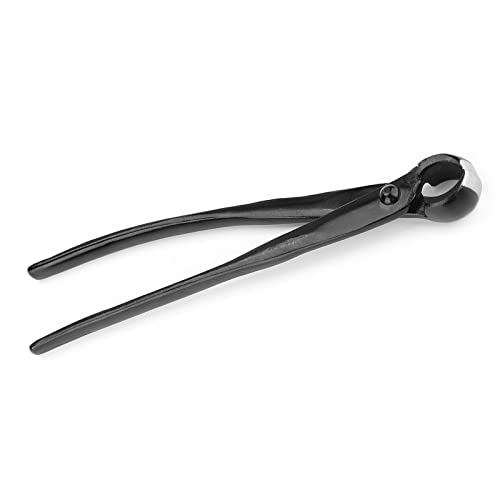
Use bonsai scissors for shoots, leaves, and fine twigs. Use concave cutters for clean branch removal up to 1 cm thick. Apply cut paste to larger wounds. Those three choices matter because the wrong tool can crush tissue, leave ragged edges, or slow healing.
After pruning, the tree needs recovery pacing. Do not follow a hard trim with another hard trim right away. Maintain normal light, keep watering consistent, and watch for strong new buds before pruning again. Fertilizing should support recovery, not force soft growth that you will have to cut again right away.
Recovery Pacing After Pruning
After a maintenance trim, let the branch rebuild before you shorten it again. If the tree is strong, that may be a matter of weeks. If it is weak, wait longer. Repeated pruning without recovery can produce the opposite of ramification: thin, tired growth and poor interior bud strength.
Defoliation belongs only in specific cases. It is a technique that can induce back-budding in certain species, but it is not a substitute for ordinary shoot management. Use it only when the tree is vigorous enough to respond and when the season and species support it.
Choose the right tool. Use bonsai scissors for shoots thinner than a pencil and concave cutters for branch removal up to 1 cm thick. That keeps cuts clean and reduces tearing.
Protect larger cuts. Apply cut paste to larger wounds immediately after pruning. This is especially important on thicker branches where drying at the edge can slow closure.
Pause before repeating. Give the tree time to push new buds before another trim. That pause is what turns trimming into ramification instead of repeated stress.
Picture a young elm with two branches crossing the center of the canopy. One branch has soft shoots at the tips, while the other has a thicker crossing section near the trunk. The soft tips should be shortened with scissors, but the thicker crossing section belongs to structural pruning with a concave cutter and cut paste.
Frequently Asked Questions
How to Trim Bonsai for Beginners
Beginners should keep the cuts light. Let new growth make a few leaves, then shorten it to 1–2 pairs of leaves while keeping one outward-pointing bud. Avoid taking off more than one third of foliage in a single session, and leave weak branches alone until they regain strength.
How to Prune a Bonsai Tree
Prune a bonsai tree by deciding whether the goal is structure or refinement. Structural cuts usually happen in early spring for deciduous species, while maintenance pruning can happen every couple of weeks during the growing season. For ramification, shorten new shoots after they extend, then let them recover.
When Should I Prune Bonsai Shoots for Finer Ramification?
Prune shoots after they have extended enough to support the branch, often around 4–6 leaves on soft growth. Deciduous trees commonly take heavier work in early spring, tropicals allow a longer window, and flowering species are usually trimmed after bloom. Pines and junipers need more species-specific timing.
How to Trim a Bonsai Plant
Trim a bonsai plant by matching the cut to the type of growth in front of you. Use scissors on fine shoots thinner than a pencil, use concave cutters on branches up to 1 cm thick, and seal larger wounds with cut paste. Light, repeated trimming usually builds finer twigging best.
Is Root Trimming the Same as Shoot Pruning?
No. Root trimming is a separate repotting task, not shoot pruning. It is done on the root system during repotting, while shoot pruning shapes the above-ground growth. If both are needed, they should be planned as different steps so the tree is not overloaded at once.