How to Adjust Irrigation for Heat Waves and Drought
During heat waves and drought, water long enough to wet the root zone, then wait until the top 2 to 4 inches of soil dries. In many gardens, that means shifting from frequent light watering to deep soakings about 1 to 3 times a week, depending on soil and zone. Skip that change, and shallow roots dry out fast, plants wilt sooner, and water rules are easier to break without meaning to. This guide shows how to adjust irrigation by plant zone, soil type, and water limits so roots stay alive under heat stress.
Heat wave irrigation basics


Start by stopping the habit of treating the whole yard the same. Set irrigation by zone, not by one summer schedule, because lawns, beds, shrubs, vegetables, and containers dry at different speeds and need different runtimes. Early summer is the time to fix problems before heat stress compounds.
Hydrozoning helps here. Group plants by similar sun, slope, and water needs, keep turf separate from beds, and avoid overwatering low-water plants just because a thirstier zone sits nearby. A smart controller can then apply weather-responsive scheduling, seasonal adjustment, zone-by-zone runtimes, and optional flow monitoring.
Start with the highest-demand zone
Begin with the zone that dries fastest or shows the earliest stress, then set the rest of the system around that zone instead of forcing every area into the same runtime. This keeps the controller aligned with the yard’s actual water demand rather than a generic calendar.
Use the root zone as the target
Watering is working only if moisture reaches the active roots. Check below the surface before you add more runtime: if the top layer is dry but the soil beneath still holds moisture, the zone does not need more water yet. If the root zone is dry several inches down, the schedule is too light or too infrequent.
What you’ll need
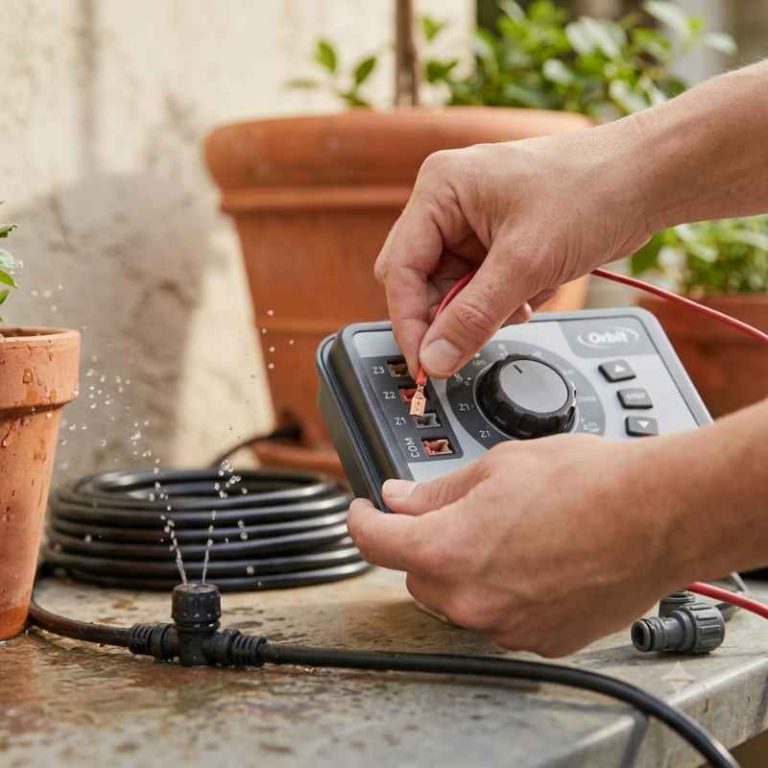
- Smart irrigation controller with seasonal adjustment and zone-by-zone runtime settings
- Rain sensor or local weather feed, if your controller supports it
- Measuring cup or straight-sided container for catch-cup checks
- Flat screwdriver or the tool required for nozzle and head adjustment
- Replacement nozzles, matched sets for turf zones
- Pressure regulator for drip or spray sections, as needed
- Mulch for beds and containers
- Marker flags or tape for spotting dry arcs, pooling, or overspray
How do you water more efficiently during a heat wave?
Use zone-specific runtimes, start before plants wilt, and favor deep soakings over frequent short runs. A smart controller helps because weather-responsive scheduling can shorten, lengthen, or skip cycles after heat, rain, or wind changes.
- Reset each zone. Move every valve off the spring or winter schedule and set runtimes by plant type, soil, and exposure. The controller can still run on spring or winter settings, which often leaves heat zones underwatered and shade zones overwatered.
- Shorten and split turf cycles. For lawns, split one long run into two shorter cycles if water starts to sheet off the surface. This gives the soil time to absorb water instead of pushing it into runoff.
- Pause after rainfall. If rain has wetted the root zone, skip the next scheduled cycle and recheck soil before restarting. Pause watering after rainfall rather than letting the controller push a normal run into already wet ground.
Zone-specific decision: lawns
Lawns usually need the most even coverage, so check for stripes, brown arcs, and runoff first. If water moves across the surface instead of soaking in, the zone needs a split cycle or a shorter pass, not a longer one.
Zone-specific decision: shrubs and beds
Shrubs and mixed beds are better served by water delivered at the root zone. If the surface dries quickly but the soil below still feels damp, keep the runtime steady and widen the gap between cycles rather than adding more water too soon.
Zone-specific decision: vegetables and containers
Vegetables and containers can dry out quickly in heat because roots have less soil volume around them. Watch the top layer closely, but confirm the root zone below it before changing the schedule. Containers that are dry at the edge and light to lift usually need attention sooner than in-ground beds.
Should you water deeply or more often in drought?
Water deeply, then wait for the top layer to dry again. In drought, shallow frequent watering trains roots to stay near the surface, where heat hits hardest. Deep watering also fits water restrictions better because it uses fewer starts and less wasted evaporation than repeated short runs.
Picture a sun-baked front lawn and a mixed bed beside it. The lawn may need a longer cycle with matched precipitation spray heads, while the bed may do better with drip at the root zone and mulch on top. One schedule for both zones will usually fail one of them.
Tune the system before the heat
- Check the controller first. Review Settings > Seasonal Adjust or Weather Settings and confirm the schedule is not stuck on spring values. If your model supports flow monitoring, turn it on before peak heat so hidden leaks do not drain the system.
- Inspect pressure and spacing. Confirm correct pressure regulation on drip and spray zones, then check head-to-head spacing, arc matching, and nozzle matching on turf. Even application depends on these basics; without them, some areas get dry arcs while others get overspray.
- Fix leaks and clogs. Run each zone and look for water on sidewalks, driveways, or walls, pooling within a few minutes of startup, and clogged nozzles. These are waste signals, and they get worse when heat and wind speed up evaporation.
- Mulch exposed soil. Add mulch over beds and around shrubs to reduce evaporation and help soil hold moisture longer. This matters most where watering limits force longer gaps between cycles.
How to tell runoff from under-watering
Runoff shows up fast, usually as water moving across the surface or collecting in low spots soon after startup. True under-watering looks different: the soil takes the water in, but the root zone is still dry below the surface when checked later. If water never infiltrates, shorten the runtime and split the cycle; if it infiltrates but the soil stays dry deeper down, increase total water for that zone.
Heat wave irrigation matrix
This matrix is a quick decision aid for adjusting runtimes by plant type, soil, and irrigation method during heat stress. Use it as a guide for whether to shorten a cycle, split it, or water more often.
| Plant type | Heat severity | Soil type | Irrigation type | Runtime change | Warning signs |
|---|---|---|---|---|---|
| Lawns | Active heat wave | Clay | Spray heads or rotary nozzles | Split into 2 cycles; shorten each cycle by 10 to 15 percent if runoff starts | Brown arcs, stripes, pooling in a few minutes, overspray onto hardscape |
| Shrubs | Pre-heat | Loam | Drip irrigation | Keep the same runtime, but space watering farther apart if soil stays moist below the surface | Leaves wilting by afternoon, dry soil 2 to 4 inches down, stressed new growth |
| Vegetable beds | Active heat wave | Sandy | Drip irrigation | Increase frequency before increasing runtime; add one extra short cycle if the top layer dries fast | Cracked soil, blossom drop, curling leaves, bed surface drying within hours |
| Containers | Extreme heat | Potting mix | Drip or hand watering | Add a morning top-up as needed; containers may need daily attention in full sun | Pot edge pulling from mix, rapid wilting, water running through without soaking |
Coverage tuning matters
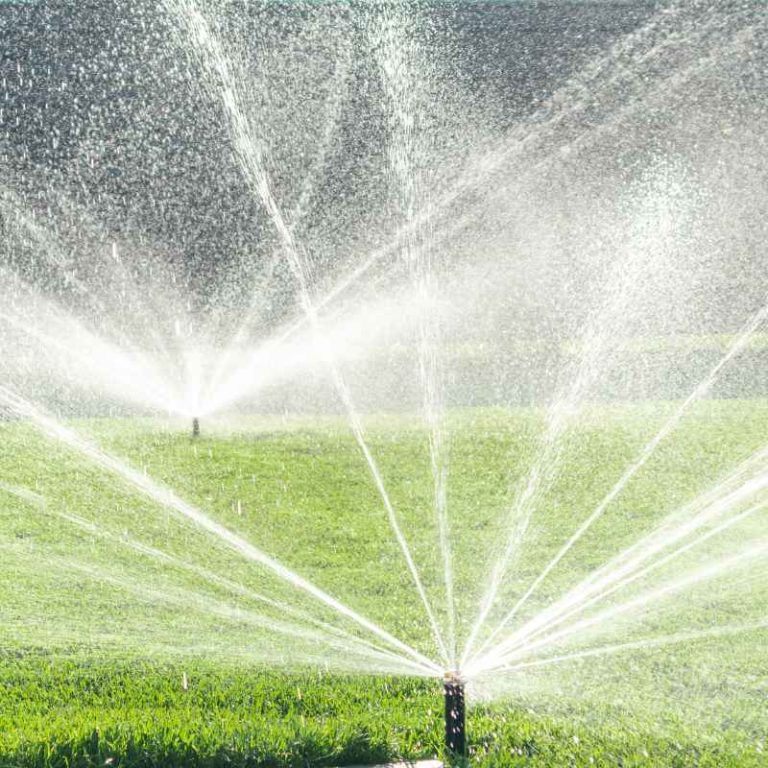
Spray heads and rotary nozzles belong in turf zones, where matched precipitation and correct spacing can help keep water even across the whole run. Head-to-head spacing, arc matching, and nozzle matching prevent brown spots and uneven growth. If one arc is short or one nozzle throws farther, the problem often shows up as stripes or crescents that mirror the sprinkler pattern.
Drip irrigation is better for shrubs, perennials, and foundation beds because it delivers water at the root zone with lower evaporation than spray. It still needs correct pressure regulation, or emitters can mist, clog, or flow unevenly. Use drip where wind and heat would waste spray.
Pressure-related misting
If spray appears as a fine fog instead of distinct droplets, or if water drifts away from the target area before it lands, the zone may have a pressure problem. Check regulation first, then inspect the nozzles and spacing so the pattern reaches the root area rather than evaporating in the air.
When to convert spray zones to drip
Convert spray to drip when the area is planted with shrubs, perennials, or foundation beds that do not need broad surface coverage. It is also a better fit when wind repeatedly moves spray off target or when runoff keeps happening before water can soak in. Turf zones still need spray or rotary coverage that matches the grass pattern.
What irrigation problems get worse in hot weather?
Hot weather makes small failures obvious. Overspray gets worse because wind pushes droplets off target, pressure problems turn good spray into mist, and drip lines with poor regulation can fail to deliver evenly. Brown arcs, dry spots, and runoff appear faster because soil cannot absorb water as quickly when it is baked hard at the surface.
- Watch the first 3 minutes. Start each zone and check for pooling or runoff within the first few minutes of startup. If water moves before it soaks, split the cycle or reduce each pass.
- Check for hidden waste. Walk the perimeter for overspray onto sidewalks, driveways, or walls. That waste is easy to miss from the controller and often wastes the most water during heat waves.
- Trace uneven patterns. If one section stays pale while the rest looks fine, inspect arc, spacing, and nozzle match. Brown crescents usually mean coverage, not plant choice.
Common mistakes
Many gardeners water everything the same amount, then blame the plants when the real issue is poor zoning. Others keep spring runtimes through July, which is too short for turf and too long for shaded beds after a storm. Both errors waste water and stress roots.
- Running the same schedule for lawn, shrub, and container zones
- Keeping spray heads on windy afternoons
- Ignoring spring settings left in the controller
- Skipping pressure checks on drip zones
- Letting mulch disappear from beds and bare soil
- Adding more runtime when runoff already starts early
Suppose a 10-minute turf cycle starts making puddles in 2 minutes. The fix is not a longer cycle. Shorten each pass, split it, and recheck after the soil drains so you can keep water in the root zone instead of on the sidewalk.
If that didn’t work, try this next
- Reduce each cycle. On the controller, cut the affected zone by 10 percent and retest after the next run. If runoff continues, cut another 10 percent and split the schedule into two passes with a pause in between.
- Switch the zone type. Move shrubs, perennials, and foundation beds from spray to drip if overspray or wind loss keeps happening. Drip is usually the better fit where water must go straight to the root zone.
- Check the water source. If multiple zones now underperform, inspect for a main-line leak, a failing valve, or pressure loss. Flow monitoring can help flag this before peak heat, when hidden waste is hardest to spot.
Irrigation checklist
- Confirm each zone has its own runtime and is not still on spring values
- Review seasonal adjustment or weather settings before the first heat stretch
- Make sure drip zones have the right pressure regulation
- Check turf heads for spacing, arc matching, and nozzle matching
- Replace clogged nozzles and clean clogged emitters
- Turn on flow monitoring if your controller supports it
- Refresh mulch where exposed soil is drying too quickly
Irrigation checklist
- Skip the next scheduled cycle if rain already wet the root zone
- Check soil before restarting instead of relying only on the calendar
- Restart only after the root zone dries enough to need water again
- Watch low spots for lingering moisture before resuming turf cycles
- Keep drip zones paused longer if the soil below the surface is still damp
Prevention
Before the hottest stretch arrives, run a full zone check, replace bad nozzles, clean clogged emitters, and update the controller from spring to summer settings. That small round of maintenance is often what keeps a drought schedule workable when watering restrictions tighten.
Frequently asked questions
When should I run my irrigation system in extreme heat?
Run it in the early morning when wind is lower and evaporation is slower. If restrictions allow only certain hours, choose the coolest legal window. Avoid midday starts because spray loses more water to drift and evaporation then.
How much should I change sprinkler runtimes during a drought?
Start by changing one zone at a time, often by about 10 to 15 percent, then recheck soil moisture and runoff after the next cycle. Turf usually needs different adjustment than shrubs or beds, so avoid one blanket cut across the whole yard.
How do I tell if my irrigation is wasting water in hot weather?
Look for water on hardscape, pooling within a few minutes of startup, and plant shapes that match the sprinkler pattern instead of the bed shape. Those signs usually point to spacing, arc, nozzle, or pressure problems rather than a simple need for more runtime.