How Many Plants Can a Self-Watering Planter Support?
A self-watering planter is often treated as suitable for about one large fruiting plant per 5 gallons of mix, while small herbs may share a 10- to 12-inch planter at about 2 to 4 plants. Too many plants cut airflow, raise disease risk, and can leave the reservoir too small for the root mass. This guide shows how to match crop type, mature size, and reservoir capacity to a safe plant count.
Why spacing still limits plant count


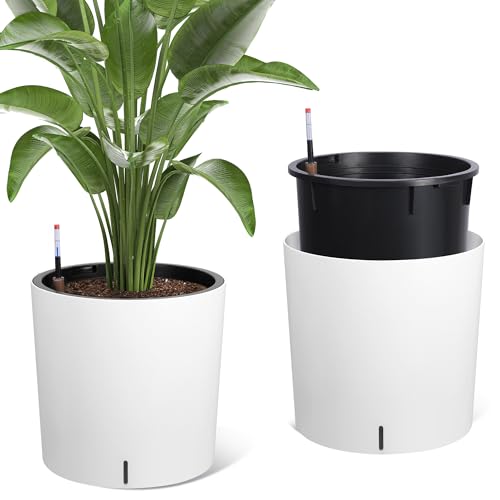
A self-watering planter changes watering frequency, not spacing needs. The reservoir and wick keep moisture available from below, but each plant still needs enough soil volume, root oxygen, and room for its mature canopy. If the planter is too full, roots compete for water and nutrients instead of growing into usable space.
What the reservoir changes
The reservoir stores water beneath the root zone and feeds the mix through a wick, perforated column, or capillary bridge. That design can cut how often you refill, but it does not make a planter safe for extra plants. The overflow or drainage path matters too, because a blocked or poorly designed reservoir can leave the lower mix saturated.
Why spacing still matters
Spacing is still driven by mature plant size. A lettuce seedling may look small, but the final head or rosette fills far more space than the transplant tray suggests. Tomatoes, peppers, and squash need root room and airflow as they size up, and crowded foliage keeps humidity high around the base of the plant.
What to measure before you count plants
Start with the planter’s length, width, depth, and growing volume in gallons or liters. Then check the reservoir size, the wicking system type, and whether the planter has a true overflow opening or only a sealed base. Finish by matching the planter to a potting mix that wicks well and drains cleanly.
Length, width, depth, and volume
Length and width tell you the surface area available for spacing. Depth tells you how much root room the crop has below the surface. Growing volume matters because a planter may look large on top but hold little usable mix once the reservoir base is subtracted. For many container crops, the usable soil volume is the real limit.
Reservoir size and drainage design
Reservoir capacity affects refill frequency, not plant count by itself. A larger reservoir can buffer dry weather, but roots still need an air gap above the water line. If the planter lacks reliable overflow drainage, the lower mix can stay waterlogged after heavy rain or an overfill, which raises the chance of root rot.
Growing mix and wick compatibility
Use a quality potting mix, not garden soil. Potting mix holds enough water for wicking while leaving air spaces between particles. Heavy garden soil can compact in a self-watering base and slow drainage, which reduces oxygen around the roots and can make the reservoir act more like a sump than a feeder.
Planter capacity matrix
This matrix gives safe starting counts for common planter sizes. It assumes a functional reservoir, decent drainage, and mature crop size rather than seedling size. If the planter is shallow, has weak aeration, or uses a dense mix, move down one row or one plant count.
| Planter size | Approx. growing volume | Herbs | Lettuce | Strawberries | Peppers | Tomatoes | One plant only warning | Overcrowding risk note |
|---|---|---|---|---|---|---|---|---|
| 10- to 12-inch round | 1.5–3 gallons | 2–4 small herbs | 1–2 plants | 1 plant | 1 plant only | 1 plant only | Yes for peppers and tomatoes | Roots fill fast; moisture stays high if packed full. |
| 12- to 16-inch round | 3–5 gallons | 3–5 herbs | 2–3 plants | 2 plants | 1 plant | 1 plant only | Yes for tomatoes | Good for greens, but fruiting crops crowd quickly. |
| 24-inch window box | 5–8 gallons | 4–6 herbs | 3–4 plants | 3 plants | 1–2 plants | 1 plant only | Yes for tomatoes | Mixed plantings can shade each other and dry unevenly. |
| Long planter, 24–36 inches | 8–12 gallons | 6–8 herbs | 4–6 plants | 3–4 plants | 2 plants | 1 large plant only | Yes for large-root crops | Canopy spread is often the limit, not floor space. |
| Large tub, 18+ gallons | 18 gallons or more | 8+ herbs, if trimmed | 6+ plants | 4–6 plants | 2–3 plants | 1 plant, sometimes 2 compact types only | Still yes for most tomatoes | High soil volume helps, but airflow still sets the cap. |
The one-plant-only warning applies most often to tomatoes, large peppers, and other heavy feeders with deep, branching roots. Even a planter that looks roomy can fail once a tomato reaches full height and canopy spread. A single plant can outgrow the reservoir’s ability to keep the root zone balanced.
How many plants fit by crop type?
Crop category matters more than seedling size. Herbs and leafy greens tolerate tighter spacing because their mature root systems and canopies stay smaller. Strawberries and compact fruiting plants need more room than greens, and tomatoes usually need the most room of all in a self-watering container.
Herbs and lettuce
Small herbs such as basil, parsley, chives, and cilantro can share a planter when the mature canopy stays modest. Lettuce can also be planted more densely, especially looseleaf types, because the final head size is smaller than heading types. Still, crowding can reduce airflow and make the center of the planter stay damp.
For a 10- to 12-inch planter, a common rule of thumb is about 2 to 4 small herbs. In a 12- to 16-inch planter, 3 to 5 herbs or 2 to 3 lettuce plants is more realistic. If the herbs are large growers such as mint, treat each one as a separate plant.
Strawberries and peppers
Strawberries are shallow-rooted but still need room for runners and leaf spread. A 12- to 16-inch planter can usually handle about 2 strawberries, while a longer box can hold more if the plants are spaced so their crowns stay above wet mix. Peppers need more root space and should be treated as medium-to-large plants.
A compact pepper can fit alone in a 10- to 12-inch planter, but a larger bell pepper belongs in a 5-gallon container or bigger. In a mixed planter, one pepper plus low-growing herbs is usually safer than two peppers side by side. Two peppers can outgrow the space before the reservoir does.
Tomatoes and other large crops
Tomatoes are the clearest one-plant crop in a self-watering planter. A determinate or patio type may fit in a 5-gallon container, but indeterminate tomatoes generally need more soil volume and more vertical support than a small planter can safely provide. Deep roots and a broad canopy make crowding a poor trade.
Say your planter is 24 inches long and holds about 8 gallons. One compact tomato can work there, but two tomatoes would crowd the canopy, reduce airflow, and drain the mix faster than the root zone can recover. The planter may still look half-empty at planting time, yet be fully occupied at maturity.
When a self-watering planter should hold one plant only
A self-watering planter should hold one plant only when the crop has a large root system, a broad canopy, or a long season of steady feeding. Tomatoes are the most common example, but large peppers, eggplant, and some vining crops also need that single-plant setup even in planters that seem spacious.
Tomatoes and other deep-rooted crops
Tomatoes want depth, steady moisture, and room for root branching. The reservoir can support frequent watering, but a crowded root zone still creates competition for oxygen and nutrients. When a tomato fills the planter, the lower mix can become saturated while the upper mix dries too quickly, which stresses the plant.
Large canopy or heavy feeder crops
Large canopy plants shade the soil surface and trap humidity. Heavy feeders also deplete nutrients faster in a confined volume of mix. In a self-watering planter, that combination can lead to nutrient leaching out the overflow and stunted growth above the rim. One plant is often the safer choice than several weak ones.
Mixed plantings that need extra space
Mixed plantings work best when one main crop gets the central root zone and smaller fillers stay at the edge. A tomato plus basil is a common example, but only if the planter is large enough and the basil stays trimmed. If the filler crop starts touching the main crop, the planter is too full.
Picture a 36-inch planter with a pepper in the center and three basil plants along the edge. If the basil begins to crowd the pepper by midseason, the planter has crossed its safe limit even if the reservoir still holds water. Mature spread, not just available water, decides the final count.
Keep an air gap above the reservoir, use a free-draining potting mix, and leave enough space for foliage at maturity. Overcrowding reduces oxygen at the roots and slows evaporation from the soil surface, so the lower zone can stay wet too long. Start with fewer plants if the sizing is uncertain.
Air gap and oxygen at the roots
The air gap between the reservoir water and the root zone is there for a reason. Roots need oxygen as well as moisture. If the planter is overfilled with mix or packed with too many plants, the root zone can sit too close to the water line and lose that cushion of air.
Drainage, saturation, and root rot
Self-watering planters reduce watering chores, but they can also hide a saturation problem. If the overflow is blocked, the wick is oversized, or the mix is too fine, the planter may stay wet for too long. That is when root rot, fungus pressure, and yellowing leaves become more likely.
Fewer plants when you are unsure
A common first-timer mistake is filling the planter to match the seed packet spacing instead of the mature plant spacing. Seedlings are small. Mature plants are not. If the plan is between two safe counts, pick the lower one and observe growth before adding more plants to another container.
Remember that self-watering containers change how often you refill, not how close plants can sit. If the crop is a leafy green, you can usually plant more densely than you would with tomatoes. If the crop is a fruiting plant with broad leaves and deep roots, space it as if the planter were a small bed, not a watering device.
Frequently asked questions
How many plants can a self-watering planter support?
The safe answer depends on crop size, planter volume, and root depth. Small herbs may fit 2 to 4 plants in a 10- to 12-inch planter, while one tomato or one large pepper is often the maximum in a small container. Mature spread should always set the limit.
How do I know how many plants fit in my planter?
Check the planter’s length, width, depth, and growing volume first. Then match those numbers to the crop’s mature canopy spread and root depth. If the planter has a shallow reservoir or weak drainage, reduce the count. The final number should be based on mature plants, not seedlings.
Can I overcrowd a self-watering planter?
You can, but it is a poor trade. Overcrowding reduces airflow, raises humidity at the soil surface, and increases competition for water and nutrients. In self-watering planters, it also makes it easier for the lower mix to stay too wet, which raises root rot risk.
Do self-watering planters work for vegetables?
Yes, especially for leafy greens, herbs, compact peppers, and some strawberries. They are less forgiving with large-root crops such as tomatoes. Vegetables still need correct spacing, good drainage, and a potting mix that wicks water well. The planter supports watering, not unlimited plant density.
How many tomato plants fit in a self-watering planter?
Usually one. A compact determinate tomato may fit in a 5-gallon planter, and a larger container can support one larger plant with support stakes or a cage. Two tomatoes in one self-watering planter usually create too much crowding, too little airflow, and unstable moisture conditions.
How many herbs can I plant in a self-watering planter?
For a 10- to 12-inch planter, 2 to 4 small herbs is a practical range. In a longer planter, 4 to 8 herbs may fit if they are trimmed and kept in check. Fast-spreading herbs such as mint need their own space because they quickly take over the planter.
How big does a self-watering planter need to be for one plant?
For one medium-sized vegetable plant, a 5-gallon container is a common minimum. Tomatoes and other large fruiting crops often do better in 7 to 10 gallons or more, depending on type. For a single herb or lettuce plant, much less volume can work if the planter drains well.
What plants grow best in self-watering planters?
Plants with moderate water needs and manageable mature size do well: basil, parsley, lettuce, spinach, strawberries, compact peppers, and other small vegetables. Large tomatoes can work only with enough volume and usually as a single plant. Crops that dislike persistently wet roots are a poorer fit.