How Many Plants Per Square Meter for Dense Plantings?
A common rule of thumb is: plants per square meter = about 1,000,000 ÷ spacing in millimeters squared, so 100 mm spacing gives about 100 plants/m² and 200 mm gives about 25. Crowded plants block light and air, leaves stay wet longer, roots have less room, and disease can move faster through the bed. This guide turns packet spacing into plant-density numbers and shows how crop type and harvest goal change safe spacing.
What determines plant count per square meter?
The main factor is mature plant size, not seedling size. A tiny transplant can seem easy to pack in close, but adult spread decides how many plants can stay in one square meter without constant crowding. Crop habit matters too: upright, compact, trailing, and clumping plants all use space differently.
Square foot gardening uses a grid-based method that divides the growing area into equal squares. The common setup uses 4 x 4 squares, and a bed against a wall can also be set up as 2 x 4. Strings or thin pieces of wood divide the plot into equal sections, and each section is a square foot, equal to 30 x 30 cm.
That square-foot framework is useful because it makes dense planting easier to plan. It also matches common square foot planting counts: 1, 4, 9, or 16 plants in each square, depending on crop size and growth habit. A one-square count suits large plants; a 16-square count suits very small plants that stay compact at maturity.
Why mature spread matters more than seedling size
Seedlings are misleading because they are small for only a short time. A spacing choice should reflect the adult canopy, root spread, and how much air must move through the bed once plants fill out. If adult leaves overlap too much, the bed may dry slowly after rain or irrigation, which can raise disease pressure.
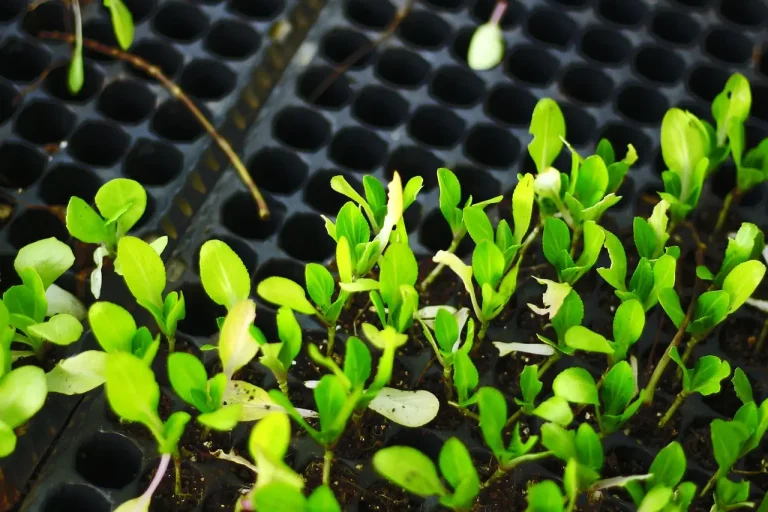
Say your lettuce transplants are each 5 cm wide at planting. That size does not mean you can place them at 5 cm spacing. If the mature head is closer to 20 cm across, the final spacing needs to follow the head size, not the plug tray size.
How crop habit changes density
Leafy crops usually tolerate the tightest spacing because the harvest is often young leaves or small heads. Fruiting crops need more room because stems branch, leaves shade each other, and fruit size drops when plants compete too hard. Roots need room below ground as much as above it.
A common first-timer mistake is using the same spacing for every crop in one bed. That works poorly when tomatoes, lettuce, and carrots share the same square-meter area, because their mature spread and harvest goals are different.
How to read spacing on seed packets
Seed packets often show two planting distance numbers. Those figures usually come from old-school row planting plans, so the larger number assumes a wide gap between rows. For dense planting in a square bed, the smaller number is the useful one to focus on.
That smaller number gives the in-row spacing you can convert into plants per square meter. The wider row spacing number is still useful as a warning, though. If the packet says 30 cm by 60 cm, the 30 cm figure is the closer spacing; the 60 cm figure reflects a layout with open rows, not a tight grid.
Which number matters for dense planting?
Use the smaller spacing number as your starting point, then check whether the crop can handle a tighter bed layout. If the crop needs airflow, a larger harvest size, or room for fruit set, you may still want to widen spacing beyond the smaller number. If you are growing leaves for repeated cutting, the smaller number is often the better guide.
Find the smaller spacing. Read both numbers on the packet or seedling label, then pick the smaller one as the dense-planting reference. That number is the one that converts cleanly into square-meter density.
Convert millimeters to density. Use the rule plants per square meter = 1,000,000 ÷ spacing in millimeters squared. A 100 mm spacing gives 100 plants/m²; 150 mm gives about 44; 200 mm gives 25; 300 mm gives about 11.
Check the mature spread. Compare the result with the adult width of the crop. If the plants are likely to touch hard before harvest, reduce the count unless the crop is harvested young.
Adjust for the harvest goal. Keep tighter spacing for baby leaves and small roots. Leave more room for larger heads, larger fruit, or fuller root development.
Dense planting conversion table
This table turns common packet spacing ranges into approximate plants per square meter. The numbers assume equal spacing in a square grid, so they are best used as planning figures rather than fixed rules. Reduce density when a crop needs stronger airflow, when disease pressure is likely, or when you want a larger harvest from each plant.
| Crop group | Common packet spacing range | Approx. plants per square meter | Dense-planting note |
|---|---|---|---|
| Leafy greens | 100–200 mm | 100–25 | Use the tighter end for baby leaves and small harvests; widen for full heads. |
| Fruiting crops | 300–600 mm | 11–3 | Keep spacing wider for airflow and fruit size, especially on taller plants. |
| Herbs | 150–300 mm | 44–11 | Compact herbs can sit closer together if you harvest often and keep them trimmed. |
| Roots | 50–100 mm | 400–100 | Use the tight end only for small roots or early harvests; larger roots need more room. |
A tighter spacing can work well in a short harvest window, but it becomes risky if the crop stays in the bed long enough to close the canopy completely.
How square foot gardening counts plants
Square foot gardening uses equal squares in a grid, and each square can hold a specific count based on the crop’s mature size. The familiar counts are 1, 4, 9, or 16 plants per square foot. That pattern gives you a simple way to turn spacing into layout decisions without guessing.
Because one square foot equals 30 x 30 cm in this framework, one square meter contains multiple square-foot units. That makes it easy to scale up: if one square foot holds 4 plants, a larger bed made from several squares can hold the same density in each section, as long as the crop size stays consistent.
When to use 1, 4, 9, or 16 plants per square foot
Use 1 plant per square foot for large, spreading crops. Use 4 for medium plants that still need room to branch or head up. Use 9 for smaller compact crops. Use 16 for tiny, fast crops that stay narrow or are harvested before they fully fill the square.
- 1 plant. Best for large crops with wide adult spread, such as many fruiting plants.
- 4 plants. Good for medium crops that need a moderate amount of room.
- 9 plants. Suits compact leafy crops or small herbs grown for repeated cutting.
- 16 plants. Fits very small crops, young harvests, or tight baby-leaf plantings.
Grid beds also work well in wall-adjacent layouts. A 2 x 4 bed against a wall still uses square sections, and the back edge is the place for taller or climbing crops. That keeps the lower plants from being shaded out.
When should you plant more or fewer?
Plant more when the crop is harvested young, stays compact at maturity, and needs leaves rather than large fruit or large roots. Plant fewer when the crop must flower, fruit, or size up before harvest. Tight spacing is a tool, not a rule, and the right density changes with the crop.
Leafy greens versus fruiting crops
Leafy greens are the easiest crops to push toward the dense end of the range. Lettuce, spinach, and similar greens can often sit closer together if you harvest young leaves or small heads. Fruiting crops need more room because the plant structure spreads, and the fruiting cycle benefits from better airflow and light.
How many tomatoes or lettuce can you plant densely? Lettuce often fits far more tightly than tomatoes. In a square-foot layout, tomatoes are usually treated as a one-plant crop, while lettuce may be placed in groups of 4, 9, or even 16 depending on the harvest stage. That difference reflects adult spread, not seed size.
Roots, herbs, and harvest size
Roots are another crop group where density depends on the edible part. Small salad roots can handle tighter spacing than storage roots. If the goal is a larger root at harvest, leave more room than you would for a quick baby-root crop.
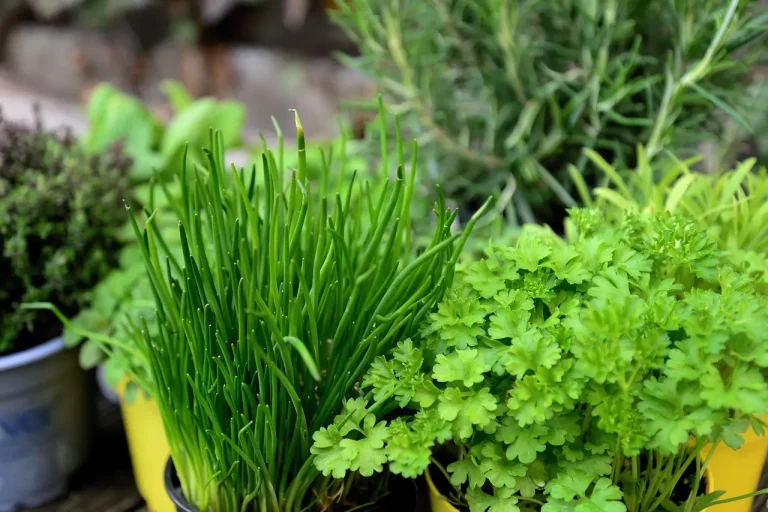
Herbs fall in the middle. Many compact herbs can be packed fairly tightly if they are clipped often, but woody or spreading herbs need more room. If a herb throws out a broad mound by midseason, treat it like a wider crop even if the packet looks tiny.
Airflow and disease pressure in tight beds
Tight spacing works best in beds with good sun, regular harvesting, and a crop that dries quickly after watering. When plants overlap heavily, airflow drops and leaves stay damp longer. That is where fungal problems and other disease pressure become more likely, especially during humid weather.
Suppose a bed of lettuce is planted at 100 mm spacing for baby-leaf harvest. If the goal changes to full heads, that same spacing becomes too tight, and the plants may bolt, crowd, or stay small. The fix is not more fertilizer; it is more space.
How should you place vine crops?
Vine crops are generally placed at the back of the bed, with a trellis installed at the very back edge. That keeps the climbing growth from shading shorter plants and gives the vines a clear path upward. In a dense bed, position the trellis before planting so the layout stays consistent.
Vines do not fit like compact crops in the center of a square grid. They need vertical support and room at the base for root access and airflow. Once the trellis is up, the front of the bed can hold lower crops that benefit from partial shade without being crowded out.
How vines fit into a dense grid
Use the back row for the climbing crop, then leave the remaining squares for lower plants that can live under lighter shade. If the vine crop is very vigorous, give it the widest spacing in the bed and avoid pairing it with another crop that needs the same root zone.
Set the trellis first. Fix the trellis at the back edge before planting. That gives the vines a defined support line and keeps the rest of the grid open for shorter crops.
Reserve the back square. Place the vine crop in the rear section of the bed, especially in a 2 x 4 wall layout. This prevents tall growth from blocking light to the front squares.
Fill lower crops forward. Put compact greens, herbs, or roots in front of the trellis row if they can tolerate the shade pattern. This uses space without forcing all crops to compete at the same height.
Frequently asked questions
How many plants fit in one square meter?
It depends on the crop’s mature spread and the spacing number you use. Larger crops may need far fewer. The square-meter count should come from adult size, not from the seedling stage.
How do I calculate plant spacing for dense plantings?
Start with the smaller spacing number on the packet, convert millimeters into square-meter density with 1,000,000 ÷ spacing squared, then compare that result with the crop’s mature width. If the canopy will close too tightly or the harvest needs more size, reduce the count.
What plant size determines spacing per square meter?
Use the adult spread of the plant, including leaf spread and expected root space. Seedlings are too small to judge final density on their own. If a mature plant needs 300 mm of room, a 50 mm transplant should still be spaced for the 300 mm size.
Can I ignore the wider row spacing on a seed packet?
You can usually treat the wider number as a row-planting figure, not the best dense-spacing figure. For square beds, the smaller number is the useful one. Even then, check whether the crop needs extra airflow, a larger fruit, or a bigger root before planting at the tightest setting.
How many tomatoes or lettuce can I plant densely?
Tomatoes are generally much less dense than lettuce because they need more room for branches, support, and airflow. In square-foot terms, tomatoes are often handled as one plant per square foot, while lettuce can be grouped much more tightly. Use the crop’s mature size and harvest goal to decide the final count.
When should I use one, four, nine, or sixteen plants per square foot?
Use one for large crops, four for medium crops, nine for compact crops, and sixteen for very small or young-harvest crops. The count is a shortcut, not a universal rule. If the plant will keep growing after harvest begins, choose the lower count unless you are taking it young.
How do I arrange vine crops in a dense planting bed?
Put vine crops at the back of the bed and install the trellis on the back edge. Then use the front squares for lower crops that will not be shaded out. This arrangement works in standard grid beds and in wall-adjacent 2 x 4 beds, because the tall crop stays out of the main light path.