How Many Chives Plants Should You Grow in a Pot?
For most growers, the right answer is simple: use at least an 8-inch pot for one chive clump, move up for multiple clumps, and keep the container in 6 to 8 hours of sun for the best regrowth (NC State Extension; University of Minnesota Extension). If the pot is crowded, leaves thin out and the mix dries faster. Here’s how to size the container, space the plants, and keep them productive.
Choose a pot that matches the number of clumps


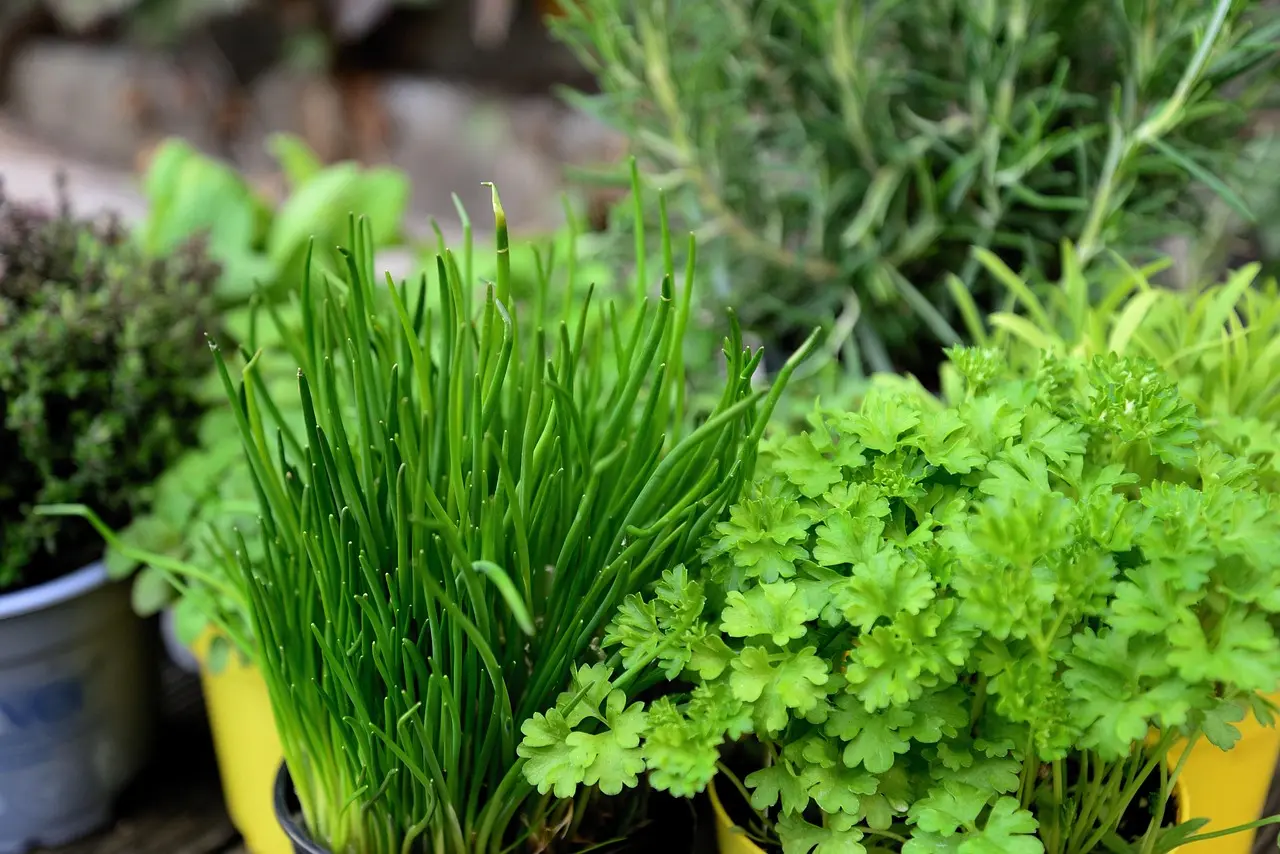
Chives stay compact, but their clumps expand over time, so container size matters more than it does for many herbs. A single clump can thrive in a small pot, while multiple established clumps need more width, more depth, and more root room to avoid crowding (University of Illinois Extension; Johnny’s Selected Seeds).
Chive pot sizing table
| Pot diameter | Minimum depth | Common chives count | Garlic chives count | Best use | Overcrowding warning |
|---|---|---|---|---|---|
| 8 inches | 8 inches | 1 clump | 1 clump | Windowsill herb pot or a single starter plant | More than one established clump usually crowd the center and dry the mix faster. |
| 10 inches | 8 inches | 2 clumps | 1 to 2 clumps | Patio pot or a small cut-and-come-again harvest | Three mature clumps can reduce airflow and narrow the leaves. |
| 12 inches | 8 to 10 inches | 3 clumps | 2 clumps | Mixed herb container or a fuller harvest pot | Planting too tightly can limit regrowth after repeated cutting. |
| 14 inches and larger | 10 inches or more | 4 or more clumps | 3 or more clumps | Mature divided clump or a larger outdoor container | Even a large pot can become crowded if the clumps touch and the center stays packed. |
Spacing guidance: keep one clump in an 8-inch pot, two clumps in a 10-inch pot, and three clumps in a 12-inch pot only when the plants are young or lightly divided. A wide pot is useful only if each crown still has room to expand.
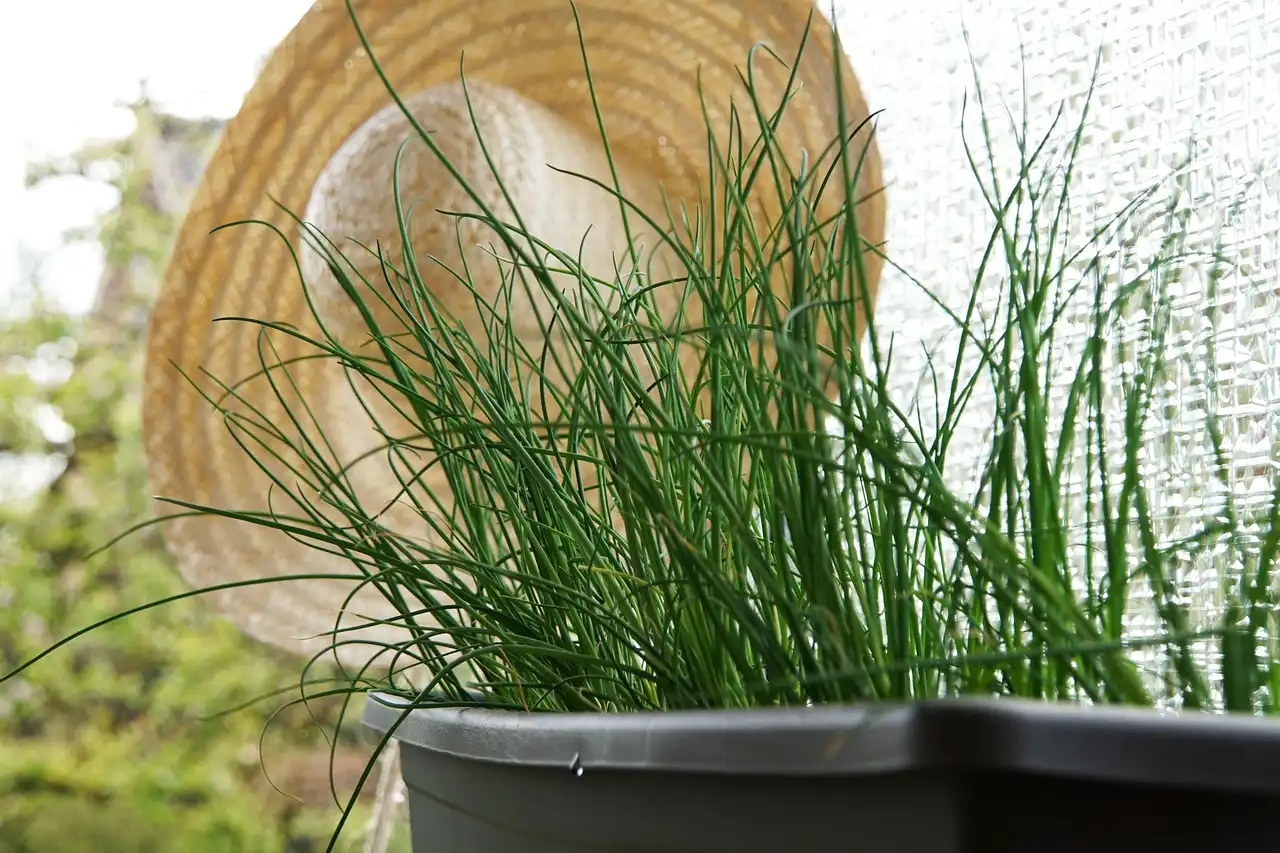
Plant chives in a container with drainage holes and a loose, well-draining mix. Set the crown at soil level, water it in, and place the pot where it gets 6 to 8 hours of direct sun, which is the common extension recommendation for strong leaf growth (University of Minnesota Extension; North Carolina Extension Gardener Plant Toolbox).
- Choose a pot at least 8 inches wide and deep, with one or more drainage holes.
- Fill it with a well-draining potting mix high in organic matter; use a mix intended for containers rather than garden soil. See potting mix for herbs.
- Set each clump so the crown sits at soil level, then space clumps according to pot size.
- Water until the mix settles, then keep the top inch slightly moist.
- Place the pot in a spot with 6 to 8 hours of direct sun, or the brightest light available indoors.
Single clump vs multiple clumps
A windowsill herb pot usually works best with a single clump because indoor light and airflow are limited. A patio pot can handle multiple clumps if the container is wide enough. A seed-started tuft can share space while young, while a mature divided clump needs immediate room because each piece already contains several growing points.
Common chives vs garlic chives
Common chives are the standard choice for a compact container and a mild onion flavor. Garlic chives grow flat leaves with a stronger garlic flavor and white flowers. Both grow well in pots, but the leaf shape, harvest style, and final use differ enough that the better choice depends on the flavor you want to cut.
Common chives for a classic onion flavor
Common chives, Allium schoenoprasum, make hollow, slender leaves that work well in small containers. They are the better fit for a simple kitchen pot, and they recover quickly after cutting when the roots have enough room. For container basics, they are usually the safer and more familiar choice.
Garlic chives for flat leaves and a stronger flavor
Garlic chives, Allium tuberosum, make flatter leaves and have a garlic-like flavor that changes the harvest profile. They still suit container growing, especially in a patio pot or a brighter, larger indoor container. For more detail, see growing garlic chives.
Care after planting
After planting, chives need steady light, even moisture, and good drainage. Let the top inch of mix dry slightly before watering again, and empty saucers so roots do not sit in water. That balance keeps the clump growing without creating soggy conditions that slow regrowth or invite root problems.
How much sun do chives need in a container?
Chives do best with 6 to 8 hours of direct sun, and 6 hours is the practical minimum for strong growth (NC State Extension; University of Minnesota Extension). In hotter climates, a little afternoon shade can help. In lower light, growth usually becomes thinner and harvests take longer to recover.
What soil should you use for chives in pots?
Use a well-draining potting mix made for containers, ideally one with organic matter that holds some moisture without staying soggy. Garden soil is too dense for most pots and can reduce airflow around the roots. A lighter mix also makes watering more forgiving in small containers.
Harvest chives correctly so they keep producing
Harvest when leaves reach about 6 inches, then leave at least 2 inches above the crown so the plant can regrow (Cornell University Home Gardening; Missouri Botanical Garden). Chives respond best to frequent light cutting rather than one heavy harvest, which keeps the clump productive through the season.
How to harvest without weakening the plant
Use clean snips or scissors and cut only the outer leaves or a portion of the clump at a time. If the plant is still young, take less from it and let the roots establish first. That keeps the crown active and helps the leaves rebound faster after each cut.
How to keep potted chives producing
After cutting, keep the container evenly moist and return it to bright light. If the leaves come back thinner or the center looks crowded, the pot is likely running out of room. At that point, repotting or division will usually restore stronger regrowth and improve air circulation.
Divide crowded chives before the pot declines
Divide established chives in spring, late summer, or fall, which are the common timing windows for perennial division before or after active growth slows (University of Minnesota Extension; Missouri Botanical Garden). Split the clump into pieces with several growing points each, then replant them in fresh mix or larger containers.
When division is the right fix
Division is the best answer when the center of the clump is packed, watering frequency rises sharply, or leaves get narrower after each harvest. It is also useful when the pot has reached its useful limit and the roots are filling the container. Fresh space restores vigor better than simply trimming harder.
How division helps a crowded container
Once a clump becomes dense, the roots compete for water and nutrients, and the soil can dry unevenly. Splitting the plant gives each piece more room to rebuild leaves and roots. If the pot is large enough, replant the divisions farther apart; if not, move them into separate pots.
Common chive mistakes to avoid
The most common problems are simple: too little root room, poor drainage, too many clumps, and cutting too hard. Fix the container first, then adjust light and watering. Chives are forgiving, but they still need enough space to recover after each harvest and enough drainage to keep roots healthy.
- Using a pot that is too small: move up to a wider container before the clump fills the surface.
- Letting the mix stay soggy: water only when the top inch dries, and empty standing water from saucers.
- Planting too many clumps at once: keep 1 clump in an 8-inch pot and 2 to 3 in a 10- to 12-inch pot.
- Harvesting too hard: cut leaves when they reach about 6 inches and leave at least 2 inches for regrowth.
- Using garden soil in a pot: switch to a loose potting mix made for containers.
Frequently asked questions
How many chive plants should I grow in one pot?
Start with 1 clump in an 8-inch pot, 2 clumps in a 10-inch pot, and 3 clumps in a 12-inch pot. If the plants are divided pieces rather than seedlings, give them even more breathing room. Conservative spacing usually gives better regrowth than trying to maximize count in a small container.
Can I plant multiple chives in the same container?
Yes, as long as the container is large enough for the clumps to expand. Multiple plants fit best in 10-inch and larger pots, and each crown should still have room to spread. If the leaves begin to press together, move one clump to its own pot or divide the plant.
What pot size do chives need indoors or outdoors?
An 8-inch pot is the minimum practical size for a single clump indoors or out. Larger pots are easier to manage outdoors because light and airflow are usually better. Indoors, a 10-inch pot is often more forgiving than a crowded smaller container, especially on a bright windowsill.
Should I grow common chives or garlic chives in containers?
Choose common chives if you want the classic onion flavor and a compact growth habit. Choose garlic chives if you want flat leaves and a garlic flavor. Both are suitable for containers, so the choice usually comes down to how you plan to use the harvest in the kitchen.
When should I divide chive clumps in pots?
Divide chives in spring, late summer, or fall, when the plant can recover well from splitting. Separate the clump into smaller pieces with several growing points each, then replant them in fresh mix. If regrowth slows or the center becomes crowded, division is usually the best reset.
Where can I learn more about related container herb care?
For nearby topics, see harvesting chives indoors and related container guides that cover light, drainage, and maintenance. Those pages help when the pot is set up well but the plant still needs a better harvest rhythm or a cleaner repotting routine.
Sources
- NC State Extension
- University of Minnesota Extension
- University of Illinois Extension
- Cornell University Home Gardening
- Missouri Botanical Garden
- North Carolina Extension Gardener Plant Toolbox
- Johnny’s Selected Seeds