Which Statement Is True for Both Plants And Animals? Solved
Obtain energy by consuming organic material, whereas plants can convert light energy into chemical energy through their chloroplasts. Even though some animal species, like certain sea slugs, can temporarily incorporate chloroplasts from algae (a phenomenon called kleptoplasty), this is not true photosynthesis in the animal kingdom and does not represent a shared characteristic.
Are There Any Organisms That Blur The Line Between Plants And Animals?
Yes, some organisms, like Euglena, possess characteristics of both kingdoms. Euglena are unicellular protists that contain chloroplasts for photosynthesis (plant-like trait) but can also ingest food (animal-like trait) and move using a flagellum. However, they are not classified as true plants or animals, highlighting the diversity and complexity of life beyond the two main kingdoms.
What Is The Importance Of Atp In Both Plants And Animals?
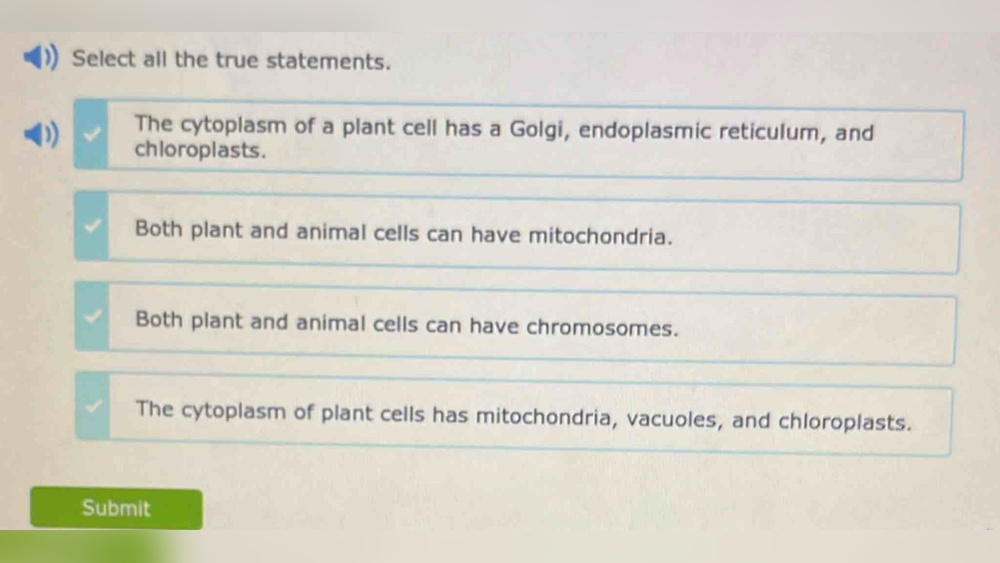
ATP (adenosine triphosphate) is the universal energy currency for all life forms. In both plants and animals, ATP powers essential processes such as muscle contraction, active transport across membranes, and synthesis of macromolecules. While plants produce ATP both in mitochondria (via cellular respiration) and in chloroplasts (via photosynthesis), animals generate ATP solely through cellular respiration in mitochondria.
How Do Plants And Animals Respond To Environmental Changes?
Both plants and animals have evolved sophisticated mechanisms to perceive and respond to their environment. Animals utilize nervous systems and specialized sensory organs for rapid and complex responses, such as fleeing from predators or seeking food. Plants, although lacking nervous systems, respond to stimuli through hormonal signaling, changes in growth direction (tropisms), or rapid movements in some species (like the Venus flytrap).
Both strategies are vital for survival and reproduction.
Expanding The Impact: Shared Traits In New Scientific Frontiers
As research advances, the shared foundations between plants and animals are opening up novel scientific and technological possibilities.
Synthetic Biology And Artificial Life
The rise of synthetic biology leverages the universal genetic code and shared cellular machinery of both kingdoms. For example, scientists can design synthetic genes or metabolic pathways that function in both plant and animal cells , leading to breakthroughs such as:
- Engineering crops to produce animal-derived nutrients (e.g., omega-3 fatty acids typically found in fish, now produced in genetically modified plants).
- Creating “biofactories” in plants or animals to produce pharmaceuticals, vaccines, or industrial enzymes more efficiently and sustainably.
One Health Approach
The One Health concept recognizes that the health of humans, animals, and plants is interconnected. Shared vulnerabilities to pathogens, environmental toxins, and climate change demand integrated solutions. For example, understanding zoonotic diseases (those that move between animals and humans) is enhanced by recognizing common cellular receptors and immune pathways.
Evolutionary Developmental Biology (“evo-devo”)
Studying the genetic and developmental similarities between plants and animals has led to the field of evolutionary developmental biology. By comparing regulatory genes and signaling pathways, scientists are uncovering how similar genetic toolkits produce the astonishing diversity of life forms. For instance:
- Master regulatory genes, like homeobox genes in animals and MADS-box genes in plants, control the development of body plans and organs.
- Cross-kingdom comparisons reveal how small genetic changes can lead to major evolutionary innovations.

Looking To The Future: The Value Of Understanding Shared Traits
As humanity faces global challenges—climate change, food insecurity, emerging diseases, and biodiversity loss—recognizing the shared traits of plants and animals becomes ever more critical.
Integrative Conservation Strategies
Conserving both plant and animal species is vital for maintaining healthy ecosystems. The loss of one group can have cascading effects on the other due to their interconnected roles in nutrient cycling, habitat structure, and food webs.
Sustainable Agriculture And Health
By leveraging the common biology of plants and animals, scientists are developing more resilient crops and livestock, reducing reliance on chemical inputs, and improving nutritional outcomes for people worldwide.
Biomedical Innovations
Breakthroughs in stem cell research, tissue engineering, and regenerative medicine often draw on fundamental cellular mechanisms common to both kingdoms. For example, understanding how plant cells regenerate entire organs has inspired research into animal tissue regeneration and healing.
Public Awareness And Education
Promoting a holistic understanding of life’s unity fosters greater appreciation for biodiversity and motivates sustainable choices. Educational initiatives that emphasize shared traits encourage critical thinking and interdisciplinary problem-solving.

Final Thoughts
Plants and animals are often portrayed as opposites in the living world, but a closer look reveals a tapestry of shared traits woven from a common evolutionary origin. Their cells speak the same genetic language, use the same energy currency, and follow the same basic rules of life.
These similarities have profound implications for science, medicine, agriculture, and conservation.
By recognizing what unites plants and animals—alongside what makes each unique—we gain a deeper appreciation for the complexity of life on Earth. This knowledge empowers us to make informed decisions, drive innovation, and protect the planet’s rich biological heritage for generations to come.
For anyone seeking to understand biology at a deeper level, grasping the true statements that apply to both plants and animals is not just foundational—it’s transformative. Whether you’re working in a laboratory, managing natural resources, or simply nurturing curiosity, these insights offer a powerful lens on the interconnectedness of all living things. For more on this, see our guide on Planting .