How Are Vacuoles Different In Plant And Animal Cells?
It’s easy to get lost in the tiny world of cells. They are the building blocks of all living things. Within these cells are special parts called organelles. Each has a job to do. Vacuoles are one of these important parts. You might wonder if they are the same everywhere. Let’s dive into how vacuoles differ between plant and animal cells. This helps us see how cells work.

Generic
Animal Plant Cell Comparison Models,Teaching Supplies Biological
- 【Animal & Plant Cell Comparative Model】This 3D biology teaching set displays both animal and plant cell structures side by side. I…
- 【Clear & Complete Cell Structure】The model marks key organelles including cell wall, cell membrane, chloroplast, nucleus, cytoplas…
- 【Premium Eco-Friendly PVC Material】Made of sturdy, non-toxic PVC with precision hand painting and color matching. Bright different…
As an Amazon Associate I earn from qualifying purchases.
Vacuoles are different in plant and animal cells mainly in size, number, and function. Plant cells usually have one large central vacuole. Animal cells have many small, temporary vacuoles. This difference is key to how each cell type survives and functions.
Understanding the Vacuole: A Cell’s Storage Unit
Think of a vacuole as a cell’s storage bag. It’s a sac inside the cell. This sac holds many things.
It can store water. It can also store nutrients. Sometimes, it holds waste products.
Vacuoles are surrounded by a membrane. This membrane helps control what goes in and out.
In essence, vacuoles are versatile. They help cells manage their contents. They can also help cells grow.
The specific role of a vacuole often depends on the type of cell. This is especially true when comparing plant and animal cells. Their needs are quite different.
Plant Cell Vacuoles: The Big, Central Player
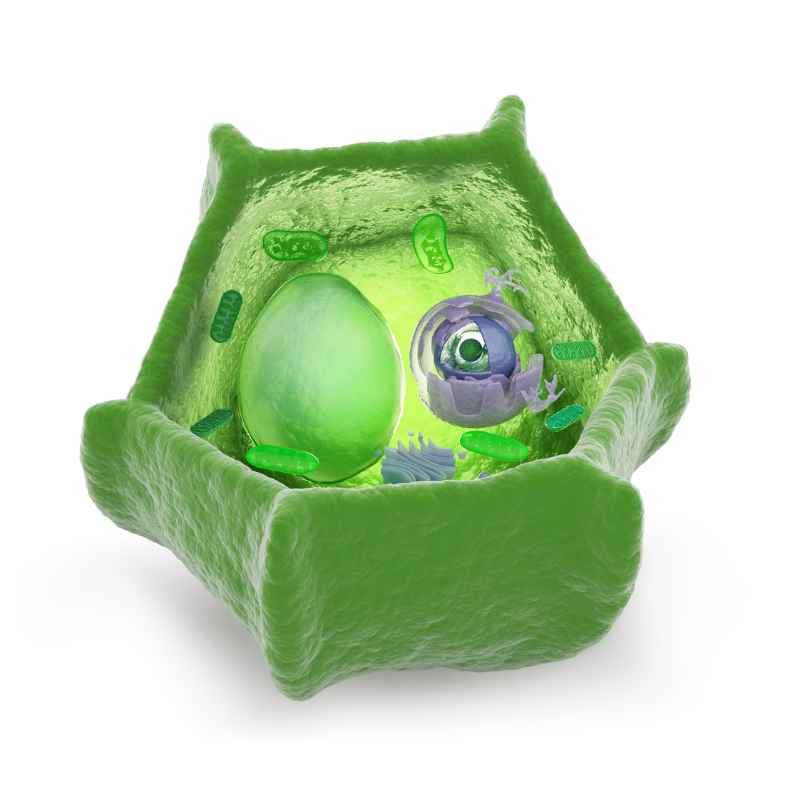
Plant cells have a very distinct vacuole. It’s usually one big one. This is called the central vacuole.
It can take up a lot of space. Sometimes, it fills up most of the cell. This central vacuole is very important for plants.
It does more than just store things.
This large vacuole helps keep the plant firm. It pushes against the cell wall. This pressure is called turgor pressure.
It’s like air in a balloon. When the vacuole is full of water, it pushes out. This makes the plant stand tall.
Without enough water, the vacuole shrinks. The plant wilts.
The central vacuole also stores water. Plants need a lot of water. It stores nutrients too.
These can be sugars or salts. It can even store pigments. These pigments give flowers their colors.
Some vacuoles store waste products. This keeps the rest of the cell clean. It’s a busy place!
The membrane around the central vacuole is called the tonoplast. This membrane is active. It pumps things into and out of the vacuole.
This is how it maintains its contents. It’s a smart storage system.
This single, large vacuole helps the plant cell. It provides support. It stores food and water.
It can even help the cell grow larger. When the vacuole fills with water, it expands. This pushes the cytoplasm to the edges.
This makes the cell bigger.
It’s amazing how one organelle can do so much. The central vacuole is a powerhouse in plant cells. It’s essential for plant life.
Its size and role are unmatched in animal cells.

Animal Cell Vacuoles: Small, Numerous, and Transient
Animal cells have vacuoles too. But they are very different. They are usually much smaller.
They are also not permanent. Animal cells might have many small vacuoles. Or they might have none at all.
These small vacuoles have different jobs. Some help with storing or transporting materials. Others are involved in waste removal.
Some animal cells use vacuoles to engulf food particles. This is part of how they eat. These are called food vacuoles.
Another type is the contractile vacuole. Some single-celled animals have these. They pump out extra water.
This prevents the cell from bursting. This is common in freshwater organisms. It’s like a tiny pump working all the time.
The key thing about animal cell vacuoles is their size and lifespan. They are generally small. They can come and go as needed.
They don’t dominate the cell’s space like the plant’s central vacuole does. Their roles are more specialized and temporary.
Think about it. Animal cells don’t need to stand tall and rigid. They move around.
They have different ways to get nutrients. They have different systems for waste removal. So, their vacuoles don’t need the same big, structural role.
The membrane of these small vacuoles is just the regular cell membrane. It doesn’t have a special name like the tonoplast. It forms when the cell membrane folds inward.
It encloses a bit of fluid or a particle. Then it pinches off into the cell.
Because they are temporary, they are harder to see in a typical image. They are not a fixed feature. They appear when needed.
They disappear when their job is done.
Key Differences at a Glance
Vacuole Comparison: Plant vs. Animal
Plant Cell Vacuole
Number: Usually one large central vacuole.
Size: Very large, can occupy up to 90% of cell volume.
Membrane: Tonoplast.
Primary Role: Turgor pressure, support, storage (water, nutrients, waste), growth.
Permanence: Permanent.
Animal Cell Vacuole
Number: Many small vacuoles, or none.
Size: Small.
Membrane: Regular cell membrane.
Primary Role: Storage, transport, waste disposal, endocytosis (food vacuoles), water balance (contractile vacuoles).
Permanence: Temporary, form and disappear as needed.
Why the Difference Matters: Function and Survival
The differences in vacuoles are not just details. They are crucial for how plants and animals live. Plants need to stand up.
They get water from the soil. Their large central vacuole is key to this. It stores water.
It provides the pressure that keeps them rigid. This helps them reach sunlight.
Animal cells are different. They move. They get food by eating other things.
They have systems like circulatory and excretory systems. These systems help manage water and waste. So, animal cells don’t need a giant storage tank for support.
Their small vacuoles do other tasks.
For example, think about how a plant wilts. This is a direct result of its central vacuole. When the vacuole loses water, it shrinks.
The turgor pressure drops. The plant droops. This shows the vacuole’s vital role.
In animal cells, vacuoles are more about processes. A cell might form a food vacuole to eat a bacterium. This vacuole then fuses with lysosomes.
These break down the food. Once done, the vacuole might disappear. Or it might release waste.
This is a very different kind of job.
So, the vacuole’s design fits the organism’s lifestyle. It’s a perfect example of form following function in biology. Each cell type is perfectly adapted to its environment and needs.
A Personal Story: The Wilting Flower
I remember one summer. I was on vacation. I asked a friend to water my plants.
But they forgot for a few days. I came back to a sad sight. My favorite potted fern was drooping.
Its leaves were limp and sad. It looked like it had given up.
I felt a pang of worry. I rushed to give it a big drink of water. I watched the pot.
Slowly, as the water soaked in, something amazing happened. The leaves began to perk up. They lifted themselves.
The plant started to look alive again.
It was a powerful, real-life lesson. I saw the plant’s central vacuole at work. Without enough water, it had shrunk.
It lost its firmness. When I gave it water, the vacuole filled up again. It pushed outwards.
It made the stem and leaves rigid.
That wilting fern taught me more about plant cells. It showed me how vital that single, large vacuole is. It’s not just a storage bag.
It’s the plant’s internal scaffolding. It’s what lets it stand against gravity. It’s what keeps it upright and reaching for the sun.
It’s a simple concept, but the impact is huge.
Other Roles of Vacuoles
Beyond Storage: Other Vacuole Functions
- Waste Disposal: Both plant and animal cells use vacuoles to isolate waste. This prevents harm to other cell parts.
- Protection: In plants, some vacuoles store compounds that can deter herbivores. They might taste bad or be toxic.
- Recycling: Vacuoles can break down old or damaged cell parts. This recycles useful molecules.
- Digestion: Food vacuoles in animal cells and some protists break down engulfed food.
- Homeostasis: Contractile vacuoles in some single-celled organisms regulate water content.
Are All Plant Vacuoles the Same?
While most plant cells have a large central vacuole, there can be slight variations. Young plant cells might have several small vacuoles. As the cell matures, these fuse.
They form one large central vacuole. This process is part of cell growth.
Different types of plant tissues might also have specialized vacuoles. For instance, plant roots and leaves have different needs. Their vacuoles might store different substances.
Some vacuoles store oils or fats. Others store acids. The cell adapts its vacuole to its specific job.
Even in a single plant, different cells have different vacuole needs. A flower petal cell might have vacuoles with pigments. A root cell might have vacuoles storing salts.
The basic structure is similar, but the contents and emphasis can change.
Are All Animal Vacuoles the Same?
No, animal cell vacuoles are even more diverse. Their roles depend heavily on the cell type. For example, a white blood cell might form a phagosome.
This is a type of food vacuole. It engulfs bacteria or cellular debris. This is part of the immune response.
Nerve cells and muscle cells might use vacuoles differently. They might be involved in transporting specific molecules. Or they might store signaling substances.
Endocrine cells might package hormones into vesicles. These are a type of small, specialized vacuole.
Even within the same organism, the types of vacuoles can vary. The cells lining the digestive tract have different vacuole functions. They might be involved in absorbing nutrients.
This absorption often happens via small vesicles that form from the cell membrane.
It’s this flexibility that makes animal cells so adaptable. They can create vacuoles on demand. These vacuoles perform specific tasks.
Then they can be broken down or reused. This is unlike the permanent, structural role of the plant’s central vacuole.
Real-World Scenarios: Vacuoles in Action
Vacuoles in Different Environments
Desert Plant
Needs to store water efficiently. Its large central vacuole is crucial for survival in dry conditions. It can hold large amounts of water.
Human Liver Cell
Involved in detoxification. May contain vacuoles that store or process toxins before they are eliminated.
Amoeba (Single-Celled Animal)
Uses food vacuoles to digest food particles. Also has contractile vacuoles to pump out excess water to prevent lysis (bursting).
When is a Vacuole Normal?
In plant cells, a large central vacuole is always normal. Its presence is a defining feature. Its size might change based on water availability.
A plant that is well-watered will have a plump vacuole. A plant that needs water will have a shrunken one.
In animal cells, the presence of small vacuoles is also normal. They are part of everyday cell function. They are used for transport.
They help in waste removal. They are involved in taking in nutrients. So, seeing small vacuoles is expected.
The key is understanding their dynamic nature in animal cells. They are not static structures. They appear and disappear.
Their presence reflects the cell’s current activity. This is perfectly normal for animal cell life.
When Should You Worry About Vacuoles?
For plant cells, extreme wilting that doesn’t recover after watering could be a sign of bigger issues. This might indicate root damage or disease. The vacuole’s function is affected by the overall health of the cell and plant.
In animal cells, problems with vacuoles are usually signs of disease. If vacuoles contain harmful substances that aren’t cleared. Or if they become too numerous and disrupt cell function.
Certain genetic disorders can affect vacuole formation or function.
For example, some storage diseases involve the buildup of materials within vacuoles. This can overwhelm the cell. It can lead to cell death or dysfunction.
However, diagnosing issues related to animal cell vacuoles is complex. It’s usually done at a cellular or tissue level by medical professionals.
For a general observer, it’s hard to “worry” about vacuoles in animal cells. They are too small and dynamic. You won’t see them clearly without a microscope.
Issues with them are typically part of a larger health problem.
Quick Checks and Tips
For plant owners, the best check is simple observation. Is your plant standing tall and green? Or is it drooping?
If it’s drooping, check the soil moisture. Water it. See if it recovers.
If not, consider other plant health factors like light and pests.
For animal cells, there are no “quick checks” for individuals. Understanding vacuole function is more for scientists and doctors. It helps them understand diseases.
It guides research into treatments.
The main takeaway is to appreciate the role of vacuoles. In plants, keep them hydrated. In animals, know they are busy doing many jobs.
Their differences highlight the unique adaptations of plant and animal life.

Frequent Questions About Vacuoles
Do animal cells ever have a large vacuole?
Generally, no. While animal cells can have multiple vacuoles, none are as large or permanent as the central vacuole in plant cells. The large central vacuole is a defining characteristic of plant cells and is essential for their structure and support.
Can plant vacuoles store poison?
Yes, some plant vacuoles can store compounds that are toxic or bitter. This is a defense mechanism. It helps protect the plant from being eaten by herbivores. These compounds are safely stored away from the main cell cytoplasm.
What happens if a plant vacuole breaks?
If a plant vacuole breaks, the contents spill into the cytoplasm. This can damage the cell. For example, digestive enzymes stored in the vacuole can break down other cell parts. The loss of turgor pressure will also cause the plant cell to lose its shape and firmness.
Are lysosomes in animal cells similar to vacuoles?
Lysosomes are a type of specialized vesicle in animal cells. They are similar to vacuoles in that they are membrane-bound sacs. However, lysosomes are primarily responsible for breaking down waste materials and cellular debris using digestive enzymes. They are like the recycling and waste disposal units of the animal cell.
Why do plant cells need such a large vacuole?
The large central vacuole in plant cells serves multiple critical functions. It maintains turgor pressure, which keeps the plant rigid and upright. It stores water, nutrients, and waste products. It also plays a role in cell growth by expanding and pushing the cytoplasm to the cell’s edge.
Do all animal cells have vacuoles?
Not all animal cells have prominent, easily visible vacuoles at any given moment. However, animal cells do form various types of vesicles and vacuoles as needed for functions like endocytosis (taking in substances), exocytosis (releasing substances), storage, and waste transport. So, while they may not always be apparent, the ability to form vacuoles is common.
Conclusion
So, there you have it! Vacuoles are a fascinating part of cell biology. They show us how different organisms adapt.
Plant cells rely on one big vacuole for support and life. Animal cells use many small vacuoles for various jobs. Understanding these differences helps us appreciate the diversity of life.
Related pick: Check today's price on Amazon