How Photosynthesis Works Similarly In C4 Plants And Cam Plants
Understanding how C4 and CAM plants perform photosynthesis reveals fascinating adaptations for survival. Both plant groups use a special way to capture carbon dioxide, helping them conserve water. This method ensures they can still make food even when stomata are closed to prevent water loss. They share a key biochemical step, even though their timing and location differ.
Photosynthesis: A Quick Look Back
Photosynthesis is how plants make their own food. They use sunlight, water, and air. Specifically, they take carbon dioxide (CO2) from the air.
They also take water from the soil through their roots. Sunlight gives them the energy they need. Inside their leaves, special parts called chloroplasts do the work.
The main goal is to turn these simple things into sugar. This sugar is the plant’s energy source. It helps them grow and live.
A byproduct of this process is oxygen, which is released into the air. We breathe this oxygen, so it’s vital for us too.
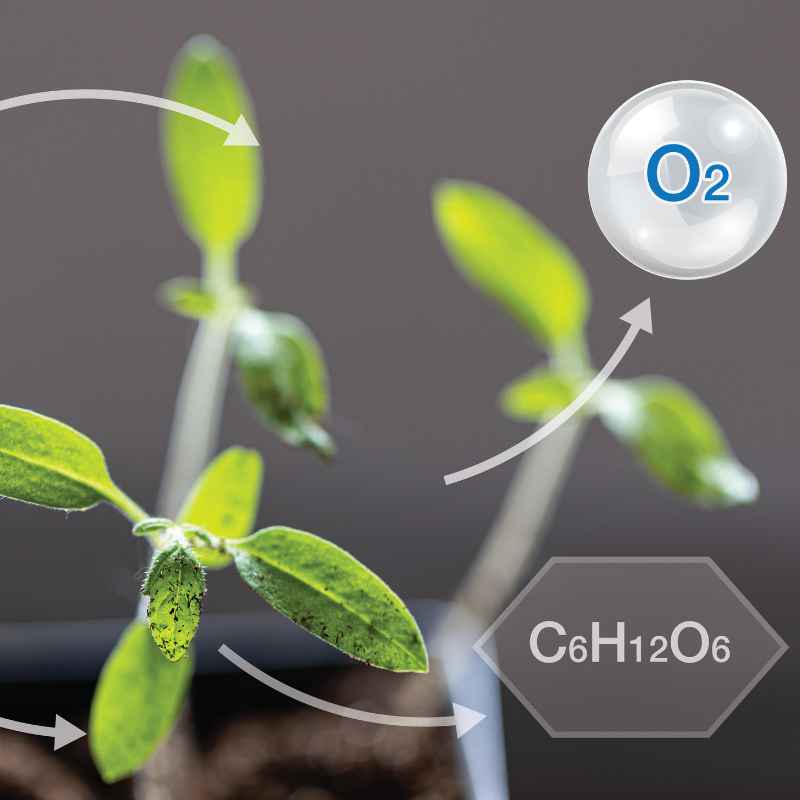
The basic equation is often shown as: CO2 + Water + Sunlight → Sugar + Oxygen. This happens in two main stages. The first stage uses light to make energy carriers.
The second stage uses these carriers to build sugar from CO2. This second stage is called the Calvin cycle.

The Challenge: Hot and Dry Conditions
Most plants are called C3 plants. They do photosynthesis directly in their leaves using the Calvin cycle. But in hot, dry places, this can be a problem.
Plants need to open tiny pores on their leaves, called stomata, to get CO2. But when stomata are open, water can escape too.
In very hot or dry weather, plants have to close their stomata. This stops water loss. However, it also stops them from taking in CO2.
This is where C4 and CAM plants become very clever. They found ways to get CO2 even when their stomata are mostly closed. They do this to survive when water is scarce.
This leads to the need for special adaptations. These adaptations help them to keep their internal CO2 levels high enough. This is important for making sugars.
They do this while also managing water loss. It’s a delicate balancing act for survival in harsh environments.
C4 Plants: Spatial Separation of CO2 Capture
C4 plants have a special leaf structure. This structure helps them deal with hot, dry climates. Think of plants like corn, sugarcane, and many grasses.
They can grow well even when it’s sunny and warm.
Their leaves have two types of cells involved in photosynthesis. One type is called mesophyll cells. The other is called bundle sheath cells.
These two cell types work together in a clever way. They separate the steps of photosynthesis in space.
The process starts in the mesophyll cells. Here, CO2 is first captured and turned into a four-carbon compound. This is why they are called “C4” plants.
This compound is then moved to the bundle sheath cells. In these inner cells, the CO2 is released. It is then used in the Calvin cycle.
The Initial CO2 Fixation in C4
When a C4 plant opens its stomata, it takes in CO2. This CO2 enters the mesophyll cells. Inside these cells, an enzyme called PEP carboxylase grabs the CO2.
This is different from C3 plants. C3 plants use RuBisCO directly for this first step.
PEP carboxylase is very good at grabbing CO2. It doesn’t get confused by oxygen. This is a big advantage.
It attaches the CO2 to a molecule called PEP. This creates a four-carbon acid, like oxaloacetate. This acid is quickly converted into other four-carbon compounds.
Malate or aspartate are common ones.
These four-carbon compounds are then transported. They move from the mesophyll cells into the bundle sheath cells. This transport happens through small channels connecting the cells.
It’s a very efficient system for moving the captured carbon.
Delivering CO2 to the Calvin Cycle
Once inside the bundle sheath cells, the four-carbon compounds are acted upon. They are broken down. This process releases CO2.
It happens in a concentrated way. This creates a very high level of CO2 around the Calvin cycle.
The enzyme RuBisCO, which is present in the bundle sheath cells, can now work well. It takes this concentrated CO2 and uses it in the Calvin cycle. The Calvin cycle then produces sugars, just like in C3 plants.
But it does so much more efficiently because of the CO2 boost.
The remaining three-carbon molecule from the breakdown is sent back. It goes back to the mesophyll cells. There, it is converted back to PEP.
This PEP is then ready to capture more CO2. This cycle allows C4 plants to keep fixing carbon even when stomata are only slightly open.
C4 vs. C3: Key Differences at a Glance
C3 Plants
Enzyme: RuBisCO directly captures CO2.
Location: Single cell type (mesophyll).
CO2 Concentration: Lower.
Water Use: Less efficient in hot/dry areas.
Examples: Wheat, rice, trees.
C4 Plants
Enzyme: PEP carboxylase first, then RuBisCO.
Location: Two cell types (mesophyll and bundle sheath).
CO2 Concentration: High in bundle sheath.
Water Use: More efficient in hot/dry areas.
Examples: Corn, sugarcane, sorghum.
CAM Plants: Temporal Separation of CO2 Capture
CAM stands for Crassulacean Acid Metabolism. These plants are masters of water conservation. Think of succulents like cacti, aloe vera, and pineapples.
They live in very dry places. Their survival depends on not losing water.
CAM plants have a different trick than C4 plants. Instead of separating CO2 capture in different cells, they separate it by time. They open their stomata at night.
At night, it’s cooler and more humid. This means less water is lost.
During the night, they take in CO2. They store it as an acid. Then, during the day, when the stomata are closed, they use this stored CO2.
They use it for photosynthesis. This allows them to make sugars while keeping their stomata shut tight.
Nighttime CO2 Fixation in CAM Plants
As the sun sets and temperatures drop, CAM plants open their stomata. This is the opposite of most plants. They take in CO2 from the air.
Just like in C4 plants, PEP carboxylase is the key enzyme here.
PEP carboxylase captures the CO2. It attaches it to PEP. This forms a four-carbon acid.
This acid is then stored. It is stored in the large central vacuole of the plant cell. The acid is typically malic acid.
It’s an accumulation of acid overnight.
This process effectively “traps” the CO2. It stores it in a form that can be used later. The plant uses its energy reserves to do this.
This storage is crucial for daytime survival. It ensures carbon is available when light is present.
Daytime Use of Stored CO2 in CAM Plants
When the sun rises, CAM plants close their stomata. This is vital to stop water evaporation. Now, the stored acids begin to work.
Inside the cell, the malic acid (or other stored acid) is broken down.
This breakdown releases CO2. This happens within the same plant cell. The CO2 is released into the chloroplasts.
There, it is concentrated. It is then used by RuBisCO in the Calvin cycle.
So, even though the stomata are closed, photosynthesis can continue. The CO2 needed for sugar production comes from the stored acids. The Calvin cycle uses this CO2 to make sugars.
This allows CAM plants to thrive in desert conditions. They can photosynthesize without constant water loss.
CAM Plant Adaptations: A Closer Look
Stomata Timing: Open at night, closed during the day.
CO2 Capture Enzyme: PEP carboxylase.
CO2 Storage: Stored as organic acids (e.g., malic acid) in vacuoles.
Water Conservation: Extremely high due to closed stomata during the day.
Environment: Arid regions, deserts.
Similarities Between C4 and CAM Photosynthesis
Despite their different strategies, C4 and CAM plants share some very important similarities. These similarities are what help them survive in tough conditions. They both represent advanced ways to handle CO2.
They do this while conserving water.
The most striking similarity is the initial capture of CO2. Both C4 and CAM plants use the enzyme PEP carboxylase. This enzyme is highly efficient at grabbing CO2.
It has a high affinity for CO2. It doesn’t get confused by oxygen in the air.
This is a key difference from C3 plants. C3 plants rely on RuBisCO for the initial CO2 capture. RuBisCO can sometimes bind to oxygen.
This leads to a process called photorespiration. Photorespiration wastes energy and reduces sugar production. PEP carboxylase avoids this problem.
Another similarity is the formation of a four-carbon compound. Both pathways start by converting CO2 into a four-carbon organic acid. This molecule is then processed further.
This initial fixation into a stable four-carbon form is central to both strategies.
Finally, both C4 and CAM plants use spatial or temporal separation to increase CO2 concentration. C4 plants separate the steps into different cells. CAM plants separate them into different times of day.
Both methods create a high CO2 environment. This boosts the efficiency of the Calvin cycle. It allows RuBisCO to work without interference.
This shared biochemical pathway, using PEP carboxylase and forming four-carbon acids, is a powerful evolutionary solution. It allows plants to overcome limitations imposed by hot, dry climates. It’s a testament to nature’s ingenuity.
Shared Biochemical Steps in C4 and CAM
Key Enzyme: Both utilize PEP carboxylase for initial CO2 fixation.
Intermediate Product: Both form a four-carbon organic acid.
Calvin Cycle Enhancement: Both methods concentrate CO2 for the Calvin cycle.
Goal: Improve carbon fixation and water use efficiency.
Differences in Their Adaptations
While they share core mechanisms, C4 and CAM plants are quite different in their overall strategies. These differences are crucial for understanding where each type thrives best. The way they separate CO2 capture is the main distinction.
C4 plants achieve spatial separation. They have specialized leaf anatomy. Mesophyll cells capture CO2 and make the four-carbon compound.
Bundle sheath cells then receive this compound. They release CO2 there for the Calvin cycle. This happens all within the same day.
The stomata might be open or partially open during daylight.
CAM plants, on the other hand, use temporal separation. They open their stomata at night. They store CO2 as acids.
Then, during the day, they close their stomata. They release the stored CO2 from these acids. The entire process, from CO2 uptake to sugar creation, spans a 24-hour cycle.
This leads to different levels of water conservation. CAM plants are generally more efficient at conserving water. Their stomata are closed for most of the day.
C4 plants still need to open their stomata for CO2 uptake during daylight. This results in some water loss, but far less than C3 plants in the same conditions.
The energy cost also differs slightly. Both pathways require extra energy. However, the continuous cycle in C4 plants might have a slightly different energy demand.
CAM plants use energy at night to store acids and then again during the day to release CO2. The overall balance is designed for survival in extreme environments.
Real-World Context: Where You Find Them
Understanding where these plants live gives us a great picture of their adaptations. C4 plants are often found in warm, sunny, and sometimes dry climates. Think of the vast corn fields in the American Midwest during summer.
Or the sugarcane plantations in tropical regions.
These plants can outcompete C3 plants in such environments. Why? Because they can maintain high rates of photosynthesis.
They do this even when temperatures are high. High temperatures tend to reduce the efficiency of C3 photosynthesis by increasing photorespiration. C4 plants bypass this issue.
CAM plants are the true survivors of the most arid places. You’ll find them in deserts, on dry rocky slopes, and in other areas where water is extremely scarce. Cacti are the classic example.
A cactus might sit in the blazing sun all day with its stomata completely shut. It relies on CO2 captured during the cooler, more humid desert night.
It’s fascinating to see how different plant families have evolved similar solutions. This is called convergent evolution. The need to survive heat and drought has pushed plants down similar biochemical paths.
Yet, their strategies for managing CO2 and water are distinct and perfectly suited to their specific niches.
Where to Spot C4 and CAM Plants
- C4 Plants:
- Warm temperate regions
- Tropical grasslands
- Areas with high light and moderate to high temperatures
- Examples: Corn, sugarcane, millet, sorghum
- CAM Plants:
- Arid deserts
- Semi-arid regions
- Environments with extreme temperature fluctuations
- Examples: Cacti, succulents, orchids (some), pineapple
What This Means for Us
These plant adaptations are not just interesting scientific facts. They have practical implications. Understanding C4 and CAM photosynthesis helps us in several ways.
It influences agriculture and our understanding of ecosystems.
For agriculture, knowing which crops are C4 is important. Corn and sugarcane are C4 crops. They are very efficient.
They can produce high yields in warm climates. This is why they are major food and energy sources. They thrive where other crops might struggle.
Understanding CAM plants is also useful. Many edible plants are CAM, like pineapples. But their very slow growth and extreme water efficiency make them interesting for other uses.
Perhaps in arid land restoration or for studying drought-resistant traits. Researchers look at these plants for inspiration.
It also helps us understand how plants respond to climate change. As global temperatures rise, areas that are currently mild might become hotter and drier. Plants with C4 and CAM pathways are better equipped to handle these changing conditions.
They might become more dominant in certain ecosystems.
This knowledge also sheds light on the diversity of life on Earth. It shows how life adapts to challenging environments. It’s a reminder of the intricate processes happening all around us.
These processes are essential for life as we know it.
When to Check Your Plants
For most home gardeners, you don’t need to actively change anything for C4 or CAM plants. They usually let you know what they are by how they grow and where they are suited. For instance, if you live in a very hot, dry climate and have a cactus, it’s a CAM plant.
If your garden has corn or many types of grass, those are likely C4 plants. They will thrive in the summer sun. You generally want to provide them with sun and water.
But their special mechanisms help them manage water better than a tomato plant, for example.
If you are growing plants that are known to be C3 (like lettuce, beans, or most fruit trees), you’ll need to be more mindful of watering. These plants need consistent moisture. They don’t have the same ability to store CO2 when stomata are closed.
The key is to match the plant to its environment. If you have a plant struggling in intense heat or dryness, it might be a C3 plant that needs more shade or water. If it’s a cactus looking perfectly happy in the heat, it’s likely a CAM plant doing exactly what it’s evolved to do.
Plant Type and Watering Needs
C3 Plants
Watering: Needs consistent moisture. Sensitive to drought.
Environment: Moderate climates, shade-tolerant.
Examples: Tomatoes, wheat, roses.
C4 Plants
Watering: Moderately drought-tolerant. Likes sun.
Environment: Warm, sunny, sometimes dry areas.
Examples: Corn, grass, sugarcane.
CAM Plants
Watering: Very drought-tolerant. Water sparingly.
Environment: Arid, hot, dry regions.
Examples: Cacti, succulents, pineapple.
Quick Tips for Understanding Plant Photosynthesis
To sum up the main ideas about how photosynthesis works similarly in C4 and CAM plants, keep these simple points in mind. They are all about managing carbon dioxide and water.
First, both C4 and CAM plants use PEP carboxylase. This is a super enzyme. It grabs CO2 really well.
It’s better than the enzyme C3 plants use when it’s hot. This initial step is the same for both.
Second, both pathways create a four-carbon compound. This is a temporary storage form for the CO2. It’s like a little package of carbon.
This package is then used later.
Third, they both concentrate CO2 for the Calvin cycle. This makes the sugar-making process much more efficient. C4 does this by moving the carbon to different cells.
CAM does this by storing carbon and releasing it later. Either way, the CO2 levels get high where the Calvin cycle happens.
The big difference is how they separate things. C4 plants do it in different parts of the leaf (space). CAM plants do it at different times of the day (time).
This is the core difference in their strategies for surviving heat and drought.

Frequently Asked Questions About C4 and CAM Photosynthesis
Are C4 and CAM plants better than C3 plants?
It’s not about “better,” but “different.” C4 and CAM plants are better suited for specific environments, especially hot and dry ones. C3 plants are more efficient in cooler, wetter conditions. All three pathways are successful adaptations for plant survival.
Do C4 plants only have four carbon compounds?
No, C4 plants make other compounds too. The “C4” name refers to the first stable product of CO2 fixation being a four-carbon compound, like oxaloacetate or malate. They still go through the Calvin cycle, which produces three-carbon sugars.
They also use other molecules in their metabolism.
Why do CAM plants store acids at night?
CAM plants store acids at night to capture carbon dioxide when water loss is minimal. They open their stomata during cooler, more humid nights to take in CO2. This CO2 is then converted into organic acids and stored in cell vacuoles.
During the hot, dry day, they close their stomata and use these stored acids to release CO2 for photosynthesis.
Can a plant switch between C4 and CAM pathways?
Plants are generally specialized to one pathway. C4 plants have specific leaf anatomy for spatial separation. CAM plants have physiological mechanisms for temporal separation.
While some plants might show intermediate traits or respond to stress, a full switch between C4 and CAM pathways is not typical.
How much water do C4 and CAM plants save compared to C3?
CAM plants are the most efficient, often losing very little water. C4 plants are significantly more water-efficient than C3 plants, especially in hot, dry conditions. They achieve higher photosynthesis rates with less stomatal opening, thus reducing water loss.
What is photorespiration, and how do C4/CAM avoid it?
Photorespiration is a process where RuBisCO binds to oxygen instead of CO2. This wastes energy and reduces sugar output. C4 and CAM plants avoid it by using PEP carboxylase first.
This enzyme has a higher affinity for CO2. They also concentrate CO2 around RuBisCO, ensuring it binds to CO2 rather than oxygen.
The Ingenuity of Plant Survival
Seeing how C4 and CAM plants manage photosynthesis shows us amazing natural solutions. They both tackle the challenge of getting CO2 for food. They do this while saving precious water.
It’s a brilliant balance for living in tough spots.
Remember, they use PEP carboxylase and make four-carbon compounds. Their main difference is where and when they do it. This helps plants thrive where others can’t.
Nature’s creativity is truly impressive!