How Many Annuals Should You Plant for Instant Color?
A common spacing guideline is to plant annuals about 6 to 9 inches apart for quick color. That usually means about 4 to 6 plants per square foot for small bedding types, and about 1 plant per 8- to 12-inch container. Too few plants leave bare soil visible for weeks. This guide gives bed, border, and container counts you can use before you buy.
Annual flowers are replanted every year. That makes them a fast way to fill bare spots, add color through the season, and change a bed from one year to the next. They also fit containers, borders, and cut-flower plantings.
Annual planting density basics

Why mature spread matters more than pot size
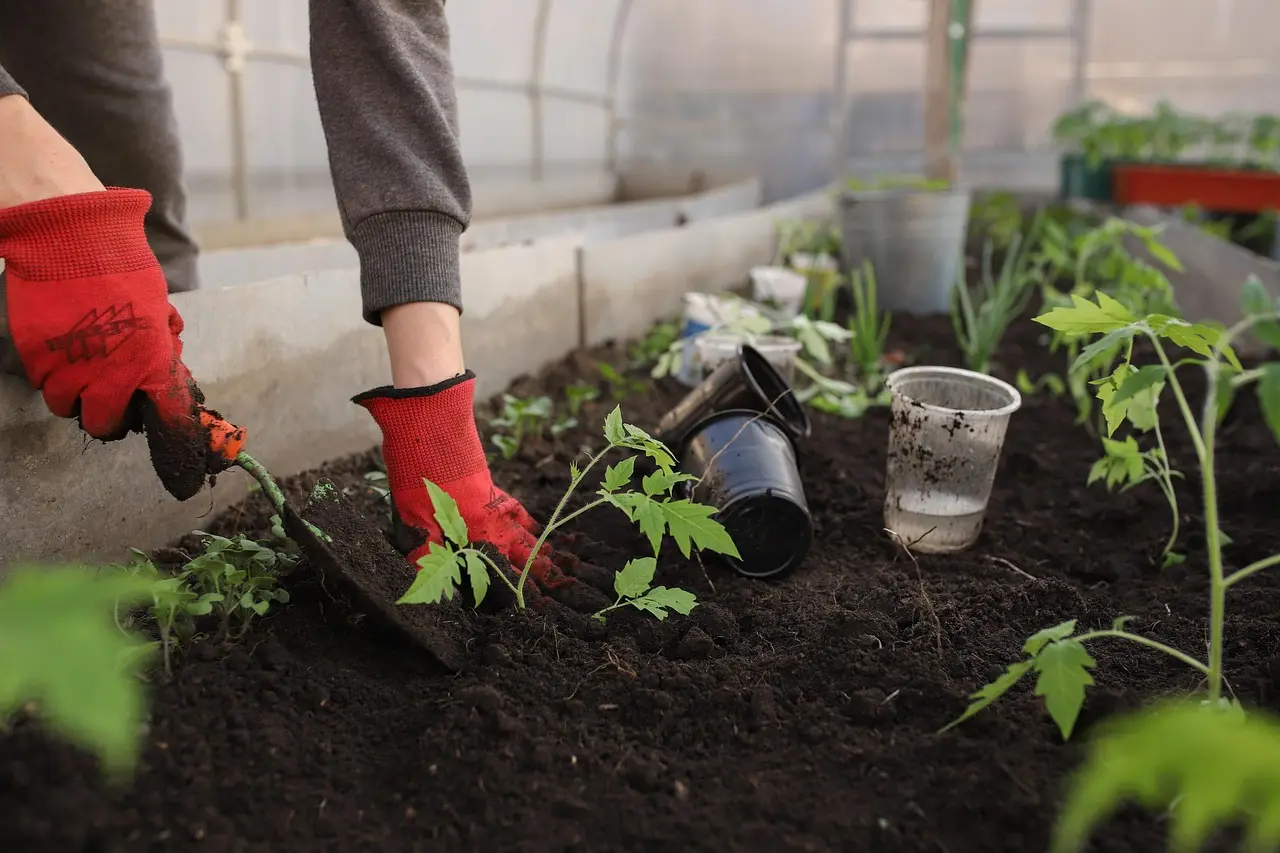
The number on the plant tag should match mature spread, not the size of the pot you carry home. A small plug can become a wide plant, while a larger transplant may still need the same final spacing as a smaller one of the same cultivar.
A simple rule of thumb is to read the mature spread in inches, then convert it to plants per square foot. For a square layout, divide 144 by the square of the spacing in inches. That gives the number of plants per square foot for edge-to-edge coverage.
Use this quick guide:
- 6-inch spacing: about 4 plants per square foot.
- 8-inch spacing: about 2.25 plants per square foot.
- 10-inch spacing: about 1.44 plants per square foot.
- 12-inch spacing: 1 plant per square foot.
If you prefer a tighter triangular layout, the count rises by about 15 percent compared with a square grid. That can matter in a border where you want plants to knit together faster. Even so, the square-foot method is easier to use when you are buying before planting day.
How to read spacing on plant tags
- Find the mature spread. Use the spread listed on the tag or catalog, not the foliage width in the pot. If the plant will spread 8 inches, plan from that final width.
- Choose your density goal. Use sparse spacing for slow fill, balanced spacing for a normal season, and instant-color spacing when you want the bed to read full right away.
- Convert to count. Multiply bed square footage by the plants-per-square-foot target. Round up if you want a fuller first season, especially in front borders and containers.
Suppose a 12-square-foot bed calls for 8-inch spacing. The math is 12 × 2.25, which comes to about 27 plants for balanced coverage. At 6-inch spacing, the same bed needs about 48 plants for a much fuller look.
How many annuals should I plant for a full-looking bed?
For a full-looking bed, a common rule of thumb is about 2 to 4 plants per square foot for most bedding annuals, with about 4 to 6 plants per square foot when instant color is the goal. That higher count closes bare soil faster and gives a finished look at planting time, especially in small beds and front borders.
Square-foot rule of thumb for beds
Use the bed’s square footage, then match that number to the density you want. A 20-square-foot bed at balanced spacing needs about 30 to 45 plants if you are working with 10- to 8-inch spacing. The same bed at instant-color spacing can need 80 plants or more.
Think in three levels:
- Sparse: about 1 to 2 plants per square foot.
- Balanced: about 2 to 3 plants per square foot.
- Instant color: about 4 to 6 plants per square foot.
Use sparse spacing when the annuals are large, grow fast, or will mix with perennials. Use balanced spacing for most new beds. Use instant-color spacing when you want the bed to read as finished on day one.
Front, middle, and back layering
Border depth changes the count. In a narrow front strip, you often plant a single row at 6 to 10 inches apart. In a deeper border, use more than one row and stagger the plants so the gaps between rows close faster.
For a 2-foot-deep border, one row is usually too thin unless the plants are large. A front-to-back mix works better: low annuals at the front, medium growers in the middle, and taller types at the back. That layout gives more coverage without forcing every plant to crowd the same strip of soil.
A common first-timer mistake is spacing the front row correctly and leaving a wide empty band behind it. A deeper bed usually needs layering, not just more plants in one row.
When a border needs more plants per square foot
Use the higher end of the range when the site is open and hot, when the annuals have fine foliage, or when you want a very finished look in the first month. In partial shade, you may still use higher density, but growth can be slower, so the bed may look sparse for longer if you underplant.
Picture a 3-foot-wide border along a walkway. If you place only one row of 12-inch annuals down the center, the edges stay open. Two staggered rows at 8-inch spacing usually look fuller much sooner and still leave room for air movement.
How many annuals should you put in one container?
In most containers, a common rule of thumb is to start with about 1 annual in an 8- to 12-inch pot, about 2 to 3 annuals in a 14-inch pot, and about 3 to 5 annuals in a 16-inch or larger planter, depending on vigor. Deeper pots and smaller cultivars can tolerate more plants, but tight crowding shortens the display if roots dry out fast.
Pot diameter and plant count
Container size matters because roots have less room than they do in a bed. A shallow pot dries faster, so it usually supports fewer plants than a deeper one of the same diameter. Vigorous annuals also need more room than compact types.
| Pot diameter | Suggested count | Use this density when |
|---|---|---|
| 8 to 10 inches | 1 plant | You want one focal plant or a small seasonal display. |
| 12 inches | 1 to 3 plants | You are mixing a thriller, filler, and spillers in a medium pot. |
| 14 to 16 inches | 3 to 5 plants | You want a fuller seasonal planter and the pot has enough depth. |
| 18 inches or larger | 5 or more plants | The planter is deep, you water often, and the plants are compact. |
For a container you plan to refresh for one season only, you can crowd slightly more than you would in a bed. For a planter that must look good for a long season, give each plant more root room and space for air movement.
Thriller-filler-spiller spacing
In a mixed planter, the thriller takes the center or back, the filler sits around it, and spillers soften the edge. Do not pack every plant equally tight. Keep the root balls close enough to read full, but leave room for the plants to widen without choking each other.
For example, a 14-inch pot can hold one upright focal annual and two smaller edging annuals if the varieties stay compact. If all three are vigorous, the pot may look good for a short stretch and then decline as roots compete for water.
When crowding causes decline
Overcrowding shows up as slower growth, pale leaves, dry soil that disappears too quickly, and flowers that stop carrying the display. Leggy transplants can make the problem worse because they stretch upward before they fill outward.
If a planter is meant to carry color all summer, leave a little more room than you would for a short-term display. A full pot on planting day is not always a full pot by midsummer.
Fast-blooming annuals for quick color
Some annuals bloom quickly after planting and fill areas rapidly, which makes them useful when you need fast visual impact. Annuals can give more color for less waiting than perennials, and many annuals thrive in full sun with well-draining soil. Others are better in shade or moist soil.
Sun annuals: zinnias, cosmos, marigolds
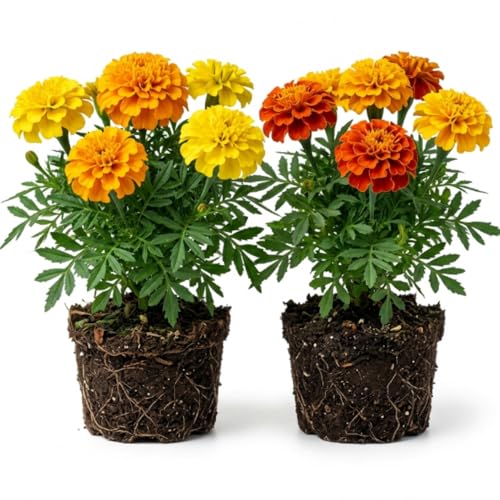
Zinnias, cosmos, and marigolds are common choices for full sun. They are often used when the site has bright light and well-draining soil, and they suit beds where you want quick color and a strong seasonal display.
These annuals work well in open beds, narrow borders, and cutting rows, but their spacing still matters. Zinnias and marigolds can look sparse if planted too far apart, while cosmos can need more room because of its airy habit. Match the final spread to the count you buy.
Shade annuals: impatiens and begonias
Impatiens and begonias are better matches for shade or part shade. They are useful where sun annuals would struggle, and they can help fill darker corners, porch planters, and north-facing beds.
In shade, growth may be slower, so a slightly tighter spacing can help the bed read full sooner. Even then, keep enough room for air movement. Shade does not remove the risk of rot in crowded soil.
Picking annuals for hot dry or moist soil
Site moisture should guide the plant list. Some annuals are recommended for hot, dry soil, while others are recommended for moist soils. Put the right plant in the right place, or the count will not matter for long.
Hot, dry sites usually need plants that can handle faster drying between waterings. Moist sites need annuals that do not sulk in consistently damp soil. If the bed sits between those extremes, choose a balanced planting density and watch how quickly the soil surface dries.
Which annuals fill in the fastest?
Plugs and bedding annuals fill fastest when planted close enough for their mature spread, but the exact speed depends on the plant type and the site. For the quickest look, choose small, healthy transplants in a high-density layout rather than a few large plants spaced too far apart.
Plugs versus 4-inch pots versus bedding annuals
Plugs are the smallest option and often the cheapest per plant, but they need more time to fill the space. Four-inch pots usually give faster coverage because the transplant already has more roots and top growth. Bedding annuals sit in between and are often the easiest choice for fast uniform color.
Use plugs when you are patient and want a lower entry cost per square foot. Use 4-inch pots when you need faster fill but still want a manageable budget. Use bedding annuals when the goal is immediate coverage and a uniform look.
- Match plant size to timing. Choose plugs for long lead time, 4-inch pots for moderate speed, and bedding annuals for the fastest fill. Bigger transplants reduce the wait, but they do not erase spacing needs.
- Match density to the goal. Use balanced spacing for most beds and tighter spacing for instant color. A higher count per square foot is what closes the gaps fastest.
- Match the site first. Put sun annuals in full sun and shade annuals in shade or part shade. A stressed plant fills slowly no matter how close it is planted.
Fast fill for new beds
For a new bed, the fastest result usually comes from bedding annuals planted at the instant-color density. That gives quick cover while the bed settles in. If you choose plugs instead, expect a longer open-soil phase and plan for more hand watering.
Suppose you are planting a 10-square-foot front border. At 4 to 6 plants per square foot, you need 40 to 60 plants for a quick full look. At 2 plants per square foot, you need only 20 plants, but the bed will show soil for much longer.
Fast fill for small gardens
Small gardens show gaps faster than large ones. That makes spacing more important, not less. In a compact bed, a few extra plants can make the whole space read finished, while a thin layout leaves every gap visible from the path.
Budget by square foot if you are trying to fill a small garden on purpose. That is the clearest way to compare sparse, balanced, and instant-color planting without guessing from pot size alone.
Annual quantity calculator
Use this table to estimate how many plants to buy. The count is based on square-foot spacing, which keeps the math tied to mature spread instead of pot size alone. When you want a faster fill, choose the tighter spacing; when you want less crowding, choose the wider one.
| Bed area | Plant spacing | Pot size | Sparse count | Balanced count | Instant-color count | When to choose it |
|---|---|---|---|---|---|---|
| 8 sq ft | 12 in | 4-inch pots | 8 to 10 plants | 16 to 20 plants | 32 to 48 plants | Sparse for big growers; balanced for most beds; instant color for a fast first look. |
| 12 sq ft | 8 in | 4-inch pots or bedding annuals | 12 to 18 plants | 27 to 36 plants | 48 to 72 plants | Use balanced spacing for normal fill; choose instant color when bare soil would be distracting. |
| 20 sq ft | 6 in | Bedding annuals | 20 to 30 plants | 40 to 60 plants | 80 to 120 plants | Choose the tighter count only when you want the bed to look full right away and can water often. |
| 24-inch round container | 8 to 12 in | 4-inch pots or small bedding annuals | 1 to 2 plants | 3 to 4 plants | 5 to 6 plants | Use fewer plants for long-season performance; use more for a short-term seasonal display. |
This calculator is a buying aid, not a planting law. Compact cultivars, large-leaf plants, and fast growers may need a little more room. Smaller, slower annuals can be set a bit closer if you want the earliest possible fill.
How to match annuals to site conditions
Match the plant to the light and moisture first, then choose the density. Full sun with well-draining soil favors many annual flowers. Shade calls for different species. Hot, dry sites and moist sites also need different plant choices if you want the planting to hold up.
Full sun and well-draining soil
Full sun beds dry faster and usually need sun-loving annuals. Many annuals thrive in full sun with well-draining soil, and these are often the easiest places to get fast bloom and strong color. Keep the spacing close enough to close the gaps, but not so tight that the soil stays soggy after watering.
Part shade and even moisture
Part shade can work well for annuals that dislike intense afternoon sun. In these spots, even moisture matters because plants often grow more slowly and recover more slowly from dry spells. A balanced spacing usually works better than a sparse one because the bed fills more evenly.
Hot dry sites versus moist sites
Hot, dry sites reward plants that are recommended for that exposure and soil. Moist sites need annuals that can handle steadier moisture without rotting at the crown. If the bed is inconsistent, aim for a medium density and adjust after you see how fast the soil dries between waterings.
A common first-timer mistake is buying only by flower color and ignoring the site. A sun annual in shade or a moisture-loving annual in a hot dry bed can look thin even at the right spacing.
Frequently asked questions
How many annuals do I need for instant color in a small garden?
For instant color in a small garden, use the tighter spacing on the calculator and round up. That usually means about 4 to 6 plants per square foot for bedding annuals. Small spaces show bare soil quickly, so a fuller start often looks better than a sparse one.
How far apart should annual flowers be planted?
For many bedding annuals, 6 to 9 inches apart gives quick color, while 8 to 12 inches apart suits a more relaxed look. The real target is mature spread. If the cultivar spreads 10 inches, spacing it 10 inches apart usually gives a better result than guessing by pot size.
Which annuals fill in the fastest for new beds?
Bedding annuals planted at the tighter end of the spacing range fill the fastest. For quick color, sun beds often use zinnias, cosmos, and marigolds, while shade beds often use impatiens and begonias. Bigger transplants fill sooner than plugs, but spacing still controls the final look.
Should I buy plugs, 4-inch pots, or bedding annuals for quick color?
Buy bedding annuals when you want the fastest visible fill, 4-inch pots when you want a middle ground, and plugs when you can wait longer for coverage. For the same bed, larger transplants shorten the open-soil period, but they do not replace proper spacing or the right site match.