Gardening Techniques for Staking Plants the Right Way
Choose support by stem strength, growth habit, and failure risk: use a single stake for one main stem, a cage or ring for bushy plants, and a trellis for climbers. Weak support lets stems snap, plants lean into paths, and fruit or flowers hit the ground. This guide shows how to match staking method, stake height, and tie placement to the plant’s growth habit.
What you’ll need


- Bamboo canes, rebar, tobacco sticks, plastic stakes, or chicken fencing for single-plant support.
- Three sticks for a tripod, or two end posts for a row support.
- Soft twine, garden tape, or cloth ties that will not cut into stems.
- A hammer or mallet for driving stakes.
- Pruners for removing broken stems or excess side growth.
- A tomato cage for seedlings that need steady support.
- Gloves.
When should you stake plants?
Stake plants at planting time whenever possible, especially for seedlings and transplants that will get top-heavy later. If a plant is already leaning, stake it as soon as you can so the stem does not harden in a bad angle or snap under its own weight. Delay means more correction and more damage.
Plants with weak stems, heavy blooms, or a windy site can need support much earlier than others.
- Set support early. Place stakes while the root ball is still easy to work around. For transplants, do it on planting day so you do not have to force hardware through roots later.
- Match the support to the habit. Use a single stake for one stem, a row system for repeated plants, a tripod for climbers, and a cage for bushy plants that spread outward.
- Check after weather. After rain or wind, inspect the tie point and the stem base. Rain can add weight and push a plant past its balance point.
Say your tomato transplant is 18 inches tall and already tilting after a windy afternoon. A 5- to 6-foot support installed now is far easier to use than a short stake added after the plant has spread and fruited.
What plants need staking the most?
Top-heavy flowers, brittle-stem annuals, climbing crops, and heavy fruiting plants often need support. Dahlias, delphiniums, and peonies are often described as top-heavy plants that can flop under bloom weight. Some cosmos varieties can lean or snap in stronger winds.
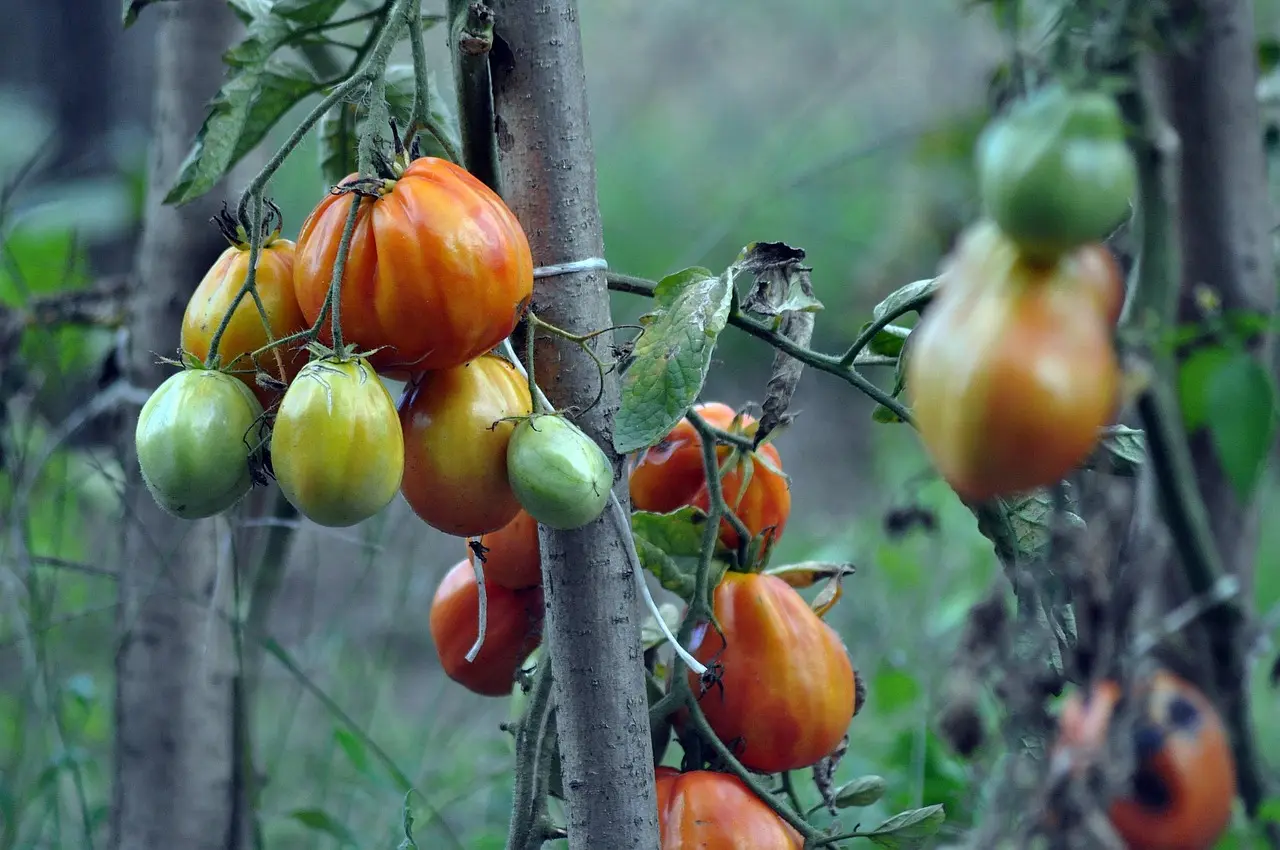
Brittle-stem annuals are another common risk group because their stems can break before the roots anchor well. Heavy fruiting plants, especially tomatoes, often need support because stems bend as fruit sets and the canopy grows wider.
Plants that commonly need staking
- Tomatoes.
- Beans and other climbing crops.
- Dahlias.
- Delphiniums.
- Peonies.
- Cosmos, especially taller or thinner varieties.
Do all tall plants need staking? No. A tall plant with a stiff stem, compact canopy, and sheltered site may hold itself upright without help. The better question is whether the stem can carry the mature load through wind and rain without bending hard at the base.
How do you choose the right support?
The best support depends on plant architecture, mature weight, and exposure. A single upright stem wants a single stake. A row of similar plants is easier to manage with a multiple stake system and twine. A climbing crop needs something it can grip and grow through. Tomatoes often do best with a cage placed early.
Single stake support
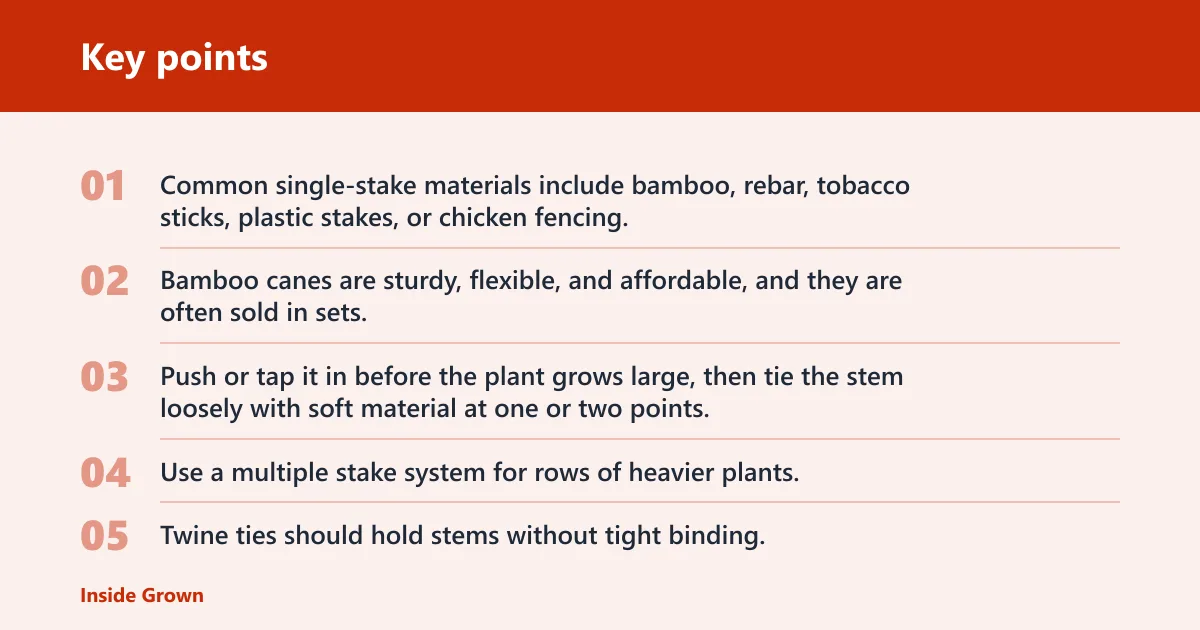
Use one stake for one plant at a time. Common single-stake materials include bamboo, rebar, tobacco sticks, plastic stakes, or chicken fencing. Bamboo canes are sturdy, flexible, and affordable, and they are often sold in sets. They are also reusable, which makes them useful for small gardens and container gardens.
Drive the stake close enough to support the stem, but not so close that you crush roots or rub the stem against the post. Push or tap it in before the plant grows large, then tie the stem loosely with soft material at one or two points. Chicken fencing can also be shaped into a small support panel or cage around a single plant and secured to short posts so the stem has a broad surface to lean on.
Multiple stake row support
Use a multiple stake system for rows of heavier plants. The system uses stakes at either end of the row, and twine runs at both the top and bottom in a zig-zag pattern between posts. Twine ties should hold stems without tight binding.
This setup works well when several plants need the same kind of support and you want a clean, repeatable structure. It is especially useful for tall vegetables or flower rows that lean together in wind.
Tripod support for climbers
Use a tripod when the crop climbs. Tripod staking uses three sticks tied together. Set the plants around the base and guide the stems upward so they can climb into the center. Beans are a classic fit for this method because the support gives them a simple frame to grip.
Tripods are useful when you want vertical support without a heavy cage. They also work in beds where you need airflow and access from several sides.
Tomato cage support
Tomato cages are usually placed when planting seedlings. Once a tomato reaches full size, the cage is much harder to add cleanly without breaking branches. A cage should be chosen before the plant sprawls, not after it collapses outward.
For tomatoes, a cage is often the simplest answer when you want support from all sides. It is less precise than a single stake, but it can reduce the need for repeated tie adjustments.
Plant staking decision table
| Plant | Habit | Mature height / weight | Recommended stake system | Ideal installation timing | Tie material | Check ties after rain or wind | Top failure mode to avoid |
|---|---|---|---|---|---|---|---|
| Tomato | Heavy fruiting, sprawling | Often tall and load-bearing at fruit set | Tomato cage or single stake | At transplanting | Soft cloth or garden tape | After each strong storm or heavy rain | Late cage placement that breaks branches |
| Bean | Climbing | Moderate height; light to medium vine weight | Tripod support | At sowing or transplanting | Soft twine | After wind that loosens the top knot | Posts that wobble at the base |
| Dahlia | Top-heavy flower | Blooms can pull stems sideways | Single stake | At planting | Soft ties with slack | After rain, when blooms get heavier | Stake too short for full bloom height |
| Delphinium | Tall flower spike | Long stems with wind catch | Single stake or row support | At planting | Soft tape | After wind and after soaking rain | Ties placed too high on the spike |
| Peony | Wide, heavy bloom | Blooms can drag stems outward | Ring, cage, or single stake | Before buds enlarge | Soft ties or ring supports | After rain adds bloom weight | Support added after stems flatten |
| Cosmos | Brittle-stem annual | Light stems, wind-sensitive | Single stake | At transplanting | Soft twine | After gusty weather | Loose stake that rubs stems |
| Sunflower | Tall single stem | Heavy head as it matures | Single stake | Early, before the stem thickens | Soft tape | After wind or head-facing rain | Stake set too far from the stem |
| Gladiolus | Flower spike | Tall spike with bloom weight | Single stake | At planting | Soft tie | After rain | Top-heavy spike left unsupported |
| Sweet pea | Climber | Vine growth through the season | Tripod support | At sowing | Soft twine | After wind | Training too late after tangling begins |
| Raspberry cane | Arching cane | Heavy fruit load on long stems | Multiple stake system | Early in cane growth | Twine ties | After wind or fruit swell | Undersized end posts |
| Rose | Upright shrub or cane | Canes bend under bloom weight | Single stake or small cage | At planting | Soft cloth tie | After rain | Tight binding that scars bark |
| Zinnia | Tall annual stem | Light to medium stem load | Single stake | Early, before full height | Soft tie | After heavy wind | Waiting until stems have flopped over |
How do you tie plants so they don’t get damaged?
Use ties that support without pinching. For garden plants as well, ties should not be tied too firmly. Leave enough slack for stem growth and slight movement, but not so much that the stem rubs hard against the stake.
Place ties on stronger parts of the stem, not on soft tips. For single stakes, one tie near the lower third and one higher up is often enough. For twine systems, keep the run snug enough to guide growth, but not tight enough to squeeze stems flat.
- Place the stake first. Insert it before tying so the root zone stays intact and the plant can be positioned naturally.
- Use soft, broad material. Choose twine, cloth strips, or garden tape that spreads pressure across the stem instead of cutting into it.
- Make a loose loop. Tie in a figure-eight or loose loop so the stake and stem do not rub directly against each other.
- Recheck after weather. If rain or wind presses the plant sideways, loosen or move the tie before the stem scars.
Suppose a peony bloom bends a stem by midseason. A loose tie around the lower stem can hold the plant upright, but a tight knot near the flower head can bruise the stem and still fail in the next storm.
What can you use instead of bamboo stakes?
For single plants, bamboo is a strong first choice because it is sturdy, flexible, and affordable, but it is not the only option. Other single-stake materials include rebar, tobacco sticks, plastic stakes, and chicken fencing. The best substitute depends on weight, weather, and how long the support must last.
Use rebar when you need a very firm anchor, and cap any exposed ends for safety. Use plastic stakes for lighter plants in calm beds. Use chicken fencing when you want a broader support surface. For rows, wood or metal end posts with twine often make more sense than a pile of separate stakes.
Common mistakes
The most common failures are easy to spot. Stakes that are too short leave the plant with no room to grow upright. Ties that are too tight scar stems. Supports added too late can break branches while you are trying to fix the problem.
Another mistake is using the same support for every plant. A bean vine does not need the same structure as a peony, and a tomato cage is not the right answer for every row. Matching the support to the plant’s growth habit matters more than choosing the strongest material in the shed.
- Avoid undersized stakes. Choose a support tall enough for the plant’s mature height, not just its current size. If the stake ends near the top growth now, it will be too short later.
- Avoid tight ties. Keep ties loose enough to allow slight movement. Tight binding can cut bark or pinch soft stems.
- Avoid late rescue staking. If the plant is already flopped, lift it gently and stake it in stages instead of forcing it upright in one move.
- Recheck after weather. After rain or wind, inspect ties and base anchors. If the stem has shifted about an inch or two, reset the support before damage spreads.
A common first-timer mistake is staking a tall cosmos after a thunderstorm has already bent it sideways. The better fix is to set a slim stake early, then check it after the first strong wind so the stem never has to recover from a hard bend.
Frequently asked questions
Should you stake plants at planting time or later?
Planting time is the better choice for most seedlings and transplants. For established plants, stake as soon as they begin to lean. Waiting until stems are already bent usually means more breakage, more tie adjustments, and a weaker final shape.
What is the best stake for tomatoes?
A tomato cage is the best simple choice for many home gardens, and it should be placed when planting seedlings. If you prefer a single-stem method, use a sturdy single stake at transplanting and tie the main stem loosely as it grows.
How far from the stem should a stake go?
Place the stake close enough to support the stem, but not so close that it crowds roots or rubs bark. A practical aim is just outside the stem’s immediate base area, with enough space to push the stake in without forcing it through the crown.