Is Coco Husk Safe for Vegetable Gardens?
Yes, coco husk is safe for vegetable gardens when you wash it, buffer it if the product calls for that step, and use it as mulch or a blend ingredient. Use it alone only in a mix built for drainage and added nutrients. Skip prep, and salts or nutrient tie-up can slow growth and stress seedlings. This guide explains where coco husk fits in beds, containers, seed starting, and soilless mixes, plus when rinsing or buffering matters.
Comparing coco husk use and risks across garden settings


| Use case | Safety level | Prep required | Best crops | Red flags |
|---|---|---|---|---|
| Raised bed amendment | Good when blended with soil | Rinse first; mix rather than layer | Tomatoes, peppers, leafy greens | Bed dries too fast, material feels salty, soil turns too airy |
| Container top-dress | Good for established plants | Use a 2-3 inch mulch layer and water through it | Squash, tomatoes, herbs in large pots | Seedlings, crusting on the surface, uneven watering |
| Seed starting | Use with caution | Use a finer, washed medium; avoid raw chips | Short-term starts in a controlled mix | Slow germination, drying between waterings, salt stress |
| Hydroponic-style soilless mix | Conditional | Wash, buffer if needed, and manage nutrients closely | Leafy greens and fruiting crops in managed systems | Unwashed material, pH drift, nutrient solution imbalance |
| Raw husk chips from an unknown source | Poor choice | Do not use until washed and tested | None until quality is verified | Salt load, contaminants, very coarse texture, unknown processing |
What is coco husk, exactly?
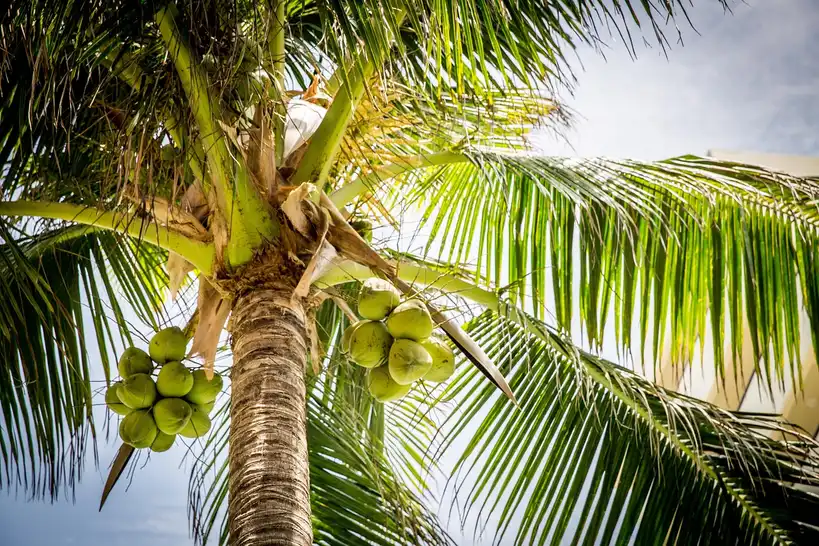
Coco husk is the coarse coconut material left after shell processing. It is not the same as coco peat, the fine, spongy fraction from the husk, or coco coir, which usually means the fibrous portion used in mats, liners, and growing media. That difference matters because particle size changes water movement around roots.
How it differs from coco peat
Coco husk chips are larger and more open than coco peat. They drain fast and hold limited water on their own. Coco peat is often reported to hold more moisture and suit seed starting and moisture-heavy mixes, while husk chips are commonly used in drainage-focused roles.
Why texture matters in vegetable growing
Vegetables need a root zone that stays moist without turning soggy. A medium that is too coarse can dry too quickly and expose roots to moisture swings. A medium that is too fine can stay wet and block oxygen. Coco husk sits on the drier, airier side of that balance.
Is coco husk safe for vegetable gardens?
Yes, coco husk is safe for vegetable gardens when you wash it, buffer it if the product asks for that step, and use it in the right role. The main concerns are salt content, unknown contaminants in raw material, and the fact that coco husk adds structure, not plant food.
Salt risk and wash quality
Raw coconut material can carry high salt levels. That is the first thing to check for edible crops, especially seedlings and salt-sensitive vegetables. Rinsing, or buying pre-washed coco husk, lowers that risk. If the label mentions washing or buffering, that is a stronger sign than a vague sustainability claim.
Contaminant concerns in raw material
Unknown-source husk chips can carry sand, debris, or residue from processing. That does not mean every unbranded product is unsafe, but it does mean you should treat raw material as unverified until you clean and inspect it. For vegetables, verified preparation matters more than marketing copy.
When it is safe enough for edible crops
It is safest when coco husk is part of a blend, not the whole root zone. In raised beds and containers, a clean, washed product can improve aeration and drainage without adding a salt problem. Used that way, it supports vegetable growth instead of working against it.
Where coco husk works best in veggie beds
Coco husk works best as mulch, a soil amendment, or a potting mix component. It is less useful as the only growing medium for vegetables. In the right setting, it can improve aeration and drainage while keeping the surface from drying too fast.
Mulch around established plants
A 2-3 inch mulch layer around established plants can help hold moisture and suppress weeds. That fits better than scattering chips over fresh seed rows. Keep mulch a few inches away from stems so the base does not stay wet.
Say your tomato plants in a raised bed are already 12 inches tall and the top inch of soil dries out fast after watering. A top-dress of washed coco husk chips can slow evaporation. The tradeoff is that you may need to water a little longer to push moisture through the layer.
Soil amendment in raised beds
In raised beds, coco husk can loosen a dense mix and improve drainage. It works best when you blend it into the soil instead of leaving it in one layer. A common rule of thumb is a 1:3 ratio of coco husk to soil for mixing, though that still depends on how much drainage the bed already has.
Potting mix ingredient for containers
Container vegetables need moisture retention and drainage. Coco husk can help with airflow, but a container mix still needs loam, compost, and a finer coconut-based component to hold water. A vegetable container blend of 60 percent loam soil, 20 percent coco peat, and 20 percent compost is a better starting point than husk chips alone.
Picture a 5-gallon pot for basil or pepper plants. If the mix is mostly husk chips, the surface may dry fast while the root ball stays unevenly moist. That can cause wilting between waterings, then water to run through the pot too quickly when you try to correct it.
Can coconut husk replace soil in a vegetable garden?
No. Coco husk cannot replace soil in a vegetable garden by itself because vegetables need more than drainage and air. They also need water-holding capacity, nutrient supply, and a root environment that stays stable between irrigations. Coco husk is a component, not a full substitute.
Why vegetables need more than aeration
Good root growth depends on a mix of air, moisture, and nutrients. Coco husk provides the air part well, but it is too airy and too low in nutrients to stand alone. That is why it can help a mix and still fail as the only medium.
Nutrient support and watering adjustments
Coco husk itself has low nutrient content, so vegetables growing in it still need fertilizer support. That is especially true in containers and soilless systems, where roots depend on you for feeding. Watering also needs adjustment because the medium dries differently than plain garden soil.
Which crops handle it better?
Leafy greens, tomatoes, peppers, and herbs can do well in a well-made container mix that includes coco-based material. Crops with shallow roots or seedlings in early stages need a finer, more moisture-retentive blend. Very coarse husk chips fit mature plants better than germination trays.
How to prepare coco husk before use
Preparation turns coco husk from a questionable raw product into a useful garden ingredient. For vegetables, the safest path is to rinse it, soak it if needed, and use it only after checking whether the product calls for buffering or pH adjustment. That matters most for edible crops and seedlings.
- Rinse the material until runoff is clearer.
- Soak it if the product is very dry or dusty.
- Drain it well before mixing or top-dressing.
- Check the label for washing or buffering guidance.
- Test pH if you are using it in a container or soilless blend.
- Add fertilizer support, since coco husk does not feed crops on its own.
Rinsing and soaking
Rinsing removes surface salts and loose debris. Soaking helps dry chips take up water before they go into a pot or bed, which makes the first watering more predictable. If the husk stays bone-dry in the root zone, it can shed water instead of absorbing it.
Buffering when the product calls for it
Some coconut-based media are buffered during processing to make them more suitable for plants. If the label mentions buffering, follow that guidance rather than treating all coconut products the same. Raw chips from an unknown source need extra caution because they may carry more salt than a packaged, pre-washed product.
pH and fertilizer checks
Coco husk is generally near-neutral to slightly acidic depending on the product, so pH can vary. That is worth checking if you are growing crops that prefer a narrow range or if seedlings seem stalled after transplanting. Since the medium is low in nutrients, a regular feeding plan is part of the setup.
Common problems after using coco husk
Most problems come from using the wrong product form or changing watering too little after installation. The medium itself is not the issue. The issue is usually salt, dryness, or a mix that is too airy for the crop.
Wilting after top-dressing
If plants wilt after a new top-dress, the water may not be reaching the root zone evenly. Chips on the surface can slow infiltration and make the bed look moist while the lower layer stays dry. Water more slowly and check below the top layer before assuming the plant needs less or more water.
Crusting or uneven moisture
Crusting can happen when fine residue settles on top or when the surface dries too hard between irrigations. Uneven moisture is common in container blends that contain too much coarse material. Breaking up the surface lightly and rebalancing the mix can help, but a poor blend may need replacing.
Seedlings drying too fast
A common first-timer mistake is using coarse coco husk chips in a seed tray because the bag says coconut-based media. Seedlings need finer material with steadier moisture. If a tray dries overnight, the chips are too coarse for that stage, and the mix needs more moisture-holding material.
Frequently asked questions
Is coconut husk safe for vegetable gardens?
Yes, coconut husk is safe for vegetable gardens when it is washed, buffered if needed, and used as an amendment or mulch. The main hazards are excess salts, unknown contamination in raw material, and a mix that is too airy for the crop. Clean product and correct use matter most.
Is coconut husk good for vegetable garden?
It can be, but only in the right role. Coco husk helps with drainage, aeration, and surface moisture control, especially in raised beds and containers. It is not a complete vegetable medium by itself, and it needs fertilizer support because it is low in nutrients.
Is coconut husk good for plants?
Yes, for the right plants and the right setup. Established vegetables, herbs, and container crops can benefit from improved aeration and drainage. Seedlings and moisture-hungry crops usually need a finer, more water-retentive blend, so coarse husk chips are not the best match on their own.
Is coco fiber good for plants?
Coco fiber can be good for plants when it is clean and matched to the crop. It helps with drainage and root air space, but it is not the same as coco peat. Fine material suits seed starting and moisture mixes better than coarse husk chips, which dry faster.
Do I need to rinse coco husk before using it in vegetables?
Yes. Rinsing reduces salt risk and removes loose debris, which matters most for edible crops. If the product is labeled pre-washed or buffered, that is better than using raw material straight from the bag. For vegetables, rinsing is a practical safety step, not an optional extra.