Best Time of Year to Book Landscaping Services by Project
For many landscaping jobs, booking several weeks ahead can help; for spring planting and hardscape work, late winter to early spring is often a good target, while major projects may be easier to start in late fall. Waiting too long can mean higher bids, weak plant establishment, or missing the best weather window. I’ve seen spring calendars fill before the thaw. This guide breaks down the best booking time by project type and region for price, availability, and plant survival.
Why booking timing matters for landscaping availability

Timing matters because landscaping crews run on labor, weather, and plant windows. Spring and early summer create the heaviest booking pressure, so crews fill early, estimates slow down, and the first available date often moves out weeks. The same job can be easier to schedule in late fall or winter.
Why booking time and work time are not the same
A homeowner can book a job months before the actual work begins. That matters most for planting, hardscape, drainage, and larger redesigns, where the estimate, materials ordering, and crew scheduling happen first, then the work lands in a narrow seasonal window.
How project scope changes your lead time
Small maintenance jobs can often be squeezed in with little notice. Larger jobs need more coordination. A quick cleanup may need only a short lead time, while a full yard renovation can require site measurements, a plan, permit checks, and material delivery dates that push the start well beyond the initial phone call.
What is the best time of year to book landscaping services?
The best time to book landscaping services is usually late fall through winter if the goal is better availability and cleaner scheduling, or late winter if the job must start in spring. Spring and early summer are often busiest, which can mean longer lead times and more price pressure. The right choice depends on whether you value cost, timing, or plant health.
Peak landscaping season in spring and early summer
In my own estimates, spring is when yard trouble shows up fast. Bare beds, dead stems, and winter damage all get noticed at once. Cleanups, mulch, edging, planting, and new installs all compete for the same crews, so companies often fill their calendars before the season fully opens.
During peak landscaping season, a quote request can take longer to return, and start dates can slip if rain or temperature swings interrupt the schedule. If a project must happen in April or May, booking in February or March is often the safer move.
Off-season booking in late fall and winter
Late fall and winter are often the best booking window for homeowners who want more attention from the estimator and more open calendars. Quotes usually turn around faster, and some companies are more willing to hold spring start dates for projects planned ahead.
That said, off-season booking does not mean every service can be done immediately. Frozen ground, dormant turf, and limited plant stock can delay the actual work. The value is often in planning early, not in rushing the job into bad conditions.
How to choose between lower cost and faster start dates
If the goal is lower pressure on the schedule, book in the off-season. If the goal is to finish before a specific event or plant during a short weather window, book early even if the price is not the lowest. Waiting for the “cheapest” time can backfire when the best planting or prep period passes.

Which landscaping jobs should you book in spring or fall?
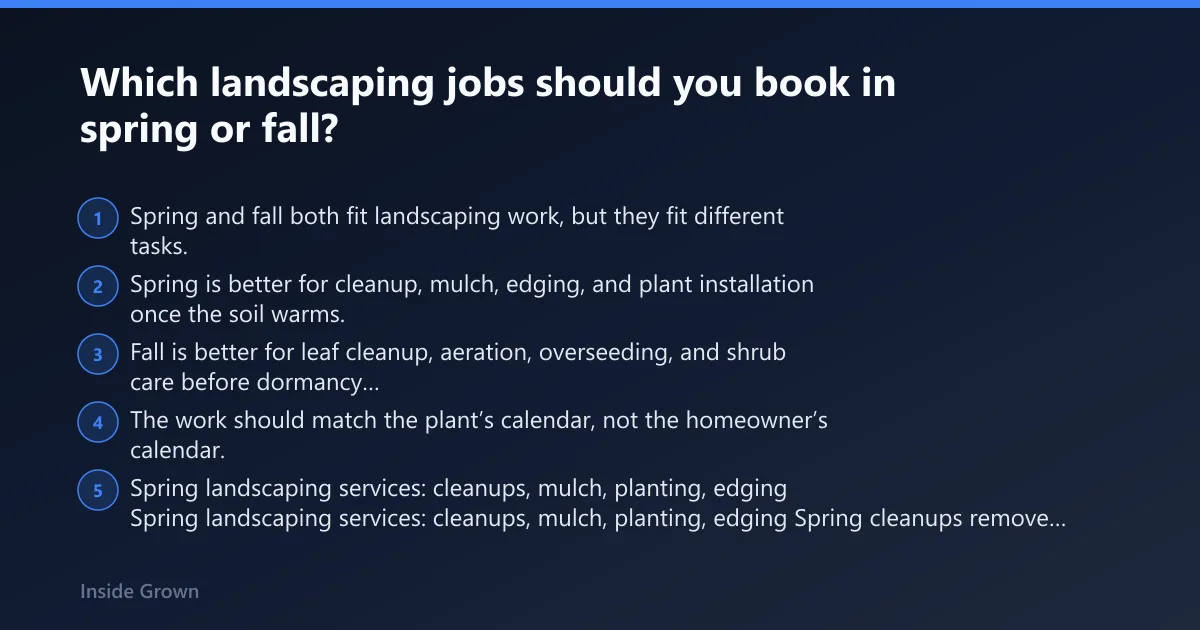
Spring and fall both fit landscaping work, but they fit different tasks. Spring is better for cleanup, mulch, edging, and plant installation once the soil warms. Fall is better for leaf cleanup, aeration, overseeding, and shrub care before dormancy and freeze-up. The work should match the plant’s calendar, not the homeowner’s calendar.
Spring landscaping services: cleanups, mulch, planting, edging
Spring cleanups remove winter debris, cut back dead material, and reset beds. Mulch installation is common once the soil starts warming. Edging also fits spring well because it creates a clean border before the growth surge makes beds harder to manage.
Planting in spring works best when frost risk is falling and soil temperatures are suitable for root growth. If spring booking happens too late, heat stress rises and new plants need more watering to survive the first season.
Fall landscaping services: leaf cleanup, aeration, overseeding, shrub care
Fall leaf cleanup is straightforward and often easier to schedule than spring work. Aeration and overseeding also belong in fall in many regions because cooler air and warmer soil support turf recovery. Shrub care and pruning can be timed to reduce winter damage and prepare plants for dormancy.
Fall is also a useful time for planning next year’s larger projects. Crews may have better bandwidth after the spring rush, and the estimate process can happen before winter pricing and scheduling settle in.
Jobs that should be scheduled around planting windows
Tree and shrub planting should follow local frost dates, soil conditions, and the plant type. Perennials, cool-season turf work, and some transplant jobs can handle cooler weather better than summer heat. Warm-season plants usually need later timing and more attention to watering during establishment.
If the region has a short spring, booking should happen well before planting season opens. In areas with hot, dry summers, planting too late can mean poor establishment even if the crew is available.
How far in advance should I schedule a landscaper?
For small jobs, schedule about 1 to 2 weeks ahead when possible. For larger projects, plan on roughly 4 to 8 weeks or more. If permits, special materials, or planting windows are involved, the lead time can stretch further. The earlier the job depends on weather or plant health, the earlier it should be booked.
Small jobs: 1-2 weeks
Small maintenance jobs include quick cleanups, minor trimming, mulch touchups, edging, and simple bed work. These are more likely to fit into an existing route, especially outside peak season. Even then, spring demand can make a short-notice date hard to secure.
Larger projects: 4-8+ weeks
Larger projects include grading changes, drainage corrections, full bed redesigns, major plantings, patio work, and multi-day installs. These jobs take time to estimate, price, schedule, and build. A lead time of several weeks is often common, and complex work can need more.
What slows a schedule: permits, materials, and weather
Permits can hold up hardscape and drainage work. Materials may have delivery delays, especially for specific pavers, soil blends, or mature plant stock. Weather can push the start date even after the job is booked, because rain, frozen ground, or drought rules can pause field work.
What happens during a landscape estimate?
A landscape estimate usually starts with a site visit, then moves to scope definition, materials pricing, and a scheduling window. Good estimates also account for access, grading, drainage, plant sizes, and any seasonal limits that affect the work. The estimate is not just a price; it is the plan that sets the timeline.
Site visit and scope definition
The contractor looks at the property, measures the area, checks access, and notes problem spots like poor drainage, compacted soil, or shading. A clear scope should spell out exactly what is included, what is excluded, and what must happen before work begins.
Materials pricing and labor assumptions
Material prices depend on the plants, mulch, stone, soil, or hardscape pieces selected. Labor assumptions change with site access, slope, disposal, and how much prep is needed. A quote given in winter may also be adjusted later if plant stock or material availability changes before the start date.
How the estimate turns into a scheduling window
A good estimate should end with a realistic start range, not a vague promise. That window depends on current bookings, lead time, weather, and whether the job needs a specific planting period or dry stretch. Homeowners should ask for the likely start range, not only the price.
How does weather and climate affect the best booking time?
Weather shapes both the best booking time and the best work time. Freeze dates, soil temperature, heat waves, rain delays, and drought restrictions can all change when a job should start. Regional climate zone matters too, because a spring date in one area may be too early or too late in another.
Freeze dates, frost risk, and soil temperature
Planting too early can expose roots and new growth to frost damage. Planting too late can leave roots under stress before summer heat arrives. Soil temperature often matters more than the calendar, because roots need workable conditions to establish.
Heat waves, rain delays, and drought restrictions
Hot weather raises water demand and transplant stress. Heavy rain can delay grading, soil movement, and planting. Drought restrictions can change irrigation plans or limit when turf work can happen. Any estimate that ignores weather risk is likely to miss the real start date.
Cool-season and warm-season regional timing
Cool-season regions often have a longer spring planting window and a strong fall turf schedule. Warm-season regions usually favor later spring and summer-adjacent timing for some plantings, but heat and drought can narrow the safe window. Rainy-season timing also matters where wet periods create access problems.
When should you book for lower prices versus better availability?
Book in late fall or winter if the goal is better availability and possibly more scheduling flexibility. Book closer to the planting window if plant health is the priority and the work depends on weather. Waiting too long can cost more than a quote difference if the best window closes or crews fill up.
When winter booking can make sense
Winter booking makes sense for major projects, spring installs, and homeowners who want a place in the queue before peak season starts. It can also help with planning, because the crew has time to define the scope, order materials, and reserve a spring start date.
When price should take a back seat to plant health
For planting, the wrong date can cost more later in replacement shrubs, extra watering, or poor establishment. If the soil is too cold or the weather is too hot, a cheaper quote is not the better deal. A healthy start is worth more than a minor discount.
When waiting too long costs more than the quote difference
If the crew is booked solid, the job may slip into a less favorable season or face rush pricing. That is common in spring. A homeowner who waits for the “right price” can end up paying more in labor, irrigation, or plant replacement because the work was done late.
Booking timing matrix for common landscaping services
This matrix separates booking time from work time. Use it to decide whether a service should be scheduled for price, availability, or plant health. For the best outcome, match the service to the season that supports it, then book ahead of that window.
| Service | Ideal booking window | Typical lead time | Seasonality risk | Priority |
|---|---|---|---|---|
| Spring cleanup | Late winter to early spring | 1-2 weeks | Medium; crews fill quickly | Availability |
| Mulch installation | Late winter to early spring | 1-3 weeks | Medium; weather can slow delivery | Availability |
| Planting shrubs and perennials | Late winter before target planting window | 2-6 weeks | High; frost and heat can narrow timing | Plant health |
| Edging and bed refresh | Late winter through spring | 1-2 weeks | Low to medium | Availability |
| Leaf cleanup | Early fall to mid fall | 1-2 weeks | Medium; leaf drop timing varies | Availability |
| Aeration | Late summer to early fall | 2-4 weeks | High; soil moisture and turf timing matter | Plant health |
| Overseeding | Late summer to early fall | 2-4 weeks | High; needs the right soil and air temps | Plant health |
| Shrub pruning and care | Late fall or dormant season, region dependent | 1-3 weeks | Medium; avoid wrong pruning timing | Plant health |
| Drainage work | Late fall or dry spells | 4-8+ weeks | High; rain can stop excavation | Availability |
| Patios and hardscape | Late fall booking for spring or early summer work | 6-12+ weeks | High; permit and material delays are common | Availability |
How to use the matrix to plan your project
Start with the service type, then choose the season that supports it. If the job affects plant survival, book around planting windows first. If it is maintenance-only, book for the most open calendar and the best quote timing. For larger projects, add extra time for permits and weather delays.
Frequently asked questions
What is the best time of year to book landscaping services?
Late fall and winter are often the best booking periods for homeowners who want better availability and earlier planning. If the job involves planting or a spring start date, book in late winter or very early spring so the crew can line up the work before peak season fills the calendar.
How far in advance should I schedule a landscaper?
Small maintenance jobs often need only 1 to 2 weeks of lead time. Larger projects usually need 4 to 8 weeks or more. If the project requires permits, specialty materials, or planting during a short weather window, booking should happen even earlier.
Is it cheaper to book landscaping in winter?
Winter booking can sometimes improve pricing or at least improve scheduling flexibility, but it is not a guarantee. The real advantage is that crews are less crowded, estimates move faster, and spring dates can be reserved before peak demand pushes jobs back.
When do landscaping companies get busiest?
Most landscaping companies are busiest in spring and early summer. That is when cleanup, planting, mulch, edging, and many install projects all pile up at once. Fall is also busy, especially for leaf cleanup, aeration, overseeding, and late-season yard prep.
How does weather affect landscaping project timelines?
Weather can delay excavation, planting, turf work, and hardscape installation. Rain can stop access to the site, freeze dates can end planting early, heat waves can stress new plants, and drought restrictions can change watering plans. Good schedules always leave room for weather shifts.
When is the best time to get quotes from landscapers?
The best time to get quotes is before the target work season starts. For spring projects, request quotes in late winter. For fall turf work, request quotes in midsummer or early fall. For major projects, get pricing well before the intended start date so materials and labor can be reserved.