The Best Rooms in the House for Overwintering Plants
Match the room to the plant. Bright, cool rooms generally suit dormant plants, while warm, bright rooms suit active tropicals; dark basements are usually suitable only for true dormancy. Pick the wrong space, and you risk leggy growth, rot, dropped leaves, or a plant that never wakes up. This guide shows which indoor rooms, windows, and enclosed spaces fit each overwintering need.
Room decision table

- Shows dry, comfort, or wet air conditions
- Tracks high and low temperature and humidity
- Tabletop stand and magnetic back
Use the room first, then adjust care. Light, temperature stability, humidity, and draft exposure matter more than the room label itself. A sunny bathroom can beat a cold living room corner, and a garage with windows can be better than a basement with no light at all.
| Space | Light level | Temperature stability | Humidity | Draft risk | Best-fit plant types | Red-flag situations | Score |
|---|---|---|---|---|---|---|---|
| South-facing living room window | High | Moderate to good | Low to moderate | Low to moderate | Tropical foliage plants, herbs, flowering houseplants, sun-loving succulents | Cold glass at night, heat vents below the sill, seasonal light drop that leaves plants stretched | 9/10 |
| East-facing spare bedroom | Moderate | Good | Low to moderate | Low | Plants that like bright indirect light, many foliage plants, smaller herbs with winter growth | North-only exposure, heavy curtains, room kept too dark for active growth | 8/10 |
| West-facing kitchen or den | Moderate to high | Moderate | Moderate | Moderate | Light-hungry plants that can handle afternoon sun, compact tropicals, citrus in bright spots | Hot afternoon glass in a sunny spell, cooking heat, cold night swings near leaky windows | 7/10 |
| Bathroom with a bright window | Moderate | Moderate | High | Low | Moisture-tolerant tropicals, cuttings, smaller foliage plants, orchids if light is adequate | No real window light, stagnant humidity, poor air flow that invites mildew | 7/10 |
| Enclosed porch | High if glazed well | Variable | Variable | Moderate to high | Plants needing cool bright rest, some dormant or semi-dormant specimens | Night temperatures near freezing, glass that overheats on sunny days, hard drafts | 6/10 |
| Garage with windows | Low to moderate | Variable | Low | High | Dormant storage, some hardy container plants, plants that need cool rest with light | Big day-night swings, no usable daylight, freezing corners, car exhaust or chemicals | 5/10 |
| Basement with a window | Low to moderate | Often good | Moderate to high | Low | Dormant plants, low-light overwintering, some cuttings and slow growers | Musty air, no window exposure, puddling, heat from boilers or laundry equipment | 5/10 |
| Dark basement or closed garage | Very low | Variable | Variable | Variable | True dormant storage only, and only if the plant can rest dry and cool | Potted tropicals, herbs, flowering plants, anything that needs winter growth or visible light | 2/10 |
The simple score is a filter, not a verdict. Give one point each for usable light, stable temperature, low draft exposure, humidity that matches the plant, and a layout that fits the plant’s winter habit. A room can score lower overall and still work for a very specific plant group.
What room is best for overwintering plants indoors?
The best room is the one that matches the plant’s winter mode. Bright, stable rooms suit plants that stay active indoors, while cool, dimmer spaces suit plants meant to rest. A south-facing room usually wins for foliage plants and herbs; a cooler spare bedroom or basement room can be better for dormant storage.
Living rooms and spare bedrooms
These rooms are often the safest default because they are easier to keep stable than garages or porches. Put plants beside the brightest window available, away from heating vents, exterior doors, and radiators. A south-facing window is often best, but east- or west-facing glass can work for many plants if winter sun still reaches the leaves for several hours.
Suppose a geranium is kept in a bright spare bedroom with an east window and a steady nighttime temperature. It can usually stay healthier there than in a dim corner of a warm living room, because the plant gets morning light without the harsh heat that pushes weak, stretched growth.
Kitchens and bathrooms
Kitchens and bathrooms can work when they have real daylight and the air movement is not too wet or too stale. Bathrooms are better for plants that like humidity, while kitchens are often better for plants that need a bit more light and less damp air. Either room fails fast if it has no usable window.
Watch for steam, cold drafts from exhaust fans, and rapid temperature changes near exterior walls. If leaves stay wet for long periods, fungus problems can follow. That matters more in a bathroom than in a dry bedroom.
Mudrooms and enclosed porches
Mudrooms and enclosed porches are useful only when they stay above freezing and do not swing wildly from warm afternoons to cold nights. They can be good buffer zones for plants that want cool light and a bit of dormancy. They are poor choices for tender tropicals unless temperatures stay steady.
If the room has old windows, check for cold leaks around the frame. Plants on the floor are more likely to catch cold air than plants set several feet back from the glass.
Do overwintering plants need a south-facing window?
No. A south-facing window is often best, but it is not mandatory. East- and west-facing windows can work for many overwintering plants, and a south window may still be too weak once winter sun angle, short days, and cloudy weather cut the light. What matters is how much usable light reaches the leaves.
South-, east-, and west-facing windows
A south-facing window usually gives the strongest winter light and the longest bright period. East-facing glass gives gentler morning light, which suits many houseplants. West-facing glass can be strong in the afternoon, but it may run hotter and create more temperature swing near the pane.
Place plants near the brightest window available without touching cold glass. If a sill is drafty, set the plant a short distance back and add a reflective wall or another bright surface nearby so light reaches the foliage from more than one angle.
When window light is enough
Window light is often enough for plants that can rest through winter or tolerate slower growth. That includes many dormant container plants and some foliage plants in bright rooms. It is usually enough only if the plant stays compact, leaves remain firm, and new growth does not come out pale or stretched.
Seasonal light loss is the catch. A window that works in October may be too weak by midwinter, especially on short, cloudy days or when nearby trees block the sun. Watch the plant, not the calendar.
When you need supplemental light
Use a grow light when the room is bright but not bright enough for steady growth, or when the plant needs more light than the window can give. Grow lights are recommended for plants that require brightness indoors. A T5 fluorescent fixture is a common example, but the setup matters as much as the bulb type.
Measure the light gap. Look for pale new leaves, stretched stems, or leaning growth. Those signs mean the window is not giving enough light for the plant’s needs, even if the room looks bright to you.
Place the fixture close. For many small houseplants, keep the canopy about 6 to 12 inches below a T5 fluorescent fixture unless the manufacturer lists a different distance. Taller, light-hungry plants may need a stronger light or a closer placement, so check the manufacturer’s listing for your model.
Run it long enough. Give the plant a regular day length, commonly about 12 to 16 hours for winter indoor growth. Use a timer so the cycle stays consistent and the plant does not get erratic light.
Watch for heat buildup. If leaves bleach, curl, or dry at the top while the base stays shaded, the fixture may be too close or too strong. Raise it a little and reassess after a few days.
Can you overwinter plants in a garage or basement?
Yes, but only if the space matches the plant’s winter needs. Garages and basements are microclimates that vary by location, so one can be excellent and another can be a failure. The right one may stay cool and stable, while the wrong one swings too much, stays too dark, or freezes in patches.
Garages with windows versus no windows
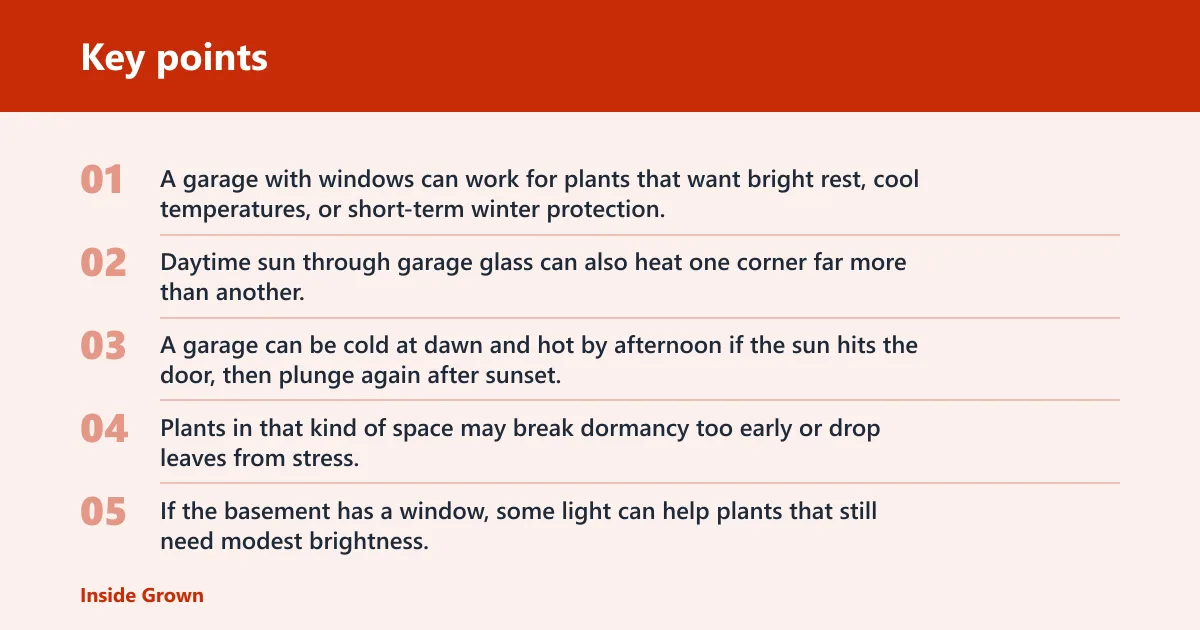
A garage with windows can work for plants that want bright rest, cool temperatures, or short-term winter protection. A garage with no windows is only suitable for true dormant storage, and even then the temperature must stay within the plant’s safe range. Daytime sun through garage glass can also heat one corner far more than another.
That variability matters. A garage can be cold at dawn and hot by afternoon if the sun hits the door, then plunge again after sunset. Plants in that kind of space may break dormancy too early or drop leaves from stress.
Basements in cooler climates
In cooler climates, basements are often among the best places for dormant plants because the temperature can stay steadier than in upstairs rooms. If the basement has a window, some light can help plants that still need modest brightness. Dry, cool air can also slow rot in plants that are meant to rest.
Look for a basement that stays cool without getting damp or musty. Set plants away from sump pumps, water heaters, laundry machines, and any floor-level puddling.
Basements in warmer climates
In warmer climates, basements may be too mild for true dormancy or too humid for safe storage. A basement that stays warm enough for active plants but lacks light can be a poor fit, because growth becomes weak and leggy. If humidity is high, soil can stay wet too long and roots can suffer.
Use a basement only if you know the temperature range it actually holds through winter. The label “basement” means little on its own.
When these spaces are too risky
Skip garages and basements when temperatures bounce around a lot, when sunlight is missing, or when the room freezes at the edges. They are also bad choices if you cannot monitor the space often enough to catch problems early. A plant in the wrong garage usually declines quietly before it looks obviously bad.
Say a potted citrus is moved into an unheated garage with no windows. The plant may look fine for a week or two, then drop leaves once the space stays cold and dim. That is a light problem first, not a watering problem.
Greenhouses and grow lights
Greenhouses can be excellent overwintering spaces, but they are not automatically safer than a house room. They need frost protection, temperature control, and venting on sunny days. A greenhouse that is too cold at night or too hot by midday can stress plants as much as an indoor room with bad drafts.
Frost protection and venting on sunny days
A greenhouse works when it can stay above frost for the plants inside and still release extra heat on sunny days. Vents, doors, or fans help prevent a sudden temperature spike. Without venting, the interior can swing hard even in winter sun.
Use the greenhouse for plants that need more light than a house room can give, or for collections that do best in bright but cooler conditions. If the structure cannot hold warmth reliably, it becomes a liability rather than a shelter.
When a greenhouse beats a house room
A greenhouse beats a house room when light is the limiting factor and the structure can keep temperatures within the plant’s safe range. It is especially useful for plants that stay active but want cooler nights than most heated rooms provide. It can also be the better choice for groups that dislike indoor dryness.
It is not the better choice if you cannot buffer cold snaps. Tender plants still need protection from frost and winter damage.
Timing, water, fertilizer, and pests
Move plants before frost damage, not after it. Tender plants should be moved in when temperatures drop to 45°F, while half-hardy plants should be moved at the first frosts for your area. Hardiness zone, plant type, and the weather pattern in your location all matter more than a single date on the calendar.
Move plants before frost damage
Check the local forecast. Watch the first frost window for your area and the overnight lows, not just daytime highs. A plant that can handle a cool day may still be damaged by one cold night.
Acclimate the plant first. Move sensitive plants through a short transition period if you can, especially when they are coming from full sun or windy outdoor conditions. That reduces shock from the sudden shift to indoor light and air.
Inspect every stem. Look under leaves, along petioles, and near the soil line for bugs, sticky residue, webbing, or eggs. Clean off debris before the plant crosses the threshold.
Water less, but by plant needs
Indoor watering should be moderate. Many overwintered plants need less water than they did outside, but not every plant should dry out completely between waterings. Use the plant’s winter activity as the guide: dormant plants usually need much less, while active tropicals may still want some even moisture.
Check the root zone, not the top inch alone. Dry surface soil can hide a damp center, especially in cool rooms. Water only when the mix has dried enough for that plant’s winter needs, then water thoroughly and let excess drain away.
Pause fertilizer for most plants
Do not feed most overwintered plants indoors. Plants that are resting do not use fertilizer well, and salts can build up in cool, low-light conditions. Orchids are the main exception, because some types continue to grow and may need a lighter feeding plan if they are actively producing roots or leaves.
Tie fertilizer to growth, not to the month. If the plant is not making healthy new growth, feeding rarely helps and may make root problems worse.
Inspect, clean, and isolate plants before the move
Wash away debris. Remove dead leaves, spent flowers, and loose soil from the pot and saucer. Clean plants are easier to inspect and less likely to carry pests inside.
Quarantine the plant. Keep new arrivals apart from your main collection for at least a short monitoring period. That gives you time to spot mites, scale, aphids, or fungus gnats before they spread.
Recheck after settling. Look again a few days later, especially under leaves and in branch junctions. Some pests hide until the plant adjusts to warmer indoor air.
Frequently asked questions
How much light do overwintering plants need indoors?
It depends on whether the plant is resting or actively growing. Dormant plants need far less light than tropicals or herbs, while active plants often need a bright window or supplemental light. Grow lights are recommended for plants that require brightness, and a T5 fluorescent fixture can work if placed close enough to the canopy.
Should I water plants less when I bring them inside for winter?
Usually yes, but not to the same degree for every plant. Indoor care should be moderate, and the soil should be allowed to dry out completely before watering again only for plants that need that kind of rest. Tropical plants often need less water than summer, but they should not be forced bone dry on a fixed schedule.
Do I need to stop fertilizing overwintering plants?
For most plants, yes. Plants should not be fed while indoors, with orchids as the exception. If a plant keeps active growth under strong light, feeding may resume only when that growth is steady and healthy. Dormant plants generally do better with no fertilizer at all until spring growth begins.