Is Row Cover Safe for Vegetable Gardens?
Yes. Row cover is safe for vegetable gardens when you keep the fabric loose, anchor the edges, and vent or remove it before heat climbs above 85–90°F or flowers need pollination. Used poorly, it can overheat plants, block pollinators, and trap pests. This guide explains when row cover helps, when it turns risky, and how to install it without stressing crops.
What row cover does



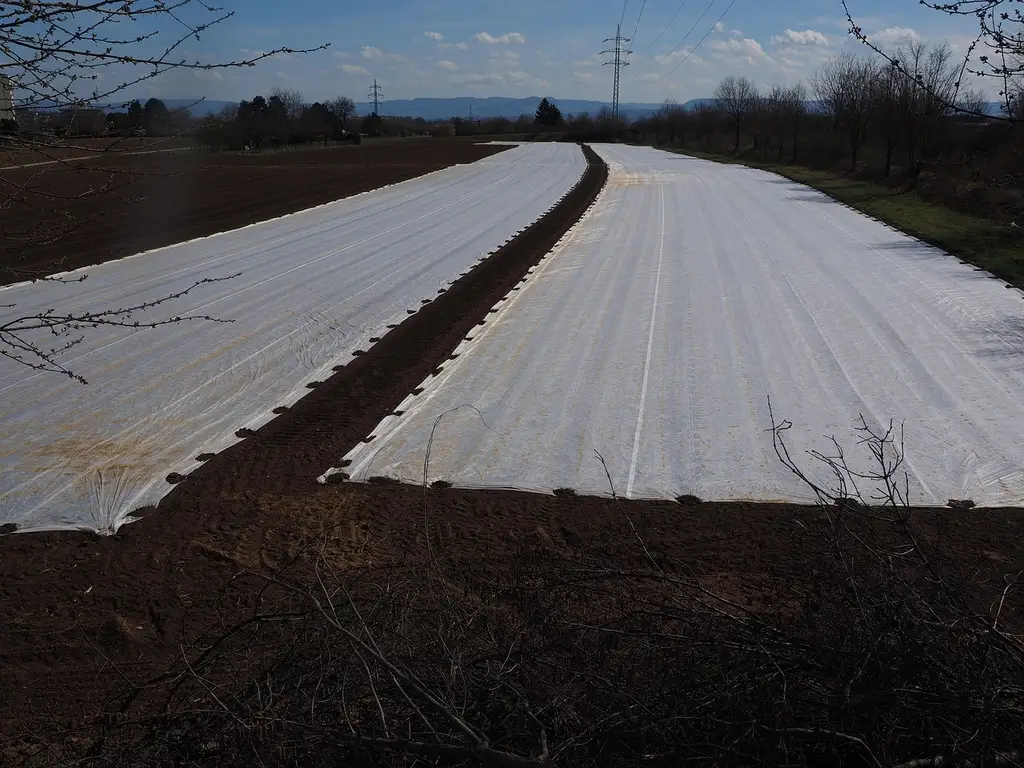
Floating row cover is a permeable fabric placed over crops to keep pests out and stretch the growing season. It still lets in light, water, and air, so plants keep growing with some wind protection and a small temperature boost.
How floating row cover works
The fabric works as a physical barrier. It keeps insects off tender crops, softens wind, and can hold enough heat to move planting dates a little earlier in spring or later into fall.
That help has limits. Row cover works when the crop can handle the heat and moisture under it, and it turns risky when bloom timing, high temperatures, or poor anchoring change the setup.
Common materials and brand names
Row cover is commonly made from spun-bonded or woven plastic, polyester, or polypropylene. Spun-bonded polypropylene is common, and some products are UV stabilized for reuse across multiple seasons if stored properly.
Reemay is a brand name often used for floating row cover in gardening. Reemay spunbond polyester media contains no binders. Agribon is described as 100% polypropylene with UV stabilizer added.
What it blocks and what it lets through
Row cover is used for pest exclusion, windbreak, and season extension. It does not make a crop invincible, because gaps at the edges, torn fabric, or direct contact with pests can weaken the barrier.
It also does not seal a bed from weather. Light, water, and air still pass through, and floating row cover allows about 85% transmission of sunlight.
Is row cover safe for vegetables?
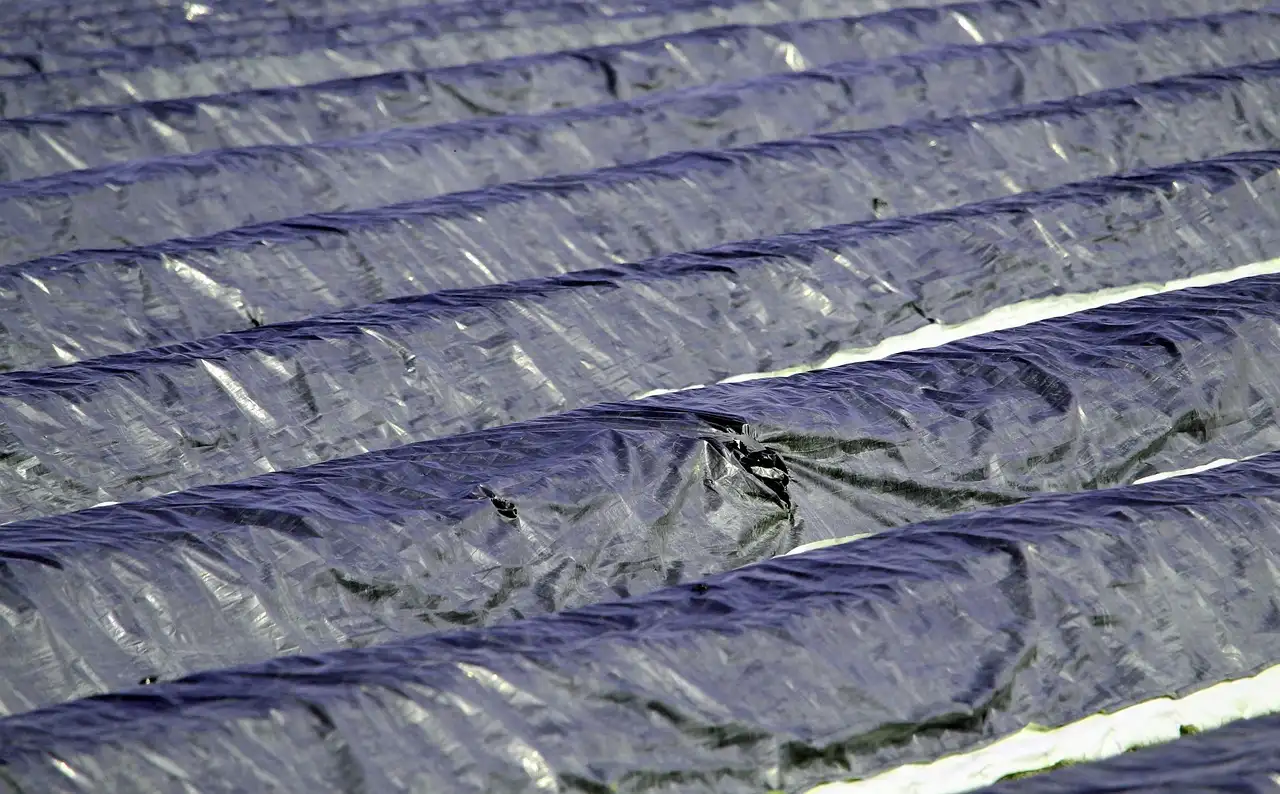
Row cover is safe for vegetable gardens when the fabric matches the crop, the weather, and the support method. It becomes risky when heat builds, flowers need pollination, or the fabric sits on foliage long enough to scuff leaves and trap moisture.
When it is safe
It is usually safe on young transplants, leafy greens, root crops, and other vegetables that do not need insect pollination during the covered period. Lightweight covers fit most crops and generally do not require supports.
Medium-weight covers also work well on many cool-season crops, especially when the main goal is pest exclusion or a small frost buffer rather than strong freeze protection.
When it becomes risky
Risk rises when the bed warms up fast, the cover sits directly on plants with sharp leaves or flowers, or the crop moves into a stage where pollinators must reach it. Row cover can make the temperature under it 5 to 15 °F hotter than outside.
Suppose a bed of squash is covered tightly during a warm spell and the first female flowers open. Pollination stops under the fabric, heat rises, and fruit set drops. The problem is not the material itself; it is leaving the cover on past the crop stage it was meant to protect.
Which crops need extra caution?
Flowering cucurbits need the most attention because they depend on insect pollination. Remove row cover when flowering starts on cucumbers and squash.
Heat-sensitive crops also need monitoring in warm weather, even if they do not need pollinators. Lettuce, peas, and similar crops can tolerate some cover, but not prolonged heat stress under a tight tunnel on a sunny day.
Row cover weights and temperature
Weight changes how row cover behaves. Lighter fabrics pass more light and are easier to leave on fragile crops, while heavier fabrics give more frost protection but hold more heat and can reduce light more.
Lightweight, medium, and heavyweight fabric
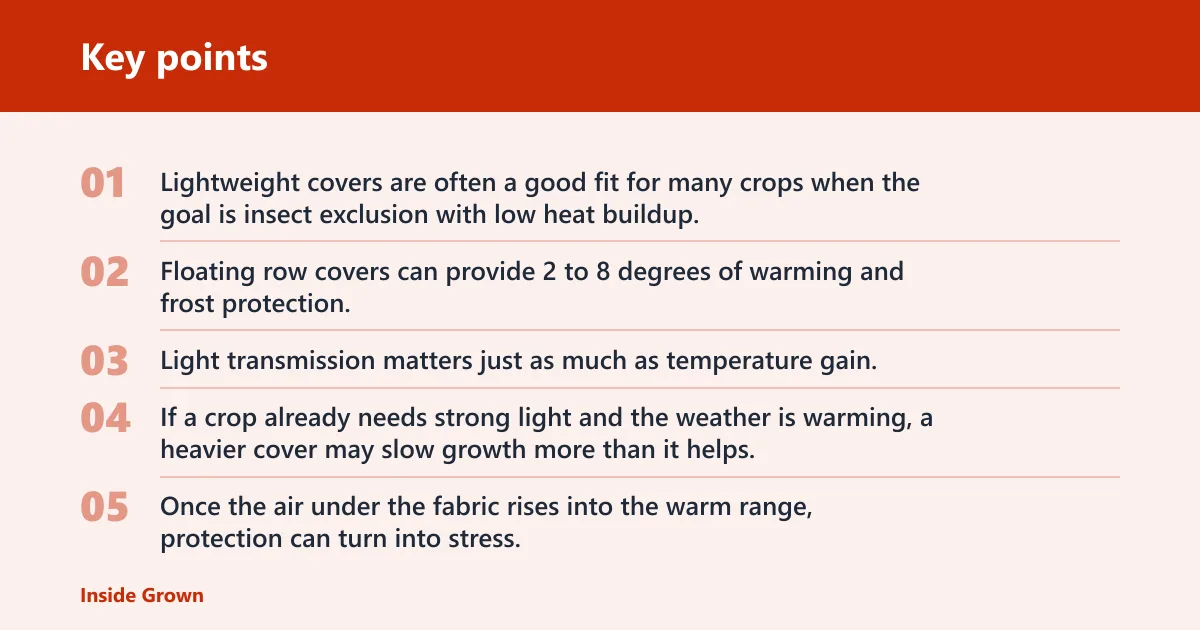
Lightweight covers are often a good fit for many crops when the goal is insect exclusion with low heat buildup. Medium-weight covers are suitable for cucurbits, lettuce, peas, carrots, radishes, potatoes, sweet corn, and blueberries.
Heavyweight covers are for colder periods. They can provide frost and freeze protection up to 4 to 8 °F, but that added protection usually comes with more heat retention and less flexibility in warm spells.
Frost protection and light transmission
Floating row covers can provide 2 to 8 degrees of warming and frost protection. That is enough to soften light frost risk, not enough to treat the cover as a substitute for true freeze protection in harsh weather. (WISC)
Light transmission matters just as much as temperature gain. If a crop already needs strong light and the weather is warming, a heavier cover may slow growth more than it helps.
When heat risk outweighs protection
Once the air under the fabric rises into the warm range, protection can turn into stress. A common rule of thumb is to vent or remove the cover when daytime heat is around 85–90°F, especially if the bed sits in full sun and the fabric is direct-lay rather than raised on hoops.
Common first-timer mistake: leaving a new bed covered through a sunny afternoon because the morning felt cool. The morning temperature is the wrong guide; the midday peak decides whether the fabric stays safe on the crop.
How to install row cover
Good installation matters as much as fabric choice. Keep the cover off leaves when the crop is tall, and seal the edges completely if the goal is pest exclusion. Poor anchoring is one of the fastest ways to lose both safety and effectiveness.
Measure the bed first. Leave enough fabric to drape fully to the ground on both sides. If the cloth is too short, it will pull tight, rub foliage, and leave entry points for insects.
Choose direct lay or hoops. Use direct lay on low, compact crops that can handle contact. Use hoops or tunnel support for taller crops because they keep fabric off leaves, improve airflow, and reduce abrasion.
Anchor every edge. Bury edges completely or secure them with rebar, lumber, stakes, rocks, or hoops. For pest exclusion, even small gaps can let in insects and let the fabric flap in wind.
Check the fabric tension. Leave a little slack so the cover can billow slightly and shed wind. Tight fabric pulls against stems and makes hot spots where leaves touch the cloth.
Inspect after wind. Recheck anchors after storms or gusty weather. If the edges lift, pests enter and the cover stops doing its job.
Hoops are especially useful for taller crops and longer covers. They lower abrasion, keep flowers from pressing against the fabric, and make venting easier when the weather turns hot.
When should you remove row cover?
Remove row cover when flowering starts on insect-pollinated crops, when heat climbs too high, or when the fabric has shifted enough to stop excluding pests. The safest choice protects the crop without blocking pollination or building excess heat.
Flowering and pollination timing
Some row covers should be removed when plants begin to flower for pollination. That matters most for cucumbers and squash, where flowers must be visited by insects to set fruit.
For crops that are not insect-pollinated at that stage, the cover can stay on longer if temperatures remain mild and the fabric is still in good shape.
Warm-weather venting
Vent the cover on warm days before the crop shows stress. Since row cover can make the temperature under it 5 to 15 °F hotter than outside, opening one side or removing the cover during the hottest part of the day can prevent wilting and flower drop.
If the crop sits under a hoop tunnel, lift the sides or ends first. That keeps some pest protection while giving heat a way out.
Signs the cover should come off now
- Flowers are opening on cucumbers or squash.
- Leaves are limp at midday even when the soil is moist.
- Condensation and heat remain high after venting.
- The fabric is torn, thin, or lifting at the edges.
- Pests are getting under the cover through gaps.
Row cover safety table
Use this table to decide whether to cover, vent, remove, or replace the fabric. If more than one warning sign appears, choose the more cautious option.
| Crop type | Growth stage | Weather condition | Direct lay vs hoops | Max duration | Stop-use warning signs |
|---|---|---|---|---|---|
| Leafy greens | Seedling to harvest | Cool, breezy, frost risk | Direct lay or low hoops | Until heat rises above 85–90°F | Wilting at midday, torn edges, soil staying too wet |
| Carrots, radishes, beets | Emergence to root fill | Cool to mild | Direct lay | Through early growth | Thin fabric, insects under cover, soil crusting |
| Peas | Vegetative growth | Cool spring weather | Direct lay or hoops | Until flowering begins if pollination is needed nearby | Heat buildup, flower buds forming under tight cover |
| Cucumbers, squash | Before flowering | Cool nights, mild days | Hoops preferred | Remove when flowers start | First open flowers, daytime heat, bees blocked out |
| Sweet corn | Young plants | Windy, cool | Hoops often better | Short-term only | Tassels nearing emergence, poor anchoring, overheating |
| Blueberries | Flowering to fruiting | Frost risk before bloom | Hoops preferred | Short frost events only | Open bloom, trapped heat, fabric rubbing fruiting clusters |
How long row cover lasts
Row cover is not made to last forever. Sunlight slowly breaks it down, and UV damage is the main reason good fabric becomes weak, thin, or brittle. Proper storage extends service life, but damaged cover should be replaced before it fails in the garden.
UV damage and wear checks
Check for thinning, brittleness, frayed corners, and stretched areas that no longer hold tension. Spun-bonded polypropylene is often reported as reusable for multiple seasons when it has been UV stabilized and stored well.
If the fabric splits when handled, has repeated pinholes, or tears at the fold lines, it is no longer dependable for pest exclusion. Small holes matter more on insect barriers than they do on simple shade cloth.
Cleaning and storage
Shake off debris. Remove soil, stems, and dead leaves before storage. Dirt holds moisture and speeds breakdown.
Dry the fabric fully. Let it air-dry before folding. Stored damp fabric can mildew, smell bad, and degrade faster.
Fold without sharp creases. Roll or fold it loosely so the same lines do not weaken every season. That helps preserve the weave and spun-bond structure.
Store out of light. Keep it indoors, away from sun and rodents. UV exposure during storage shortens life just as surely as exposure in the garden.
A fabric that looks fine at first glance can still be too weak for use if the edges are brittle or the center has gone thin. Replace it before the next cover-up, not after it tears in the field.
Frequently asked questions
Is row cover safe for vegetable gardens?
Yes, if it matches the crop and weather. Row cover is safe when it is secured well, kept off sensitive foliage when needed, and removed or vented before flowering or heat stress becomes an issue. It becomes risky when left on too long or anchored poorly.
How do you use garden row covers?
Lay the fabric over the bed or set it on hoops, then anchor all edges so wind and pests cannot get under it. Use direct lay for low crops and hoops for taller plants. Remove it when flowers need pollination or when heat builds too high.
What are row covers used for in a vegetable garden?
They are used for pest exclusion, windbreak, and season extension. Row covers also give light frost protection and can help young vegetables get established in spring. The fabric is a barrier, not a cure-all, so crop stage and weather still matter.
Do row covers let in light, water, and air?
Yes. Floating row cover remains permeable to light, water, and air. That is why it can stay over crops for a while without sealing them off completely. Even so, heat can still build under it, especially on still, sunny days.
When should you remove row covers from vegetables?
Remove them when insect-pollinated crops start flowering, when daytime heat rises above about 85–90°F, or when the fabric is damaged and no longer blocks pests well. Cucumbers and squash are the clearest examples because open flowers need pollinators.
Can row covers protect vegetables from frost?
Yes, but only within a limited range. Row covers can provide 2 to 8 degrees of warming, and heavyweight covers can provide frost and freeze protection up to 4 to 8 °F. That helps with light frost, not with severe freezes.