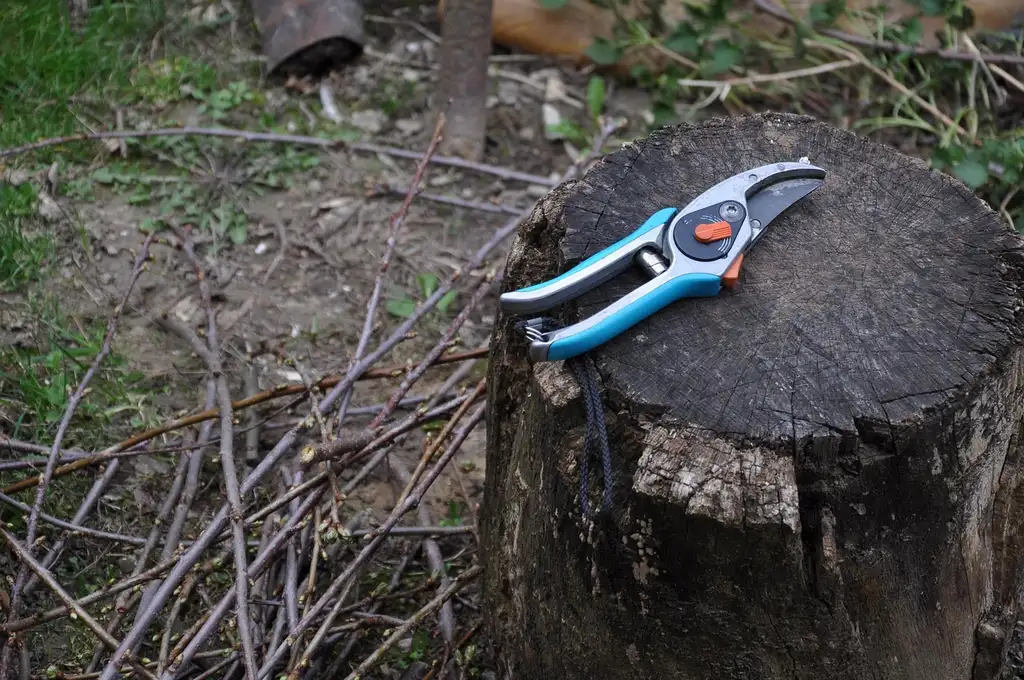
Gardening Techniques for Disinfecting Pruning Tools
Disinfect pruning tools between plants after any cut on visibly diseased tissue, and always before moving from a sick plant to a healthy one; use 70% isopropyl alcohol or a 10% bleach solution for brief contact, not long soaking on every blade. Skipping this step can move cankers, blights, and viruses from one branch to the next, and careless cleaning can also dull blades or corrode metal. This guide gives you a tool-by-tool workflow for shears, loppers, saws, and snips that keeps cuts clean, speeds up work, and protects your tools. (Missouri)
Why clean tools before disinfecting?

Wipe off soil, sap, and debris first. A disinfectant works on exposed metal, not on sticky residue, and heavy buildup can weaken the chemical action needed for plant-pathogen control.
That first wipe also protects the blade. Pruning shears, loppers, and saws all have metal parts that can corrode if harsh products sit on them too long, especially on cutting edges and joints.
- Remove visible residue. Use a cleaning cloth or paper towel to lift off soil, sap, and plant bits before any disinfectant touches the tool. Clean with water first, then wipe dry enough that the blade is not dripping.
- Choose the right contact method. Use a wipe, dip, or soak only after the blade is clean. That keeps the disinfectant from spending its contact time on dirt instead of the metal edge.
- Protect the finish. If a tool has a plated or polished blade, less residue means less time in contact with harsh chemicals. That matters because corrosion starts faster when the surface stays wet and dirty.
Say your pruning shears cut a mildewed rose cane and then a clean hydrangea shoot. A quick wipe on the first blade is not enough if sap and bits still cling near the pivot; clean first, then disinfect, or the next cut can carry the same residue onward.
📊 The Missouri article recommends 70% isopropyl alcohol for pruning tools. Source: Missouri.
How do you disinfect pruning tools between plants?
The most practical workflow is simple: clean, disinfect, dry, then move on. For pruning shears, loppers, and saws, that usually means a fast wipe or a short soak with a disinfectant that matches the tool and the amount of residue on it.
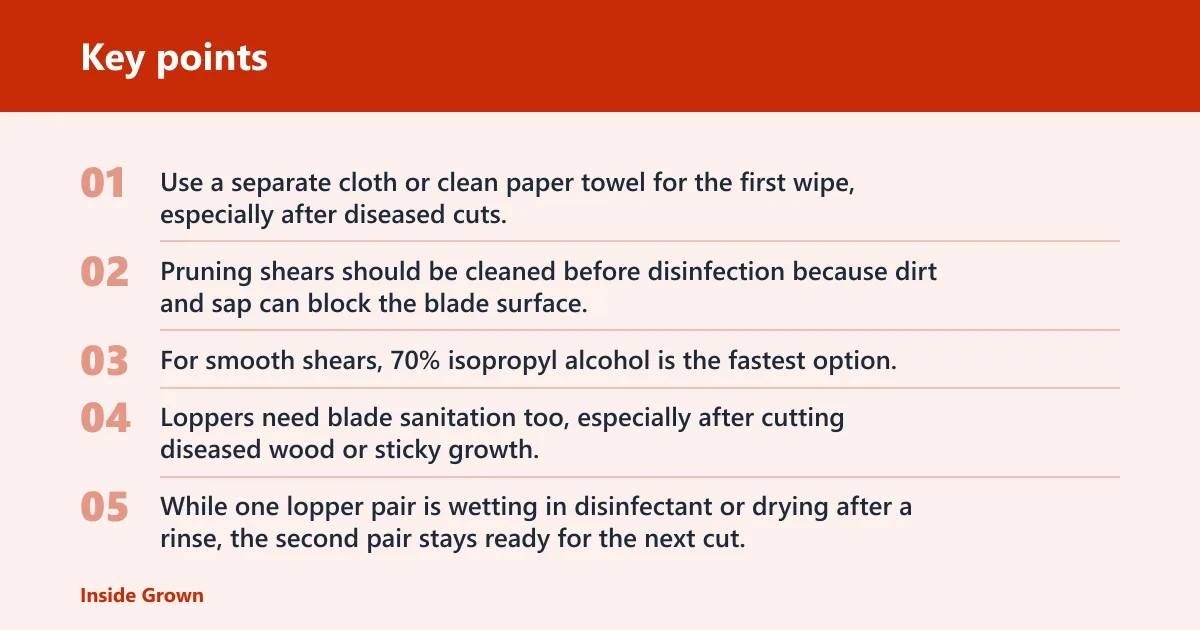
Use a separate cloth or clean paper towel for the first wipe, especially after diseased cuts. If a tool is shared across a crew, keep one blade in service while the other is wetting or drying, so pruning does not stall.
Pruning shears
Pruning shears should be cleaned before disinfection because dirt and sap can block the blade surface. They are also the hand tool most often used on diseased plants, so they need the most disciplined between-plant routine.
For smooth shears, 70% isopropyl alcohol is the fastest option. It works as a wipe or dip, and alcohol works quickly, so you do not need a long wait before resuming cuts.
Loppers
Loppers need blade sanitation too, especially after cutting diseased wood or sticky growth. Their larger blades and longer handles often collect sap and soil residue, so they can carry contamination farther if you move from plant to plant without cleaning.
A two-tool rotation helps here. While one lopper pair is wetting in disinfectant or drying after a rinse, the second pair stays ready for the next cut. That keeps work moving during brief contact times.
Pruning saws
Pruning saws are harder to disinfect than smooth blades because serrated teeth hold residue. They are often used on shrubs and trees, where the cut surface is larger and heavier debris is more common.
For saw teeth, a wipe works best when residue is light. If pitch, bark dust, or soil is packed into the gullets, clean first and use a method that gives the disinfectant full surface contact. Serrations make that slower than with flat blades.
Pruning tool disinfectant comparison table
This comparison ranks common options by speed, contact time, rinse need, corrosion risk, and where they fit best. Use it as a field check, not as a substitute for the label on the container or the crop-specific advice you may need for a disease outbreak.
| Disinfectant | Speed | Contact time | Rinse required | Corrosion risk | Best use case |
|---|---|---|---|---|---|
| 70% isopropyl alcohol | Fastest | Immediate effectiveness; wipe or dip, no soak needed | Usually no, unless the product label says otherwise | Low to moderate on brief use | Pruning shears and loppers between plants when speed matters |
| 10% bleach solution | Fast, but slower than alcohol in practice because of cleanup and rinse | Reference soak for blades is 30 minutes; some extension guidance uses shorter contact for sanitation, so match the strictest current advice you have | Yes, rinse after use to reduce corrosion | High | Short, controlled use when you need a broad-spectrum option and can rinse promptly |
| Household disinfectants | Moderate | Varies by label and product | Often yes, depending on product instructions | Usually less corrosive than bleach | Easy-to-find backup for pruning blades when alcohol is unavailable |
| Pine oil solution | Moderate | Use as a 25% solution; contact details vary by product | Often yes, depending on the formulation | Lower than bleach | When reduced corrosion matters more than top-end pathogen control |
| TSP | Moderate | Use as directed for detergent action; not a universal pruning-tool disinfectant | Yes | High | Heavy soil removal or older, specific guidance for limited cases |
Which disinfectant fits each tool?
Pick the product by tool type, residue load, and how fast you need to keep pruning. The best choice for a clean pair of shears is not always the best choice for saw teeth packed with sap and bark dust.
70% isopropyl alcohol for fast wiping and dipping
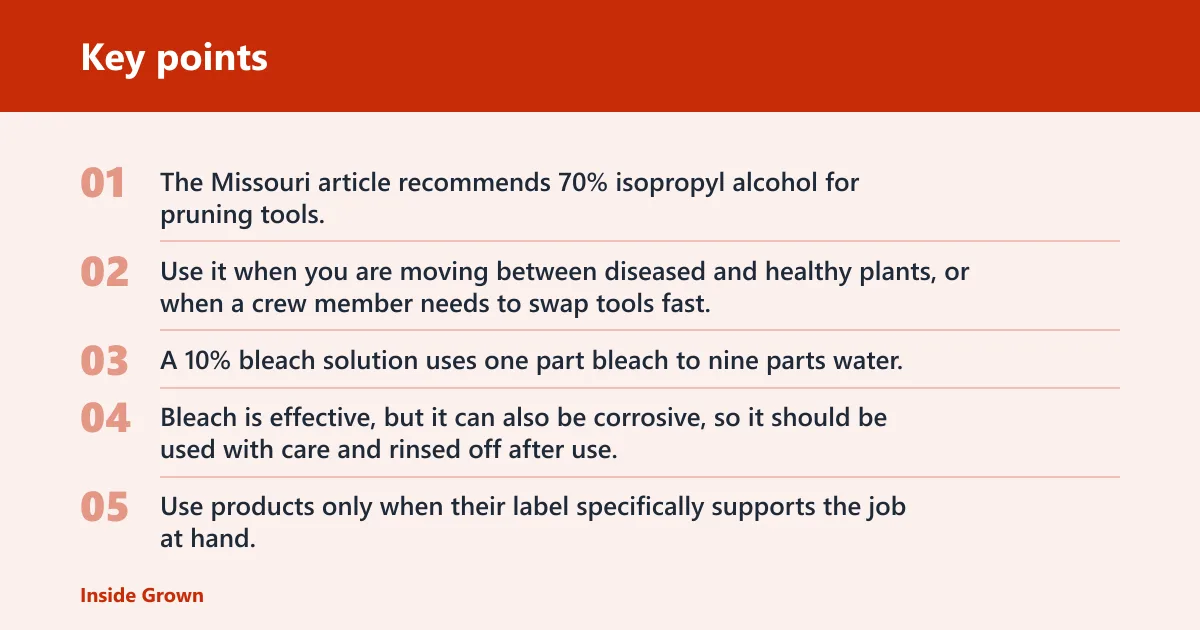
Alcohol is the quickest option for repeated cuts because it is immediately effective and can be used as a wipe with no soaking necessary. The Missouri article recommends 70% isopropyl alcohol for pruning tools.
Use it when you are moving between diseased and healthy plants, or when a crew member needs to swap tools fast. It is a strong fit for pruning shears and a good mid-day choice for loppers with relatively clean blades.
10% bleach solution for short, controlled contact
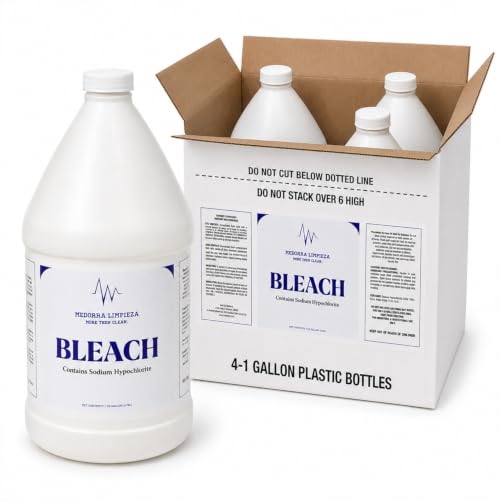
A 10% bleach solution uses one part bleach to nine parts water. Bleach is effective, but it can also be corrosive, so it should be used with care and rinsed off after use.
Some extension sources reference longer soak times, but for this workflow use short, controlled contact on a clean blade, then rinse to limit blade damage. (UFL)
Household disinfectants, pine oil, and TSP tradeoffs
Use products only when their label specifically supports the job at hand.
Follow the product label for any cleaner or disinfectant, and do not assume a household product will work the same way on pruning tools.
If a product leaves residue, rinse it off as directed and avoid leaving it on the blade longer than needed.
A common first-timer mistake is reaching for the strongest product first. Suppose a pair of loppers has a light film of sap after a rose hedge. Alcohol on a clean blade is faster and gentler than a long bleach bath, and the tool goes back into service sooner.
What if blades are sticky, rusty, or heavily soiled?
Start with mechanical cleaning, not a longer soak. Sticky sap, rust, and packed debris all reduce disinfectant contact, and a soaked dirty blade often leaves more residue behind than a wiped clean one.
- Scrape off buildup. Use a cloth or paper towel to remove sap, soil, and plant debris before disinfection. On serrated saw teeth, work the cloth into the gullets as best you can without bending the blade.
- Wash with water first. Clean tools with water first before disinfecting them. This matters most when the blade is visibly dirty or sticky, because a disinfectant cannot reach all of the metal through a crust of residue.
- Use a stronger cleaner carefully. If residue remains, choose a product that can cut through it, then follow with a disinfectant step. Use only products whose labels fit the job, and rinse if the label calls for it.
- Dry and inspect. Check the cutting edge, pivot, and saw teeth for rust or dull spots before you store the tool. If rust is present, avoid leaving bleach or other corrosive products on the blade longer than necessary.
What can you use to remove sap from pruning blades? A cloth or paper towel is the first move, followed by water and, if needed, a stronger cleaner that the tool can tolerate. For sticky resin on a saw, the goal is to free the teeth enough that disinfectant can reach the metal.
How often should you disinfect while pruning?
Disinfect between plants after any cut on visibly diseased tissue, and always before moving from a diseased plant to a healthy one. If the plant looks healthy and you are only making routine cuts, many gardeners clean at the end of the session and disinfect more selectively during the work.
Be cautious in food gardens. Follow crop and product-label guidance when moving between different plants or planting areas.
When a tool is shared across a pruning crew, a rotation helps keep the pace steady. One tool can dry while the other works, which matters more than forcing every blade through a long wait.
Between diseased plants
Use the most direct method that fits the blade: alcohol for fast wiping, or bleach for short controlled contact followed by a rinse. If the same plant shows multiple diseased stems, disinfect after the affected cut and again before moving to the next plant.
When moving from ornamentals to edible crops
Be more cautious in food beds than in ornamental-only work. Clean and disinfect tools before moving between planting areas.
When a tool is shared across a pruning crew
Set up a simple handoff: one tool in use, one tool in disinfectant or drying. That rotation reduces idle time and avoids the pressure to skip contact time just to keep the job moving.
What should you do after disinfecting tools?
Rinse when the product calls for it, dry fully, and protect the metal. That last step matters because repeated wetting is one of the fastest ways to dull a cutting edge or invite corrosion.
- Rinse as directed. If you used bleach, rinse after use to reduce corrosion. Do the same for any other product that leaves residue the label says to remove.
- Dry all surfaces. Wipe the blade, pivot, and handle joints completely dry. Moisture left in the hinge is a common place for rust to start.
- Oil the moving parts. Apply a light coat to the pivot and cutting surfaces if the manufacturer allows it. This helps slow blade damage after disinfecting and keeps the tool easier to open and close.
- Store in a dry place. Keep tools out of wet buckets, damp sheds, and soil contact. Clean storage does more for blade life than any single disinfectant choice.
Frequently asked questions
What is the best disinfectant for pruning shears?
For most clean pruning shears, 70% isopropyl alcohol is the best blend of speed and simplicity. It can be wiped or dipped with no soaking necessary. If residue is heavy or you need a different chemistry, use a product whose label fits the job.
Do I need to clean pruning tools before disinfecting them?
Yes. Water and a cloth or paper towel should come first, because dirt and sap block the disinfectant from reaching the metal. Cleaning first also reduces corrosion risk and makes the next cut safer for both the tool and the plant.
How long should pruning tools soak in bleach?
Some extension references mention longer soak times, but for routine pruning tools use short, controlled contact on a clean blade. A 10% bleach solution is one part bleach to nine parts water, and the blade should be rinsed afterward because bleach is corrosive.
Is rubbing alcohol safe for disinfecting garden tools?
Yes, for many pruning jobs it is one of the safest fast options for the tool itself. Rubbing alcohol, usually 70% isopropyl alcohol, works quickly and can be used as a wipe. Keep it away from flames and follow the product label.
Will bleach damage pruning tools?
It can. Chlorine bleach is corrosive and produces fumes, and its solution strength drops over time. If you use it, keep the contact controlled, rinse the blade after use, and do not leave the tool wet with bleach for longer than needed.
Can I use household disinfecting wipes on pruning tools?
Read the label and follow the product directions.