Gardening Techniques for Rainwater Collection in Gardens
Choose the rainwater method by roof area, rainfall, and soil drainage: Small roofs or patios can use one 50–100-gallon barrel, while larger beds usually need linked barrels or a cistern sized by the common rule of thumb of about 0.6 gallon per square foot of roof for each inch of rain. Poor sizing wastes runoff, overflows beds, and leaves you short during dry spells.
Why your site should decide the system

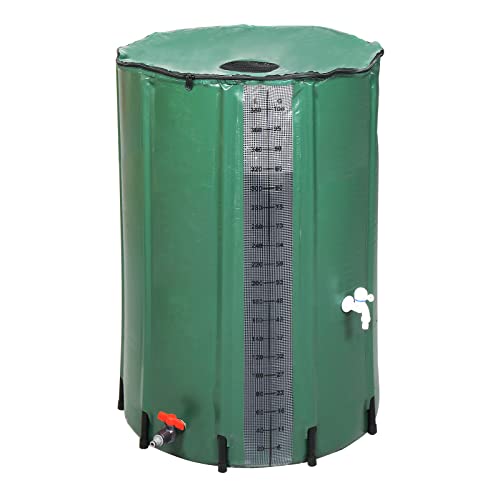

Start with the site, not the container. A 55-gallon barrel is the common simple setup for garden rainwater collection, but it only fits modest roof catchment and limited garden demand. A cistern makes more sense when roof capture is large, dry spells are long, or you want to feed pumps and irrigation lines.
Soil and slope matter just as much. Clay soil holds water longer, so a rain garden can stay shallower and still work. Sandy soil drains faster, so storage alone may help less than infiltration features that slow runoff and let it soak in. Steeper sites need careful overflow routing and often benefit from swales or berms before a tank ever fills.
What you’ll need
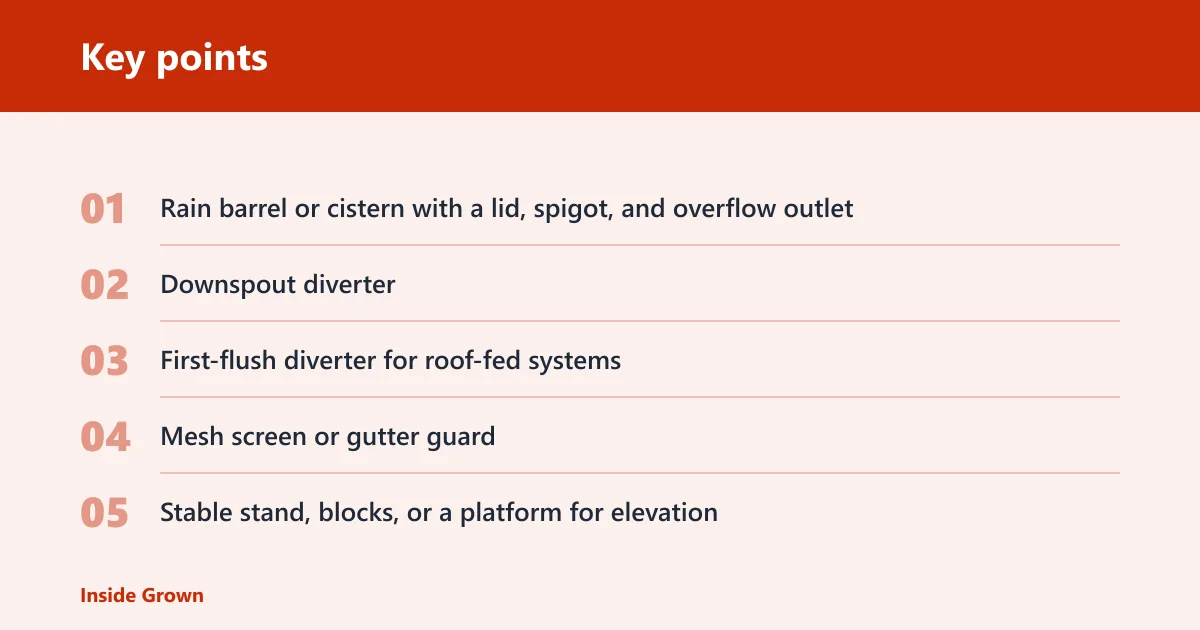
- Rain barrel or cistern with a lid, spigot, and overflow outlet
- Downspout diverter
- First-flush diverter for roof-fed systems
- Mesh screen or gutter guard
- Stable stand, blocks, or a platform for elevation
- Hose, tubing, or watering can for delivery
- Pump and filter for larger tanks or pressurized irrigation
- Native or moisture-tolerant plants for rain gardens
- Shovel, level, and marking paint or stakes for siting infiltration features
How do you choose the right collection method?
Match the method to the main job. If you want water stored for later hand watering, start with a barrel or cistern. If you want runoff slowed and absorbed on site, choose a rain garden, swale, or berm. Many gardens need both: storage for dry days and infiltration for overflow.
Say your garden has two 4-by-8-foot beds and a modest roof. A barrel may cover spot watering after rainfall. Suppose the beds are larger, the roof is broad, and summer dry periods last for weeks. A cistern with a pump becomes the better fit because a single barrel empties too fast.
Rain gardens work best where you can spread runoff across soil instead of collecting it in a tank. Swales and berms work well on slopes or along flow paths where water needs to move slowly, sink in, and avoid cutting channels through the bed edges.
Rainwater collection decision table
Use the table to match the site to a method before you buy parts. The storage target is the minimum practical starting point, not the maximum harvest from every storm.
| Garden size | Roof area | Soil type | Slope | Rainfall pattern | Best method | Minimum storage target | Top two failure risks |
|---|---|---|---|---|---|---|---|
| Small patio beds | Up to 500 sq ft | Any, with good drainage | Flat to gentle | Frequent light rain | One 50-gallon to 80-gallon barrel | 50 gallons | Overflow pooling near foundation; mosquito entry through gaps |
| Small to medium beds | 500 to 1,500 sq ft | Clay soil | Gentle | Mixed rain, short dry spells | Linked barrels plus rain garden | 100 to 165 gallons | Barrels empty too fast; rain garden placed too close to foundation |
| Medium to large beds | 1,500 to 3,000 sq ft | Sandy soil | Gentle to moderate | Seasonal dry periods | Cistern with overflow to infiltration | 200 gallons or more | Undersized tank; clogged screen or first-flush diverter |
| Large garden or orchard edge | 3,000 sq ft or more | Clay or compacted soil | Moderate to steep | Drought-prone, with heavy storms | Cistern plus swales and berms | 500 gallons or more, or staged storage | Overflow erosion; foundation damage from bad routing |
| Any bed where storage is not the main goal | Any roof area | Clay soil | Flat to mild | Heavy rain events | Rain garden | 10% of roof drainage area as garden area | Too shallow for local infiltration; plant failure from standing water |
How do you size and place the system?
Estimate harvest from roof catchment area and rainfall depth. One inch of rain on 1,000 square feet of roof yields 623 gallons. That means a 500-square-foot roof can yield about 311.5 gallons from a 1-inch storm, which is more than one barrel can hold and enough to justify overflow routing from the start.
Place a barrel directly under a downspout, on a stable stand or blocks, with a spigot about 2 to 3 inches above the bottom. That height leaves some settled sediment below the outlet and still allows gravity-fed watering. A full 55-gallon barrel weighs around 460 pounds, so the base must be level and firm.
Rain gardens should sit at least 10 feet from building foundations. For clay soils, a typical depth is 4-8 inches; for sandy soils, 8-12 inches is common.
How do you connect overflow safely?
Put an overflow outlet near the top of every barrel or cistern. Route it away from the foundation, walkways, and low spots where water can pool. If you plan to link tanks, make sure each tank has its own overflow path so the last container does not back up into the downspout.
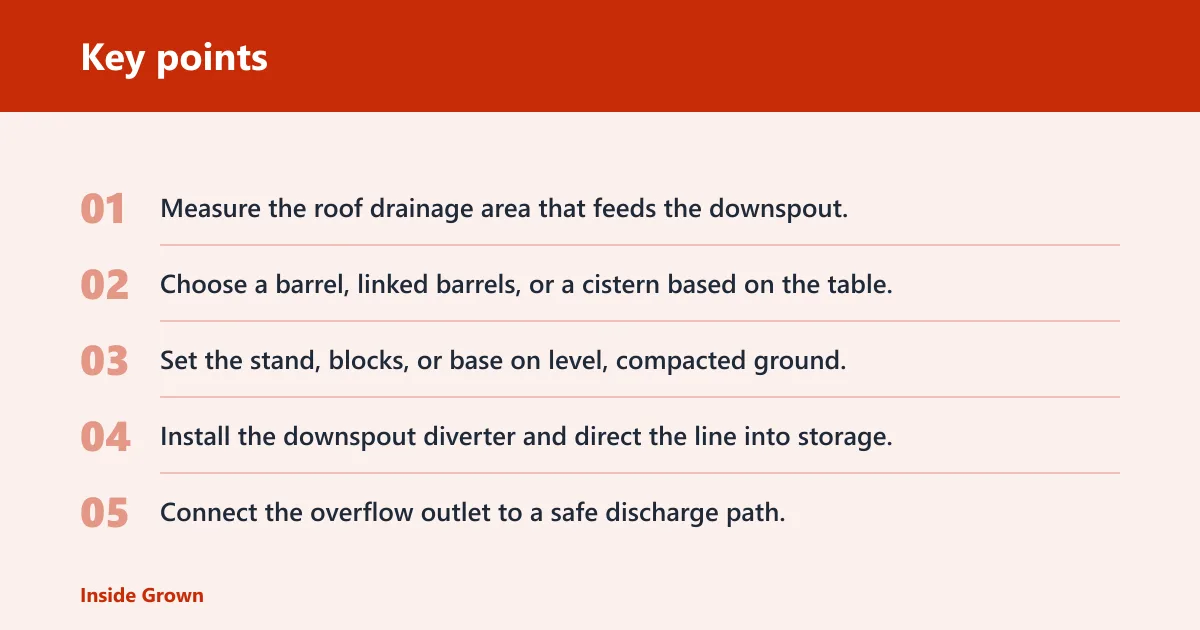
- Measure the roof drainage area that feeds the downspout.
- Choose a barrel, linked barrels, or a cistern based on the table.
- Set the stand, blocks, or base on level, compacted ground.
- Install the downspout diverter and direct the line into storage.
- Connect the overflow outlet to a safe discharge path.
- Test with a hose and confirm that water moves away from the house.
How do you keep rainwater clean and usable?

Use a mesh screen or gutter guard to block leaves and insects. This reduces mosquito breeding and keeps coarse debris out of the system, but it needs periodic cleaning. Add a first-flush diverter for roof-fed systems so the dirtiest initial runoff does not enter the barrel or cistern.
Rainwater used for vegetables is fine for irrigation when the roof runoff is routed through basic screening and kept out of the tank as dirty first flush. Farmers’ Almanac warns that rainwater is not drinkable without treatment, so garden use should stay separate from any drinking-water plan.
For larger tanks or pressurized delivery, use a filter before the pump or hose line. Sediment that settles in the tank can clog emitters, stain the water, and create algae-friendly buildup if the lid is loose or the tank sits in full sun.
What parts prevent common failures?
Use a lid or mesh screen, a solid spigot, and a sealed top opening. Gaps invite mosquitoes. Loose fittings drip. Missing overflow routing can flood the base and weaken nearby soil. If the barrel sits in the sun, opaque material or shade helps limit algae growth.
Suppose three linked barrels hold about 165 gallons, but the overflow line ends beside the foundation. The system fills during one storm, then the extra water puddles where it should not. The fix is not another barrel first; it is a better overflow path and a check on slope.
- Inspect the screen, lid, and spigot every 2 to 4 weeks in the growing season.
- Flush the first-flush diverter after major storms.
- Drain settled debris from the bottom outlet if the tank design allows it.
- Clean the filter before it slows flow to beds or hoses.
Common mistakes
Undersizing storage is the most common miss. A small barrel under a large roof can capture water, but it will fill in a single storm and leave the rest to spill. If dry spells are long, move up to linked barrels or a cistern instead of adding only one more planter hose.
Bad overflow routing is another problem. Water should move away from the house, not toward footing, paths, or a low patch that can erode. Leaving a lid gap or torn screen invites mosquitoes. Skipping winter prep can crack fittings or split a full container in freezing weather.
- Check whether the roof area is larger than the storage you planned.
- Confirm that overflow exits downhill from the foundation.
- Seal every access point that is not needed for maintenance.
- Drain or disconnect exposed parts before hard freezes.
- Replace cracked fittings before the next rain event.
What should you do with rain barrels in winter?
Drain barrels before freezing weather if the tank or fittings are not rated for winter use. Empty hoses, disconnect diverters if needed, and store small parts indoors. Water left in a barrel can expand and crack plastic, split spigots, or push fittings loose, which often shows up as leaks in spring.
If the barrel stays outside, keep the lid secure and the overflow clear of ice buildup. For cold climates, a cistern or barrel system usually needs seasonal shutdown unless it is built for year-round use. Winter prep is far easier than replacing a split tank.
Are there rules for collecting rainwater in my state?
Yes. Check state and municipal rules before installing a larger collection system, especially a cistern or any setup tied to irrigation plumbing. Some places allow garden collection freely, while others place limits on storage size, roof connections, or the way overflow is routed.
Start with the local water authority, city code, or county building office. Ask whether permits, backflow prevention, or setback rules apply. If the system will feed a pump or permanent irrigation line, check whether that changes the approval process.
Frequently asked questions
How do I collect rainwater for my garden?
Start with a downspout, a screen, and a storage container or infiltration feature. For a small garden, a 50-gallon to 80-gallon barrel is often enough. For larger beds, use linked barrels, a cistern, or a rain garden sized to the roof drainage area.
What size rain barrel do I need for my garden?
A 55-gallon barrel is the common simple setup, and many systems use a 50-gallon to 100-gallon barrel size range. If your roof drains heavily or your garden needs more than one watering between storms, move to linked barrels or a cistern.
Where should I place a rain barrel or cistern?
Place it under a downspout on level support, with the spigot 2 to 3 inches above the bottom. Keep the overflow aimed away from the foundation, and avoid putting the tank where runoff can pool against walls, walks, or steps.
How do I keep rainwater from getting mosquitoes or debris?
Use a lid, mesh screen, or gutter guard, and clean them often. Add a first-flush diverter so the first dirty runoff stays out of the tank. Make sure there are no gaps around fittings or overflows where insects can enter.
How much rainwater can I collect from my roof?
One inch of rain on 1,000 square feet of roof yields 623 gallons. Use that number to estimate storm harvest, then compare it with your storage capacity and garden demand. A small roof can still produce more water than one barrel can hold.
Can I connect multiple rain barrels together?
Yes. Three linked barrels hold about 165 gallons, and linking helps when one barrel empties too fast for the next storm. Make sure each barrel has a stable base, a sealed top, and an overflow route that does not send water toward the house.